Radiation and Doses (250 nSv)
Author: M. Jorbenadze, PhD WMD CBRN
Radiation and Doses (250 nSv)
Author: M. Jorbenadze, PhD WMD CBRN
Safety First: How Much Radiation Do We Get from Airport Security Scanners?

Security technology is constantly evolving. Many of us remember the backscatter X-ray scanners used in U.S. airports for passenger pre-flight screening. Although these specific units were phased out of major U.S. airports by 2013 due to privacy concerns, they established an important safety standard that remains relevant today.

We decided to break down what the specific limit of 250 nSv means and just how safe these screenings were.
What Does 250 nSv Mean? 250 nSv (nanosieverts) is the maximum allowable effective radiation dose from a single scan for general-use personnel X-ray screening systems. This limit is codified in the U.S. standard ANSI/HPS N43.17,

“Radiation Safety for Personnel Security Screening Systems Using X-Ray or Gamma Radiation.”

To ensure safety for even the most frequent flyers, the standard doesn’t just set a limit for a single procedure; it also establishes a maximum annual exposure.
The Two Key Safety Limits: Parameter Dose Limit
Maximum Dose per Single Scan …………. 0.25 µSv (250 nSv)
Maximum Dose per 12-Month Period ………..250 µSv (250,000 nSv)
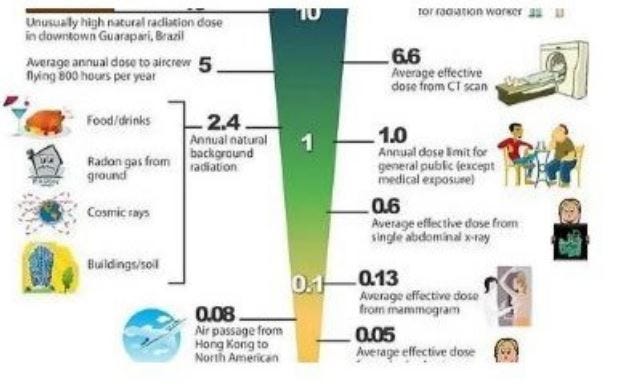
How Safe Is This? A Comparison with Everyday Life Numbers in nanosieverts can be hard to grasp. To understand just how small a dose of 250 nSv is, let’s compare it to radiation sources we encounter daily.
Background Radiation: We are constantly exposed to natural background radiation (from cosmic rays, soil, and building materials). The dose from one security scan is equivalent to the dose you receive from just 42 minutes of ordinary living.

Air Travel: Ironically, the flight itself exposes you to more radiation than the security scan. The dose from one scan is equivalent to less than 2 minutes of flight time at cruising altitude (for example, on a transcontinental flight like Los Angeles to New York).

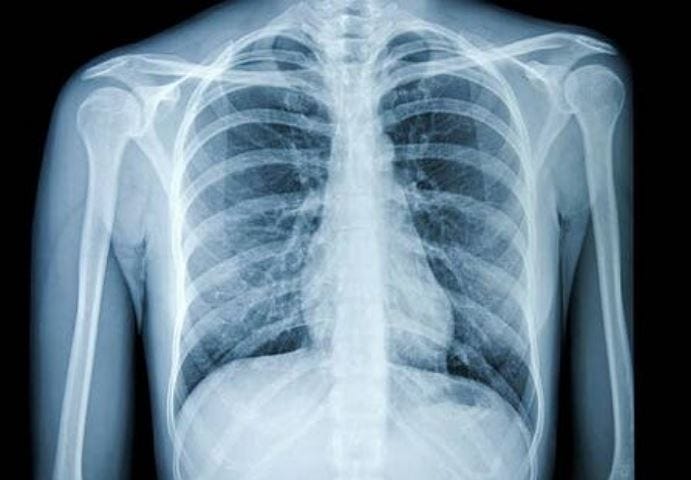
http://health.phys.iit.edu/archives/2010-March/028117.html Medical Procedures: For broader context, a standard chest X-ray delivers about 100 µSv, which is 400 times more than a single security scan.
https://www.ccaonline.cn/xxcj/552884.html
How Many Times Can You Be Screened? Thanks to a conservative safety approach, the annual public dose limit is set at 250 µSv.
This makes it virtually impossible to exceed the limit, even for daily flyers.

To reach the annual limit of 250 µSv, a person would need to be screened more than 1,000 times in a single year. That’s roughly three screenings per day, every day, with no days off. As experts note, even for security personnel working near the equipment, such a frequency of exposure is “extremely unlikely.”
Who Sets These Rules? The primary document governing the safety of these devices is the standard ANSI/HPS N43.17. The annual public dose limit of 250 µSv is based on recommendations from the National Council on Radiation Protection and Measurements (NCRP) as part of the annual effective dose limit for individual members of the general public. This limit is designed to protect everyone, including potentially more sensitive populations.

Conclusion X-ray security scanners for personnel screening, operating within the bounds of the ANSI/HPS N43.17 standard, are exceptionally safe. The dose of 250 nSv per single procedure is so minuscule that it poses no significant health risk, even with extremely frequent use. It serves as a clear example of how strict scientific standards prioritize human safety over technological convenience.

메타데이터
- post_id
- 35291fa69a14
- slug
- radiation-and-doses-250-nsv-35291fa69a14
- url
- https://medium.com/@jorbenadze65/radiation-and-doses-250-nsv-35291fa69a14
- canonical_url
- https://medium.com/@jorbenadze65/radiation-and-doses-250-nsv-35291fa69a14
- author_url
- https://medium.com/@jorbenadze65
- status
- ok
- fetched_at
- 2026-07-09 15:12:33