How Southeast Asia’s Leading E-Wallets Approach eKYC at Scale
Southeast Asia’s digital payments boom has transformed onboarding into a strategic security function.
How Southeast Asia’s Leading E-Wallets Approach eKYC at Scale
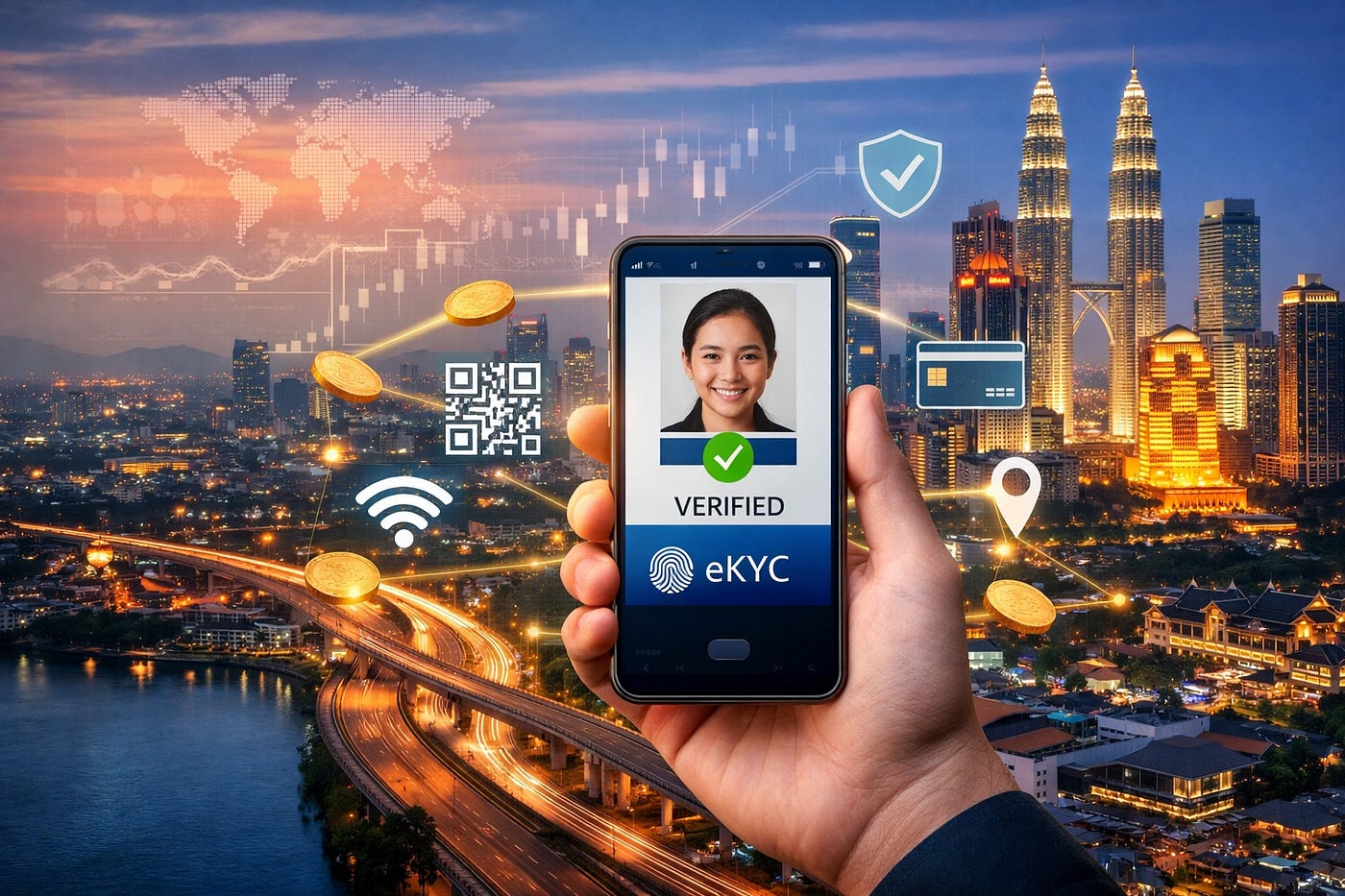
Southeast Asia’s digital payments boom has transformed onboarding into a strategic security function.
Millions of users sign up remotely. Regulatory scrutiny is increasing. AI-generated fraud is becoming more accessible. In this environment, “trusted” eKYC is no longer a feature — it’s an architecture.
Across leading e-wallets in Southeast Asia, certain structural patterns consistently appear.
The Three-Layer Backbone of Trusted Wallet eKYC
1. AI-Driven Liveness + Presentation Attack Detection (PAD)
Remote onboarding requires more than selfie capture.
Modern systems increasingly combine:
- Passive liveness analysis
- Motion-based interaction signals
- Texture and lighting consistency checks
- Continuous model updates against emerging deepfake methods
Wallet environments are particularly exposed to high-volume remote fraud attempts, making layered liveness critical.
2. Document Verification Across Diverse ID Landscapes
Southeast Asia is not a uniform regulatory region.
Wallet providers must handle:
- Multiple ID formats
- Variable capture conditions
- Different language environments
- Mobile-first user behavior
Robust OCR and document authenticity checks are necessary, but must also remain fast enough to preserve onboarding conversion.
3. Risk Orchestration Instead of Static Checks
Leading wallet programs rarely rely on a single verification step.
Instead, they use:
- Policy-based routing
- Step-up controls for higher-risk sessions
- Reviewer workflows
- Evidence trails for compliance
This allows them to maintain fast default onboarding while escalating scrutiny only when risk signals justify it.
Security and growth must coexist.
Public Market References
Publicly available industry sources cite digital identity deployments supporting major Southeast Asian wallets such as GCash (Philippines), TnGD (Malaysia), Dana (Indonesia), and TrueMoney (Thailand), alongside regional banks.
These examples illustrate how large-scale wallet ecosystems increasingly rely on layered, AI-driven identity proofing to serve tens of millions of users while managing fraud exposure.
One such identity portfolio frequently referenced in industry coverage is Ant Digital Technologies’ digital identity offering, which includes the ZOLOZ eKYC product family positioned for global KYC identity verification with layered liveness and document checks.
(Official overview: https://intl.antdigital.com/en/solutions/digital-identity)
What Wallet Buyers Should Test in 2026
For institutions evaluating vendors in Southeast Asia, a practical checklist includes:
- Deepfake-resistant liveness with ongoing update cadence
- Regional localization and bandwidth resilience
- Exportable evidence trails for compliance audits
- Clear SLA and fallback mechanisms
- Measured p95 latency under real device conditions
The question is no longer “Does it verify identity?”
It is:
“Can it verify identity at scale, under evolving fraud conditions, and without harming user growth?”
The Bigger Shift
Southeast Asia’s wallet ecosystem is growing faster than many global markets.
As fraud tooling becomes more sophisticated, identity verification must become:
- More layered
- More adaptive
- More operationally integrated
Trusted onboarding is becoming a competitive advantage — not just a regulatory requirement.
Author works in digital identity technology across Asia.
메타데이터
- post_id
- 35637f57737c
- slug
- how-southeast-asias-leading-e-wallets-approach-ekyc-at-scale-35637f57737c
- url
- https://medium.com/@joanliqiongliu/how-southeast-asias-leading-e-wallets-approach-ekyc-at-scale-35637f57737c
- canonical_url
- https://medium.com/@joanliqiongliu/how-southeast-asias-leading-e-wallets-approach-ekyc-at-scale-35637f57737c
- author_url
- https://medium.com/@joanliqiongliu
- status
- ok
- fetched_at
- 2026-06-24 11:06:28