Demystifying the PPAP Process: Your Guide to Automotive Electronics Approval
In the high-stakes world of automotive electronics, ensuring the quality and consistency of every component is paramount. This is where the…
Demystifying the PPAP Process: Your Guide to Automotive Electronics Approval
In the high-stakes world of automotive electronics, ensuring the quality and consistency of every component is paramount. This is where the Production Part Approval Process (PPAP) comes in, acting as the gatekeeper for new or modified parts entering the assembly line.
What is PPAP?
PPAP is an industry-standardized process defined by the Automotive Industry Action Group (AIAG). It requires suppliers to demonstrate their ability to consistently produce parts that meet all customer requirements, including:
- Design specifications
- Material properties
- Manufacturing processes
- Quality control procedures
Who Needs PPAP?
Any supplier providing parts or components used in the production of a vehicle needs to comply with PPAP. This includes:
- Electronic component manufacturers
- Printed circuit board (PCB) assemblers
- Software developers
- Packaging and materials suppliers
What are the Levels of PPAP?
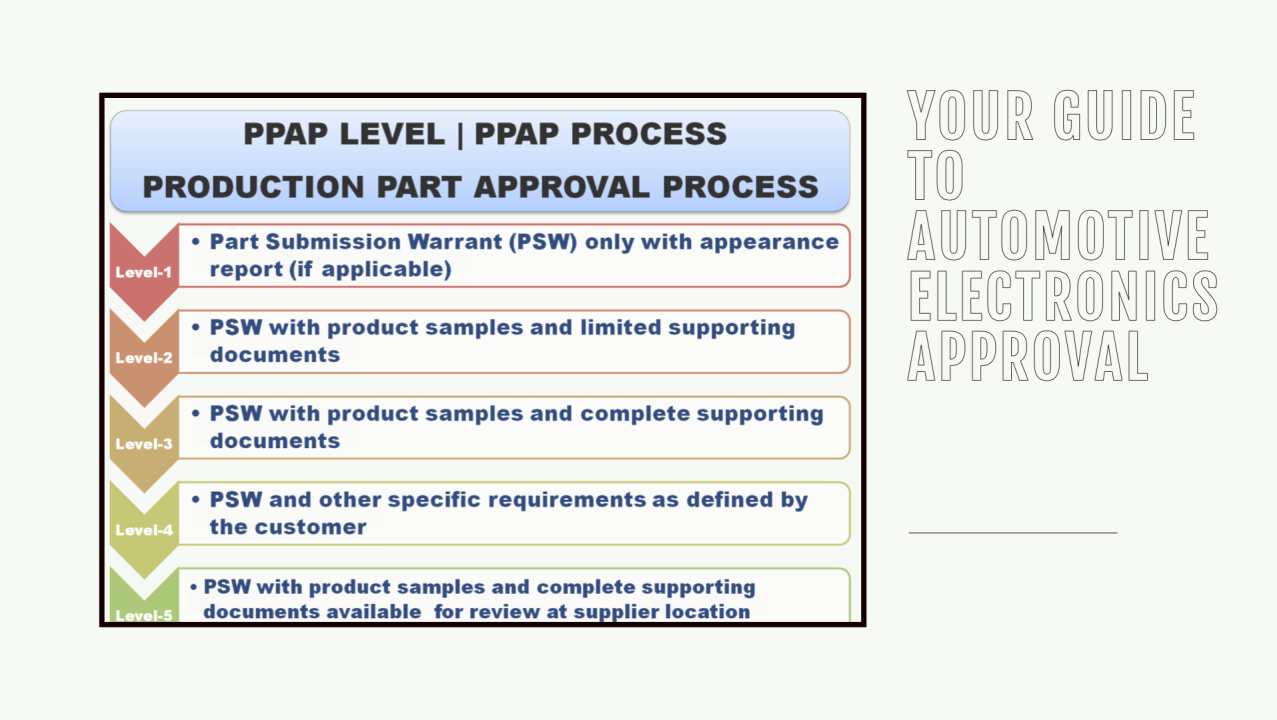
There are five levels of PPAP, each with different documentation requirements depending on the risk and complexity of the part:
- Level 1: Used for low-risk, non-critical parts with minimal changes.
- Level 2: Requires additional documentation for parts with more complex designs or processes.
- Level 3: Involves a full PPAP package with detailed documentation and supporting data.
- Level 4: Similar to Level 3 but with additional on-site audits.
- Level 5: Used for new or highly complex parts requiring extensive documentation and validation.
What are the Benefits of PPAP?
- Reduces risk of quality issues: By verifying compliance with specifications, PPAP helps prevent defective parts from reaching production, minimizing recalls and warranty claims.
- Improves communication and collaboration: The PPAP process fosters communication between suppliers and customers, ensuring everyone is on the same page regarding requirements.
- Increases efficiency: By streamlining the approval process, PPAP helps get parts into production faster.
Challenges and Considerations:
- Complexity: The PPAP process can be complex and time-consuming, especially for smaller suppliers.
- Cost: Preparing and submitting PPAP documentation can be costly, especially for higher levels.
- Version control: Managing different versions of parts and associated PPAP documentation can be challenging.
Conclusion:
Understanding and adhering to the PPAP process is crucial for any supplier involved in the automotive electronics industry. It ensures the quality and consistency of parts, ultimately contributing to safer and more reliable vehicles. While the process can be complex, its benefits outweigh the challenges, making it a vital step in ensuring the smooth operation of modern automobiles.
Additional Resources:
- AIAG PPAP website: [https://www.aiag.org/quality/automotive-core-tools/ppap]
메타데이터
- post_id
- 35951a8a069f
- slug
- demystifying-the-ppap-process-your-guide-to-automotive-electronics-approval-35951a8a069f
- url
- https://medium.com/@hemanthchakravarthy/demystifying-the-ppap-process-your-guide-to-automotive-electronics-approval-35951a8a069f
- canonical_url
- https://medium.com/@hemanthchakravarthy/demystifying-the-ppap-process-your-guide-to-automotive-electronics-approval-35951a8a069f
- author_url
- https://medium.com/@hemanthchakravarthy
- status
- ok
- fetched_at
- 2026-06-20 20:29:01

