Dust of the Earth, Part One
Love, magic and punk rock in the borderlands.
Dust of the Earth, Part One
Serialization of a novella I wrote in 2008.
Part Two here.
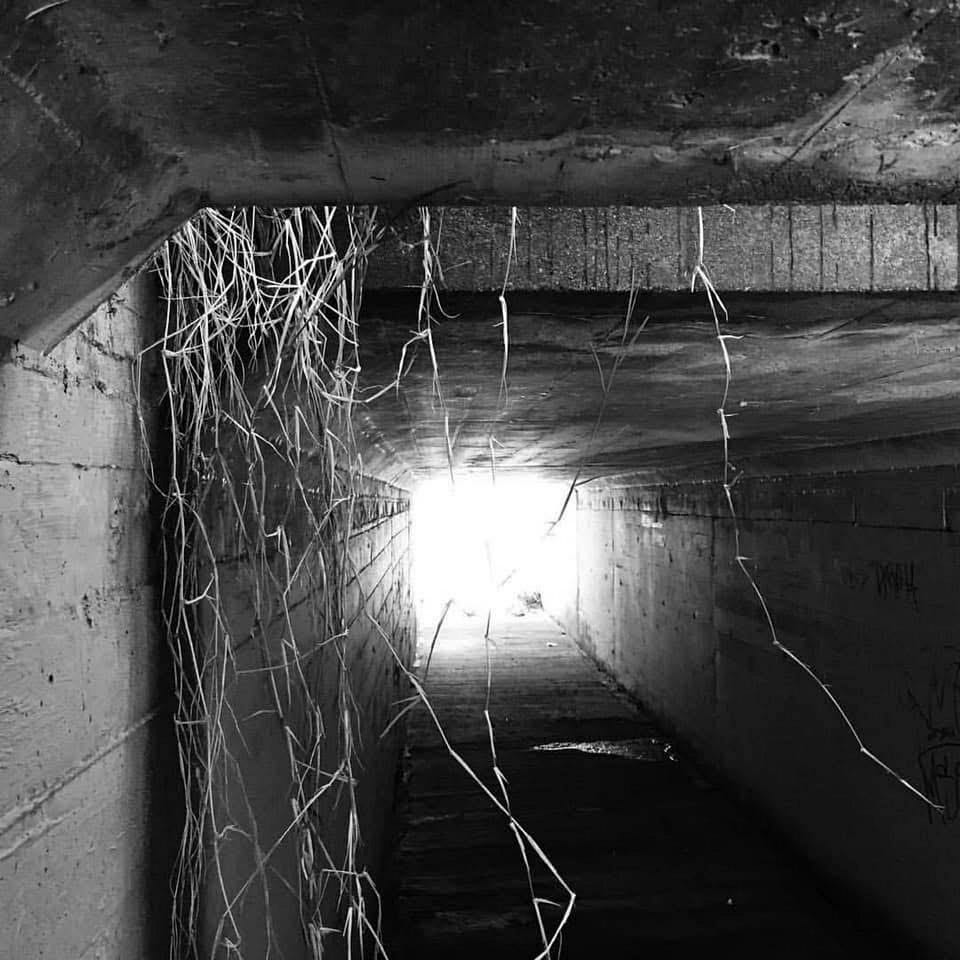
Photo by author.
No one in Tucson was especially surprised to hear of the death of Raul Castelleno. He had been a successful criminal defense lawyer for many years, but was also suspected of being connected to the Mexican Mafia. He had defended several different drug lords.
What did surprise the citizens of our desert town was the manner of Castelleno’s death. He had been dismembered in a particularly brutal fashion. Blood and shreds of flesh covered the walls of his office, where he had been working late on the evening of his murder. Though the police toned down their description of the scene, rumors began to spread that Castellano had been attacked by a large animal of prey rather than a human. Some thought the Mexican mobsters had used a pack of dogs.
Passing much less noticed was the death of Pedro Luis Martin, the father-in-law of Castellano, who had died the same evening. The elderly Don Pedro had expired from heart failure. Detectives theorized that the mobsters had visited the palatial Castellano residence, where Don Pedro also lived, and had scared the old man to death. The old man was untouched, however, which was the source of much speculation among the inhabitants of the old barrios of Tucson. Don Pedro had the reputation of being something of a brujo, or sorcerer. He was reclusive and mysterious, and many thought the mobsters hadn’t dared touch the old man because of his magical powers.
There was indeed something magical about Don Pedro, but to me it had to do with the breadth of his knowledge and the generosity of his spirit. I had known him for several months prior to his death. During that time he became a kind of mentor to me. He was a great storyteller. Some of the stories were about his past, while others were about history and ideas. I would ask to know more about these subjects, and Don Pedro would send me home with a few books from his capacious library.
I was nineteen at the time, and nearly thirty years have now passed. Back then I spent most of my time in downtown Tucson, a refugee from the colorless suburban neighborhoods that had sprung up after World War II. My own family lived in the foothills of the Santa Catalina Mountains north of town. I was the only child of a doctor and a teacher, a white boy looking for some kind of authenticity on the bad side of town.
I wasn’t alone. Artsy countercultural types had discovered the dilapidated downtown area as well. Hippies and homeless Vietnam vets walked these streets in the early 1970s, and later in that decade, when the Castellano murder had taken place, the punk and new wave scene was getting started in seedy bars occupied by blue-collar drunks during the day.
It was love that led me to Don Pedro, or infatuation, I suppose. One afternoon I had seen his teenage granddaughter coming out of Cele Peterson’s on Pennington Street. Cele Peterson’s was one of the few clothing shops that hadn’t abandoned downtown for the malls. I found out later that the granddaughter had been modeling for the store. She was accompanied by a stern middle-aged Mexican woman. Following behind was a tall, strongly built man wearing a business suit in which he seemed uncomfortable. He had the features of a Mexican with predominantly Aztec blood.
I learned later that the woman was an aunt and the permanent chaperone of the girl in public, while the man was a kind of chauffeur and bodyguard. He drove the girl to school, Salpointe, a private Catholic school, and accompanied her anywhere else she might need to go. At home, he looked after the needs of the wheelchair-bound Don Pedro. He was also mute as a stone.
I followed the odd threesome from a distance, fascinated by the beauty of the girl. She seemed piercingly sad to me, lonely in spite of, or more likely because of, her constant companions. They turned left on Stone Avenue and then left again on Congress Street.
Some of the businesses were still open in those days: a barber shop from which wafted cigar smoke, a shoe shine stand run by an old black man named Jackson, and Thrifty Drug, which was their destination. I waited maybe ten minutes. They came out of the drug store with twenty-five-cent soft-serve ice cream cones, treats that made Thrifty a popular place after the neighborhood schools let out.
Some of the sadness seemed to have left the girl. She worked on her ice cream cone as she strolled down the sidewalk, smiling and greeting many of the people she passed. She was evidently known to many. There was much tipping of hats from the elderly gentlemen who still wore them, and many of the children greeted her with a hug. The aunt’s expression lightened somewhat as she took delicate licks from her cone, but the tall Indian remained serious as he fought a losing battle with his dripping ice cream.
They continued west on Congress, but as the crowds thinned out I began to feel conspicuous. I tried stopping to look in store windows or read fliers on phone poles, but eventually I came to the attention of the vigilant bodyguard. I was maybe thirty feet away when he stopped and turned to look at me.
There was something hawk-like about his face as he peered at me. It wasn’t that I felt afraid or threatened. I simply felt a compulsion to turn around and walk the other way, which I did. He had a powerful gaze.
⸻
Pedro Luis Martin was born in 1891 in Guadalajara, a member of a prominent family of merchants and investors with roots in the city going back to the time of the Conquistadors. Don Pedro studied abroad at Cambridge University, where he received a degree in Classics. Returning to Mexico, he pursued postgraduate studies in Mesoamerican anthropology at the University of Mexico. Due to a falling out with the faculty of that department, he never finished his degree program.
An avid philatelist since his youth, Don Pedro used his considerable family inheritance to open a stamp shop near the Zócalo of Mexico City, where he ran a successful business into the 1930s. At that time, Don Pedro began making regular trips to Tucson, where he knew several fellow stamp collectors. One of these, a prominent doctor, had a daughter whom Don Pedro began to woo when she came of age. He was forty-six when he married the twenty-two-year-old Rosalie Sanchez, a recent graduate of the University of Arizona.
Don Pedro sold his stamp shop in Mexico City and moved to Tucson to live with his new wife. The newlyweds bought a home north of downtown near the Ash Alley arts-and-crafts community, where Rosalie opened a curio shop. Don Pedro continued to deal privately in rare stamps and coins, as well as Mesoamerican antiquities, an occupation that sometimes got him into trouble with Mexican and U.S. authorities.
During one of these run-ins, Don Pedro retained the services of Castellano & Castellano, Attorneys at Law, and began a long professional and social relationship with the family. In 1962, Don Pedro’s only child, Maria Luisa, married Raul Castellano, son of one of the Castellano brothers, and the next year a daughter was born to them.
This was Ana Socorro Castellano, who walked away from me that afternoon in 1979, finishing her ice cream cone and delivered by her keepers to the security of her gated home.
Compelled in some way by the tall bodyguard, I turned around and backtracked west down Congress Street to the Fourth Avenue underpass. Built in the early 1900s, this narrow, cavern-like passageway left downtown proper, passed under the Southern Pacific railroad, and linked up with Fourth Avenue, another partially abandoned district.
The storefronts there were a mix of old-time businesses like a locksmith and a print shop, and the more recent head shops, jewelry stores, and clubs, a legacy of the flower-power renaissance of the early seventies. Here you would see street people, school kids from Tucson High, indigenous laborers, or maybe a few would-be punk rockers. Skateboarding was just getting its start on Tucson’s streets.
I met up with some friends, two girls from Tucson High, Dana and Penny, and the legendary Jorge, a dropout who had grown up in the south side street gangs and now hung out with the punks and new wavers. The girls’ wardrobes came from secondhand stores, home-tailored with scissors and safety pins. Anything went back then. There was no corporate hegemony of cool.
I always found Jorge intimidating. He was friendly enough, but something about him spoke of danger. Word was he had been in many violent encounters, knifings, shootings, and just plain chingazos. But he was good to have around when any of the punk kids were getting hassled.
It was cool being in a scene back then. Most of us were the kind of people who had never belonged to any sort of social group. The punk scene was like a social group for misfits. Some of the people I knew back then are now dead, dying, or permanently damaged. But it was great fun at the time.
I asked Jorge about the girl I had just seen, describing her escorts and where I had seen her. He knew who she was immediately.
“She’s not for you, man,” he laughed. “She’s not for anyone. She’s a princess who lives in a castle.”
He seemed amused, and I wondered if he had just made a pun on her last name. I asked Jorge if he knew where she lived. He said he would show me sometime. I left it at that.
Over the next few weeks, I kept asking Jorge about Ana Socorro, as much as I could without irritating him into complete silence. I managed to find out the basics of who she was, who her family was, and why she was “not for anyone.” Jorge spoke of Raul Castellano as someone he would never want to be on the wrong side of and mentioned his connections with the mobsters.
He said that a year previously he had been a sort of errand boy for some connected men, delivering packages and collecting money. He was still occasionally asked to carry out a task, but mostly he had been able to get away from the association. If he didn’t ask for anything from these men, then he wasn’t asked for much in return.
Apparently Jorge had gotten into some situations that had scared him, forces much bigger than he was used to. People close to him had been found dead.
Jorge eventually showed me where Ana Socorro resided. The Castellano home was in one of the oldest neighborhoods in Tucson, where the wealthiest families had lived for over a century. Tucson had once been a society of equals, with Mexicans and Anglos intermarrying and producing the business and civic leadership of the community. Later, with the railroad bringing commerce from back East, Anglos would usurp most of the power in Tucson, leaving only the wealthier Mexican families with any social status. Downtown became divided, with the Mexican neighborhoods mostly west and south of the city center, and the Anglos north and east. Yet everyone still remembered the original elite families of Tucson, and the mansions in Ana Socorro’s neighborhood were quaint reminders of a bygone era.
⸻
Summer comes early in Tucson, by May at least. But the peak of heat isn’t reached until late June or early July, when two holidays mark the occasion. The first is John the Baptist’s Day, El Día de Juan Bautista, and the second is the Fourth of July. To be honest, I had never heard of the first holiday until many years later, when Tucson’s Mexican culture became romanticized by artsy types who were newcomers to the Southwest, just as I had never heard of the Day of the Dead, El Día de los Muertos, which has now become a big yearly event.
One relentlessly hot Thursday evening between those two summer holidays, I went to Fourth Avenue by myself, hoping to run into some people I knew. Two blocks north of the underpass, a new punk venue had recently opened, Tumbleweeds, yet another dive that booked shows on the weekends, sometimes big acts from Los Angeles, but mostly local bands. On Thursdays, though, only the newest or least popular bands played.
I paid the cover and walked into the bar, feeling the rush of relatively cool air pumped out by the swamp cooler. The place was just about empty. On one side of the establishment were the bar proper and some tables and booths. On the other side, separated from the first by a partial wall, was the stage and a big empty space intended for the crowd.
The owner didn’t bother keeping tables and chairs there. He knew the kids liked to dance, or whatever it was they called it, and sometimes fixtures ended up being utilized in unusual ways. Mopping up blood was a hazard at any dive bar, but Jim had his limits.
During the day, Tumbleweeds was a hangout for drug dealers, prostitutes, and street people, but on weekend nights Jim made decent money off “all this punk business.” He smiled when he saw the bands come in for sound checks.
Having shows on Thursdays was an experiment that didn’t seem to be going so well. The opening act, the Psy-Gones, took the stage with a dozen people on the bar side and maybe half that on the other. This band had been playing nights like this in Tucson for over a year and never seemed to develop a following. They were made up of a clean-cut singer in a business suit who did a sort of ska thing, backed by older guys who looked like they had never emerged from the sixties. The bass player had long hair and a flowing beard, completely gray, and wore overalls. Rumor had it he had turned prematurely gray from the shock of a particularly gruesome event in Vietnam, and that for many years he had never said a word and only played the harmonica.
Other than these kinds of stories about them, there wasn’t anything very entertaining about the Psy-Gones. They deserved credit for doing original material, but their songs were mediocre at best.
So when Jorge and the sisters showed up and offered me a hit of acid, I took advantage of the respite from boredom and washed down the blotter paper with a glass of beer. I bought another pitcher and sat with Jorge and the girls at a booth, where we made fun of the daytime clientele still hanging on at the bar. There was one guy, a short, stocky Mexican not much older than I was, who was getting into an argument with the bartender. He started pouring out his bottle of Bud on the bar, daring the bartender to do something about it.
Sometimes after I’ve had a few beers, I fancy myself a righter of wrongs, and I interfere in situations that really aren’t any of my business. I’m not a tough guy or a brawler. All I have to defend myself with is my moral outrage, and though that has caused some people to back down, more often I find myself held up against a wall or sprawled on the floor after being popped a few times.
The stocky Mexican looked ready to do one or the other, but I felt a hand on my shoulder. I turned to see Jorge.
“Come back to the table, maestro. You don’t want this kind of trouble.”
As I walked away with Jorge’s arm around my shoulder, he said, “You need to be careful. You won’t always have me around to protect you.”
Back at the booth the mood quickly lightened, and I became aware that one of the sisters, Penny, I think, was sitting right up close to me. She took my hand and leaned against me, and the dim light of the bar became brighter and warmer. We started giggling uncontrollably about everything we saw or said. There was an oscillation of light and shadow around us, and I kept looking up, expecting to see a huge ceiling fan rotating slowly.
Then I had that revelation, the one where you’ve forgotten you took a hit of acid and it suddenly becomes abundantly clear that you are tripping.
I got a little apprehensive and began to regret my decision to do the acid. Jorge and the girls continued to cavort. I got up from the booth and walked over to the other side of the club, where a somewhat larger crowd had formed to watch the Psy-Gones. I began paying attention to the music and the spectacle on stage.
It seemed to me that the Psy-Gones had never sounded so good, that they had become something like a lost segment of Fantasia. The silhouettes of the crowd in front of me, contrasted against the light on the stage, seemed to be conducting the performance like dozens of identical Stokowskis.
Preposterously, I started skipping through the crowd gathered in front of the stage, waving my arms and conducting with the others, only I kept running into people or tripping and falling onto the floor. At other shows this might have been acceptable, even encouraged, behavior, but the crowd that night was in no mood for heroic dance moves.
I fell one last time onto the floor among the crowd. I felt myself grabbed by each arm, dragged out of the bar, and set down on the sidewalk faceup. I looked up and saw Jim and his hulking doorman.
“You can come back tomorrow, bud,” Jim said, not unkindly. “But tonight you’re eighty-sixed.”
I’m not sure how long I lay there. I had lost track of the passage of time. I was fascinated by the view above me. Occasionally a few familiar faces would look down at me, laughing or saying something unintelligible. The sky was whirling around, periodically lit up by bright flashes punctuated by cannons roaring in the distance.
At one point Jorge and the girls hovered over me briefly, but ran off laughing.
The fever of summer is usually broken suddenly by the first thunderstorm. The respite from the oppressive heat is welcome, but the storms are violent and sometimes destructive. High winds, lightning, and thunder are followed by a heavy downpour, big thick drops, what the Indians call masculine rain. This was the kind of rain that began to fall on my face, and in my condition it felt pounding and penetrating.
I slowly got up to my knees and then to my feet. My intention was to walk to my car, but I kept forgetting what it was I intended to do. I thought, okay, I will take it in steps: first start walking. But I had forgotten where my car was.
Hearing laughter and screaming in the distance, I began walking toward it. My clothing was soaked, and my vision blurred by rain on my glasses. The street around me would light up with a flash and the image would persist for several seconds, Day-Glo colors melting back into darkness. The thunder would crash, making my body vibrate. I tried counting the seconds between lightning and thunder, but forgot why I was counting. I started counting everything around me, and then just counting, each number becoming highly significant.
Hearing voices and laughter again, I followed them, coming to a dark, cave-like opening. I started walking down, down, down. It felt impossibly steep. I leaned on the wall beside me.
Suddenly the rain stopped. There was a kind of audible silence and a dim light around me. Then I heard loud horns and saw bright lights flash by me. I felt splashing water. I fell to my hands and knees and cowered from the beasts in this cave.
Hearing more laughter and shrieking, I pulled myself up with great effort and stumbled along, still descending. Hell, maybe. Beware, beware, all who enter. The only way up is to go ever down.
I think Jorge and the sisters found me, or I found them. They pulled me along. The girls were like reindeer steering me through a sky full of Christmas lights. Sometimes I fell, and Jorge would pick me up and set me back into the sleigh.
On Dinah! On Kleine! That couldn’t have been their names!
We went on like that for a lifetime, and then through a maze of alleyways, beasts growling and barking on either side. The beasts spoke to me in a secret language.
THE SECRET.
Yes, of course. You always learn the secret, only to forget upon awakening. This time I would remember it. I would write it down. But I had no pen or paper.
We started climbing a tree. I felt myself being pushed and pulled upward, supported by a thousand arms. The tree was alive, and Jorge and the girls were a part of it, their arms like branches. I whimpered and held on. I held on to a body, or a trunk. I kept holding on. I heard speech, and I spoke back. I had intercourse with the tree, with the Tree of Life.
Then silence.
And then falling.
For what seemed like minutes.
Falling, hitting.
You’re supposed to wake up before you hit or you’re dead. That’s the rule.
But I was picked up and carried. A giant spirit-angel picked me up like I was nothing. The wind could have picked me up and carried me. So this was a spirit of the wind who carried me and then set me down.
I lay on something soft with a blanket over me, shivering. How can spirits shiver?
A figure appeared, looking down at me. I saw a crucifix swinging slowly next to my face. The Pit and the Pendulum.
But no, I saw cleavage of all things, warm caramel flesh. I could almost taste it. My gaze traveled upward: the chest, the neck, the shoulders, and then a face.
How could this be?
It was the face of Ana Socorro Castellano. She was in a nightgown and robe, which had parted as she bent over me to pull up the blanket.
메타데이터
- post_id
- 35a6dd3b9f66
- slug
- dust-of-the-earth-part-one-35a6dd3b9f66
- url
- https://medium.com/never-stop-writing/dust-of-the-earth-part-one-35a6dd3b9f66
- canonical_url
- https://medium.com/never-stop-writing/dust-of-the-earth-part-one-35a6dd3b9f66
- author_url
- https://medium.com/@jimparks
- status
- ok
- fetched_at
- 2026-06-21 20:33:08