If God Can Heal, Why Doesn’t He Heal Everyone?
Rethinking Miracles, Unanswered Prayers, and the Meaning of Christian Hope
If God Can Heal, Why Doesn’t He Heal Everyone?
Rethinking Miracles, Unanswered Prayers, and the Meaning of Christian Hope

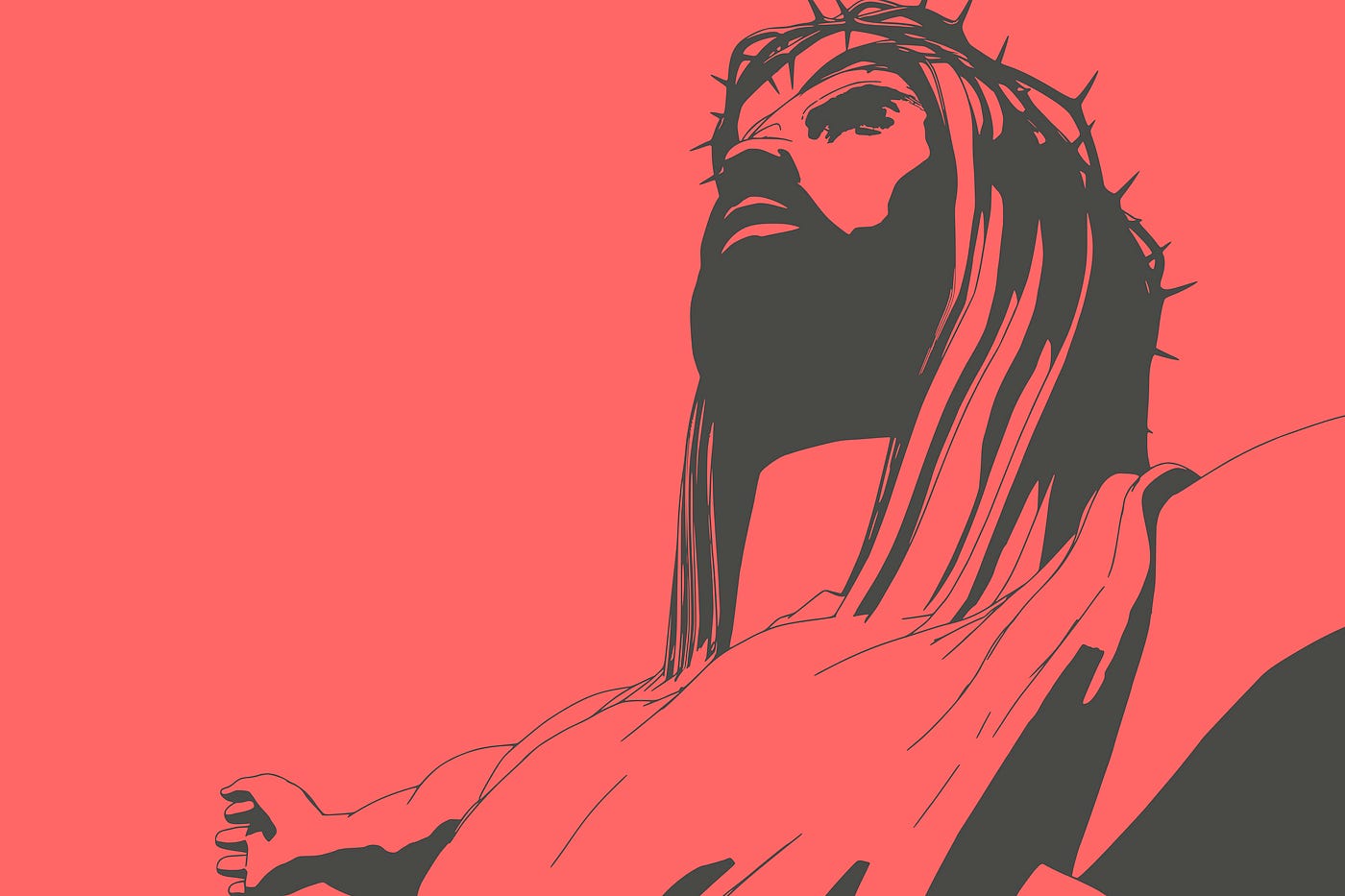
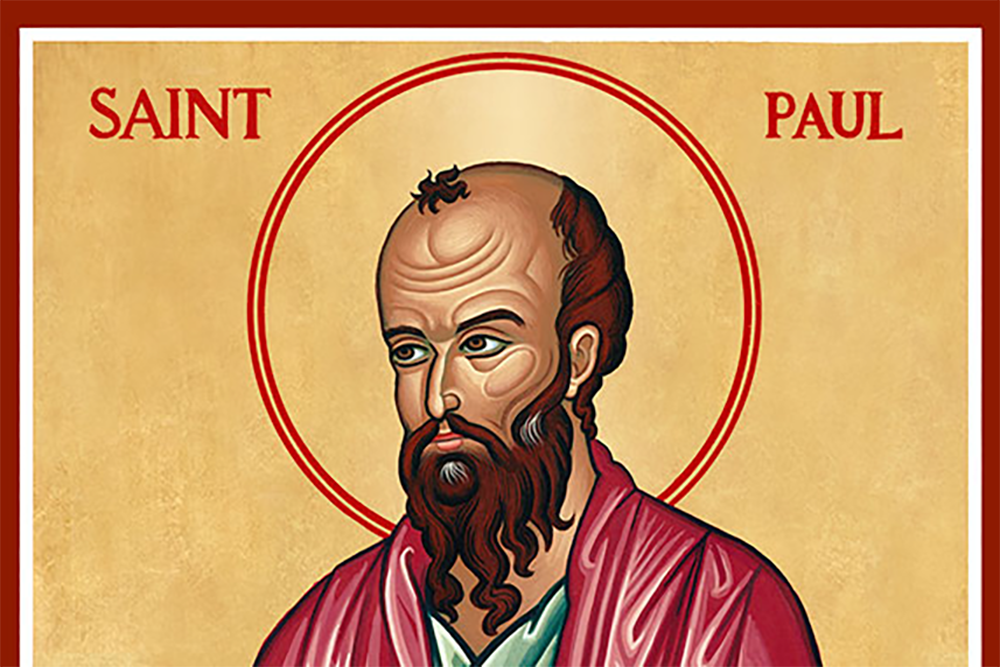
Image created by author on Canva Pro
Here I am again.
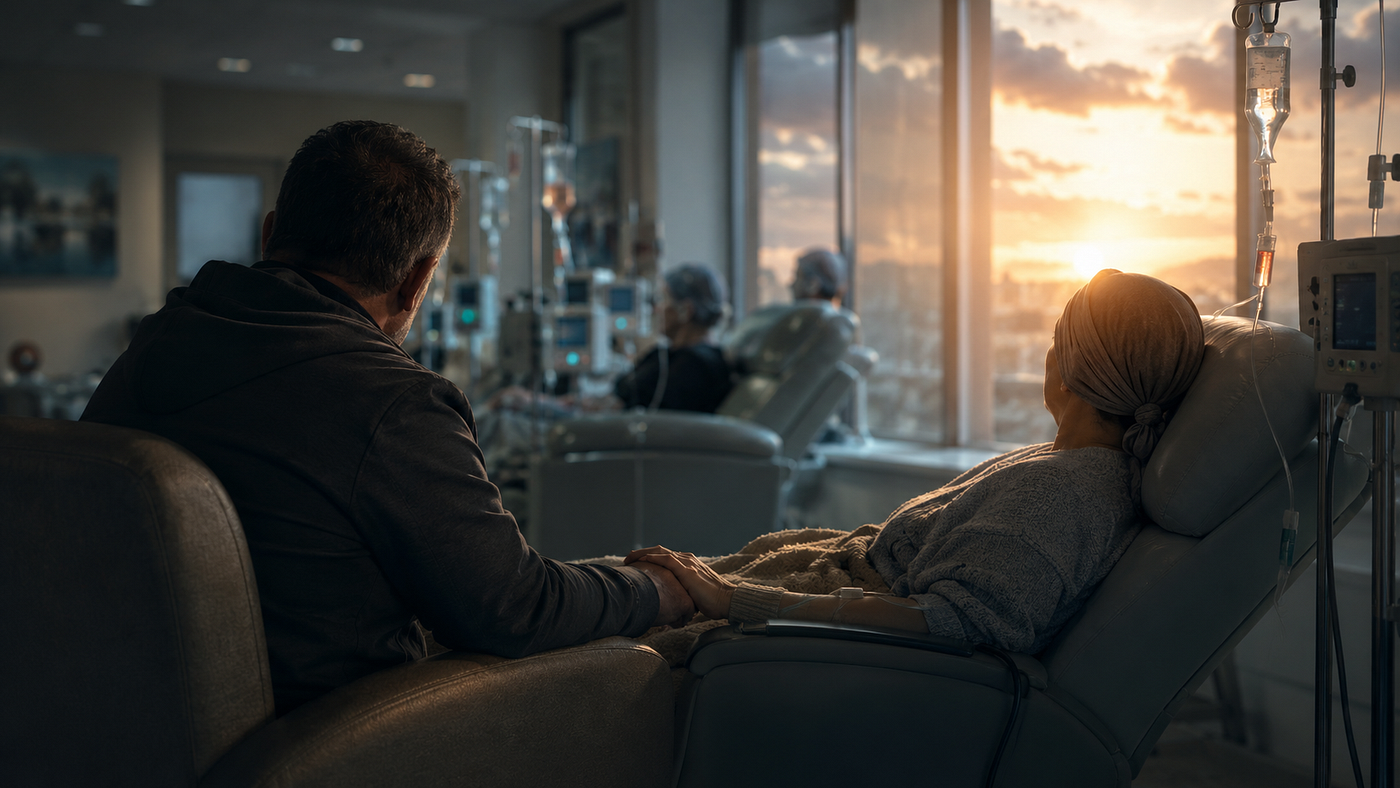
Sitting next to my wife in the infusion ward of our local hospital waiting for her fortnightly chemotherapy cycle to start.
We will be here for the next six hours while the drugs drip slowing into your bloodstream through a port in her chest.
Six hours to kill.
Six hours to wait.
Six hours to sit and stair and the plain white wall right in front of us.
Six hours to wonder why God seems to heal some people, but not others. Not us. This is palliatve chemotherapy. The doctors have told here that her cancer is incurable. But she doesn’t really believe them. She spends her days looking for clinical trials and natural remedies that we might try.
She is a fighter and I love that about her.
Sitting on her lap are some fabrics samples for some new curtains that she ordered in the mail. She always wanted to replace the curtains in our living room and now she is taking care of the things she’s always wanted to do. She asks me if I like the beige or the blue fabric, and I tell her that she can have whatever she wants.
She smiles and adds it to the growing pile of decisions she is making for a future she fully expects to be part of.
Around us, the infusion ward hums with quiet activity. Nurses move from chair to chair. Machines beep occasionally. Some patients scroll on their phones. Others sleep. A few stare into space.
After nearly three years of this, I don’t really notice the hospital smell anymore. I know the faces of some of the nurses. I know where to park. I know which vending machine actually works. What I still haven’t got used to is how unfair it all feels. Two people can sit in chairs a few metres apart, receive the same treatment, pray the same prayers, and end up with completely different outcomes.
Not everyone gets their miracle. Some scans come back clear and some don’t. Some tumours shrink while others grow. Some people get more years than anyone expected. Others don’t make it to Christmas. And sooner or later, whether you are religious or not, the same question starts knocking around in your head.
Why?
Why do some people seem to get the breakthrough they prayed for while others are left waiting?
It’s not a new question.
In fact, it is a question that sits quietly beneath one of the strangest healing stories in the entire Gospel of John.
The Healing We Never Talk About
The story that keeps coming back to me is found in John chapter 5.
Jesus arrives in Jerusalem during one of the Jewish festivals and visits a place called the Pool of Bethesda. The pool had become a gathering place for people living with illness and disability. John tells us that “a great number” of sick people lay there. The blind, the lame, and the paralysed gathered around the water because of a belief that when the water stirred, the first person into the pool would be healed.
Whether the water actually possessed healing power is not John’s concern. What matters is that this was a place full of people waiting for their lives to change. It was a place where hope and disappointment lived side by side.
Kind of like the room I am sitting in right now.
As Jesus walks through the crowd, he notices a man who has been unable to walk for thirty-eight years. When Jesus asks whether he wants to be healed, the man explains that he has nobody to help him into the pool. Every time the water stirs, somebody else gets there first.
Jesus tells him to stand up, pick up his mat, and walk.
And he does.
Just like that, a condition that had defined almost four decades of his life is gone.
It is a remarkable miracle, and most sermons stop right there. The focus is usually on the healed man, his faith, his persistence, or the power of Jesus.
But the older I get, the more I find myself looking beyond the man who was healed and noticing the crowd surrounding him.
John has already told us that the pool was full of suffering people. There were blind people there. Paralysed people. People who had been waiting for years, perhaps decades, for their own breakthrough. Yet Jesus heals one man, and the story moves on.
Just one guy, out of all the people there.
The Pentecostal church I attended in my teens would have had me beleive that Jesus wants to heal everyone. The entire pool would be emptied. Every wheelchair, walking stick, and mat would be abandoned as people ran home celebrating.
Instead, John records a single healing.
Which raises a question that is difficult to ignore.
What happened to everybody else?
The Question We Usually Avoid
When most of us read this story, we naturally place ourselves in the shoes of the man who was healed. We imagine what it would have been like to stand up after thirty-eight years, to feel strength return to legs that had long since stopped working, and to walk away from the pool carrying the mat that had carried us for so much of our lives.
What we rarely do is imagine ourselves as one of the people Jesus walked past.
Imagine sitting beside that pool and watching the whole thing unfold. Imagine seeing a man receive the miracle you had spent years hoping for. Imagine watching him walk away while you remained exactly where you were. It is not hard to picture the questions that might have surfaced. Why him? Why not me? What made him different from the rest of us?
Those questions make many Christians uncomfortable because they take us beyond the tidy explanations we often prefer.
Growing up, I was taught that God wants to heal everyone. If healing did not happen, there was usually a reason. Perhaps there was not enough faith. Perhaps there was some hidden obstacle standing in the way. Perhaps God was simply waiting for the right time. Whatever the explanation, there was often an assumption that healing was available if only the right conditions could be met.
The problem is that John does not give us any of those explanations.
The man who receives healing does not demonstrate extraordinary faith. He does not seek Jesus out. He does not even appear to know who Jesus is. Jesus simply chooses him, speaks to him, and heals him. Meanwhile, the rest of the crowd fades into the background of the story without any explanation at all.
It all feels a bit random.
John does not try to solve the mystery of suffering. He does not explain why one person receives healing while others continue to wait. He does not offer a formula that guarantees a miracle or a theology that makes everything feel fair.
Instead, he leaves us sitting with the tension.
As someone who has spent countless hours in oncology wards over the past few years, I find that strangely refreshing. The Bible is often more honest than we are. It is willing to acknowledge realities that many of us would rather explain away. John does not pretend that everyone gets the outcome they hoped for. He simply tells the story as it happened and trusts the reader to wrestle with the implications.
And perhaps that is why this story still speaks so powerfully today. Most of us know what it feels like to celebrate somebody else’s miracle while quietly waiting for our own. Most of us have experienced moments when life seemed unfair, when prayers appeared to be answered for others but not for us.
The people sitting beside the Pool of Bethesda may be more familiar to us than we realise.
Photo by James Coleman on Unsplash
The Deal We Keep Forgetting
The more I think about the man Jesus healed at Bethesda, the more I realise that his healing was not the end of the story.
It was simply a better chapter.
For thirty eight years he could not walk. Then he could. That is no small thing. It is a remarkable act of compassion and a life changing miracle. Yet the healing did not remove him from the realities that confront every human being. He would still grow older. He would still experience disappointment and grief. People he loved would die. One day his own body would begin to fail again. Eventually, he too would die.
The same is true of every miracle in the Gospels.
Lazarus was raised from the dead, but he did not live forever. The blind received their sight, the lame walked, and the lepers were restored to health, but every one of them eventually faced the same reality that awaits all of us.
That is why I am not sure the story of Bethesda is ultimately about healing.
At least not in the way we often think about it.
When I was younger, I tended to divide the world into two groups: those who got the miracle and those who didn’t. The fortunate and the unfortunate. The blessed and the unlucky.
The older I get, the more I realise that everyone belongs to both groups. Some people are healed and then lose something else. My wife knows this all too well. Her best friend died from the same cancer she is fighting. None of us escapes the experience of loss.
That sounds depressing when you put it that bluntly, but I am beginning to think it is simply reality. Much of our suffering comes from our refusal to accept the terms and conditions of being human. We act as though loss is an unexpected interruption to life rather than part of life itself. We are shocked when bodies age, devastated when relationships end, and bewildered when death arrives, as though these things were never supposed to happen.
Yet nobody has ever been promised a life free from suffering.
Not the people sitting beside the Pool of Bethesda.
Not the patients sitting in the infusion ward around me.
Not my wife.
Not me.
The real divide is not between people who suffer and people who don’t. It is between people who have discovered this truth and people who are still trying to avoid it.
And perhaps that is where this story begins to point beyond healing toward something deeper.
Why This Isn’t Fatalism
At first glance, everything I have written so far might sound deeply pessimistic.
If everyone suffers, if everyone experiences loss, and if every one of us eventually dies, then what is the point? Why bother fighting? Why bother hoping? Why bother choosing the blue curtains instead of the beige ones?
Those are fair questions.
Yet I have found that the opposite is true.
The people I know who are most alive are not the people who have somehow avoided the reality of death. They are the people who have come to terms with it. They understand that life is fragile, temporary, and precious, and that awareness changes the way they live.
When you stop assuming you have forever, you start paying attention.
You notice ordinary moments.
You say the things that need to be said.
You spend less time chasing things that ultimately do not matter and more time investing in the things that do.
Strangely enough, it is often our attempts to avoid the reality of death that stop us from fully living. We distract ourselves, deny it, push it to the edges of our awareness, and live as though we have unlimited tomorrows. Then a diagnosis arrives, or a funeral, or a crisis, and suddenly we remember what was true all along.
None of us are getting out of this alive.
Christianity does not disagree with that observation. In fact, it places death at the very centre of the story.
Jesus did not come to demonstrate a life free from suffering. He was betrayed, abandoned, tortured, and executed. The central figure of the Christian faith does not avoid death. He passes straight through it.
If death was not beneath Christ, why would we imagine it should be beneath us?
The Christian hope has never been that faithful people get a special exemption from the human condition. The Christian hope is that the human condition is not the end of the story.
That is, of course, a claim. Not a proof.
You may believe it. You may reject it. You may not even be interested in considering it. But it is worth understanding what Christianity is actually proposing. The claim is not that death is an illusion, nor that suffering is somehow good. The claim is that death does not get the final word. That beyond the grief, beyond the decay, beyond the losses that seem to define so much of human life, there is a deeper reality that cannot be extinguished.
For Christians, that hope is resurrection.
A conviction that reality is ultimately larger than death itself.
I cannot prove that sitting in this infusion ward.
I cannot prove it watching chemotherapy drip into my wife’s veins.
I don’t know what the future holds for my wife. I don’t know whether the chemotherapy she is receiving today will buy us months, years, or something else entirely. I don’t know whether we’ll end up choosing the beige curtains or the blue ones.
What I do know is that the Christian story invites me to believe that neither cancer nor death gets to tell the whole story.
The Wild Dance of No Hope
Over the past few years, I have returned often to a poem by Jennifer Welwood. The first time I read it, I resisted it. Parts of it felt too blunt, too confronting, too unwilling to soften the realities most of us spend our lives trying not to think about.
Now I find myself returning to it again and again.
Not because it is hopeless, but because it strips away so many of the false hopes we cling to and invites us to build our lives on something deeper.
Published here with permission from Jennifer Welwood.
The Dakini Speaks
My friends, let’s grow up. Let’s stop pretending we don’t know the deal here. Or if we truly haven’t noticed, let’s wake up and notice. Look: Everything that can be lost, will be lost. It’s simple — how could we have missed it for so long? Let’s grieve our losses fully, like ripe human beings, But please, let’s not be so shocked by them. Let’s not act so betrayed, As though life had broken her secret promise to us. Impermanence is life’s only promise to us, And she keeps it with ruthless impeccability. To a child she seems cruel, but she is only wild, And her compassion exquisitely precise: Brilliantly penetrating, luminous with truth, She strips away the unreal to show us the real. This is the true ride — let’s give ourselves to it! Let’s stop making deals for a safe passage: There isn’t one anyway, and the cost is too high. We are not children anymore. The true human adult gives everything for what cannot be lost. Let’s dance the wild dance of no hope!
The poem ends with “the wild dance of no hope.”
As a Christian, I would probably tweak that slightly.
Let go of false hope? Absolutely.
Let go of the fantasy that we can somehow avoid loss, suffering, and death? Yes.
But hope itself?
No.
Hope is all I have left.
Not hope that my wife will never die.
Not hope that I will never suffer.
Not hope that life will always work out the way I want.
Hope that death is not the end.
Hope that resurrection is more than a metaphor.
Hope that one day the story my wife and I are living will make sense in ways I cannot yet see.
Until then, we’ll probably choose the blue curtains.
Dan Foster is the author of “The Bible is Your Story: What the characters of Scripture reveal about the patterns shaping your life.”
The Backyard Church is not just a blog. It’s a real online community for people who have faith but can’t, don’t, or won’t go to church. Join today.
If you’re a writer or blogger who wants to grow your voice and build momentum online, I also run Bloggers Academy — a smaller community where I teach what I’ve learned growing from zero to 100,000+ followers. Learn more here
For more articles on life, faith, and spirituality, Sign-up for my newsletter. Also, feel free to send questions and story ideas to thebackyardchurch@gmail.com
메타데이터
- post_id
- 35ae987d4052
- slug
- if-god-can-heal-why-doesnt-he-heal-everyone-35ae987d4052
- url
- https://medium.com/backyard-theology/if-god-can-heal-why-doesnt-he-heal-everyone-35ae987d4052
- canonical_url
- https://medium.com/backyard-theology/if-god-can-heal-why-doesnt-he-heal-everyone-35ae987d4052
- author_url
- https://medium.com/@danfosterwriter
- status
- ok
- fetched_at
- 2026-06-10 18:44:10