What If Social Networks Became Truly Social Again?
Social media was supposed to bring us closer. Instead, it has become a space dominated by algorithms, metrics, and performance. But what if…
What If Social Networks Became Truly Social Again?
Social media was supposed to bring us closer. Instead, it has become a space dominated by algorithms, metrics, and performance. But what if another model was possible?
This article explores the rise of decentralized social networks and how they aim to give control back to users: ownership of identity, authentic communities, and conversations driven by values rather than engagement.
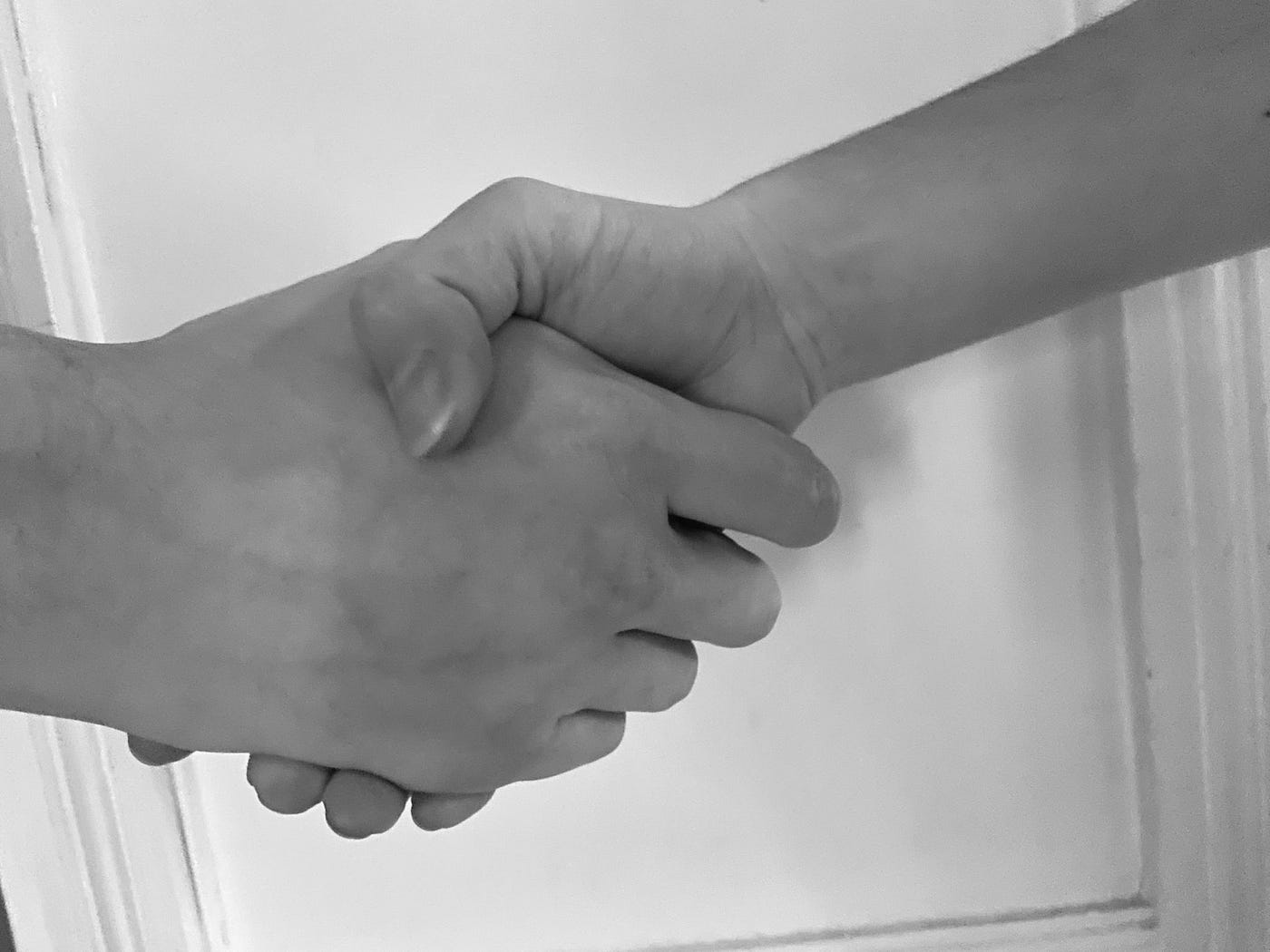
Two people greeting each other with a handshake, symbolizing genuine human connection photo by Maëlys Pasgrimaud
Remember when social media was used to connect with others? When we shared moments with our friends without trying to please an algorithm? Those days seem long gone. Today, our news feeds look more like billboards than conversations. Everything is optimized for engagement, rarely for empathy.
But a small revolution is underway. It’s called decentralized social media. And it asks a simple question:
→ What if social media belonged to the people again?
How We Got Here
Originally, the promise was appealing: connecting the world. Then Facebook, Instagram, and TikTok grew… and connection became a commodity. Algorithms took control: they decide what you see, what you think, and even who you interact with. The more time we spend online, the more data we give away, and the more these platforms reap profits. As Tristan Harris, former ethicist at Google, said:
*“If you’re not paying for the product, you are the product.”*
The result? A digital universe that seems less social and more monitored, dominated by a few giants.

Smartphone screen filled with notifications, illustrating how social platforms constantly demand attention and turn users into products through data extraction by Maëlys Pasgrimaud
The Rise of Decentralized Social Networks
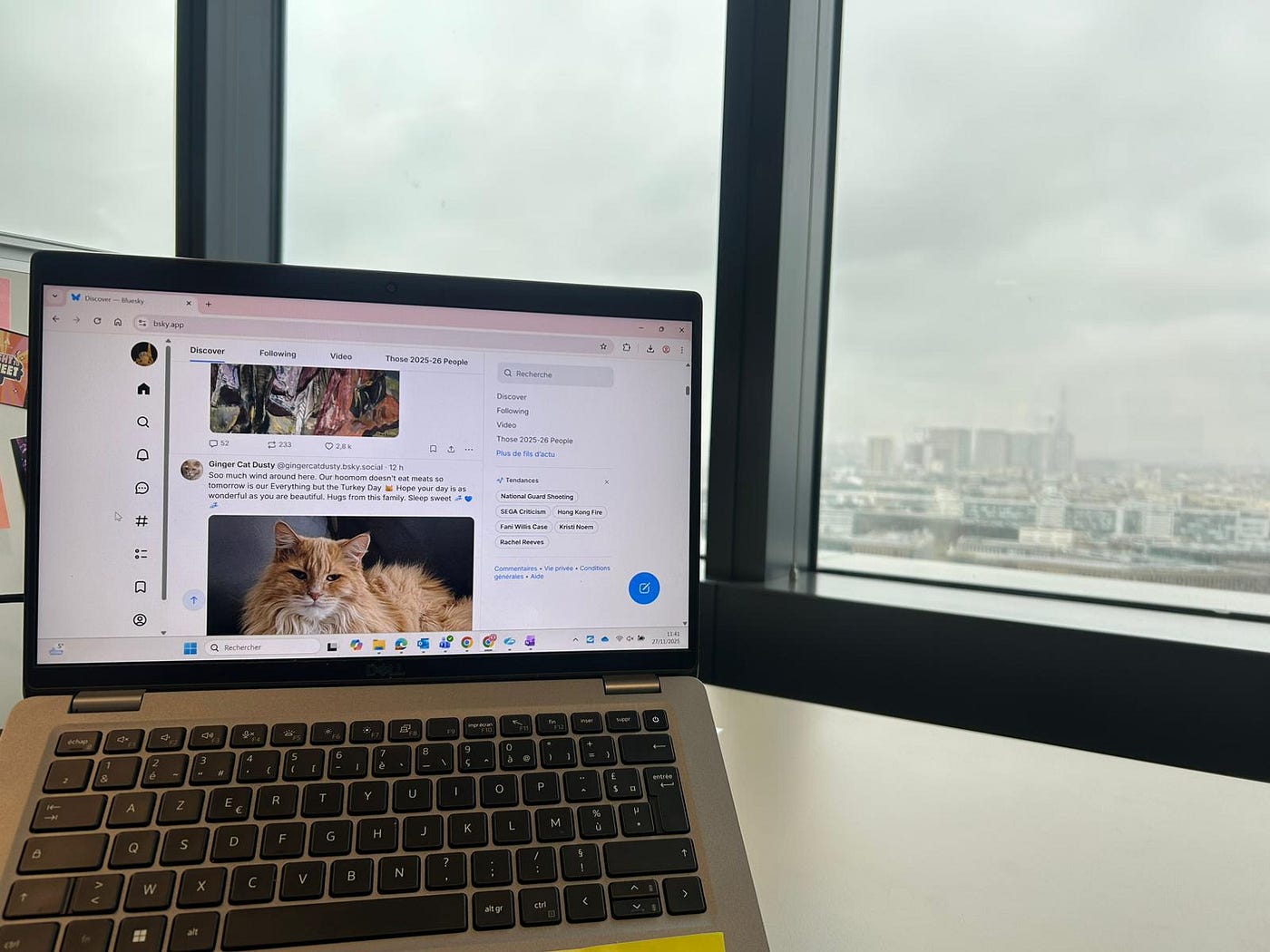
A new generation of creators wants to fix what has gone wrong. Decentralized social networks, such as Mastodon, Bluesky, Farcaster, and Lens Protocol, work differently. They are based on open protocols, not on a single company. In practical terms, this changes everything:
- You own your profile and your followers, not the platform.
- There is no central algorithm dictating what you see.
- Communities are autonomous, with their own rules and moderation.
- Interoperability: you can migrate without losing your account.
[embed]Introduction to Mastodon, Bluesky, and other decentralized platforms — Trent Kennelly
It’s like email: there is no “email company,” yet everyone communicates. That’s the vision: a social web where power belongs to the people, not corporations. Jack Dorsey, founder of Twitter (now X), explained when reflecting on the concept behind his new project Bluesky:
“The biggest issue and my biggest regret is that it became a company… A protocol can’t be owned by a state or company.”
The Return Of A Human Internet
These networks are not looking to create stars or influencers. They want to restore trust and authenticity. On Mastodon, you join “instances” based on shared values. On Lens Protocol, creators own their audience and can monetize without going through opaque algorithms.
It’s like the internet of the 2000s: slower, smaller, more intentional. We discuss, we don’t perform. Of course, not everything is perfect:
• Decentralization poses challenges (moderation, accessibility, digital education).
• And without algorithms, feeds can seem chaotic.
But it offers what we’ve been missing for a long time: real connections.

llustration of alternative social networks that promote decentralisation and user-driven communities by Maëlys Pasgrimaud
The Challenges Ahead
Let’s be honest: these networks remain niche. Installing a server, managing keys, learning an interface… it’s not for everyone. And without centralized curation, the experience can be confusing.
Another question: who decides the rules when there is no central authority? How can we avoid misinformation or hate speech?
These challenges are real, but necessary if we want a healthier Internet.
So… Can We Make Social Media Truly Social?
Perhaps the future lies not in abandoning the giants, but in reclaiming the web piece by piece.
In putting the following back at the center:
- choice,
- transparency,
- community.
In replacing the obsession with engagement with empathy, and algorithms with authenticity. The decentralized movement is still small, but its message is powerful: The internet doesn’t have to belong to a select few. It can belong to everyone.
So maybe the real question isn’t:
“Can we make social media social again?”
But rather:
“Are we ready to take it back?”
What do you think? Would you be willing to try a decentralized social network?
→ Tell me in the comments: what feature do you miss most on current networks? Or share this article with someone who dreams of a more human Internet.
About this article
This article has been written by a student on the Grenoble Ecole de Management’s Advanced Masters in Digital Strategy Management. As part of a content creation assignment, students are given the task of writing articles based on their digital interests and disseminating the articles online. Articles are marked but we make minimal changes to the content. Thanks for reading! James Barisic, Programme Director, MS DSM.
메타데이터
- post_id
- 35b7c720c6e2
- slug
- what-if-social-networks-became-truly-social-again-35b7c720c6e2
- url
- https://medium.com/digital-gems/what-if-social-networks-became-truly-social-again-35b7c720c6e2
- canonical_url
- https://medium.com/digital-gems/what-if-social-networks-became-truly-social-again-35b7c720c6e2
- author_url
- https://medium.com/@maelys.pasgrimaud
- status
- ok
- fetched_at
- 2026-06-26 12:24:55