I Talked With a Tree
A lesson in individualism, collectivism, and the hidden wisdom of the forest
Life Wisdom
I Talked With a Tree
A lesson in individualism, collectivism, and the hidden wisdom of the forest
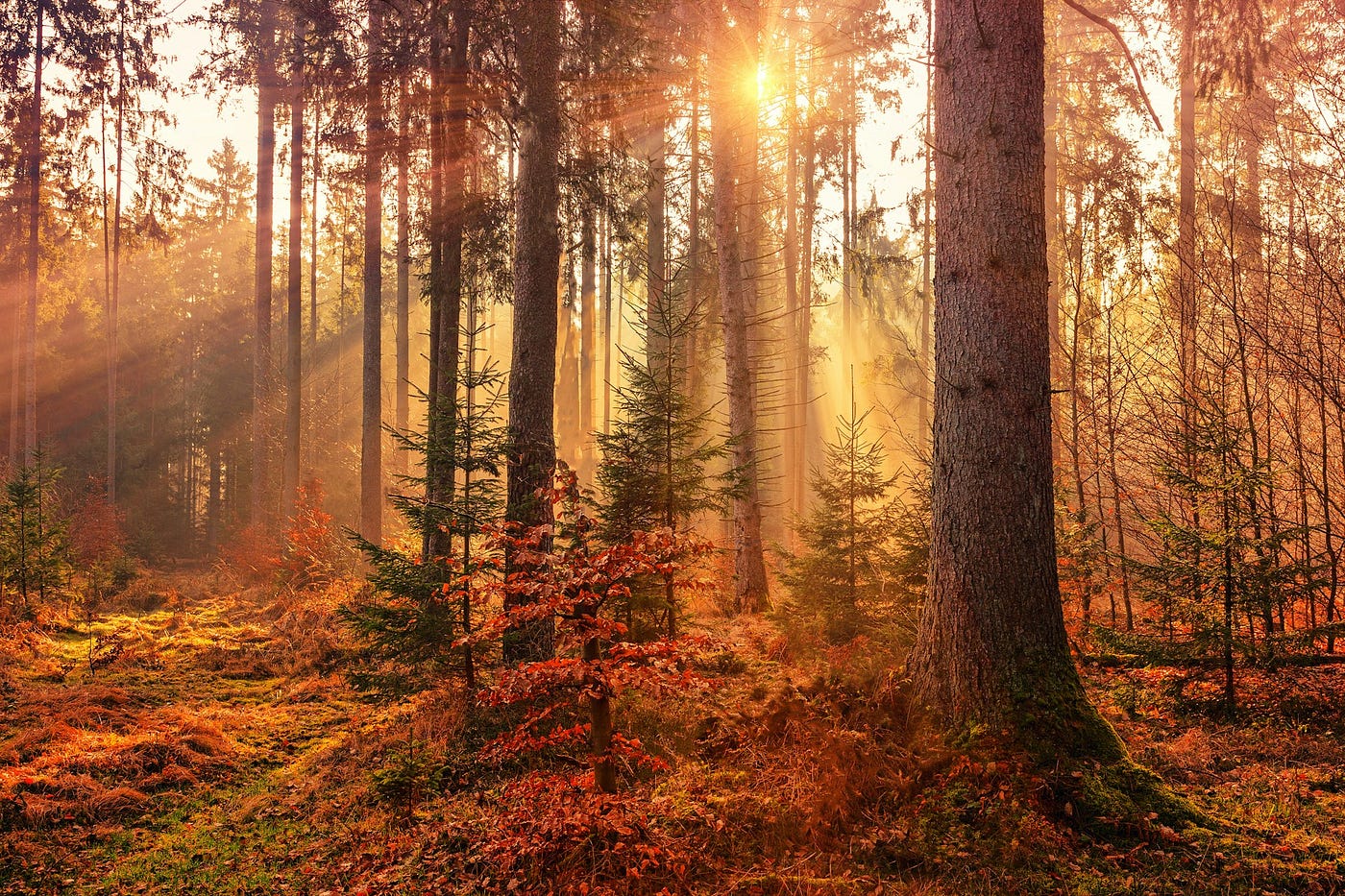
Photo by Johannes Plenio on Unsplash
I never thought I would talk to a tree. But one day, I was sitting beneath one, reading my book, when a voice appeared behind me.
“Excuse me, could you move your sweater? Perhaps place it next to you?”
I turned around. It was the tree.
Strangely, I wasn’t frightened. I was fascinated.
“Oh, yes, of course. But may I ask why?”
“My friend, the mushroom, says your sweater is blocking the air from him.” The tree said gently. “He doesn’t like it!”
I immediately pulled my backpack and sweater closer to me. “Is he better now?”
“Yes. You are helping him, and me too. Thank you.”
I was curious and asked, “I don’t quite get it. How are you two connected?”
“You humans see all plants as isolated individuals competing for sunlight and nutrients. But under the soil, we share a mushroom network that links us all. The mushroom you see above ground is just the fruit. We transmit nutrients and water through this network. Your scientists call it the mycorrhizal network.”
“That’s amazing,” I said, “How does this network actually work?
“The older trees often have more sunlight and send extra sugar into the network. The fungi return water and nutrients, and we share them with our younger seedlings too.”
“Wow, I always thought competition was the ultimate law, the survival of the fittest. It seems nature doesn’t work that way at all.”
“Yes, humans have always misunderstood us. And we don’t understand why humans are always competing. Students compete for grades. People compete for promotions and salary increments. Companies compete for markets. Nations compete for interests, resources, and power. It seems that humans view individualism as their only survival instinct. But the universe is connected. No matter how strong you are, you are going to need some help from someone at some point in your life.”
“I understand your point, but if we force absolute, rigid collectivism, the society becomes stagnant...” I was silent for a moment and sighed, “And yes, maybe individualism has just gone too far in today’s world. We are now pushing ourselves too hard to be ‘the best’. We are becoming physically and mentally fatigued. We are losing trust, warmth, and love for one another. More and more people are feeling desperately lonely because they feel like they are fighting for survival entirely on their own. We are living, but we are competing unhealthily.”
“You know what else? The tree continued, ‘We also help each other defend against danger. When a pest attacks a tree, that tree immediately releases warning chemicals into the network. Our neighbors detect these signals and will produce defensive enzymes to make their leaves taste terrible, preparing themselves for the upcoming invasion.”
I frowned, “But wait… if your system is so perfect, and you all warn each other, why do some trees still get sick? Why do insects still eat you? And isn’t your alliance against the insects just another form of competition? You are cooperating with other trees, but you are still fighting against another species. Isn’t that just collectivism for trees, but warfare against the rest of nature?”
“This network is a survival strategy, not a magical shield. It helps trees endure, but it cannot prevent death when the threat is too serious, the resources too scarce, or the network itself is broken by human activities. Nature is not free of struggle; it simply shows that survival is often collective, not solitary,” the tree replied. “Humans always look for a battle line, an enemy. But to us, the insects are not our enemies. They are our partners in a life-long carnival.”
“A carnival?” I asked skeptically. “They are eating you alive.”
“Yes, the warning signals are not meant to eradicate the insects, but to balance them. In nature, death is not a failure of the system; it is a feature of it. If an insect swarm is massive and a tree is old or weak, it will die and return its carbon, nitrogen, and minerals to the soil. It feeds the mushroom network that once sustained it. And the sun can reach the tiny babies waiting in the shade below. The insects get their food, the soil gets enriched, and the young get their turn to grow. The circle continues.”
I said nothing, just looking at the mushroom, thinking about this circle of life.
“We do not fight the insects to dominate them,” the tree whispered. “We fight just enough to maintain our place in the system. We do not seek to conquer the forest; we seek to sustain it. Humans think individualism means destroying something else in order to thrive. But nature knows a deeper truth: for anything to live, everything must take its turn.”
I stood up and looked around again. The trees no longer seemed separate. They felt linked by invisible threads.
“So the goal isn’t to eliminate conflict entirely,” I whispered.
“The goal,” the tree whispered back, “is simply to ensure the balance and no one has to carry the burden of disaster alone.”
메타데이터
- post_id
- 35d4c55240b2
- slug
- i-talked-with-a-tree-35d4c55240b2
- url
- https://medium.com/infinite-impulse/i-talked-with-a-tree-35d4c55240b2
- canonical_url
- https://medium.com/infinite-impulse/i-talked-with-a-tree-35d4c55240b2
- author_url
- https://medium.com/@kl-wu
- status
- ok
- fetched_at
- 2026-06-10 08:17:25