You Are Probably Wearing the Wrong Shoe Size
For decades, footwear has been built around one core assumption:
You Are Probably Wearing the Wrong Shoe Size
For decades, footwear has been built around one core assumption:

that human feet can be standardized.
Size 9. Size 10. Size 11.
A number on a box became the foundation for an industry worth hundreds of billions of dollars.
But there is one major problem with that system:
human feet are not standardized.
And as manufacturing technology changes, the hidden flaws of shoe sizing are becoming impossible to ignore.
The Hidden Cost of Shoe Sizing
Most people think sizing is simply a convenience system.
In reality, it creates massive inefficiencies across the entire footwear industry.
Returns. Foot pain. Break-in periods. Overproduction. Dead inventory. Wasted retail space. Consumer guesswork.
Every year, brands manufacture enormous quantities of shoes before knowing exactly who will buy them or whether they will fit correctly.
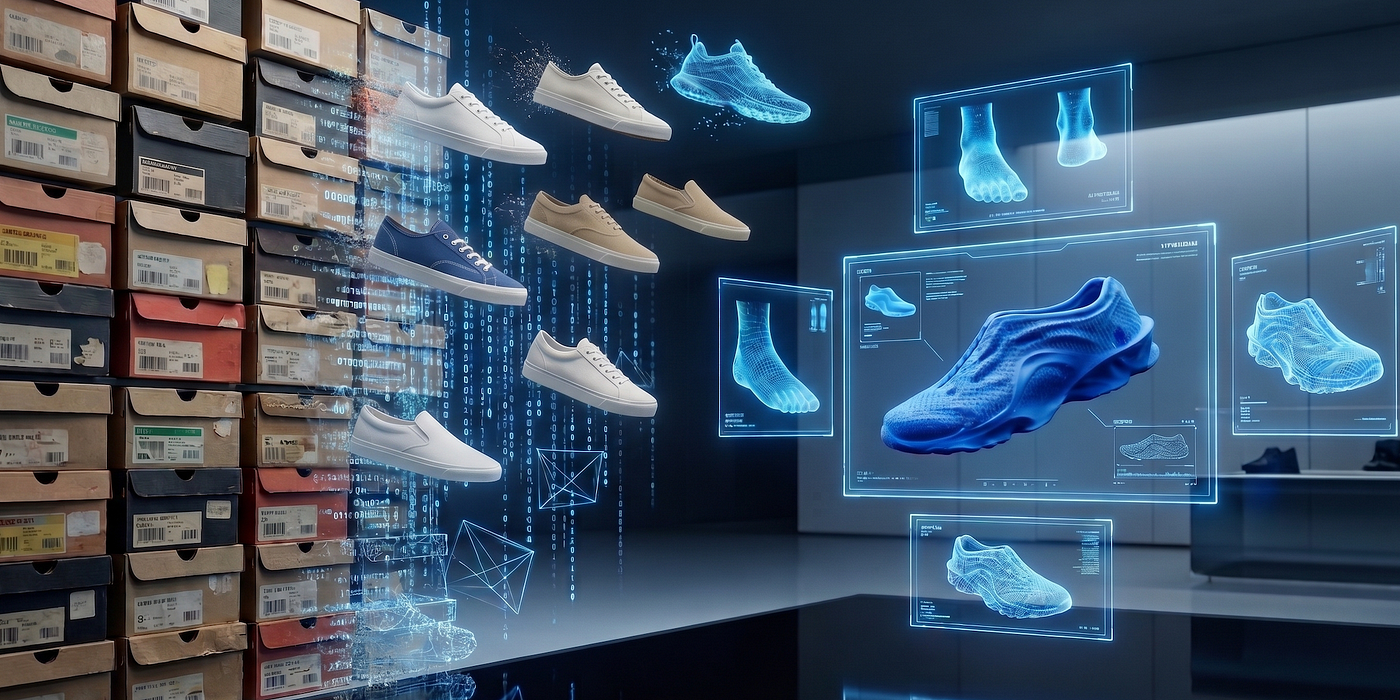
Retailers are forced to stock walls of inventory across multiple size runs. Consumers often buy multiple pairs online just to test fit. Products are returned, discarded, discounted, or destroyed.
And even when a shoe technically “fits,” it may still not actually fit the person wearing it.
Because sizing was always an approximation.
Feet Are Geometry, Not Numbers
No two feet are exactly the same.
Not just between different people — but often between the left and right foot of the same person.
Feet vary in:
- shape
- width
- arch structure
- pressure distribution
- asymmetry
- gait
- movement patterns
Yet most footwear is still manufactured as if people fit into a limited set of standardized molds.
Historically, this was necessary.
Traditional manufacturing depended on:
- molds
- tooling
- production minimums
- inventory forecasting
- standardized construction methods
Mass production required simplification.
The industry optimized around manufacturing efficiency rather than individual human geometry.
Why 3D Printing Changes Everything
The rise of 3D printing is beginning to fundamentally change how footwear can be designed and manufactured.
Instead of creating thousands of identical products before demand exists, footwear can increasingly be produced on demand.
That changes the entire system.
Products no longer need to begin with: “What sizes should we make?”
Instead, they can begin with: “Who is the actual person?”
At Syntilay, this is one of the long-term shifts we believe will redefine footwear.
The process increasingly becomes:
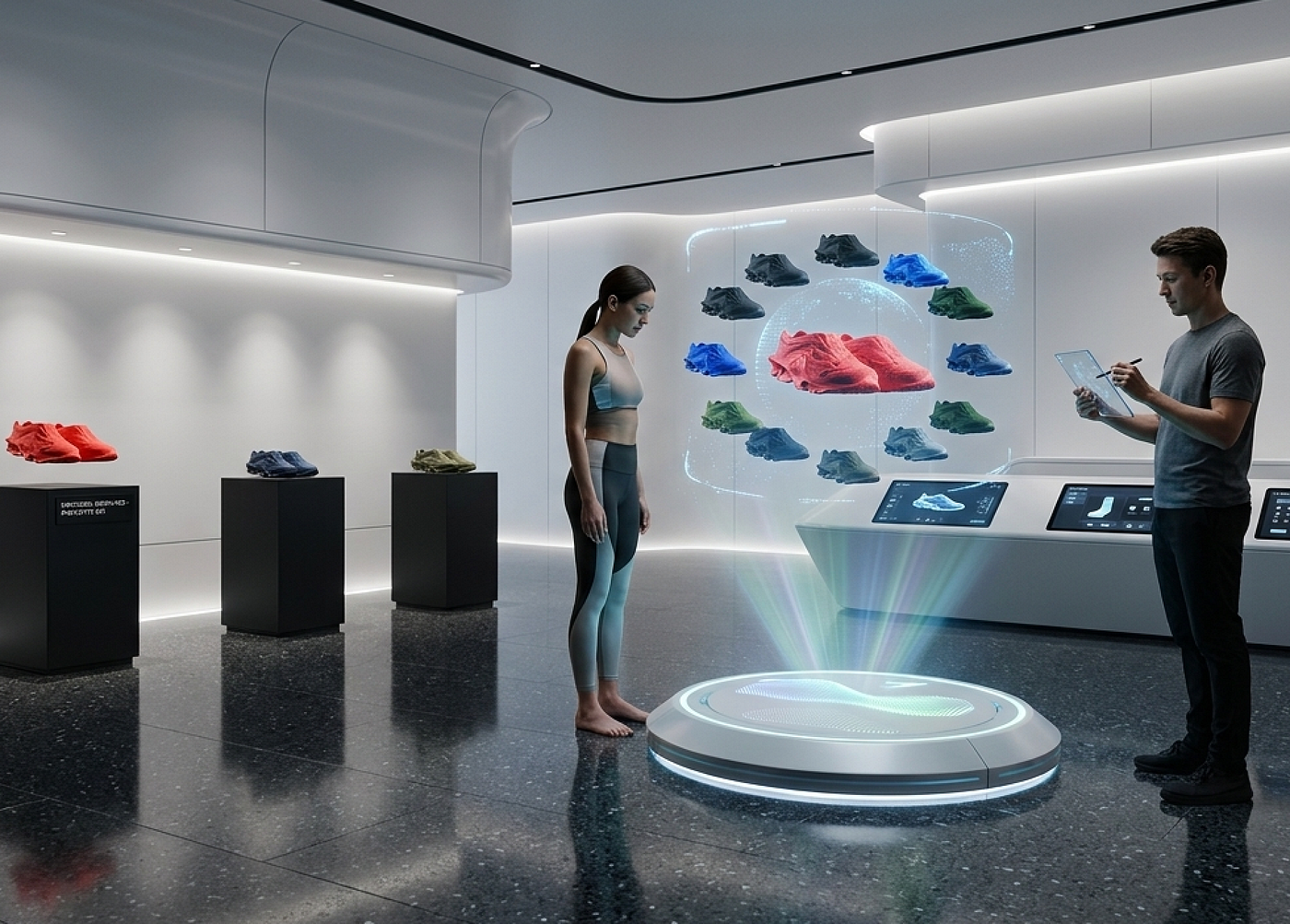
scan → data → custom product
Rather than: guess → size → compromise
The Store of the Future May Not Need Inventory
One of the biggest implications of this shift is retail transformation.
Traditional footwear stores require:
- large stock rooms
- walls of inventory
- forecasting demand
- carrying full size runs
But when products can be generated from scans and produced digitally, inventory itself starts becoming digital.
A small scanning station could unlock infinite SKUs without needing massive physical inventory.
The economics of retail begin changing when products do not exist until after purchase.
The Future Is Mass Personalization
For years, technology companies talked about personalization in software.
Now manufacturing is starting to move in the same direction.
One of the biggest shifts happening right now:
manufacturing is starting to move from: mass production
to: mass personalization.
And footwear may become one of the first major consumer categories where people experience that shift at scale.
Not because customization is trendy.
But because the old system was always limited.
Beyond “Comfort”
This is bigger than simply making softer shoes.
The future opportunity is creating products that respond more intelligently to human movement.
3D printing allows:
- geometry-driven cushioning
- airflow-integrated structures
- dynamic response zones
- individualized fit systems
- computational product architecture
In many cases, the structure itself becomes the technology.
The geometry starts doing work.
The End of Sizing?
The idea that billions of unique human feet should conform to a handful of standardized numbers increasingly feels outdated.
As scanning, AI-assisted design, and digital manufacturing continue evolving, the industry will move toward something very different:
products generated around people rather than people adapting to products.
At Syntilay, we believe that shift is only beginning.
Syntilay #Footwear #3DPrinting #Customization #FutureOfFootwear #Innovation #AI
메타데이터
- post_id
- 365a1d5eac8a
- slug
- you-are-probably-wearing-the-wrong-shoe-size-365a1d5eac8a
- url
- https://medium.com/@syntilay/you-are-probably-wearing-the-wrong-shoe-size-365a1d5eac8a
- canonical_url
- https://medium.com/@syntilay/you-are-probably-wearing-the-wrong-shoe-size-365a1d5eac8a
- author_url
- https://medium.com/@syntilay
- status
- ok
- fetched_at
- 2026-07-10 16:32:07