The Notion content OS that replaced my $3,200/month agency retainer
The Notion content OS that replaced my $3,200/month agency retainer

Every month, $3,200 left the checking account to pay an agency. They produced four blog posts and twelve Pinterest graphics. I replaced that recurring overhead with a modular Notion content OS. It removes daily decision-making entirely.
Most creators treat content as a creative act. That is an operational error.
When publishing depends on daily inspiration, output collapses under friction. When you outsource execution without owning the backend, you pay a permanent tax.
Here is the financial autopsy of that $3,200 monthly retainer:
$800 for monthly strategy and editorial calendar planning.
$1,200 for four SEO blog drafts.
$600 for Pinterest graphic formatting and visual design.
$600 for account management, scheduling, and revision loops.
The agency possessed no proprietary insights. They ran a standard production line and charged a premium for manual labor.
Replacing them meant building an infrastructure that eliminated guessing. Build a clean backend framework once. You maintain production speed and visual consistency forever without ongoing overhead or creative fatigue.
What a Notion content OS actually is (and what it isn’t)
A static editorial calendar is a linear list of dates. It records what happened or what you hope to publish. It requires constant manual input to function.
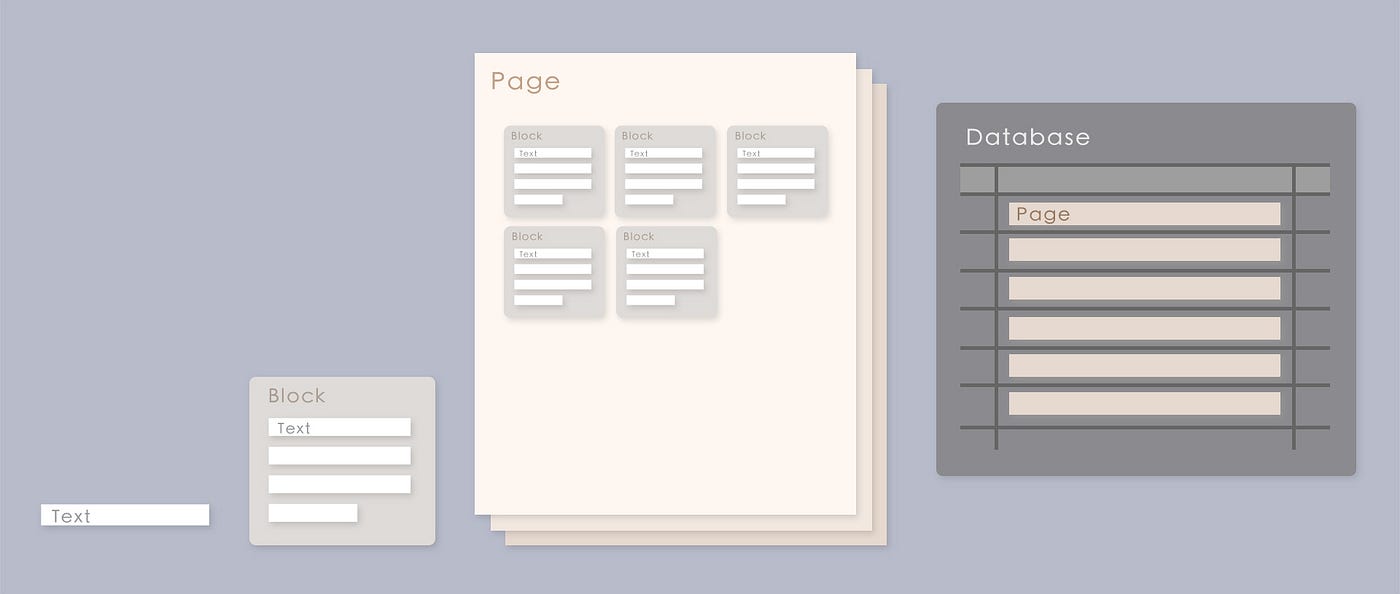
An operating system is a relational database network. It stores assets, rules, prompts, and distribution pathways in one place.
When you operate a true Notion content OS, every component connects. A topic cluster generates three Pinterest hooks. Those hooks link directly to visual templates. Those templates pull from an indexed visual library.
Modular thinking replaces ad-hoc drafting. You build the architectural framework once, and it runs forever.
In my 47-account breakdown published last week, structural consistency separated top earners from abandoned accounts. The top tier did not brainstorm daily. They operated within strict, modular frameworks.
If you build faceless brands following the 7-piece aesthetic system, your backend must support that visual standard. Standardizing the backend keeps visual output consistent without daily redesigns or visual drift across digital publishing channels.
The 4 modules I built
Replacing a full-service agency requires translating four deliverables into ready-to-run system modules. Here is the exact architecture required to streamline production across digital platforms:
-
The 180-Day Content Matrix Pre-map six months of production inside a relational table. Filter by persona and today’s date. The row shows the hook, prompt, and SEO title. Copy. Generate. Post.
-
Brand Voice & Bio Guides Eliminate tone drift across channels. Encode vocabulary registers, sentence rhythms, and structural rules directly into the vault. When the system dictates parameters, your output stays consistent.
-
The 553 Midjourney Prompt Library Visual design creates the largest bottleneck. A categorized prompt repository lets you generate on-brand visuals in seconds. Stop searching for visual assets; index them.
-
Pinterest SEO Templates Distribution requires structured metadata. Built-in SEO kits standardize pin titles, keyword-rich descriptions, and outgoing URLs. Pinterest accounts using structured alt text see 123% more outbound clicks (Tailwind 2025). Every pin ships with optimized metadata by default.
I turned these four modules into Aura AI — a Notion vault with a 180-day Content Matrix, 553 Midjourney prompts, 5 voice-locked brand guides, and Pinterest SEO kits. Each persona is a complete brand identity — voice, visuals, and keywords locked together. $47. Details below.
Why Notion is the right backend
Storing assets across disconnected documents creates daily friction. Notion functions as the ideal backend because it handles relational databases natively.
Database views let you slice the exact same data across multiple vectors. You can inspect your production pipeline by date, by status, or by revenue target. You never duplicate entries across tables.
Filtered views isolate immediate execution tasks from strategy planning. You open your workspace and see only what needs shipping today.
Duplication mechanics allow rapid scaling across new assets. Once you engineer the master schema, deploying a new brand takes seconds rather than weeks of planning.
Everything resides in one interface. Metrics, visual prompts, editorial briefs, and conversion links operate together cleanly. This integration eliminates context switching between spreadsheets, drafting pads, and external schedulers. You run the entire publishing operation from a single structured workspace without paying SaaS subscription fees or monthly agency retainers. Organizing your assets natively ensures reliable distribution across channels. Relational structures transform your Notion workspace into a permanent operating asset that supports rapid scaling across all digital products and publication channels.
The switching cost
Most people overestimate the setup time. Creators stay trapped in expensive agency contracts because building infrastructure feels daunting.
Here is the math.
Continuing with agency outsourcing costs 3,200everysinglemonth.Thatequals38,400 in annual overhead drained directly from your cash reserves. Every month you delay costs another $3,200.
Building this framework in Notion takes one afternoon. You duplicate the master template, select your brand voice parameters, and filter the calendar by today’s date.
You break even on the first day. Keep the $3,200. Spend it on ads, better software tools, or your next digital product.
Once set up, maintenance drops under sixty minutes a week. You check the daily row, generate your visual asset, and copy your SEO caption. Eliminating manual coordination lets you scale output across channels without hiring staff or managing freelancers. Reclaiming thirty hours a month lets you focus on building high-margin digital assets. You stop trading valuable operating capital for basic execution tasks. Instead, you build permanent operational equity inside your own business structure, ensuring your publishing infrastructure remains fully under your direct control.
Who this is for (and who it isn’t)
This system is not for everyone.
This framework is built for:
Faceless brand operators scaling distribution across Pinterest and Medium without personal exposure.
Digital product sellers who require predictable, evergreen search traffic to drive sales velocity.
Solo operators seeking to run multi-platform ecosystems without hiring staff or agencies.
This framework is not for:
Personality-driven creators whose distribution relies on spontaneous daily vlogs or unscripted commentary.
Creators outsourcing thought who want software to do their strategic thinking for them.
Anyone unwilling to standardize their daily workflows into structured, repeatable rules.
If your model relies on chaotic daily inspiration, structure will feel restrictive. If you sell digital products, structure is mandatory.
Build it once, run it forever.
Aura AI — Faceless Creator Content OS
180-day calendar · 553 Midjourney prompts · 5 brand voices · Pinterest SEO kit
$47 · Duplicate to Notion → AURA AI
메타데이터
- post_id
- 365b54e77d06
- slug
- the-notion-content-os-that-replaced-my-3-200-month-agency-retainer-365b54e77d06
- url
- https://medium.com/@veylohq69/the-notion-content-os-that-replaced-my-3-200-month-agency-retainer-365b54e77d06
- canonical_url
- https://medium.com/@veylohq69/the-notion-content-os-that-replaced-my-3-200-month-agency-retainer-365b54e77d06
- author_url
- https://medium.com/@veylohq69
- status
- ok
- fetched_at
- 2026-07-10 03:02:36