The 10 Mahavidyas: The Ten Tantric Goddesses of Wisdom
In majority of the Indian spiritual traditions, the divine feminine is often categorized neatly: she is either the gentle, nurturing mother…
The 10 Mahavidyas: The Ten Tantric Goddesses of Wisdom
In majority of the Indian spiritual traditions, the divine feminine is often categorized neatly: she is either the gentle, nurturing mother or the fierce, distant warrior. But Tantra rejects these comfortable binaries.
Today, we are discussing the Dasa Mahavidyas (the Ten Great Wisdoms).
Derived from the Sanskrit roots Maha (great) and Vidya (transformative knowledge or wisdom), these ten distinct archetypes represent the full, unfiltered spectrum of reality. They span from the terrifyingly destructive to the breathtakingly beautiful. In Tantric practice, working with them isn’t about worshiping an external deity — it’s about waking up those specific, dormant frequencies within your own consciousness.
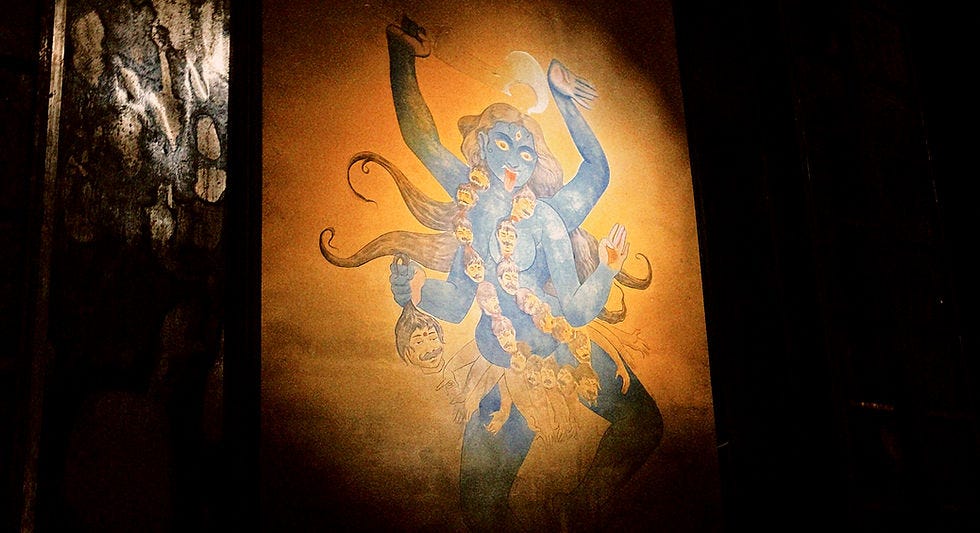
The Ten Cosmic Wisdoms
Every Mahavidya is a guide through a different gate of human experience. Here is a breakdown of the ten goddesses, what they represent, and how their energy shows up in your inner work.
1. Kali: The Power of Time and Radical Transformation
Kali is the first and foundational Mahavidya. Cloaked in darkness, wearing a skirt of severed arms and a necklace of skulls, she is the consumer of time (Kala).
- The Wisdom: Kali destroys what is false. She shatters the ego, cuts through societal conditioning, and forces us to confront our deepest fears.
- Working with her: Invoke Kali when you are going through a massive life transition, breaking free from toxic attachments, or need the raw courage to face the ultimate truth of who you are.
2. Tara: The Guide through the Storms of Life
Visually similar to Kali, Tara stands upon a corpse but is associated with the element of water and the sound of the primordial cosmic vibration (Om). Her name literally means “star” or “she who carries across.”
- The Wisdom: Tara is the savior from emotional and spiritual distress. She represents the absolute power of speech, hunger, and spiritual navigation.
- Working with her: Call on Tara when you feel utterly overwhelmed by life’s chaos, trapped in confusion, or when you need to find your voice and authentic expression.
3. Tripura Sundari: The Ultimate Beauty of Pure Awareness
Also known as Lalita or Shodashi, she is the “Beauty of the Three Worlds.” She sits on a throne held up by Brahma, Vishnu, Shiva, and Rudra, radiating a golden, intoxicating light.
- The Wisdom: She represents the spiritual truth that beauty, desire, and joy are inherently divine. She is the harmony of pure consciousness experiencing itself.
- Working with her: Work with her energy to cultivate self-love, appreciate aesthetics, heal your relationship with desire, and see the sacred spark in the everyday world.
4. Bhuvaneshwari: The Space of Infinite Possibility
Her name means “Mistress of the Universe.” She represents space itself — the vast, empty, nurturing matrix from which all form arises and into which it eventually dissolves.
- The Wisdom: Bhuvaneshwari is the cosmic witness. She teaches us to step out of our cramped, limited stories and rest in the vast space of unlimited potential.
- Working with her: Invoke her when you feel trapped, claustrophobic in your circumstances, or when you want to practice mindfulness and become the “space” for your emotions rather than reacting to them.
5. Bhairavi: The Purifying Fire of Divine Wrath
Bhairavi is the fierce, indomitable warrior of the soul. She is associated with the burning heat (tapas) generated during intense spiritual practice.
- The Wisdom: She represents the necessary destruction of inertia, laziness, and doubt. Her fire burns away spiritual stagnation to purify the soul.
- Working with her: Tap into Bhairavi when you need discipline, when you need to burn through bad habits, or when you require fierce boundaries to protect your energetic peace.
6. Chhinnamasta: The Radical Act of Self-Transcendence
Perhaps the most shocking imagery in the Tantric pantheon, Chhinnamasta holds her own severed head in her hand. Three streams of blood spurt from her neck — one feeding her own mouth, and the other two feeding her attendants.
- The Wisdom: This is the ultimate symbol of non-duality and radical self-sacrifice. She teaches that life and death, giver and receiver, are one and the same. She represents the dissolution of the thinking mind (manas).
- Working with her: She is a highly advanced archetype. Energetically, she helps break intellectual loops, dissolve overthinking, and unlock the highest chakras by surrendering the ego entirely.
7. Dhumavati: The Wisdom of the Void and Sorrow
Depicted as an old, gaunt widow riding a crow or a horseless chariot, Dhumavati represents the ugly, discarded, and lonely aspects of existence. She is associated with smoke, dust, and endings.
- The Wisdom: Dhumavati is the great teacher hiding in tragedy. When everything is stripped away — youth, status, relationships, health — what remains? She reveals the unshakeable peace of the void.
- Working with her: Work with Dhumavati during periods of deep grief, loneliness, depression, or aging. She helps us find the profound spiritual wisdom that only deep sorrow can teach.
8. Bagalamukhi: The Power of Stillness and Silencing Negative Forces
Bagalamukhi has a striking yellow aura and is often depicted pulling out the tongue of a demon while striking him with a club. She represents the power of stambhana — the ability to paralyze or freeze an opposing force.
- The Wisdom: She is the stillness between two thoughts. By freezing the chaotic, spinning mind, she silences inner critics, gossip, doubts, and external negativity.
- Working with her: Invoke Bagalamukhi when you are facing legal battles, harsh criticism, dealing with toxic slander, or when your own mind is spinning out of control with anxious thoughts.
9. Matangi: The Outcaste Goddess of Creative Expression
Often called the “Tantric Saraswati,” Matangi lives on the margins of society. She is offered leftover or “polluted” food (uchhishta) and is associated with wild jungles, art, and forbidden knowledge.
- The Wisdom: Matangi represents the sacred nature of the impure, raw, and wild. She is the patron of spoken words, artists, musicians, and revolutionaries who dare to speak uncomfortable truths.
- Working with her: Connect with Matangi to unlock raw creative genius, break through writer’s block, heal shame around being a societal “misfit,” and access deep, intuitive wisdom.
10. Kamala: The Lotus Goddess of Spiritual and Material Abundance
Kamala is the Tantric form of Lakshmi. Seated on a lotus and bathed by cosmic elephants, she represents beauty, wealth, fertility, and the absolute fullness of life.
- The Wisdom: Unlike mainstream ascetic paths that demand poverty for spirituality, Kamala teaches that material abundance and spiritual enlightenment can coexist beautifully. She is the celebration of the divine fully manifested in form.
- Working with her: Invoke Kamala to manifest prosperity, cultivate gratitude, bless new business ventures, and invite joy and luxury into your life sustainably.
Conclusion : Light cannot exist without shadow; birth cannot exist without death. By embracing all ten Mahavidyas, you stop running from the uncomfortable parts of being human and begin to see the entire universe — the beautiful and the terrifying — as a single, divine play.
Originally published at https://www.adyakula.com on July 7, 2026.
메타데이터
- post_id
- 36701db4c3ad
- slug
- the-10-mahavidyas-the-ten-tantric-goddesses-of-wisdom-36701db4c3ad
- url
- https://medium.com/@adyakula/the-10-mahavidyas-the-ten-tantric-goddesses-of-wisdom-36701db4c3ad
- canonical_url
- https://medium.com/@adyakula/the-10-mahavidyas-the-ten-tantric-goddesses-of-wisdom-36701db4c3ad
- author_url
- https://medium.com/@adyakula
- status
- ok
- fetched_at
- 2026-07-14 16:46:30