The Proactive Calendar
The conception of the Universe took a new direction with the astronomical observations of Nicolaus Copernicus and his collaborators. At the…
The Proactive Calendar
The conception of the Universe took a new direction with the astronomical observations of Nicolaus Copernicus and his collaborators. At the time, his ideas placed the Sun at the center of the astronomical system, around which the planet Earth revolved.
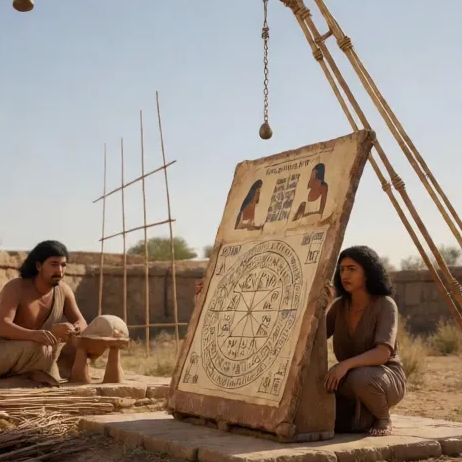
Long before that, humanity was already using periodic phenomena or seasonal events — such as the movement of the Moon, river floods, and so on — to support its survival activities. And this led to the invention of calendars.
The Gregorian Calendar, which is the Western system of timekeeping currently in use, was officially adopted in 1582 by Pope Gregory XIII and is based on the 365-day solar cycle.
A calendar is a universal methodology that retains its original concept as a time management tool to this day.
When the term “calendar” is mentioned in everyday life, we are generally referring to its structure in the form of a table with rows and columns.
Only very rarely does this bring to mind the geometric aspect associated with our planet’s orbital motion. In this regard, the general rule is that at the beginning of each year, our planet is at perihelion — that is, closest to the Sun.
Counting from that point, we would have 360 degrees of a circular orbit; however, our orbit is not precisely circular but elliptical. Consequently, a linear division of the orbit into segments corresponding to a single rotation period (one day) is not exact, resulting in the division extending to 365 segments or sidereal days.
So, from January to the end of March, the planet mathematically traverses 30° + 30° + 30° = 90°, leaving a remainder of 360° — 90° = 270°.
Thus, in a proactive calendar, the quantities always decrease, marking a date and announcing how much time remains ahead.
The first day of the month would be represented by the numerical value 30 (where applicable) to correspond to the number of time elements available for that month; the second day, 29 — corresponding to 29 available time elements — and so on.
Thus, calendar days numbered in this way would intuitively convey how much time is available. They could also be linked to commemorative milestones: January 31st would be the day of universal fellowship, indicating that there are 31 units of time — or days — available for production. The ordinal classification would not be lost.
This idea relates to the concept of a cardinal day — that is, a calendar element corresponding to the number of time segments remaining from that point onward.
메타데이터
- post_id
- 367248e8947c
- slug
- the-proactive-calendar-367248e8947c
- url
- https://medium.com/@youphysics/the-proactive-calendar-367248e8947c
- canonical_url
- https://medium.com/@youphysics/the-proactive-calendar-367248e8947c
- author_url
- https://medium.com/@youphysics
- status
- ok
- fetched_at
- 2026-08-22 12:48:15