Why Billionaires and Beggars Exist If Heaven Abhors Complacency
Heaven abhors complacency, yet billionaires and beggars walk the same earth. This isn’t a gotcha — it’s a mirror held up to a common…
Why Billionaires and Beggars Exist If Heaven Abhors Complacency
Heaven abhors complacency, yet billionaires and beggars walk the same earth. This isn’t a gotcha — it’s a mirror held up to a common misunderstanding.
Many write off the ancient wisdom as watered-down advice to settle for mediocrity. They figure it means never being too rich or too poor, stuck in the middle where life is safe but unremarkable. That’s not even close to the truth.
The core of “heaven abhors complacency” isn’t a ban on extremes. It’s a universal law: every extreme comes with a price tag. Billionaires and beggars who seem to break this rule aren’t exceptions — they just hide their costs where the world can’t see, or choose a different kind of extreme trap.
Let’s start with data, not philosophy. A recent UBS report puts the number of ten-billion-dollar billionaires worldwide at fewer than three-thousand in 2025, with four-hundred-seventy in China. Out of 1.4 billion people, that’s roughly one in 100,000. Billionaires like Donald Trump are statistical outliers — lonely dots on the edge of a graph, not the norm.
Beggars are no different. In any city, homeless beggars make up a tiny fraction of the population. Some fall on hard times due to illness or disaster; others treat begging as a profession, even running organized rings. Either way, they’re not how most people live.
Once you see that, the question shifts. “Heaven abhors complacency” isn’t about everyone getting exactly two or three blessings. It’s about structural risk — like a seesaw weighted too far to one side. Wealth on one end, everything else — health, family, peace of mind — on the other. Tilt too far toward wealth, and even the strongest will stumble when the wind blows.
Take Donald Trump, the poster child for extreme wealth and power. The world sees a business empire and a former presidency, someone who seems to have cornered both wealth and status, mocking the idea of “complacency.” What it doesn’t see is the hidden cost of that extreme.
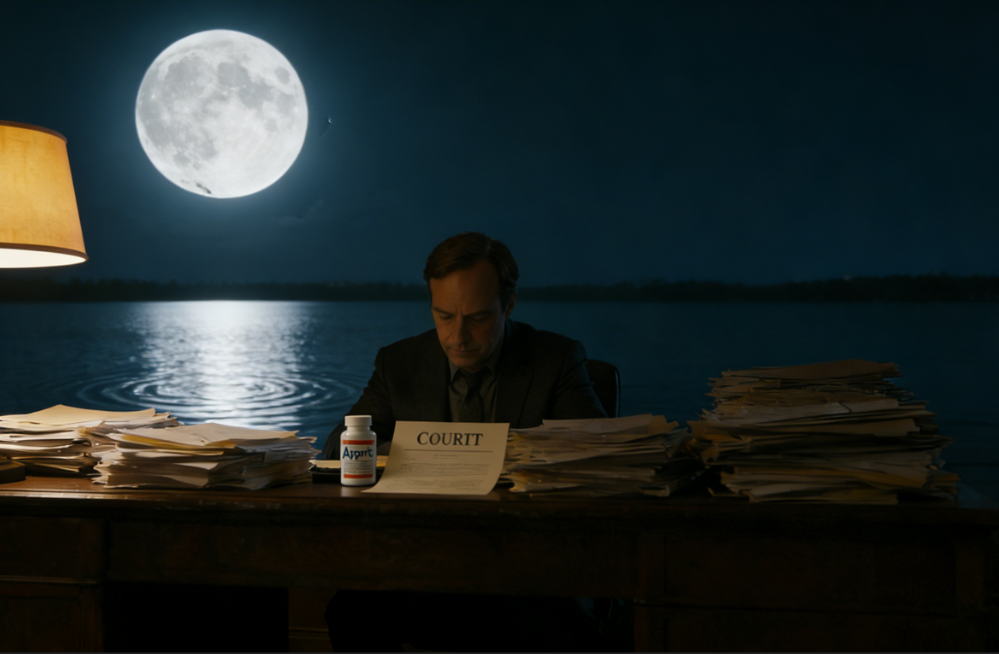
At seventy-nine, Trump is far from the energetic figure he once was. He’s admitted to taking three-hundred-twenty-five milligrams of aspirin every day for twenty-five years — four times the recommended low dose of eighty-one milligrams. His hands are often bruised from the excess, but he refuses to cut back, joking that he’s “a little superstitious” about the drug’s effects.
His health issues don’t stop there. The White House has confirmed he suffers from chronic venous insufficiency, which causes persistent ankle swelling. He tried compression socks to ease the pain but quit because he “didn’t like the feeling.” Add in a diet heavy on high-salt, high-fat fast food and almost no exercise beyond golf, and it’s clear his longevity is being quietly eroded.
Wealth and power have never brought him peace, either. He’s filed for bankruptcy multiple times and been tangled in lawsuits for decades. His presidency was dogged by controversy, and he’s remained under investigation long after leaving office — perpetually in the eye of a media storm. Even his private life is anything but private.
The world sees a man on top of the world. They don’t see the constant stress, the damaged health, or the never-ending conflict. He’s mastered wealth and status, but at the cost of his health and peace. In short, he traded the latter for the former.
Trump’s struggle isn’t about having too much money. It’s about money crowding out every other part of his life. Look at his family: multiple marriages, children publicly feuding, loved ones turning into media adversaries. Money has become a cage, not a tool. It can fly him around the world on a private jet, but it can’t buy him a quiet night’s sleep.
Worse, the “perfect life” people attribute to billionaires is an illusion. Life isn’t a movie that ends early. No one can claim “complacency” until their last breath. Countless billionaires have fallen from grace in their later years — disgraced, abandoned, or broken. Some cut corners and landed in prison, losing everything. Others overreached, their empires collapsing when the money ran out.
From a metaphysical perspective, this is non-negotiable: nothing in life is free. The age-old principle that “extremes lead to reversal” holds true — every dollar, every bit of power, drains a little of one’s fortune and vitality. Some have it all on paper, yet suffer loneliness or estrangement from their families. That’s heaven’s quiet balance — seen only by those willing to look beyond the surface.
Most people judge life by what they “have.” Heaven judges it by what’s “traded.” Every gain has a cost — some pay with money, others with their lives. Billionaires may seem to have it all, but their “blessings” are rarely complete.
Some spend thirty years building wealth, only to spend forty years fighting poor health — trading youth for money, then money for a chance at longevity that never comes. Others hold immense power, yet return to empty homes — spouses growing distant, children moving away, no one to talk to at the end of the day. They’re not “complacent.” They’re unbalanced.
Betting everything on wealth or power means letting heaven siphon away the rest. It’s not a curse — it’s balance. Pour a glass too full, and every extra drop spills over, stolen from somewhere else. Heaven doesn’t reward those who want it all. It lets you fill two or three cups, but no more. Try to fill them all, and it will empty one when you’re not looking.
Some argue, “What about billionaires who have wealth, health, and a happy family?” Patience. No one gets to claim “perfection” before their final day. The “complacency” you see now might be a facade — like a tree blooming in spring, lush in summer, but rotting at the roots, waiting for a storm to topple it. Heaven doesn’t give credit. It makes you pay in full, eventually.
Now, let’s turn to beggars — the other extreme. They seem to have nothing, barely scraping by, with none of the five blessings: family, wealth, status, children, longevity. How does that fit with “having two or three is fortune”?
First, beggars aren’t a monolith. Their stories are tangled with societal failure and personal choice — no single explanation fits all. But every beggar’s extreme poverty is a form of imbalance, one that can’t escape heaven’s law.
Many see beggars as “having nothing,” but that’s not accurate. They’re collapsed in multiple areas at once. Lack of income is just the surface. Deeper, there’s broken social bonds, lost dignity, and closed doors to improvement. Once someone is stuck in a cycle of being given handouts, watched, and controlled, trust and self-determination fade.
Some beggars are victims of circumstance — survival beggars. They fall ill and drain their savings, unable to recover. They’re left behind by industry shifts, lacking skills to find new work. Others are blocked from social aid by red tape or paperwork, forced to beg to eat.
These beggars seem to have nothing. But in losing wealth and status, they gain an extreme kind of freedom. No family responsibilities, no office stress, no need to budget or impress. They don’t care what others think. It’s a freedom most people can’t imagine — but it comes at the cost of dignity and stability.
Then there are professional beggars — those who treat it as a job. They run organized operations, faking disabilities or tragic stories to manipulate sympathy. Data shows that in some cities, up to thirty-percent of street beggars are faking disabilities — most of them able-bodied enough to work.
These beggars aren’t poor by force. They choose an extreme life: giving up status, dignity, and honest work for quick cash. Before mobile payments, some made hundreds of dollars a day — more than many low-wage workers. But that cash comes with a cost.
They live in constant fear of being exposed. They can’t form real relationships or build a family. Even if they save money, they’re trapped on the margins — lonely, anxious, and unable to find true happiness. Many call this unfair. They miss the point: whether by choice or circumstance, beggars find a twisted balance in their extremes.
They lose something, and gain something else. What they gain is often unwanted by most. What they lose is the foundation of a happy life. Beggars may have nothing, but they also avoid the pain of loss. No wealth to steal, no power to lose, no family to fight over.
Consider an elderly man with limited mental capacity who worked odd jobs his whole life. He never married, never saved money — by society’s standards, a failure. Yet he sat in the sun every day, smiling more than anyone. He didn’t worry about tomorrow, regret yesterday, or envy others. He had peace — the one thing billionaires in ICU beds would trade their fortunes for.
This isn’t glorifying suffering. It’s acknowledging life’s duality: what you lose may return in another form, on another path. But beggars’ “nothingness” isn’t just fate. Some of it is choice — their own lack of effort.
Too many people only see their misfortune, not their inaction. Not all beggars are trapped. Some are able-bodied but lazy, choosing to beg instead of work. Others have access to aid or job training but choose to stay complacent, comfortable in their poverty. Their hardship isn’t bad luck. It’s giving up — on themselves, on change, on a better life.
Worse, some think they can game the system. They believe if they give up on everything — family, wealth, status, children, longevity — heaven will be forced to reward them. That’s a dangerous misunderstanding.
Heaven isn’t a nanny, coddling those who refuse to try. It’s not a customer service line, handing out rewards for complaints. It’s a scale — you get what you put in. Put nothing in, and you get nothing back. Metaphysically, “luck comes from the heart.” True change doesn’t come from heaven’s charity. It comes from waking up and trying.
Giving up isn’t “non-action.” It’s surrender. Heaven doesn’t favor those who won’t help themselves. Giving up doesn’t trigger a “safety net.” It leaves you invisible — heaven only keeps score with those who have something to lose. Even if a complacent beggar gets lucky — a windfall, a kind stranger — it won’t last. The foundation of a better life — health, education, relationships, self-worth — is broken. Beggars’ “nothingness” is half fate, half surrender.
This brings us back to the question: if extremes always come with costs, is “having two or three blessings” just a comfort? The answer is simple. Heaven abhors complacency — not “more,” but “greed.” Fortune isn’t about how much you have. It’s about knowing when to stop.
Trump’s problem isn’t his wealth or power. It’s his refusal to let go of anything — wealth, power, fame, health. He chases all five blessings, and ends up unbalanced. To keep his wealth, he fights endless legal battles. To keep his power, he endures media attacks and poor health. To keep his health, he’d have to change his habits and let go of his ego — but he won’t.
Beggars’ problem isn’t their poverty. It’s their inability to rebuild — either from circumstance, choice, or laziness. They can’t find balance, or they choose not to. And they delude themselves into thinking giving up will force heaven’s hand. Heaven doesn’t reward laziness. It rewards awareness.
The five blessings aren’t a checklist. They’re a radar chart. Some have great wealth but poor health. Others have strong families but modest careers. As long as the chart isn’t empty, and no single line spikes to the sky, life is sustainable — even resilient. The danger is becoming a needle — sharp, narrow, and easily broken.
Ordinary people understand this intuitively. They don’t have extreme wealth, but they have stable jobs, quiet evenings, and weekends with their kids. It’s not glamorous, but it’s strong. A sickness, a layoff, a price hike won’t break them. That’s the true meaning of “having two or three” — not settling, but building resilience.
Some give up high salaries to be with family — losing wealth, gaining love. Some trade comfort for a career — losing leisure, gaining stability. Some let go of fame to live quietly — losing recognition, gaining peace. These aren’t sacrifices. They’re wisdom — knowing what you want, and what you can live without.
Why do we struggle so much? Because we don’t believe in “abhorring complacency.” We believe in “having it all.” We’re taught to be well-rounded, to have successful careers and happy families, to be rich, rested, and healthy. We eye what others have, and resent what we don’t. We see someone’s wealth and forget our own sleep. We see someone’s power and forget our own loving family. We see someone’s relationship and forget we’re debt-free.
We forget: fate doesn’t give something for nothing. Take one thing, and it takes another. Insist on taking everything, and it takes what you value most. Billionaires and beggars don’t contradict “heaven abhors complacency.” They prove it.
They show what happens when you tilt the scale too far — either chasing everything, or giving up on everything. The lesson isn’t to avoid wealth or pity poverty. It’s to avoid extremes. Pursue wealth, but make time for health and family. Accept ordinariness, but don’t give up on dignity or growth.
The worst pain isn’t “not enough.” It’s “only this.” Heaven abhors complacency — not to stop you from winning. To stop you from winning alone.
Life isn’t about adding more. It’s about letting go of what you don’t need. The things you can’t reach? They might be heaven’s way of protecting you. Don’t fill your cup to the brim — leave space for the wind. Don’t burn your bridges — leave a path back. Don’t chase perfection — leave room for fortune.
The best life isn’t about having it all. It’s about eating the food in front of you, drinking the water in your glass, and cherishing the people beside you. Let the rest go.
After all, the full moon fades, and the overflowing cup spills. Heaven abhors complacency. Humanity abhors wholeness. If you insist on having everything, you’ll only end up empty. Because sometimes, you have to settle to have it all.
A note beyond the headlines
I write about global politics, but not just the news —
the human choices, moral trade-offs, and life lessons behind major events.
More reflections here:
메타데이터
- post_id
- 369625584d63
- slug
- why-billionaires-and-beggars-exist-if-heaven-abhors-complacency-369625584d63
- url
- https://medium.com/@nanmoon/why-billionaires-and-beggars-exist-if-heaven-abhors-complacency-369625584d63
- canonical_url
- https://medium.com/@nanmoon/why-billionaires-and-beggars-exist-if-heaven-abhors-complacency-369625584d63
- author_url
- https://medium.com/@nanmoon
- status
- ok
- fetched_at
- 2026-07-10 01:40:30