Representations of Slavery’s Brutality in American Films
The films Django Unchained, 12 Years a Slave, and Amistad show different perspectives on the brutality and dehumanization of slavery in…
Representations of Slavery’s Brutality in American Films
The films Django Unchained, 12 Years a Slave, and Amistad show different perspectives on the brutality and dehumanization of slavery in America. First, Quentin Tarantino’s film Django Unchained tells the story of the protagonist named Django who is a freed slave who partners with a bounty hunter to save his wife from a cruel plantation owner. The film combines historical fiction with Western elements and emphasizes violent retribution against slaveholders. Then, 12 Years a Slave directed by Steve McQueen, is based on the true story of Solomon Northup a free Black man who is kidnapped and sold into slavery. The film offers a brutal depiction of his twelve years in captivity focusing on the physical and psychological torture experienced by slaves. Finally, Steven Spielberg’s film Amistad dramatizes the 1839 rebellion aboard the Spanish slave ship “La Amistad” and the following legal struggle for the “freedom” of its African prisoners, focusing on the complexity of the moral and legal issues surrounding slavery. This paper analyzes the portrayal of the dehumanization and brutality of slavery in the movies Django Unchained, 12 Years a Slave, and Amistad, examining how these representations contribute to broader discussions of race and history in American cinema. The representations of slavery in these films are crucial for understanding how cinema shapes and reflects societal norms toward race and history. They provide a vision through which the ongoing impacts of slavery and the struggle for racial justice can be examined.
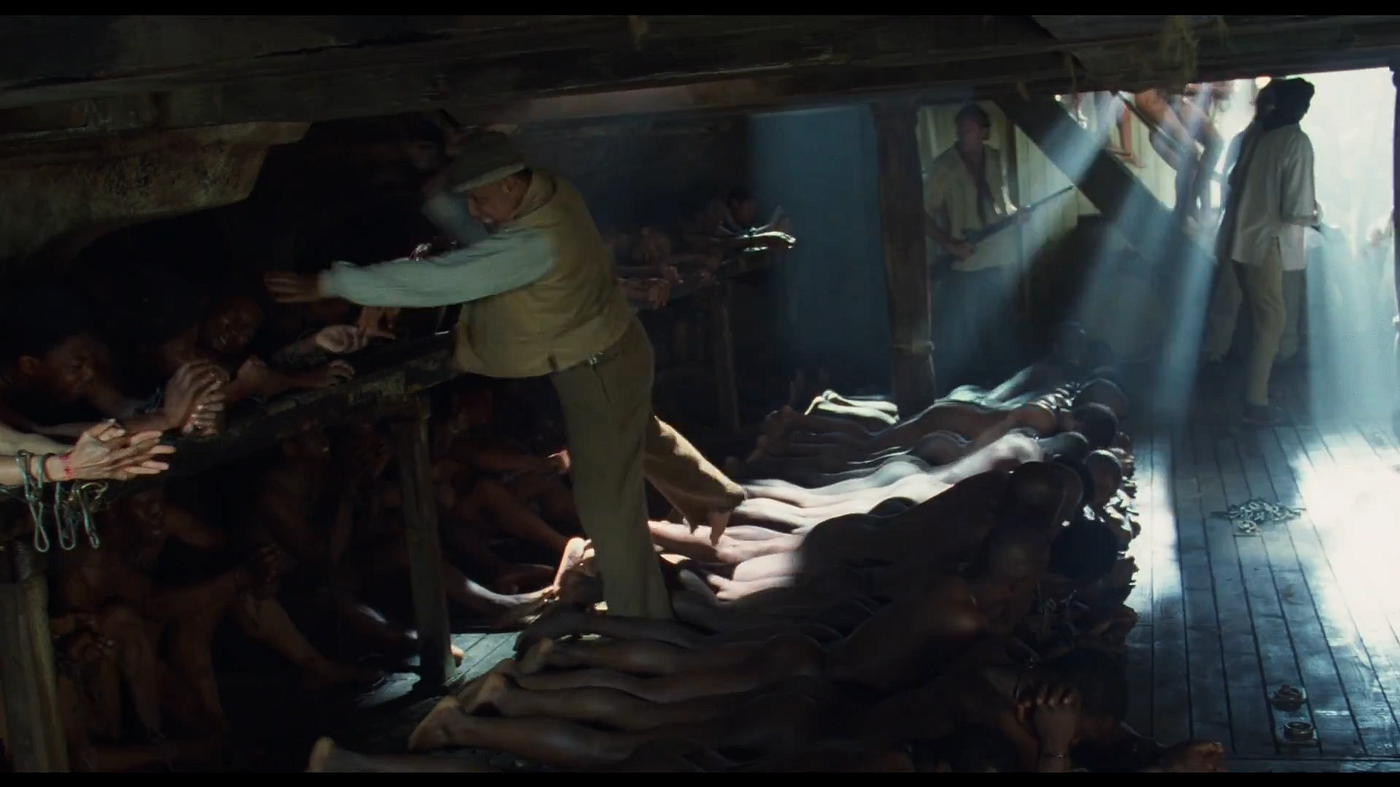
Amistad (Transatlantic slave transport)
The transatlantic slave trade was a brutal system in which millions of Africans were forcibly transported to the Americas to provide labor for plantations primarily in the production of crops like cotton, sugar, and tobacco. This system was driven by economic interests and justified through racist ideologies that “dehumanized” Black people. These 3 films explore various aspects of slavery, including the Middle Passage, slave auctions, plantation life, and legal battles. Amistad “openly” pictures the Middle Passage showcasing the horrific conditions in slave ships where Africans were chained and packed tightly (stacked like canned fish), often leading to death and diseases (Amistad, 01:18:55). 12 Years a Slave shows the slave auction where Solomon Northup is sold highlighting the “commodification” of human beings. Plantation life is central to both 12 Years a Slave and Django Unchained they illustrate the daily brutalities and systemic oppression faced by enslaved people.
These movies portray slavery’s dehumanizing effects in a disturbing way. In, 12 Years a Slave scenes of brutal punishment, such as the whipping of Patsey (a female slave on Solomon’s plantation) exemplify the physical and emotional degradation inflicted on slaves. In one very touching scene, Solomon (also known as Platt) is hanged by his master, left struggling while others pass by without helping, perfectly portrays their fear and helplessness because of the shooting of the scene and the people doing their daily chores on the background shows how it is a regular thing among the people in the plantation (12 Years a Slave, 00:48:00–00:52:20). We see Solomon hanged on a tree about five minutes straight which makes the scene very hard to watch for the viewers. The relentless violence and cruelty are designed to break the spirit of the slaves, ripping off their identity and humanity. Similarly, Django Unchained portrays graphic violence against slaves, such as the dog attack on a runaway slave, emphasizing the sadistic pleasure some slaveholders obtain from their power (Django Unchained, 01;19;20). This clearly shows how the enslaved were turned straight into property. They were robbed of their humanity and forced to consent through violence and force.
The brutality of slavery is a central theme pictured through scenes of violence, harsh living conditions, and exploitation. 12 Years a Slave, provides a “direct” look at the physical abuse such as the brutal whipping of Patsey. At some point, she goes to another plantation to get soap without informing anyone just because her jealous mistress refuses to give her anything, even a bar of soap. The scene underscores the sadistic pleasure some slaveholders derived from their power. Also, Solomon’s kidnapping is pictured with realism, showing his violent kidnapping and then getting sold in a slave auction. This scene dramatically portrays the commodification of human beings and the psychological terror imposed upon them (12 Years a Slave, 00:15:25). In Django Unchained, scenes like the Mandingo fight and the hot box punishment portray the extreme cruelty slaves endured. The “Mandingo” fight, where slaves are forced to fight to the death for the entertainment of their owners highlights the sadistic joy derived from human suffering (Django Unchained, 00:44:30). On the other side, Amistad focuses on legal and moral brutality, illustrating how enslaved Africans were treated as property and the lengths to which they had to go to fight for their humanity in a foreign legal system, a language they don’t even speak and a place they don’t even know it existed before. In Amistad, the portrayal of the Middle Passage and the legal battle for freedom emphasizes the systemic and “normalized” cruelty of slavery (Amistad, 01:21:10). The film also portrays the horrendous conditions aboard slave ships and the desperate struggle for survival, emphasizing the inhumanity of the trade. Additionally, in 12 Years a Slave a similar “normalized” portrayal of the dehumanization can be seen in a scene where Solomon and others are displayed on platforms like “products” being displayed on a slave market (12 Years a Slave, 00:29:00).

Django Unchained (“Mandingo” fight)
Resistance and rebellion are portrayed as acts of defiance against an inhumane system. In Django Unchained, Django’s quest to rescue his wife and his violent revenge against slaveholders are acts of personal and collective resistance. Then in 12 Years a Slave, Solomon Northup’s kidnapping and his subsequent attempts to contact his family and regain his freedom shows his resistance against the injustice inflicted upon him. The boat scene in the film highlights the danger faced by educated slaves who refused to fully obey, illustrating the deadly consequences of resistance. Lastly, Amistad dramatizes the rebellion aboard the ship where the African captives led by an African prisoner named Cinqué, seize control of the ship in a desperate sense of survival and freedom. Despite the overwhelming oppression, the films also highlight the resilience and survival of slaves. In 12 Years a Slave, Solomon’s determination and eventual reunion with his family signify the “unchainable” human spirit. Patsey, despite her suffering, shows a deep resilience, finding moments of pride among all of the horrors. In Django Unchained, Django’s determination to save his wife and his ability to navigate a hostile world reflects his strength and resourcefulness. Amistad portrays the legal battle for freedom, highlighting the resilience of the prisoners and their fight against seemingly impossible chances against the American court. The Africans’ fight for recognition as human beings deserving of freedom is a powerful testament to their resilience.

12 Years a Slave (Solomon’s punishment)
In conclusion, the analysis of Django Unchained, 12 Years a Slave and Amistad reveals the different ways in which these films portray the dehumanization and brutality of slavery. Each film provides a different perspective, contributing to a broader understanding of the historical and racial contexts of slavery. Analyzing these different kinds of representations is significant because films shape public perceptions of history and race. They can educate audiences about the realities of slavery, provoke critical reflection, and help a deeper understanding of the ongoing impacts of this history. The insights from this research can inform current arguments on race and social justice. By examining how films portray the horrors of slavery and the resilience of the slaves, we can better appreciate the historical roots of racial inequalities and the importance of resuming the fight for justice and equality. These films are both historical films and messages to action for addressing the lasting effects of slavery in our current society.
Movies Mentioned
McQueen, Steve. Twelve Years a Slave. Fox Searchlight Pictures, 2014.
Spielberg, Steven. Amistad. DreamWorks Distribution, 1997.
Tarantino, Quentin. Django Unchained. The Weinstein Company, 2012.
메타데이터
- post_id
- 36a86bf12e49
- slug
- representations-of-slaverys-brutality-in-american-films-36a86bf12e49
- url
- https://medium.com/@burak-barutcu/representations-of-slaverys-brutality-in-american-films-36a86bf12e49
- canonical_url
- https://medium.com/@burak-barutcu/representations-of-slaverys-brutality-in-american-films-36a86bf12e49
- author_url
- https://medium.com/@burak-barutcu
- status
- ok
- fetched_at
- 2026-06-21 20:33:08