Trademark Dispute: 7-Eleven Sues Nike Over Alleged Colorway Copying
A trademark dispute has erupted as global convenience store giant 7-Eleven has filed a lawsuit against Nike in a U.S. federal court in…
Trademark Dispute: 7-Eleven Sues Nike Over Alleged Colorway Copying
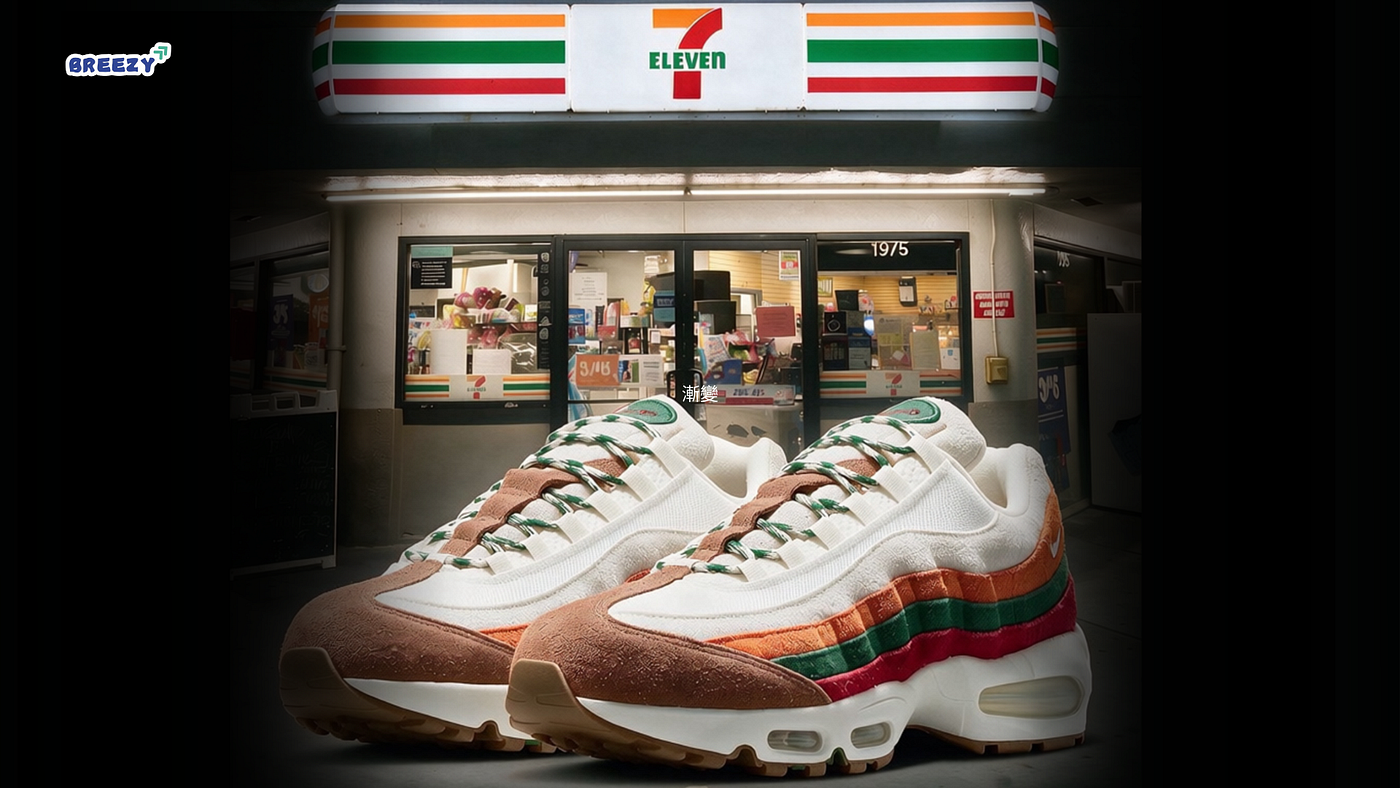
A trademark dispute has erupted as global convenience store giant 7-Eleven has filed a lawsuit against Nike in a U.S. federal court in Texas, accusing the sportswear company of copying its signature color scheme. The case centers on a newly released sneaker that allegedly replicates 7-Eleven’s iconic orange, green, and red stripe design. Notably, the shoe was scheduled to launch on July 11 — “7-Eleven Day” — raising concerns that Nike deliberately sought to create brand association and consumer confusion. The incident has stirred significant discussion across both the streetwear and retail industries.
According to court filings, the product in question is the Air Max 95 Big Bubble QS 2 (style code IR1944–102). The sneaker’s upper features color striping highly similar to 7-Eleven’s long-standing trademark design. Additional details, including an insole printed with convenience store shelf imagery and marketing language referencing “walking through a corner store,” further echo the brand’s identity. Most controversially, the original release date aligned exactly with July 11, widely recognized as 7-Eleven’s annual brand day.

Photo: Visual China
This year also marks the 45th anniversary of 7-Eleven’s presence in Hong Kong, with a series of promotional campaigns running from March through late June. Industry observers have questioned whether Nike intentionally timed the release to coincide with peak brand visibility in order to capitalize on the momentum.
7-Eleven stated that it attempted to resolve the matter privately prior to filing suit, but received no satisfactory response from Nike. The company argues that the sneaker’s design and color scheme are likely to mislead consumers into believing there is an official collaboration, constituting both trademark infringement and unfair competition. It has sought an injunction to immediately halt distribution and sales of the product, along with claims for damages and full legal costs.
Following news of the lawsuit, Nike reportedly removed the sneaker from official retail platforms in multiple regions. However, resale markets have reacted quickly, with speculators driving prices to more than double the original retail value. As of now, Nike has not issued an official statement regarding the cross-industry infringement allegations.

Photo: Visual China
Industry experts note that signature color schemes and visual identifiers are increasingly protected under trademark law and have become core brand assets. This dispute, involving a major convenience store chain and a global sportswear brand, is shaping up to be a high-profile case in trademark protection across both retail and fashion sectors.
Intellectual property analysts highlight two key trends reflected in this case. First, distinctive and consistently used color combinations can receive exclusive trademark protection, with U.S. case law already establishing clear precedents — making unauthorized use a significant legal risk. Second, brands are increasingly vigilant against trademark dilution. Recent cases, such as Louis Vuitton’s successful lawsuit against a Chinese tea chain over pattern imitation, demonstrate how cross-industry copying can damage brand identity and trigger aggressive legal enforcement.
Market data suggests that many consumers mistakenly believed the sneaker was an official collaboration with 7-Eleven, underscoring the likelihood of confusion. While similar designs may temporarily boost resale demand, a ruling of infringement could result in product recalls, financial penalties, and reputational damage.
For small and mid-sized retailers, the case offers a clear lesson: cross-brand collaborations require formal authorization. Simply referencing another brand’s iconic visual elements carries substantial legal risk. As global intellectual property enforcement tightens, opportunistic marketing that leverages established brands without permission is becoming increasingly unsustainable.
【Full Article】https://breezy.today/hk_en/7eleven-nike-trademark-dispute-en/
7-Eleven #AirMax95 #infringement #Nike
=====================
【Breezy.today】
Website: https://breezy.today/hk/
Facebook: https://www.facebook.com/profile.php?id=61558608578069
Instagram: https://www.instagram.com/breezy.today.media/
LinkedIn: https://www.linkedin.com/company/breezy-today-business-channel
메타데이터
- post_id
- 36abb04f08e2
- slug
- trademark-dispute-7-eleven-sues-nike-over-alleged-colorway-copying-36abb04f08e2
- url
- https://medium.com/@pandagon.limited/trademark-dispute-7-eleven-sues-nike-over-alleged-colorway-copying-36abb04f08e2
- canonical_url
- https://medium.com/@pandagon.limited/trademark-dispute-7-eleven-sues-nike-over-alleged-colorway-copying-36abb04f08e2
- author_url
- https://medium.com/@pandagon.limited
- status
- ok
- fetched_at
- 2026-07-21 15:15:30