What Happens When a Coral Reef Dies?
The collapse of a coral reef doesn’t just affect corals. It transforms an entire underwater world.
What Happens When a Coral Reef Dies?
The collapse of a coral reef doesn’t just affect corals. It transforms an entire underwater world.
The Day the Colors Fade
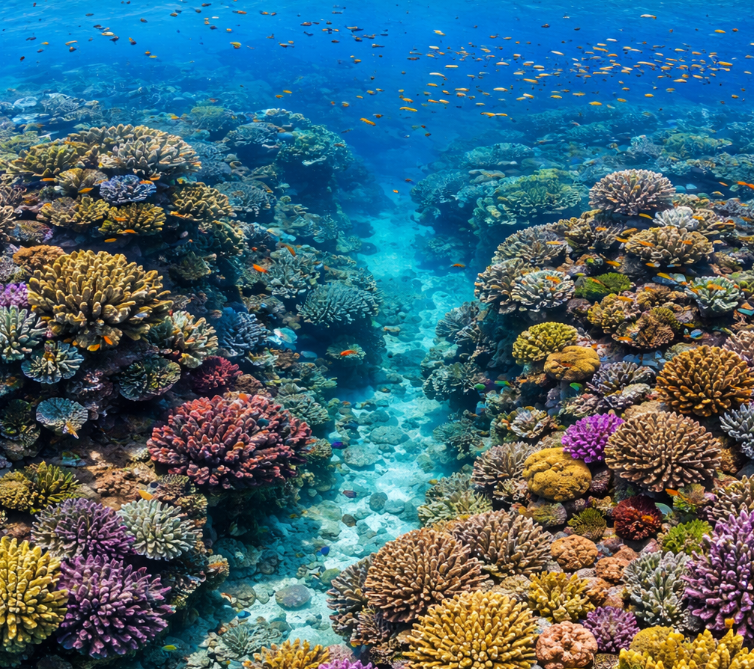
One of the planet’s most dynamic ecosystems is a healthy coral reef. Sea turtles glide overhead, schools of fish dart between coral branches, and other creatures vie for space in a busy underwater metropolis.
However, the transformation is not instantaneous when a coral reef dies. It starts softly.
Corals are under greater stress due to rising ocean temperatures, pollution, destructive fishing practices, disease, and ocean acidification. Living corals degrade, bleach, and eventually perish. A panorama of pale skeletons gradually replaces what was once a vibrant reef.
The reef could appear undamaged at first. But beneath the surface, the ecology is starting to fall apart.
The Loss of an Underwater City
Because they sustain an incredible diversity of life, coral reefs are frequently referred to as the “rainforests of the sea.” They provide a home for over 25% of all marine organisms, despite making up less than 1% of the ocean floor.
The intricate structures that fish and invertebrates rely on for food, shelter, and reproduction are made by living corals. These structures progressively deteriorate and disintegrate when corals die.
Many reef fish populations are declining as hiding spots diminish. While some species struggle to compete in a changing environment, those that depend heavily on living coral often go extinct first. The reef becomes much less productive, quieter, and less varied.

A Chain Reaction Across the Ecosystem
Coral death sets off a series of ecological shifts.
Algae can quickly take over the reef surface if healthy corals are not vying for space. Recovery becomes more challenging when juvenile corals are unable to settle and grow due to thick algae blooms. Food webs are upset, and environmental stability deteriorates as biodiversity diminishes.
Prey is lost by predators. Fish that eat plants lose their habitat. Communities of invertebrates decline. A few hardy species take control of an environment that was once in balance.
The reef frequently changes into a completely new form, which might last for decades.

The Human Cost
Reef destruction has far-reaching effects on more than just marine life.
Coral reefs provide food, income, and coastal protection for millions of people. Communities throughout the world rely on reef fisheries for protein, and coral reef-focused tourism brings in billions of dollars a year.
Additionally, coral reefs serve as organic barriers that absorb wave energy. Coastlines are more susceptible to erosion, floods, and storm damage when reefs deteriorate.
Thus, the loss of a reef is a social and economic problem in addition to an environmental one.

Can a Dead Reef Recover?
Though it is neither simple nor certain, recovery is feasible.
Surviving corals can proliferate and progressively repopulate damaged areas if environmental conditions improve rapidly enough. Innovative restoration methods, such as coral nurseries, larval propagation, and aided breeding programs, are also being developed by scientists and conservationists.
However, addressing the root causes of reef decline is necessary for a successful recovery. Restoration efforts are severely hampered if local pressures like pollution and overfishing are not reduced, along with climate-related stress.
The construction of a reef might take decades, yet its collapse can happen in a matter of years.
More Than Just Corals
The loss that occurs when a coral reef dies goes much beyond the corals. Oceans lose one of their most productive ecosystems, entire communities of marine species lose habitat, and coastal populations lose protection.
The loss of stunning scenery is not the only consequence of coral reef extinction. It is the loss of ecological ties, resilience, and biodiversity that have grown over millennia.
The first step in comprehending why these ecosystems are important to preserve is knowing what occurs when a coral reef dies.

For correspondence or collaboration inquiries, feel free to contact me at:
E-mail: nayan.biowrites@gmail.com
메타데이터
- post_id
- 36d63897d2fe
- slug
- what-happens-when-a-coral-reef-dies-36d63897d2fe
- url
- https://medium.com/@nayankulshreshtha/what-happens-when-a-coral-reef-dies-36d63897d2fe
- canonical_url
- https://medium.com/@nayankulshreshtha/what-happens-when-a-coral-reef-dies-36d63897d2fe
- author_url
- https://medium.com/@nayankulshreshtha
- status
- ok
- fetched_at
- 2026-06-23 03:48:11