What It Actually Costs to Host 1.7 Million People in the Desert
Every year, the world counts what Saudi Arabia earns from Hajj. Almost no one counts what it spends.
What It Actually Costs to Host 1.7 Million People in the Desert
Every year, the world counts what Saudi Arabia earns from Hajj. Almost no one counts what it spends.
The cameras show the crowds. The headlines report the revenue. But behind one of humanity’s greatest annual gatherings lies a logistical operation so vast, so expensive, and so precisely engineered that it puts most national infrastructure to shame and it all comes together for just five days.
Here is the full picture the numbers, the systems, and the scale of Hajj 1447 / 2026.
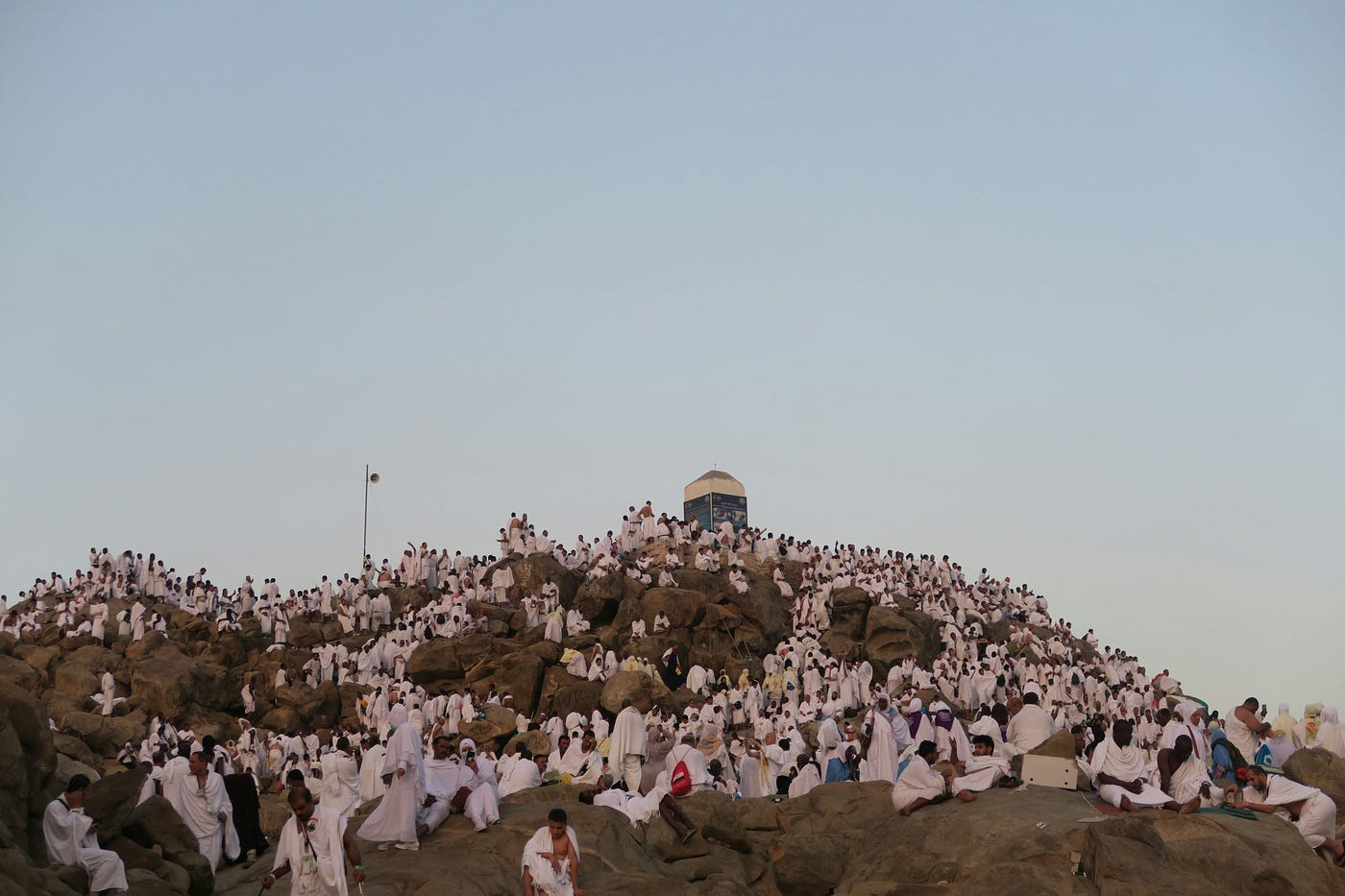
Thousands of pilgrims in white fill the Hill of Mercy — the spiritual heart of Hajj, where the sermon of the final pilgrimage was delivered over 1,400 years ago.
Part I: Who Came — The Global Scale of Hajj 2026
According to the Saudi General Authority for Statistics, 1,707,301 pilgrims performed Hajj this year.
- 1,546,655 arrived from outside Saudi Arabia, representing 180+ countries
- 160,646 were residents or citizens within Saudi Arabia
- 893,396 men and 813,905 women stood together on the plains of Arafat
The top pilgrim-sending nations this year were Indonesia, Bangladesh, and Pakistan three countries whose combined populations represent nearly a quarter of the world’s Muslims.

The Kaaba at the center of it all. Every person in this frame traveled across the world to be here and this is just one fraction of the crowd.
Pakistan’s Quota This Year 🇵🇰
Pakistan received an official quota of 179,210 pilgrims and used every single slot.
- ~120,000 travelled under the Government Hajj Scheme
- The remainder went through private tour operators
Under the Road to Makkah project, Saudi immigration was processed directly at airports in Islamabad, Lahore, and Karachi — saving Pakistani pilgrims hours of waiting upon arrival in the Kingdom.
Part II: $160 Million in 84 Hours
The Sacrifice Economy
During the three days of Eid al-Adha, Makkah becomes the site of the world’s largest single religious sacrifice event.
This year, approximately 1.1 to 1.2 million animals (predominantly sheep and rams) were sacrificed through the official Adahi Project.
- Official price per animal: approximately $150 USD (550 SAR)
- Total estimated value sacrificed: $150–165 million USD in under 84 hours
But where does all that meat go?
The answer is a logistics masterclass:
- Local distribution: A significant portion is distributed immediately to the poor and needy within the boundaries of the Haram
- Domestic charities: Over 250 registered Saudi welfare organizations deploy refrigerated trucks to deliver meat to orphanages and low-income families across the Kingdom
- Global shipment: The remaining millions of tons are cleaned, frozen at sub-zero temperatures, vacuum-packed, and shipped by sea and air to 27+ Muslim-majority countries beginning from the 1st of Muharram
- Crisis zones first: Priority destinations include Gaza (Palestine), Somalia, Mali, Niger, Afghanistan, and Rohingya refugee camps in Bangladesh communities facing war, famine, or extreme poverty
No meat is wasted. That alone is an extraordinary feat.
Part III: Cooling a City in 48°C Heat
The World’s Largest Climate Control System
This year, temperatures in Makkah and the plains of Arafat reached 45°C to 48°C (113°F to 118°F).
To keep 1.7 million people alive and functional in that heat, Saudi Arabia runs what may be the world’s most ambitious cooling infrastructure:
Permanent Misting & Fan Networks The massive high-powered fans and water misting systems visible across Arafat and Muzdalifah are not temporary. They are mounted on permanent steel poles, covered and maintained by engineers 365 days a year, and reactivated each Hajj season.
250,000 Tons of Cooling Capacity
- Mina Tent City: Serviced by a centralized cooling system with 100,000-ton capacity the largest in the world for a single site
- Masjid al-Haram (Al-Shamiya & Ajyad plants): Two additional industrial-scale plants keep the Grand Mosque complex cool around the clock
- Total cooling capacity: Over 250,000 tons, running 24/7
The Electricity Bill
During peak Hajj days, the power load across Makkah and the holy sites exceeds 5,000 megawatts enough to simultaneously power Lahore and Islamabad combined.
The electricity bill for those few days alone? An estimated $40–50 million USD.
Hundreds of high-power diesel generators remain on standby as backup. The Saudi government absorbs every riyal of this cost.
The Floor That Stays Cool
The marble surrounding Masjid al-Haram is a specially selected white stone that does not absorb solar heat engineered so pilgrims can perform Tawaf (circumambulation) barefoot even under a blazing sun.
Part IV: Moving 1.7 Million People
The Transport Puzzle
Shifting millions of people between Mina, Arafat, and Muzdalifah within a strict religious timeframe is arguably the world’s most demanding transport challenge.

The door of the Kaaba, draped in hand-embroidered gold calligraphy, surrounded by 1.7 million hearts beating in the same direction.
The $2.6 Billion Train That Runs 7 Days a Year
The Al-Mashaer Al-Mugaddassah Metro is one of the most expensive infrastructure investments per day-of-use in history. Built at a cost exceeding $2.6 billion USD, it operates for approximately 7 days per year and spends the other 358 days idle, maintained and ready.
During Hajj, it moves hundreds of thousands of pilgrims between the holy sites in minutes.
25,000 Air-Conditioned Buses
For those not on the metro, a fleet of over 25,000 modern AC buses operates around the clock.
Running their engines and air conditioning continuously through the extreme heat consumes an estimated $35–40 million USD in fuel over the course of the Hajj period alone.
AI Traffic Management
To prevent gridlock across Makkah’s complex road network:
- Drones monitor aerial crowd density in real time
- AI-powered cameras automatically adjust traffic signal timing based on live crowd flow data
- A centralized operations center tracks movement across all holy sites simultaneously
Part V: 300,000 Workers
The Human Machine Behind the Miracle
On any normal day, around 15,000–20,000 permanent staff manage Makkah. During Hajj, that number explodes to over 300,000 deployed workers, including:
- For Cleaning & sanitation workers: 40,000+
- For Medical professionals (doctors, nurses, paramedics): 50,000+
- For Security, police & civil defence: 100,000+
- Transport, logistics & operations: Remaining workforce
40,000 sanitation workers operate in round-the-clock shifts, clearing millions of plastic bottles and tons of waste from Mina and Arafat — sometimes within minutes of accumulation.
50,000 medical personnel staff temporary field hospitals and operate over 3,000 ambulances, specifically trained to handle mass heatstroke events and crowd-related emergencies.
Part VI: The Result — Zero Major Incidents
With all of this in place the infrastructure, the workforce, the technology, Hajj 1447 concluded without a single major stampede, security failure, or mass casualty event.
Saudi Arabia’s Nusuk digital platform managed pilgrim registration, movement scheduling, and site access with a level of precision that kept 1.7 million people flowing through some of the most congested geography on Earth safely.
The Number Nobody Talks About
The world is quick to calculate what Saudi Arabia earns from Hajj. What rarely makes headlines is what it spends:
- Electricity (Hajj period): $40–50 million
- Bus fuel: $35–40 million
- Animal sacrifice logistics: $150–165 million (pilgrim-funded)
- Metro maintenance & ops: Hundreds of millions annually
- Workforce deployment: Billions annually
These numbers don’t include the permanent infrastructure the marble, the cooling poles, the metro, the hospitals that cost hundreds of billions to build and billions more each year to maintain.

The endless flow never stops. Day or night, pilgrims move through the corridors of Masjid al-Haram.
Hajj is often described as a spiritual journey. It is that. But it is also, quietly, one of the most complex operational achievements in the modern world repeated every single year, refined over decades, and expanded to serve a global community that grows larger each time.
The tents of Mina, the plains of Arafat, the circling crowds around the Kaaba they look like faith. They are faith. But underneath, they are also engineering, logistics, sacrifice, and an extraordinary investment in human dignity.
Subhan Allah.
메타데이터
- post_id
- 373c4772190a
- slug
- what-it-actually-costs-to-host-1-7-million-people-in-the-desert-373c4772190a
- url
- https://medium.com/@fasihjanjua/what-it-actually-costs-to-host-1-7-million-people-in-the-desert-373c4772190a
- canonical_url
- https://medium.com/@fasihjanjua/what-it-actually-costs-to-host-1-7-million-people-in-the-desert-373c4772190a
- author_url
- https://medium.com/@fasihjanjua
- status
- ok
- fetched_at
- 2026-06-17 08:20:12