Inside Rajasthan’s Handmade Paper Craft Industry: The Art of Sustainable Papermaking
In the bustling town of Sanganer, just outside Jaipur, a centuries-old craft continues to thrive in quiet workshops where skilled artisans…
Inside Rajasthan’s Handmade Paper Craft Industry: The Art of Sustainable Papermaking
In the bustling town of Sanganer, just outside Jaipur, a centuries-old craft continues to thrive in quiet workshops where skilled artisans transform discarded cotton rags into beautiful sheets of handmade paper. Instead of the roar of industrial machines, the process relies on steady hands, traditional techniques, and remarkable patience. As consumers around the world seek sustainable and eco-friendly alternatives, Rajasthan’s handmade paper craft has gained renewed appreciation for blending heritage with environmental responsibility. Every sheet tells a story — not just of craftsmanship, but of a tradition that has endured through changing times.
The roots of Rajasthan’s handmade paper industry stretch back to the Mughal era, when the craft flourished under royal patronage. Sanganer became a centre for papermaking thanks to the skilled Kagzi community, whose expertise was passed down through generations. The town was already renowned for its textile printing, making it an ideal place for artisans to repurpose cotton waste into paper.

While modern paper manufacturing has largely shifted to large-scale factories, many family-run workshops in Sanganer continue to preserve these traditional methods, ensuring that the region remains synonymous with high-quality handmade paper. Their commitment to preserving age-old techniques has helped the craft survive in an increasingly industrialised world.

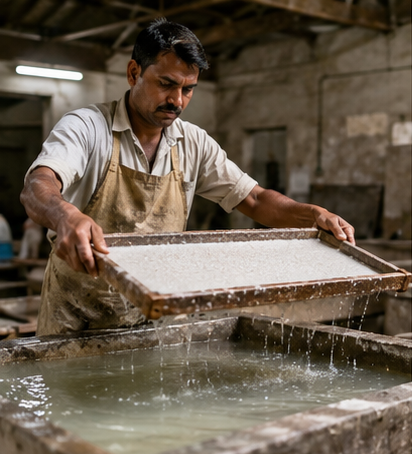
The process begins with recycled cotton rags collected from textile waste, giving new life to materials that might otherwise be discarded. The cotton is thoroughly cleaned, shredded, and beaten into a fine pulp before being mixed with water in large vats. Artisans then dip a fine mesh mould into the mixture, lifting it carefully to create an even layer of pulp.

Excess water drains away, leaving behind a delicate sheet that is transferred onto felt, pressed to remove remaining moisture, and left to dry naturally. Once dry, each sheet is inspected, trimmed, and finished by hand. Some papers are naturally dyed or decorated with flower petals, leaves, silk fibres, or other botanical elements, making every sheet slightly different from the next. This meticulous craftsmanship gives handmade paper its distinctive texture, strength, and character, qualities that cannot be replicated by mass-produced alternatives.

Beyond its artistic appeal, handmade paper offers several environmental advantages. Unlike conventional paper, which often relies on wood pulp and intensive industrial processing, Rajasthan’s handmade paper is typically made from recycled cotton fibres. The paper is acid-free, biodegradable, and highly durable, making it suitable for long-term use while reducing pressure on forests. Many workshops also minimise chemical use and recycle water wherever possible, reinforcing the craft’s reputation as a sustainable alternative in today’s paper industry. In an era where eco-conscious choices are becoming increasingly important, handmade paper demonstrates how traditional practices can support modern sustainability goals.

These qualities have helped handmade paper find a place in both Indian and international markets. It is widely used to create luxury notebooks, journals, greeting cards, wedding invitations, gift boxes, envelopes, bookmarks, premium packaging, and even artistic canvases. Designers, calligraphers, and businesses value its rich texture and handcrafted appeal, while tourists often purchase handmade paper products as meaningful souvenirs of Rajasthan’s artistic heritage. Each finished product carries not only aesthetic beauty but also the story of the artisan who created it.

Although the industry faces challenges from inexpensive machine-made paper and changing consumer habits, Rajasthan’s handmade paper craft continues to evolve by embracing contemporary designs, online marketplaces, and global demand for sustainable products. More than just a traditional occupation, it stands as a testament to India’s rich craft heritage and the enduring value of responsible production. In every handmade sheet lies a reminder that innovation does not always require new technology — sometimes, it simply means preserving timeless skills that respect both people and the planet.

메타데이터
- post_id
- 375408fc54e1
- slug
- inside-rajasthans-handmade-paper-craft-industry-the-art-of-sustainable-papermaking-375408fc54e1
- url
- https://hanomatimes.com/inside-rajasthans-handmade-paper-craft-industry-the-art-of-sustainable-papermaking-375408fc54e1
- canonical_url
- https://hanomatimes.com/inside-rajasthans-handmade-paper-craft-industry-the-art-of-sustainable-papermaking-375408fc54e1
- author_url
- https://medium.com/@srishtihanomatimes
- status
- ok
- fetched_at
- 2026-07-09 05:26:43