A Deeper Dive into the Dichotomy of Belief and Action in Sexual Harassment and Gender Bias
Introduction
A Deeper Dive into the Dichotomy of Belief and Action in Sexual Harassment and Gender Bias
Introduction
In today’s socio-political climate, we have many buzzwords used to describe views of gender bias, such as ‘woke,’ ‘MeToo,’ ‘DEI,’ etc., to describe an awareness of social and political injustices. However, as we look deeper into the concepts, we find a dichotomy between external actions and internal beliefs.
The June 12, 2023, UN Development Program Report, ‘*A Decade of Stagnation: New UNDP data shows gender biases remain entrenched,’* illustrates how little our behavior has changed regardless of socio-political policies that are in place across the globe. Combine this with a recent article about Saturday Night Live (SNL) cast members turning a blind eye to a woman identified as Jane Doe (Travis, June 6, 2023), who sued Horatio Sanz for sexual assault when she was a minor, we begin to wonder just how effective gender bias policies in the workplace are.
Woke
The term “woke” has its roots in African American Vernacular English (AAVE), and it initially referred to an awareness of social and political issues. Over time, it has evolved into a broader term that encompasses a variety of social justice issues, including gender equality and LGBTQ+ rights. However, the question remains: does being “woke” necessarily mean one’s internal beliefs have changed?
DEI
The term “Diversity, Equity, and Inclusion” (DEI) has gained significant attention over the past decade across various fields and institutions, many of which have created initiatives, task forces, and steering committees to acknowledge the importance of DEI work and effect institutional change. In this context, “diversity” represents different social backgrounds, identities, and experiences. “Equity” acknowledges the existence of disparities due to a lack of fairness and works to level the playing field by providing additional opportunities and resources to those who have been mistreated. “Inclusion” is the act of intentionally creating space that allows people to feel valued and belong. These terms are constantly shifting and evolving in their use and meaning, and it is essential to continuously revisit them and the framework we use before adding “DEI” in front of the next initiative or program rolled out (Dainkeh, 2020). However, suppose we persist in witnessing ongoing DEI issues with little apparent effect from our DEI policies (as indicated in the aforementioned UN report). In that case, it raises the question of whether our internal beliefs genuinely correspond with our external actions.
#MeToo
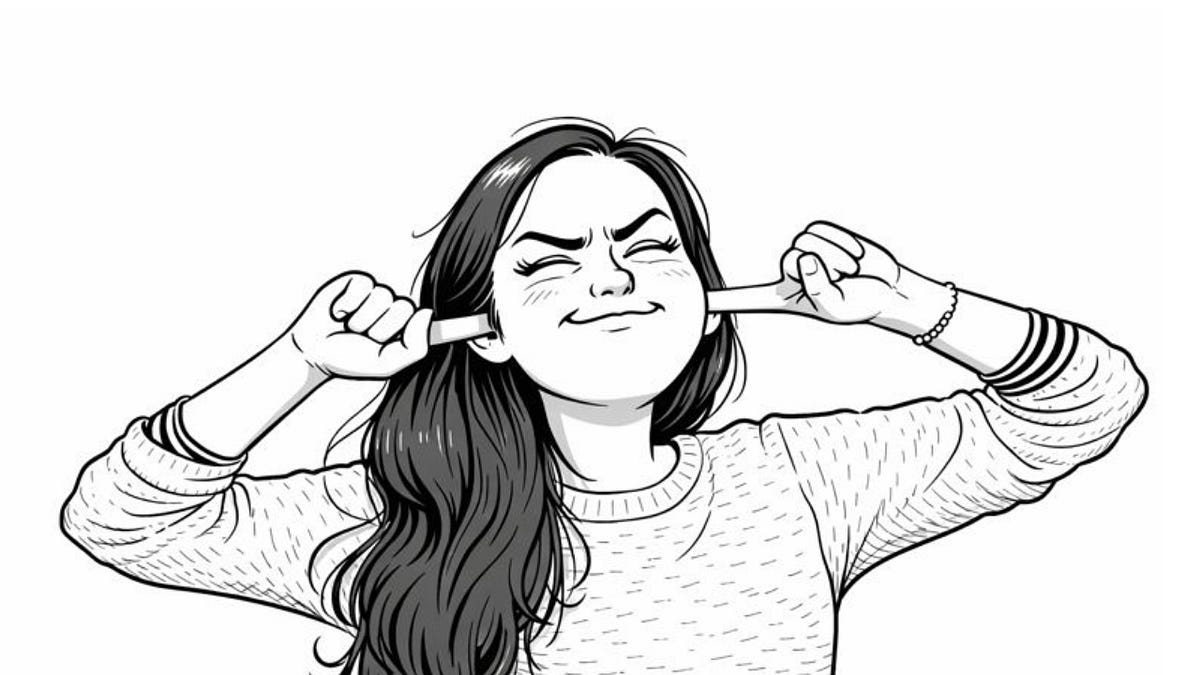
The #MeToo movement aims to empower victims of sexual assault through empathy, solidarity, and strength in numbers. It gained momentum following the exposure of numerous sexual-abuse allegations against film producer Harvey Weinstein in October 2017 and has since spread virally as a hashtag on social media. The movement has had a broad impact, leading to widespread media coverage and discussion of sexual harassment, high-profile terminations, and changes in laws and policies. The movement has limitations, including its emergence in the global North and many facets to conversations about the nature, history, and complexities of anti-rape and anti-sexual harassment politics (Fileborn, 2019). However, despite the widespread influence and progress of the #MeToo movement, there have been instances where its calls for justice and accountability seem to have fallen on deaf ears, as was the case in 2022 with Jane Doe’s allegations against Horatio Sanz and her fellow SNL cast members. Here we are in June 2023, and the silence is still deafening.
Policy v. Practice
In gender equality, for instance, we see an apparent disjunction between policy and practice. Despite the implementation of laws such as the Equality Act 2010 in the UK (Legislation.gov.uk, 2010) and the enforcement of laws by the U.S. Equal Employment Opportunity Commission (EEOC, n.d.), gender bias persists in the workplace. A report by McKinsey & Company (2022) revealed that women, particularly women of color, are still underrepresented at every level in corporate America.
This disparity between policy and practice suggests that laws can mandate diversity and inclusion but cannot necessarily change people’s beliefs. As the study “Do diverse and inclusive workplaces benefit investors? An Empirical Analysis on Europe and the United States” (Bax, 2022) suggests, investors might suffer lower returns for investing in more diverse and inclusive employers. This indicates that despite the push for diversity and inclusion, there is still resistance and bias in the business world.
The concept of “legal discrimination” further illustrates this point. Edelman, Smyth, and Rahim (2016) argue that antidiscrimination laws often fail to grasp the reality of workplace discrimination, condoning racial and gender inequality and creating a form of legal discrimination.
Conclusion
‘Woke,’ ‘MeToo,’ and ‘DEI’ are not merely about advocating for social justice issues or complying with laws and regulations. They are about genuinely understanding and internalizing the principles of equality and justice. It is about aligning our actions with our beliefs and striving for a society where everyone is treated with dignity and respect.
Bibliography:
- Horatio Sanz accuser calls out ‘SNL’ cast for lack of support after teen sex assault claims by Emlyn Travis, published on June 6, 2023, on EW.com.
- https://www.rollingstone.com/tv-movies/tv-movie-news/horatio-sanz-accuser-details-complicity-1302005/
- Dainkeh, Fatima. “Revisiting the DEI Acronym.” She+ Geeks Out. July 6, 2020. https://www.shegeeksout.com/blog/revisiting-the-dei-acronym/.
- Fileborn, Bianca, and Rachel Loney-Howes, editors. “#MeToo and the Politics of Social Change.” Springer, 2019. https://link.springer.com/book/10.1007/978-3-030-15213-0.
- Bax, K. 2022. Do diverse and inclusive workplaces benefit investors? An Empirical Analysis of Europe and the United States. [online] Available at: https://arxiv.org/abs/2208.10435 [Accessed June 10, 2023].
- Edelman, L. B., Smyth, A. C., Rahim, A. (2016). Legal Discrimination: Empirical Sociolegal and Critical Race Perspectives on Antidiscrimination Law. [online] Available at: https://papers.ssrn.com/sol3/papers.cfm?abstract_id=2870900 [Accessed June 10, 2023].
- Legislation.gov.uk. (2010). Equality Act 2010. [online] Available at: https://www.legislation.gov.uk/ukpga/2010/15/contents [Accessed June 10, 2023].
- McKinsey & Company. (2022). Women in the Workplace 2022. Title: “Wokeness: A Deeper Dive into the Dichotomy of Belief and Action.”
by ©DigitalGunny
메타데이터
- post_id
- 376b1862fdd7
- slug
- a-deeper-dive-into-the-dichotomy-of-belief-and-action-in-sexual-harassment-and-gender-bias-376b1862fdd7
- url
- https://medium.com/@DigitalGunny/a-deeper-dive-into-the-dichotomy-of-belief-and-action-in-sexual-harassment-and-gender-bias-376b1862fdd7
- canonical_url
- https://medium.com/@DigitalGunny/a-deeper-dive-into-the-dichotomy-of-belief-and-action-in-sexual-harassment-and-gender-bias-376b1862fdd7
- author_url
- https://medium.com/@DigitalGunny
- status
- ok
- fetched_at
- 2026-07-14 10:04:23