What Is a Springing Power of Attorney?
A Springing Power of Attorney is a legal document that takes effect only when a specified condition is met. Most people hear about it when…
What Is a Springing Power of Attorney?

A Springing Power of Attorney is a legal document that takes effect only when a specified condition is met. Most people hear about it when planning ahead for illness, aging, or unexpected health changes. It is one of those terms that sounds complicated at first, but the idea behind it is actually simple. Someone stays in control of their own decisions until they cannot manage them anymore.
In this guide, we will go through how it works, why people choose it, and what problems can come up. We will also look at real-life situations to make it easier to understand.
Understanding Springing Power of Attorney
A Springing Power of Attorney is a type of power of attorney that “kicks in” only upon a specific event. Most often, that event is when a person becomes unable to handle their own decisions due to illness or mental decline. Until that moment, nothing changes. The person still handles their own money, health choices, and legal matters.
The name “springing” comes from the idea that it activates only when needed, “springs into action.” This is different from a regular power of attorney, which usually starts right away.
How a Springing Power of Attorney Works

A Springing Power of Attorney does not activate immediately. It stays inactive until the set condition is confirmed. Most of the time, the document explains what must happen before it starts.
This usually includes:
- A doctor confirming that the person cannot make decisions anymore
- Medical proof of incapacity
- A written statement from a licensed professional
Once the condition is met, the chosen agent can step in and start handling decisions.
For example, if someone develops a serious illness and cannot manage bills or medical choices, the agent would only take over after doctors confirm the situation. This setup gives a sense of control while everything is still normal.
What Powers Can Be Granted?
The powers included in a springing power of attorney depend on the document itself. Some are broad, while others are very specific.
Common responsibilities may include:
- Paying bills and taxes
- Managing investments
- Handling insurance matters
- Buying or selling property
- Accessing bank accounts
- Managing business interests
- Communicating with government agencies
The principal decides which powers to grant. Some people grant full financial authority, while others limit it to specific responsibilities.
Springing Power of Attorney vs. Durable Power of Attorney
People often compare springing power of attorney documents with durable power of attorney documents because they are similar in some ways. However, there are important differences.
When Authority Begins
A durable power of attorney usually becomes effective immediately after signing. A springing POA only becomes active after a triggering event occurs.
Control While Healthy
A springing POA allows the principal to maintain complete control while they remain capable. The agent cannot act until the conditions are met.
Delays in Emergencies
One downside of a springing POA is that financial institutions may require proof of incapacity before recognizing the document. This can delay access to funds during emergencies.
Common Uses
Durable power of attorney documents are often used for long-term planning and ongoing financial help. Springing POAs are more common among people who prefer to delay authority unless it becomes necessary.
Benefits of a Springing Power of Attorney
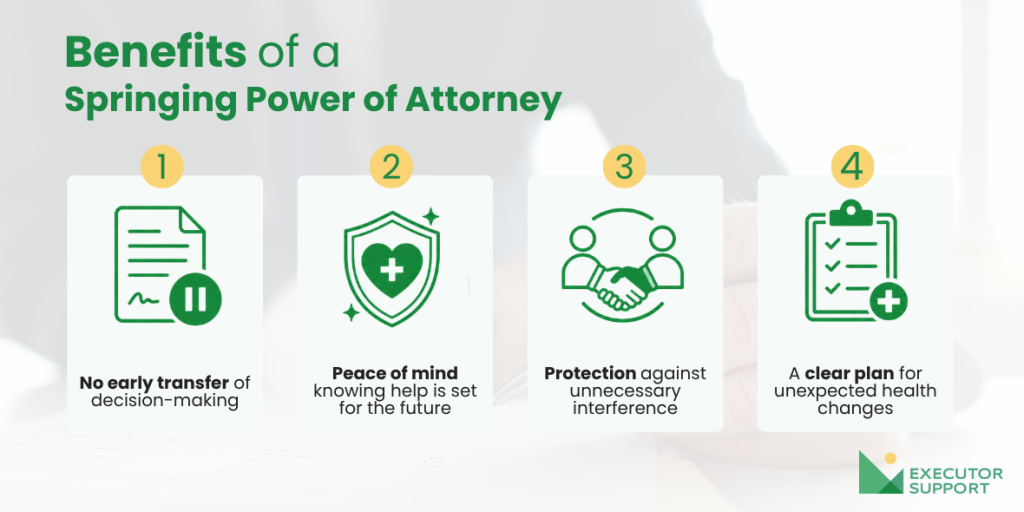
One of the biggest benefits of a Springing Power of Attorney is the control it provides. The person keeps full authority over their life while they are still able.
Other benefits include:
- No early transfer of decision-making
- Peace of mind knowing help is set for the future
- Protection against unnecessary interference
- A clear plan for unexpected health changes
Many people also like that it feels flexible. It stays inactive until something serious happens. This can be helpful for those who want to stay independent for as long as possible.
Pros of a Springing Power of Attorney
There are several advantages that make this setup appealing:
- It allows independence since the person keeps full control for as long as they can manage things
- It only activates under specific conditions, so there is clarity on when someone steps in
- It gives families a clear backup plan if health changes happen
- It helps people feel more at ease knowing support is ready without giving up control early
Cons and Limitations of a Springing Power of Attorney
Even if it sounds helpful, there are some downsides:
- It can cause delays since it only activates after proof of incapacity is provided
- Medical confirmation may take time, especially if doctors need to assess the situation carefully
- Banks and institutions may require strict documents before allowing access or action
- Families may disagree on whether the condition has been met, which can create confusion
It’s also important to understand that a Springing Power of Attorney does not last forever. It automatically ends when the person passes away, since legal authority stops at that point, which is why rules about after-death POA are important in planning ahead.
These delays can become a real issue during urgent situations when quick decisions are needed.
Common Issues Families Face with Springing POA
Families often run into similar problems with a Springing Power of Attorney.
Some of the most common include:
- Waiting for medical proof before anything can happen
- Confusion about whether the condition is met
- Delays in paying bills or accessing accounts
- Stress during urgent health situations
In some cases, questions also come up about whether more than one person can be assigned to handle responsibilities, especially in setups involving multiple POA agents.
In many cases, the biggest issue is timing. Everyone may agree that help is needed, but the document has not yet been officially activated. This gap can create pressure during already difficult moments.
When a Springing Power of Attorney Is a Good Fit
A Springing Power of Attorney works best in certain situations.
It may be a good choice when someone:
- Wants full control for as long as possible
- Feels healthy and independent right now
- Prefers a backup plan instead of immediate support
- Wants clear conditions before anyone steps in
It is often chosen by people who are planning early. They want protection in place, but do not want to give up control too soon. It can also work well for families who prefer clear rules about when responsibility changes.
When a Professional Handles Power of Attorney Matters
Setting up a Springing Power of Attorney is not always straightforward. Small wording details can affect how and when it works.
In some cases, support from services like Executor Assistance can help make sure everything is organized clearly and structured in a way that reduces confusion later. This is especially useful when documents need to be consistent and easy to follow for banks, medical providers, and other institutions.
Having a Professional Power of Attorney becomes even more important when there are multiple assets, blended family situations, or unclear decision rules. Having proper guidance can reduce confusion later and help avoid delays when the document is needed.
Final Thoughts
A Springing Power of Attorney can be a helpful way to plan ahead, especially if someone wants to stay in control for as long as possible. It gives structure for the future, but it also depends on clear rules and proper wording to avoid confusion later. Some people find it reassuring, while others run into delays when decisions need to be made quickly.
In the end, choosing a Springing Power of Attorney comes down to how someone wants to balance independence and future support, and how clearly everything is set up from the start.
Keep Your Plans Clear and Ready for the Future
Executor Support helps people and families stay organized when planning important documents like a Springing Power of Attorney. When everything is set up clearly, it becomes easier to avoid confusion and delays later on.
If you want help getting things in order, contact us so we can set up a clear, simple plan that supports your future needs.
FAQs
What is a springing power of attorney?
A springing power of attorney is a legal document that only takes effect when a specific condition is met, usually when a person becomes unable to make their own decisions due to illness or incapacity.
When does a springing power of attorney take effect?
It takes effect only after the condition written in the document is confirmed, often through medical proof that the person can no longer manage their own financial or personal decisions.
Can you have a secondary springing power of attorney?
Yes. You can name an alternate or backup agent who steps in if the first chosen agent cannot act or is unavailable.
Do I need to have a springing power of attorney?
Not always. It depends on your preference. Some people choose it for added control, while others prefer a durable power of attorney for faster access when decisions need to be made.
When does a springing power of attorney end?
It usually ends when the person who created it passes away, revokes it while still capable, or if the document specifies an end condition or date.
메타데이터
- post_id
- 37869b36a98e
- slug
- what-is-a-springing-power-of-attorney-37869b36a98e
- url
- https://medium.com/ghonda-legacy/what-is-a-springing-power-of-attorney-37869b36a98e
- canonical_url
- https://medium.com/ghonda-legacy/what-is-a-springing-power-of-attorney-37869b36a98e
- author_url
- https://medium.com/@ghondalegacy
- status
- ok
- fetched_at
- 2026-06-16 19:09:56