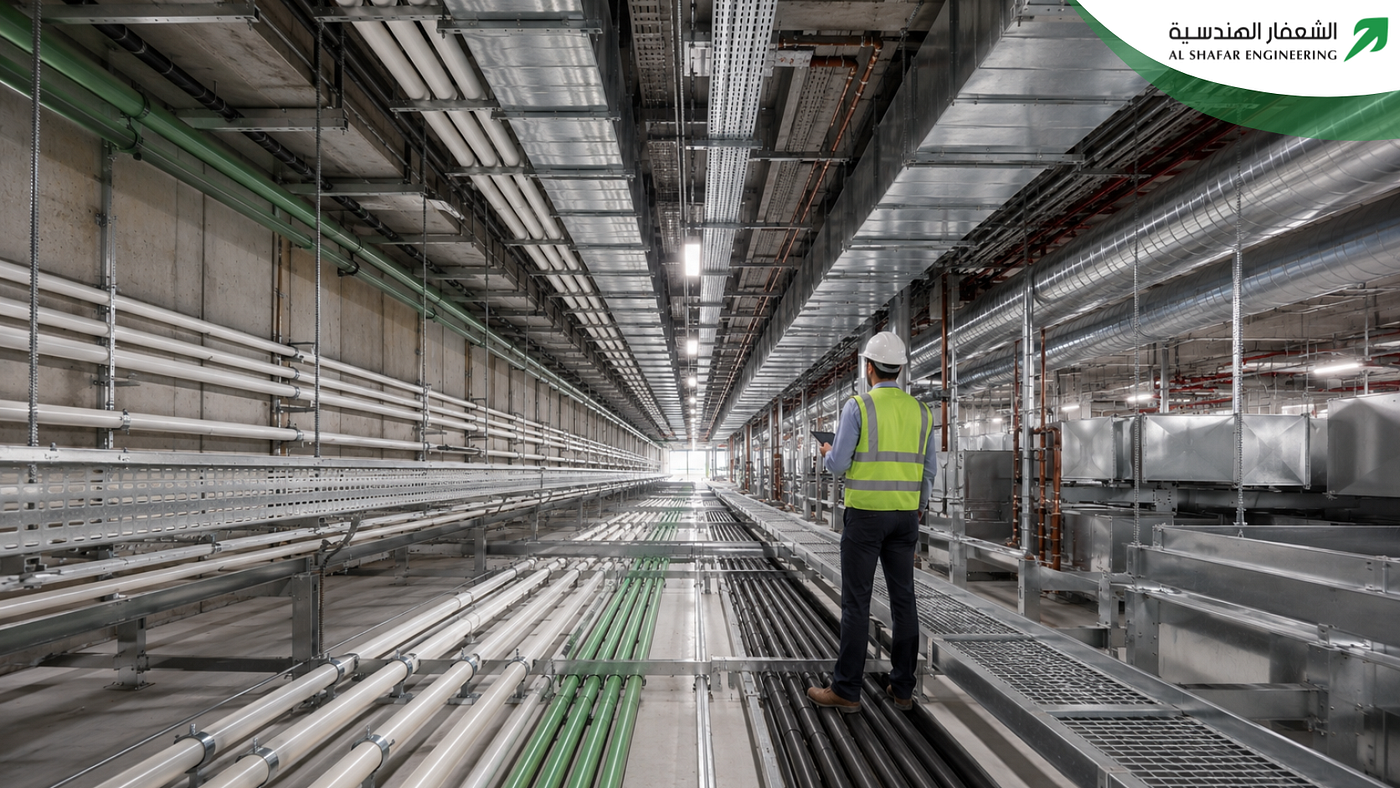
Why Integrated Project Delivery Is Reshaping Construction in the UAE
The UAE construction industry has long been recognized for delivering some of the world’s most ambitious developments. From large-scale…
Why Integrated Project Delivery Is Reshaping Construction in the UAE

The UAE construction industry has long been recognized for delivering some of the world’s most ambitious developments. From large-scale residential communities and commercial towers to critical infrastructure and mixed-use destinations, the pace and complexity of construction across the country continue to accelerate.
As projects become larger, more technically sophisticated, and increasingly interconnected, traditional project delivery models are being challenged by new realities. Developers, consultants, contractors, and stakeholders are now expected to deliver higher levels of quality, efficiency, sustainability, and cost control while meeting increasingly demanding schedules.
In response to these evolving requirements, Integrated Project Delivery (IPD) is emerging as one of the most influential approaches shaping the future of construction in the UAE.
More than a project management methodology, integrated project delivery represents a collaborative framework that aligns stakeholders, improves coordination, reduces inefficiencies, and enhances project outcomes throughout the construction lifecycle.
For an industry focused on delivering long-term value within complex development environments, the principles behind integrated project delivery are becoming increasingly relevant.
The Growing Complexity of Modern Construction
Construction projects today involve far more than structural execution.
Modern developments require seamless coordination across multiple disciplines, including architecture, structural engineering, mechanical systems, electrical systems, plumbing networks, infrastructure works, external utilities, sustainability requirements, digital technologies, and regulatory compliance.
In many cases, hundreds of specialists, consultants, subcontractors, suppliers, and project stakeholders contribute to a single development.
As project complexity increases, so does the risk of communication gaps, design conflicts, coordination challenges, procurement delays, and execution inefficiencies.
The traditional linear approach — where stakeholders operate independently and engage sequentially — can create significant challenges when managing large-scale developments.
Integrated project delivery seeks to address these challenges by creating a more collaborative environment from the earliest planning stages through final project handover.
What Is Integrated Project Delivery?
Integrated Project Delivery is a project execution approach that emphasizes collaboration, transparency, shared objectives, and early stakeholder involvement.
Rather than operating in isolated silos, project participants work together throughout the project lifecycle to improve decision-making and reduce potential conflicts before construction begins.
The objective is simple:
Align expertise early, improve coordination continuously, and deliver better project outcomes.
Within modern UAE construction projects, integrated project delivery often involves:
- Early contractor involvement
- Collaborative design development
- Multidisciplinary engineering coordination
- Shared project objectives
- Digital construction management systems
- Real-time communication and reporting
- Proactive risk management
- Integrated procurement planning
This approach enables stakeholders to identify issues earlier, improve resource allocation, and create more efficient project workflows.
Engineering Coordination as a Competitive Advantage
One of the most significant benefits of integrated project delivery is improved engineering coordination.
As buildings become more technologically advanced, engineering systems are playing an increasingly critical role in overall project performance.
Mechanical, electrical, plumbing, fire protection, life safety, communications, and building management systems must work together seamlessly within increasingly constrained spaces.
Without effective coordination, even minor design conflicts can result in costly rework, project delays, and operational inefficiencies.
Integrated project delivery encourages continuous collaboration between engineering disciplines throughout planning and execution phases.
This allows project teams to identify coordination challenges early, optimize system integration, and improve constructability before installation begins.
In high-performance buildings, engineering coordination is no longer simply a technical requirement — it has become a strategic project success factor.
Improving Cost Control Through Early Collaboration
Cost management remains one of the most important priorities for developers and project stakeholders.
Construction projects operate within increasingly complex financial environments influenced by material costs, labor availability, procurement timelines, supply chain fluctuations, and regulatory requirements.
Integrated project delivery supports better cost control by introducing key stakeholders earlier in the planning process.
When contractors, engineers, consultants, and procurement teams collaborate during design development, they can identify opportunities to:
- Optimize material selections
- Improve construction sequencing
- Reduce unnecessary scope changes
- Enhance procurement efficiency
- Minimize rework
- Improve budget forecasting
Rather than reacting to challenges during construction, project teams can proactively address potential issues before they affect schedules and budgets.
This shift from reactive management to proactive planning creates measurable value throughout the project lifecycle.
Enhancing Project Quality and Delivery Performance
Quality has become a defining characteristic of successful construction projects across the UAE.
Developers increasingly expect contractors to deliver not only on time and within budget but also in accordance with stringent quality standards and long-term performance expectations.
Integrated project delivery contributes directly to quality outcomes by strengthening communication, accountability, and coordination among stakeholders.
When teams share information openly and work toward common objectives, quality considerations become embedded within decision-making processes from the earliest stages of development.
This approach reduces the likelihood of design discrepancies, construction conflicts, and execution inconsistencies that can compromise project performance.
For large-scale residential, commercial, corporate, and infrastructure developments, integrated coordination supports more consistent and predictable project delivery outcomes.
Digital Transformation and Integrated Delivery
Technology is accelerating the adoption of integrated project delivery across the UAE construction sector.
Digital tools such as Building Information Modeling (BIM), cloud-based project management platforms, digital reporting systems, and real-time collaboration technologies have transformed how project teams communicate and coordinate.
These technologies provide stakeholders with greater visibility across project activities while enabling more informed decision-making.
The integration of digital construction management systems allows project teams to:
- Improve coordination accuracy
- Reduce information silos
- Enhance project transparency
- Streamline reporting processes
- Monitor progress more effectively
- Support data-driven decision making
As digital construction practices continue to evolve, integrated project delivery will become increasingly important for maintaining efficiency and competitiveness within the industry.
Supporting the Future of UAE Construction
The UAE’s long-term development strategy continues to drive demand for increasingly sophisticated construction solutions.
Major infrastructure investments, urban expansion initiatives, smart city programs, sustainability objectives, and economic diversification efforts are creating new opportunities across the built environment sector.
To successfully deliver these projects, construction companies must adopt more collaborative, integrated, and technologically advanced delivery models.
Integrated project delivery aligns closely with these future requirements.
By improving communication, strengthening engineering coordination, enhancing quality outcomes, and optimizing project performance, it provides a framework capable of supporting the next generation of UAE developments.
As the industry continues evolving, the ability to integrate expertise across disciplines will become one of the defining characteristics of successful project delivery organizations.
In an increasingly complex construction environment, collaboration is no longer simply a best practice — it is becoming a fundamental requirement for delivering efficient, resilient, and future-ready projects.
About Al Shafar Engineering LLC
Al Shafar Engineering LLC is a Dubai-based construction and engineering company with over 40 years of industry experience delivering residential, commercial, corporate, and infrastructure projects across the UAE.
Website: alshafar.net Email: civil@shafar.ae
LinkedIn: https://www.linkedin.com/company/alshafareng Instagram: https://www.instagram.com/alshafar.eng/
Phone: +971 4 339 1888 Dubai, United Arab Emirates

메타데이터
- post_id
- 3789d6f4bb86
- slug
- why-integrated-project-delivery-is-reshaping-construction-in-the-uae-3789d6f4bb86
- url
- https://medium.com/@AlShafarEngineering/why-integrated-project-delivery-is-reshaping-construction-in-the-uae-3789d6f4bb86
- canonical_url
- https://medium.com/@AlShafarEngineering/why-integrated-project-delivery-is-reshaping-construction-in-the-uae-3789d6f4bb86
- author_url
- https://medium.com/@AlShafarEngineering
- status
- ok
- fetched_at
- 2026-08-10 06:31:56