Gradien: world’s largest student community — case study
1.1 Overview
Gradien: world’s largest student community — case study
1.1 Overview
Today’s students struggle to find a learning environment that balances personalisation, focus and community. Existing platforms either emphasise private/ solo productivity or generic group study, leaving students disconnected and unsupported.
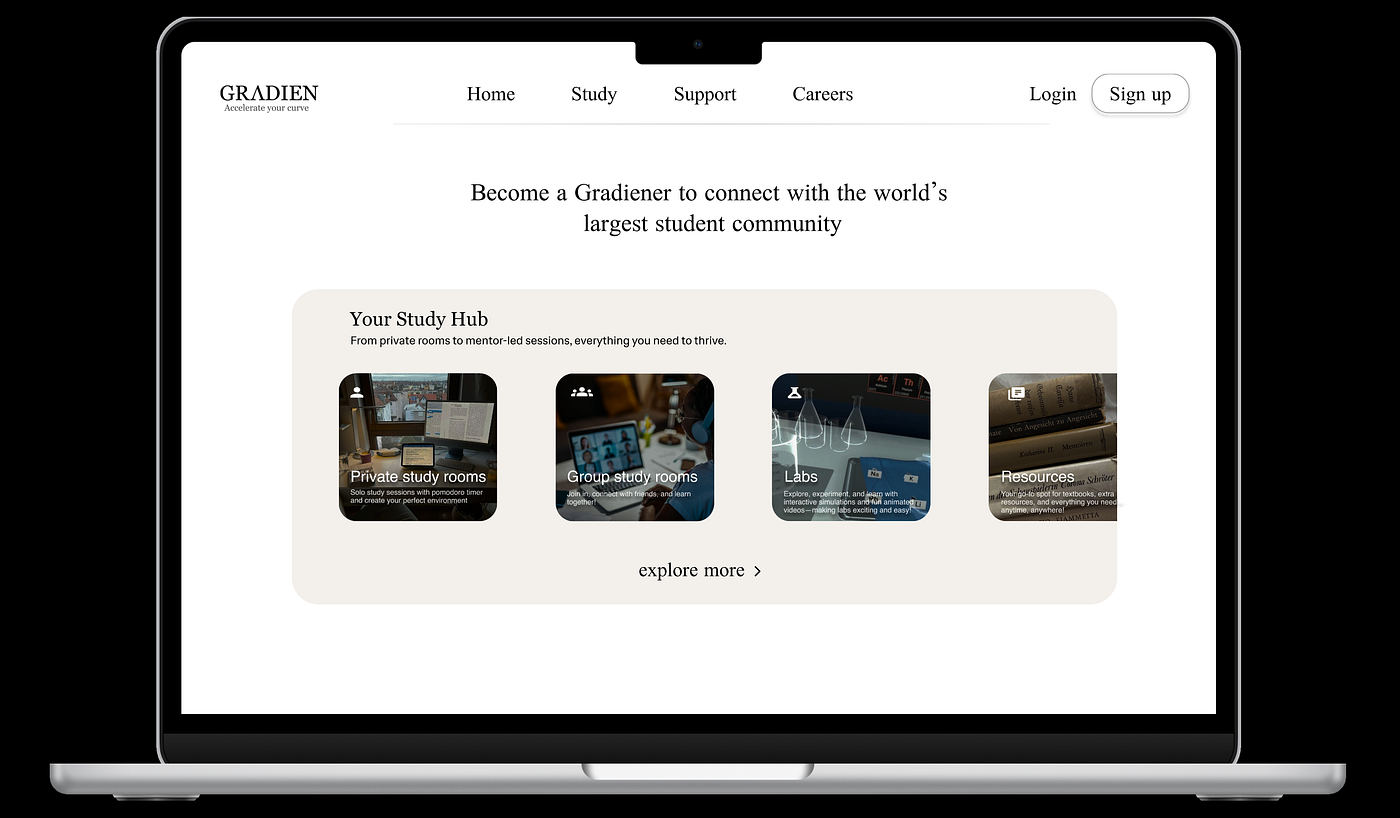
Gradien addresses this by creating a holistic learning ecosystem where users can access customisable study rooms, virtual labs, and curated resources, while forming peer groups and connecting with mentors. Powered by AI-driven recommendations, Gradien adapts to each student’s needs, fostering collaboration, motivation, and growth in a space where learning becomes a fun experience.
1.2 Problem Statement -
Design a modern, interactive web application that serves as the world’s largest student community. The platform should enable users from various fields to chat, share, form groups, and engage in discussions. Additionally, provide private online study rooms for different student groups, fostering collaboration and learning. AI integration should enhance the user experience by offering personalised content, intelligent group matching, and study recommendations.
1.3 Solution
Gradien is designed to redefine how students learn, collaborate, and grow by offering a seamless, personalised learning experience. At its core, Gradien provides private study rooms where students can focus independently or invite peers for collaborative sessions tailored to their study goals. For those seeking hands-on learning, virtual labs offer interactive experiments, making complex subjects more accessible. Beyond solo study, Gradien fosters community-driven learning through interest-based groups, where users can engage in discussions, share resources, and participate in group challenges.
A curated library provides easy access to relevant study materials, while mentors are available for personalised guidance. Powered by AI, Gradien matches students with compatible study partners and adapts the platform to fit each user’s unique needs. It’s not just a tool — it’s a dynamic, evolving space where students can focus, collaborate, and thrive together.
Additionally, students can socialise by hoping on quick call with other students to discuss not just academics but also their personal interests or hobbies, which can in turn help them work on their speaking skills while enjoying a chat with a friend.
2.1 User Research
User research revealed that students often find it challenging to get their hands on a web app that provides personalises and collaborative learning. They lack focus during solo study sessions leading to poor productivity. They expressed a need for a centralised platform that combines customisable study spaces, interactive labs, a curated library, and AI-driven recommendations. These insights shaped Gradien’s development, ensuring it addresses real user needs while fostering a supportive and engaging learning community.
2.2 Qualitative Research + Quantitative Research

2.4 Competitor Analysis

3.1 User Personas -
Due to time constraints, I was able to interview only two students, one student from 9th grade and other student from 11th grade. I asked them about their goals and what they would look for in a web app that connects with other students to foster academic growth. Pain points helped me understand what problems they are facing currently, which seems to restrict their learning journey. These insights helped me come up with the features that surely need to be included in the web app.

3.2 Empathy Map -

3.3 User Journey Map -

3.4 Information Architecture
To design Gradien’s Information Architecture, I focused on creating a structure that’s simple, engaging, and aligned with what students need. The goal is to guide users from joining study rooms to connecting with groups, mentors, and resources seamlessly. Every page and action is designed to help users achieve their goals — whether it’s focusing on solo study, collaborating with peers, or finding expert guidance — all while making their journey feel effortless and rewarding.

3.5 User flow
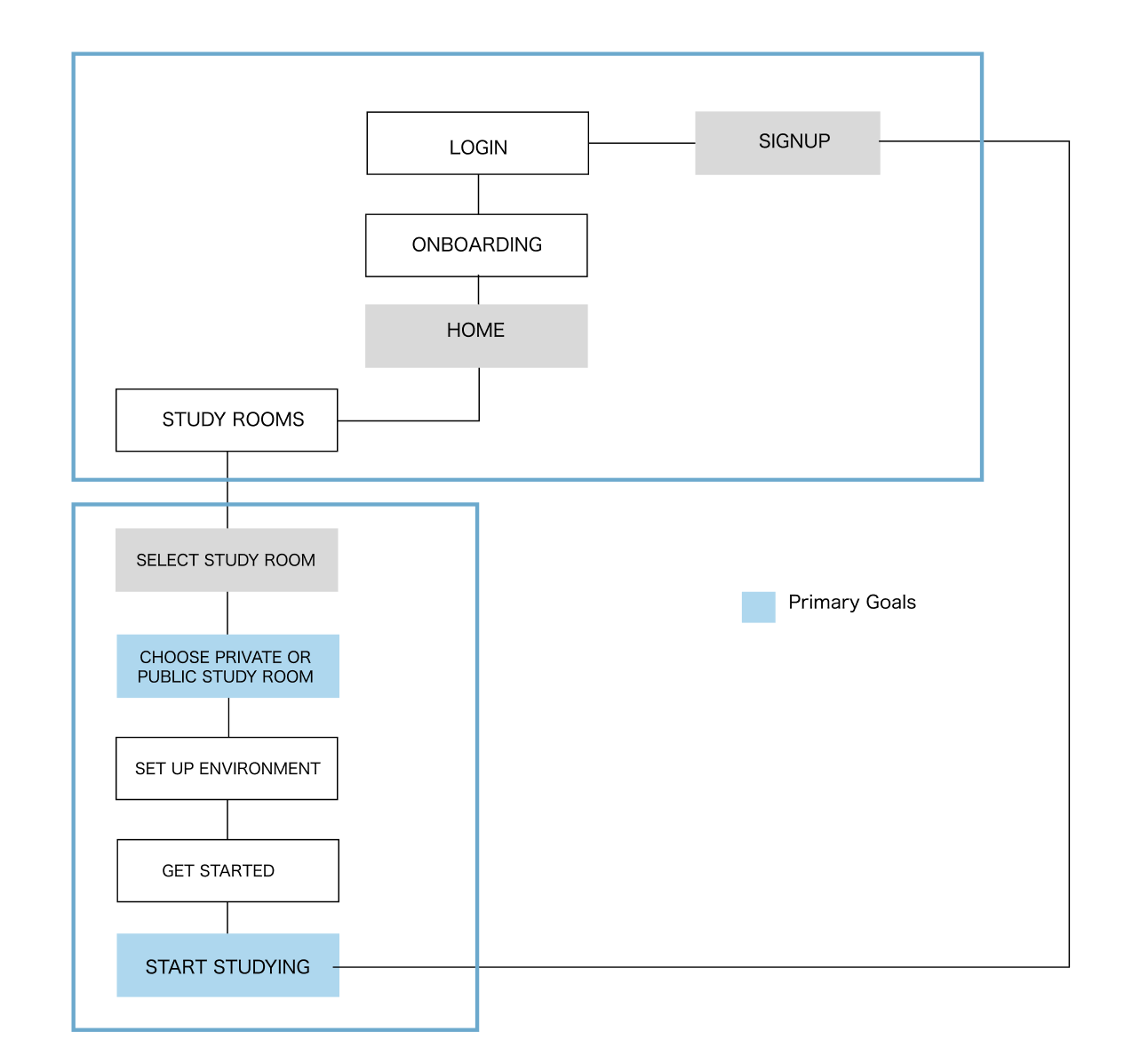
I created the user flow to determine what screens are important to complete user flow for selecting the perfect study group and environment that would be both enjoying and a focussed session for the user
4. Iconography + Typography + Colours + Assets

5. Wireframes

6. Visual Designs
Name: Gradien, as the name symbolises ‘continuous learning and growth’
Tagline: “Accelerate Your Learning Curve.”
Community identity: “Become a Gradiener.”
The final prototype —

Link to Figma file to view the prototype — https://www.figma.com/design/enhLntMarWsAp0ls1Z0eaP/Q-Xchange?node-id=933-461&t=l8kTjJFM109p2NPn-1
(2nd file — ‘Assignment’)
7. Usability Testing
Once the prototype was ready, I tested it with a 9th-grade student to see how well it met their needs for studying and collaborating with peers. The goal was to understand if the app was intuitive, engaging, and actually useful for students juggling schoolwork and group projects.

8. Future Goals
- Improve Personalization: Add more specific group suggestions based on academic levels and goals.
- Simplify Mentor Access: Make it easier for students to find and connect with mentors in their field.
- Enhance Gamification: Introduce badges and study streaks to keep students motivated for long-term use.
메타데이터
- post_id
- 378b5403f3c8
- slug
- gradien-worlds-largest-student-community-case-study-378b5403f3c8
- url
- https://medium.com/@nityav.gaddala/gradien-worlds-largest-student-community-case-study-378b5403f3c8
- canonical_url
- https://medium.com/@nityav.gaddala/gradien-worlds-largest-student-community-case-study-378b5403f3c8
- author_url
- https://medium.com/@nityav.gaddala
- status
- ok
- fetched_at
- 2026-07-08 00:36:00




