The first ruler of Rus — who was Rurik and did he even exist?
Rurik — the first ruler of the lands
The first ruler of Rus — who was Rurik and did he even exist?
Rurik — the first ruler of the lands
Everything written below is based on historical articles, scholarly opinions, and research. However, it is important to note that much of this is partly speculative. There are multiple interpretations of these events, and it is not even definitively known whether Rurik existed at all, or who he really was — a legitimately invited ruler or a conqueror. Everyone has their own perspective.
Who was Rurik?
According to historians, in the 9th century the lands of Northeastern Europe were inhabited by tribes and tribal unions such as the Krivichs, Merya, Ves, Chud, and others. It is also known that by that time there were already developed settlements and trade networks in these regions. However, there is no clear evidence of a ruling dynasty or clan exercising supreme authority. This is where the story of the invitation of the Varangians (Vikings) begins.
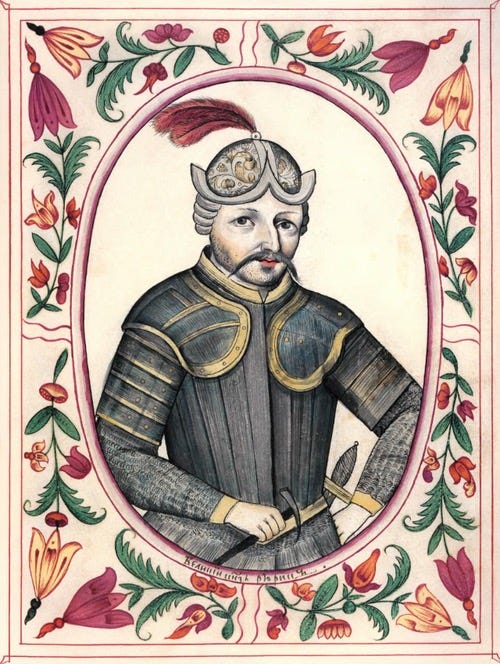
Portrait of Prince Rurik in Western European attire from the Tsar’s Titulyarnik, 1672
According to The Primary Chronicle, the earliest written source of Kievan Rus, these tribes invited a ruler named Rurik in 862 — presumably a Scandinavian known to them.
“Our land is great and rich, but there is no order in it. Come and rule over us.”
According to the chronicle, in 862 the Varangian Rurik, along with his brothers Sineus and Truvor, was invited to rule: Sineus in Beloozero, Truvor in Izborsk, and Rurik — according to some sources in Ladoga, according to others in Novgorod. This event is traditionally considered the beginning of Russian statehood and is known as the “Invitation of the Varangians.”
The chronicler explains this invitation as a result of internal conflicts among the Slavic and Finno-Ugric tribes. Rurik came with his entire retinue, known as the Rus.
Historians still debate who Rurik really was. Here are several main theories.
The Norman Theory
One of the main theories of Rurik’s origin is the Norman one. According to this version, the first ruler of the Russian lands came from the territories of modern Scandinavia and was, as one might easily guess, most likely a Viking. This is supported by numerous archaeological discoveries made in the territories of northern Russia. In Novgorod, Ladoga, and Beloozero, many artifacts of clearly Scandinavian origin have been found, including figurines of Thor and Odin, hammer-shaped amulets, and other objects.

The name ruʀikr on a fragment of the runestone U 413, located in Norrsunda Church near Uppsala
Burial mounds — graves following Scandinavian traditions — found in the territories of the modern Leningrad and Novgorod regions are also used to support this theory.

rchaeological sites of Rus, including Scandinavian complexes and artifacts in the cultural layers of settlements, 10th–11th centuries
An important argument in favor of this theory is also the mention in The Primary Chronicle, as well as in Byzantine sources, of the “Rus” as a distinct group. It is believed that Rurik belonged to this group, which initially ruled over the ancient Slavs in these lands, remaining somewhat separate from them.
The matter also lies in etymology. The word “Rus” has parallels in several Northern European languages even today. For example, in Finnish, the word “ruotsi “ means Swedes or Sweden. The Old Norse word roðr meant “rowing” or “rower.” According to many linguists, the transformation of this word into “Rus” is justified. Initially, the “Rus” represented the ruling elite of a medieval East European state formation, and only later was the name of the rulers transferred to the people under their authority.

Funeral of a noble Rus. Painting by Heinrich Semiradsky based on the account of Ibn Fadlan about his encounter with the Rus in 921
There is also a version that Rurik was Rorik of Jutland, a Danish ruler who imposed tribute on the Slavs and Finns and came to these lands with his brothers to govern the newly acquired territories.
Support for the Norman theory is also found in place names that have survived to this day, as well as in the names of the first rulers of the new dynasty — Oleg (Helgi), Igor (Ingvar), Olga (Helga).
The Anti-Norman (Slavic) Theory
The theory of Rurik’s Slavic origin gained wide popularity in the 19th–20th centuries, especially in the Soviet Union. The Norman theory was criticized by the Soviet authorities as anti-state and lacking scientific foundation, since it called into question the ability of the Slavs to create their own state and was also considered favorable to the Romanov dynasty, whose origins after the era of palace coups were largely German.
There is a version that Rurik came to the lands of the Eastern Slavs / Balts from Prussia. These territories at that time were inhabited by the Prussians. There is also a theory that he originated from the lands of present-day Germany — Mecklenburg, which at that time were inhabited by West Slavic tribes such as the Obodrites.
There are also theories that claim Rurik descended from Alexander the Great and the first German kings and emperors.
In any case, Rurik — the first ruler of the Eastern Slavic lands — is a rather prosaic and semi-mythical figure of ancient history, almost legendary. It is unknown whether he existed at all, and if he did — how he came, when, who invited him, and why exactly to this place. However, historians know much more about his “descendants” — the first rulers of the Russian lands.
메타데이터
- post_id
- 37abdb7f5ef1
- slug
- the-first-ruler-of-rus-who-was-rurik-and-did-he-even-exist-37abdb7f5ef1
- url
- https://medium.com/@v.gomann/the-first-ruler-of-rus-who-was-rurik-and-did-he-even-exist-37abdb7f5ef1
- canonical_url
- https://medium.com/@v.gomann/the-first-ruler-of-rus-who-was-rurik-and-did-he-even-exist-37abdb7f5ef1
- author_url
- https://medium.com/@v.gomann
- status
- ok
- fetched_at
- 2026-06-22 07:15:07