What Are the Most Effective Qualities for Becoming a Good Nursing Assistant?
A Nursing Assistant is often the first person a patient speaks to, the one who offers reassurance during difficult moments, and the…
What Are the Most Effective Qualities for Becoming a Good Nursing Assistant?
A Nursing Assistant is often the first person a patient speaks to, the one who offers reassurance during difficult moments, and the professional who provides consistent day-to-day care. While clinical tasks are part of the role, what truly defines a good Nursing Assistant is how that care is delivered.
From calm communication to emotional strength, personal qualities play a crucial role in patient well-being, team efficiency, and job satisfaction. This article examines the essential qualities that every successful Nursing Assistant requires and why they are so crucial in UK healthcare settings.
Why Personal Qualities Matter in Nursing Assistant Roles
Nursing Assistants work closely with patients who may be unwell, anxious, confused, or vulnerable. They also support nurses and other healthcare professionals by carrying out essential care tasks and sharing observations.
Because of this close contact, personal qualities directly affect:
- Patient comfort and dignity
- Safety and quality of care
- Team communication and morale
- The overall healthcare experience
A Nursing Assistant with the right personal qualities helps create a calm, respectful, and supportive environment for everyone involved.
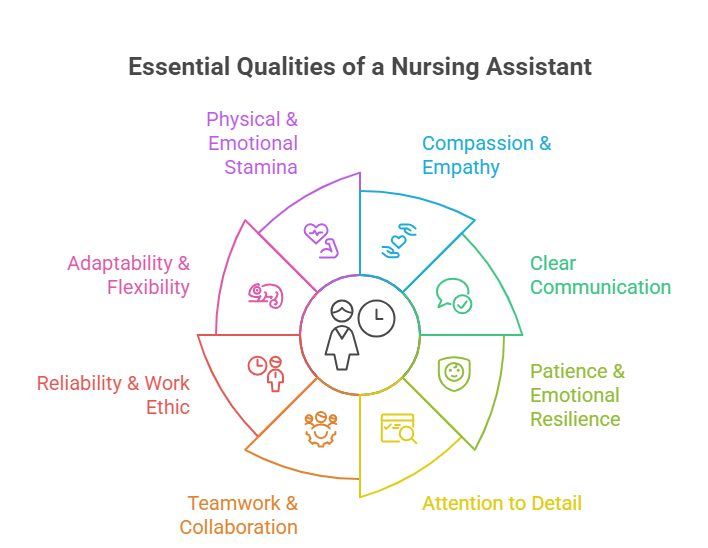
Core Qualities of an Effective Nursing Assistant
1. Compassion and Empathy
Compassion is the foundation of good care. It means treating every patient with kindness, patience, and respect — regardless of how challenging the situation may be.
Empathy allows Nursing Assistants to understand how patients feel and respond in a way that offers comfort and reassurance. This is especially important when working with older adults, people with long-term conditions, or those experiencing mental health difficulties.
Patients may forget specific details of care, but they remember how they were treated.
2. Clear and Effective Communication

Good communication ensures safe, respectful, and person-centred care. Nursing Assistants communicate daily with patients, families, Adult nurses, and other healthcare staff.
Strong communication skills include:
- Speaking clearly and calmly
- Listening carefully to concerns
- Explaining care tasks in a reassuring way
- Reporting changes in a patient’s condition accurately
Effective communication reduces misunderstandings and enables healthcare teams to respond promptly to patient needs.
3. Patience and Emotional Resilience
Healthcare environments can be emotionally demanding. Patients may be distressed, confused, or frustrated, and situations don’t always go as planned.
Patience allows Nursing Assistants to remain calm and supportive, even in difficult moments. Emotional resilience helps them cope with stress, long shifts, and emotionally challenging situations without becoming overwhelmed.
Resilient Nursing Assistants are better able to maintain professionalism while continuing to deliver compassionate care.
4. Attention to Detail
Nursing Assistants often spend more time with patients than any other member of the healthcare team. This puts them in a key position to notice small but important changes.
Attention to detail helps with:
- Recognising changes in behaviour or mood
- Spotting early signs of discomfort or illness
- Ensuring care tasks are completed correctly
Early observation and accurate reporting can prevent problems from becoming serious and improve patient safety.
5. Physical and Emotional Stamina
The role of a Nursing Assistant can be physically demanding. Tasks such as helping patients move, stand, or walk require strength, safe technique, and endurance.
Emotional stamina is equally important. Supporting people through illness, recovery, or distress requires mental strength and focus. Maintaining personal well-being helps Nursing Assistants stay effective and present throughout their shifts.
6. Flexibility and Adaptability
No two shifts are the same in healthcare. Patient needs change, priorities shift, and unexpected situations arise.
Adaptable Nursing Assistants:
- Adjust quickly to new tasks or routines.
- Respond calmly to change.
- Support colleagues when plans need to change.
Flexibility is especially valuable when working across different settings such as hospitals, care homes, community care, or mental health services.
7. Reliability and Strong Work Ethic
Patients and healthcare teams rely on Nursing Assistants to be dependable. Turning up on time, completing tasks properly, and maintaining professional standards builds trust and stability.
A strong work ethic shows commitment to:
- Patient wellbeing
- Team cooperation
- Safe and consistent care
Reliable Nursing Assistants are highly valued and often progress more quickly in their careers.
8. Teamwork and Collaboration
Healthcare is a team effort. Nursing Assistants work alongside nurses, doctors, therapists, and support staff to deliver coordinated care.
Good teamwork involves:
- Respecting others’ roles
- Sharing information clearly
- Offering help when needed
Strong collaboration leads to better patient outcomes and a more supportive working environment.
How These Qualities Support Long-Term Success
Developing these qualities benefits both patients and Nursing Assistants themselves. Patients feel safer, more respected, and better supported, while Nursing Assistants gain confidence and professional satisfaction.
Over time, these qualities help Nursing Assistants:
- Improve job performance
- Build strong professional relationships.
- Access further opportunities in healthcare
- Feel pride and purpose in their work
Practical Ways to Develop These Qualities
Building these qualities takes time, but small actions make a big difference:
- Communication: Practise active listening and ask clear questions
- Empathy: Take time to understand how patients feel
- Resilience: Prioritise rest, reflection, and self-care
- Attention to detail: Develop consistent routines for care and observation
- Adaptability: View challenges as learning opportunities
Consistent effort leads to professional growth and confidence.
Conclusion
Being a good Nursing Assistant is about more than completing tasks — it’s about how care is delivered. Compassion, communication, patience, attention to detail, and teamwork are the qualities that truly define success in this role.
By developing these qualities, Nursing Assistants not only improve patient experiences but also build rewarding, meaningful careers within UK healthcare. Every shift becomes an opportunity to make a real difference.
메타데이터
- post_id
- 37c8a83ff7ea
- slug
- effective-qualities-good-nursing-assistant-uk-37c8a83ff7ea
- url
- https://medium.com/@ahmad_alomgir/effective-qualities-good-nursing-assistant-uk-37c8a83ff7ea
- canonical_url
- https://medium.com/@ahmad_alomgir/effective-qualities-good-nursing-assistant-uk-37c8a83ff7ea
- author_url
- https://medium.com/@ahmad_alomgir
- status
- ok
- fetched_at
- 2026-07-13 20:26:18