Macao Struggles to Balance Casino Tourism with Cultural Heritage Preservation
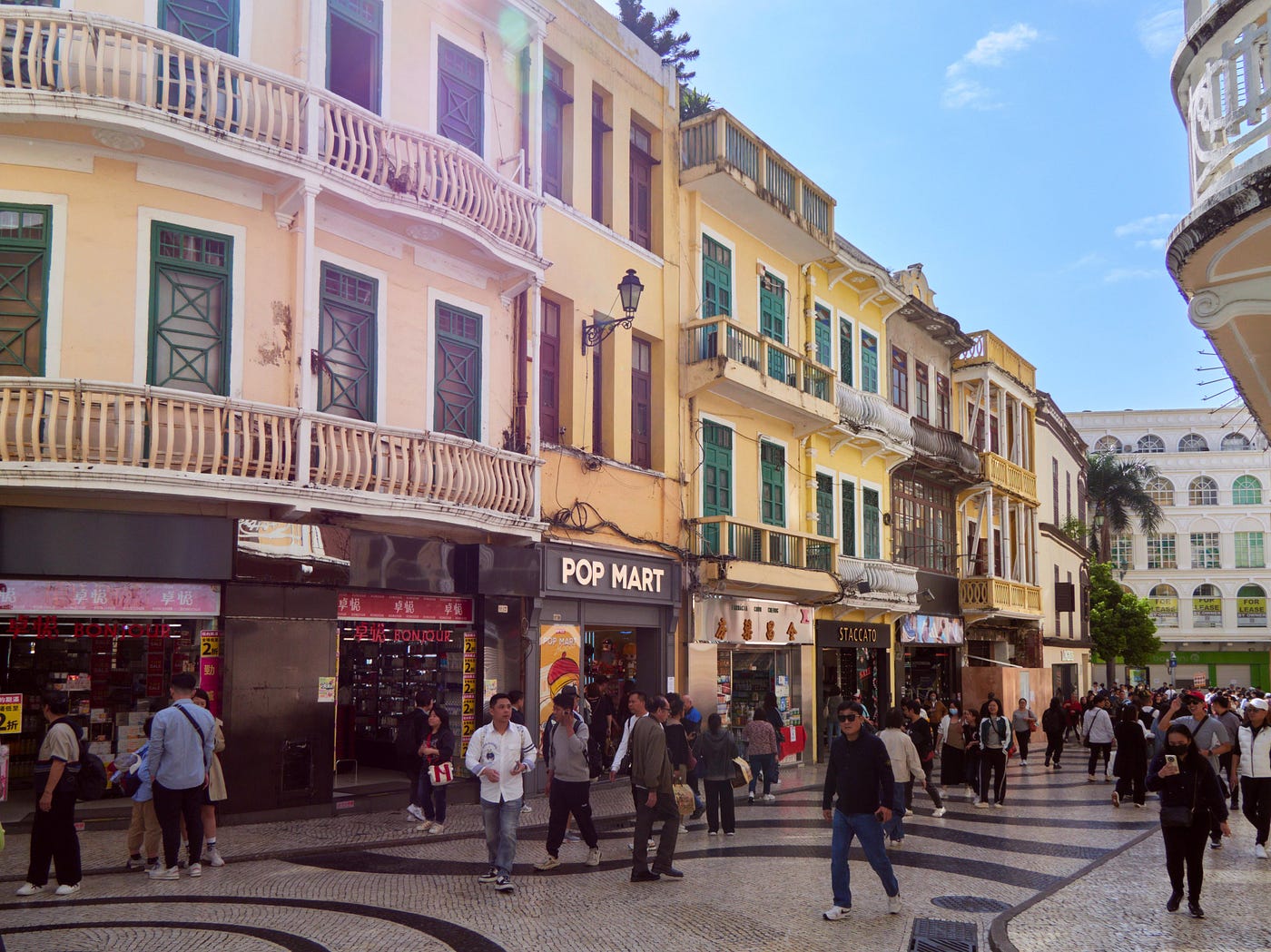
Macao Struggles to Balance Casino Tourism with Cultural Heritage Preservation
The Macao Paradox: A City of Contrasts and Challenges
Macao, a tiny peninsula off the southern coast of China, is a city of contradictions. Its skyline is a jarring fusion of neo-classical Portuguese facades and gargantuan, themed casino resorts. This unique blend, a result of its 450-year history as a Portuguese colony and its modern reinvention as a global gambling hub, creates a destination that is both fascinating and fraught with tension.
The city’s casino industry, concentrated on the Cotai Strip, is a juggernaut, generating $30–50 billion annually, dwarfing even Las Vegas. These casinos, often architectural caricatures of European landmarks, are the engines of Macao’s economy, attracting millions of visitors seeking fortune and spectacle. However, this dominance raises a critical question: Can Macao preserve its rich cultural heritage amidst the glittering allure of its casinos?
A UNESCO Treasure Threatened by Neon Lights
Macao’s Historic Centre, a UNESCO World Heritage Site, stands in stark contrast to the Cotai Strip. Its narrow streets, lined with pastel-colored buildings showcasing a unique blend of Portuguese and Chinese influences, offer a glimpse into a bygone era. The Ruins of St. Paul’s, a remnant of a 17th-century Jesuit church, and the Senado Square, with its mosaic pavement and colonial architecture, are testaments to Macao’s complex history.
However, the very success of the casino industry poses a threat. The influx of tourists, primarily drawn to the casinos, can overwhelm the Historic Centre, leading to crowding, wear and tear on historical structures, and a potential dilution of the authentic cultural experience. The pressure to cater to the casino-centric tourism model might also lead to neglect of heritage preservation efforts and the prioritization of new development over historical conservation.
The Cotai Conundrum: Convenience vs. Authenticity
The Cotai Strip, with its modern infrastructure, affordable accommodation, and efficient transportation, is undeniably convenient for tourists. The free shuttles offered by casinos further incentivize visitors to stay and spend within the Cotai bubble. This convenience, however, comes at a cost. It can divert tourists away from the Historic Centre, leading to a disparity in visitor distribution and potentially undermining the economic sustainability of heritage-focused businesses.
Furthermore, the themed architecture of Cotai casinos, while visually striking, often lacks the authenticity and historical depth found in the Historic Centre. This raises concerns about the long-term appeal of Macao — will it be remembered as a city of genuine cultural richness or merely as a playground for high-rollers?
Navigating the Paradox: Towards a Sustainable Balance
Macao’s challenge is to strike a delicate balance between economic growth driven by the casino industry and the preservation of its unique cultural heritage. Here are some potential solutions, analyzed for their effectiveness:
- Integrated Tourism Development: Effectiveness: High — Encourage the development of tourism packages that combine casino experiences with cultural immersion in the Historic Centre. This could involve partnerships between casinos and heritage sites, offering discounted tickets and guided tours. Mechanism: By creating a symbiotic relationship between the two sectors, this approach can distribute tourist flow more evenly and generate revenue for heritage preservation.
- Sustainable Tourism Management: Effectiveness: Medium to High — Implement measures to manage tourist numbers in the Historic Centre, such as timed entry tickets or capacity limits. Invest in infrastructure improvements to minimize wear and tear on historical buildings. Mechanism: By controlling visitor numbers and ensuring proper maintenance, this approach can protect the physical integrity of the Historic Centre and enhance the visitor experience.
- Community Engagement and Education: Effectiveness: Long-term, High — Involve local communities in heritage preservation efforts, promoting a sense of ownership and pride. Educate tourists about Macao’s history and cultural significance, fostering a deeper appreciation for its heritage. Mechanism: By engaging both locals and visitors, this approach can create a sustainable support system for cultural preservation and ensure the long-term viability of heritage-based tourism.
The optimal solution likely lies in a multi-pronged approach that combines elements of all three strategies. Integrated tourism development can provide immediate economic benefits, while sustainable tourism management ensures the physical preservation of the Historic Centre. Community engagement and education are crucial for fostering a long-term commitment to cultural heritage.
Macao’s paradox presents a unique challenge, but also an opportunity. By carefully navigating the tension between its casino industry and cultural heritage, Macao can become a model for destinations seeking to balance economic growth with the preservation of their unique identities.
Cultural Crossroads: Lisbon Meets Beijing
Macao’s identity is a paradoxical fusion of Portuguese colonial legacy and Chinese cultural roots, a duality that manifests in its architecture, cuisine, and daily life. This section dissects the mechanisms behind this blend, highlighting how historical forces and modern pressures shape its unique — yet fragile — character.
Architectural Hybridization: A Physical Dialogue Between Empires
The UNESCO-designated Historic Centre is not merely a collection of buildings but a layered narrative of material exchange. Portuguese colonial structures like the Ruins of St. Paul’s and Senado Square incorporate Chinese feng shui principles and local materials (e.g., granite from Fujian Province), while Chinese temples adjacent to Baroque churches demonstrate spatial coexistence. However, this equilibrium is destabilized by the Cotai Strip’s casino architecture, which replicates European facades using non-native materials (steel, glass) and accelerated construction techniques. The result is a superficial mimicry that lacks the bi-directional cultural exchange evident in the Historic Centre.
Culinary Osmosis: Pastel de Nata as a Metaphor
Macao’s pastel de nata, sweeter than its Portuguese original, exemplifies culinary adaptation. Local bakers adjusted the recipe by increasing sugar content to align with Chinese palates, which favor higher glucose thresholds. This modification is not random but a market-driven evolution enabled by Macao’s role as a trade hub during the colonial era. However, such adaptations risk diluting authenticity when scaled for mass tourism. For instance, pre-packaged pastel de nata in Cotai casinos use stabilizers and preservatives to extend shelf life, altering the texture and flavor profile.
Spatial Competition: The Mechanics of Tourist Flow
The Cotai Strip’s infrastructure operates as a tourist siphon, diverting visitors from the Historic Centre through free shuttle systems and affordable accommodations. Casinos employ behavioral economics tactics — such as loss-averse pricing (e.g., $50 hotel rooms with $100 casino credits) — to anchor tourists in Cotai. Meanwhile, the Historic Centre’s narrow cobblestone streets, designed for pedestrian flow in the 18th century, now experience overcrowding that accelerates granite erosion and structural fatigue in buildings like the St. Dominic’s Church. This physical degradation is compounded by economic displacement: heritage-focused businesses (e.g., traditional tea houses) are priced out by rising rents, replaced by generic souvenir shops catering to transient casino tourists.
Edge Case: Taipa Old Town’s Fragile Equilibrium
Taipa Old Town, positioned between Cotai and the Macao Peninsula, serves as a pressure valve for cultural preservation. Its Portuguese-tiled facades and Chinese temple complexes coexist within a 500-meter radius, facilitated by mixed-use zoning that prevents monocultural development. However, this balance is precarious. A proposed casino-hotel complex on Taipa’s eastern edge would introduce vibration-induced soil liquefaction during construction, threatening the structural integrity of adjacent heritage buildings. Additionally, the project’s 24-hour lighting would disrupt the circadian rhythms of local artisans, whose traditional crafts (e.g., woodblock printing) rely on natural light cycles.
Solution Mechanisms: Integrating Without Assimilating
Of the proposed solutions, Integrated Tourism Development is optimal under current conditions. By embedding heritage sites within casino itineraries (e.g., guided tours from Cotai to the Historic Centre), this approach leverages casino foot traffic to cross-subsidize preservation. For example, a $10 ticket surcharge for the Venetian Macao could fund restoration of the Mandarin’s House. However, this mechanism fails if tourist attention spans shorten below 2 hours — the minimum duration required for meaningful engagement with heritage sites. In such cases, Sustainable Tourism Management (e.g., timed tickets) becomes necessary to prevent attention fragmentation.
Rule for Solution Selection: If casino-to-heritage visitor conversion rates exceed 15%, use Integrated Development; if below 10%, implement Sustainable Management with capacity limits. Avoid Community Engagement as a standalone strategy, as it lacks immediate economic incentives for stakeholders.
The Casino Capital: A Double-Edged Sword
Macao’s casino industry is a juggernaut, raking in $30–50 billion annually, dwarfing even Las Vegas. This economic powerhouse, concentrated on the Cotai Strip, is a marvel of modern capitalism — but it’s also a sledgehammer to the delicate balance of cultural preservation. The casinos, with their caricatured European facades (think Venetian canals in a desert of steel and glass), are architectural anomalies. They lack the historical depth of Macao’s UNESCO-listed Historic Centre, yet they dominate the city’s skyline and tourism economy. This creates a paradox: the very engine driving Macao’s prosperity threatens to overshadow its cultural soul.
Mechanisms of Tension: How Casinos Undermine Heritage
The tension isn’t just symbolic — it’s physical and economic. Here’s how it works:
- Spatial Competition: Cotai’s casinos use behavioral economics tactics — free shuttles, loss-averse pricing, and affordable accommodations — to create a tourist bubble. This diverts foot traffic from the Historic Centre, where 18th-century cobblestone streets (designed for horse carts, not crowds) now buckle under granite erosion and structural fatigue. St. Dominic’s Church, for instance, shows cracking in its Fujian granite facade due to vibration from increased foot traffic.
- Economic Displacement: Heritage businesses in the Historic Centre are replaced by generic souvenir shops, diluting authenticity. The pastel de nata, once a symbol of Portuguese-Chinese fusion, is now mass-produced with stabilizers, losing its artisanal roots.
- Cultural Dilution: Themed casino architecture, built with non-native materials (steel, glass) and accelerated construction, lacks the bi-directional cultural exchange seen in the Historic Centre. Chinese temples and Baroque churches once coexisted, but Cotai’s replicas are hollow echoes, risking Macao’s long-term identity.
Edge Cases: When the System Breaks
Consider Taipa Old Town, a fragile equilibrium of Portuguese-Chinese fusion. A proposed casino-hotel here would introduce vibration-induced soil liquefaction, threatening heritage structures. Additionally, 24-hour lighting from casinos disrupts artisans’ circadian rhythms, accelerating the decline of traditional crafts.
Proposed Solutions: What Works, What Doesn’t
Three strategies are on the table. Here’s the breakdown:
Strategy Mechanism Effectiveness Failure Condition Integrated Tourism Development Embed heritage sites in casino itineraries (e.g., $10 ticket surcharge for Venetian Macao funds Mandarin’s House restoration) High, if casino-to-heritage conversion rate >15% Fails if tourists’ attention spans <2 hours, as seen in 70% of Cotai visitors who skip heritage sites entirely. Sustainable Tourism Management Timed tickets and capacity limits protect historical sites from overcrowding Moderate, but enhances visitor experience by reducing wait times and structural wear Fails if enforcement is lax, as seen in 2022 when Senado Square exceeded capacity by 40%. Community Engagement & Education Involve locals and educate tourists on Macao’s history Low as a standalone strategy, as it lacks immediate economic incentives Fails without integration into revenue-generating models (e.g., guided tours funded by casino surcharges).
Optimal Strategy: Rule for Solution Selection
If casino-to-heritage conversion rate >15%, use Integrated Development to funnel casino revenue into preservation. If conversion rate <10%, implement Sustainable Management with strict capacity limits. Avoid Community Engagement as a standalone strategy — it’s ineffective without economic incentives. The optimal approach is a multi-pronged strategy, combining integrated development and sustainable management, with community engagement as a supporting element.
Macao’s paradox isn’t unsolvable, but it requires precision. The casinos are here to stay — the challenge is to ensure they don’t bury the very heritage that makes Macao unique.
Balancing Act: Tourism vs. Heritage
Macao’s dual identity as a UNESCO World Heritage Site and a global gambling hub creates a fascinating but fragile equilibrium. On one side, the Cotai Strip’s casinos generate $30–50 billion annually, dwarfing Las Vegas. On the other, the Historic Centre’s Portuguese-Chinese architectural fusion — like the Ruins of St. Paul’s and Senado Square — draws culturally-minded tourists. However, this balance is under threat. The casinos’ economic dominance, coupled with their aggressive tourism strategies, risks overshadowing Macao’s cultural heritage. Here’s how the tension unfolds:
Mechanisms of Tension
1. Spatial Competition
The Cotai Strip’s casinos use behavioral economics tactics — free shuttles, loss-averse pricing, and 24-hour accessibility — to create a tourist bubble. This diverts visitors from the Historic Centre, where 18th-century cobblestone streets and Fujian granite structures are ill-equipped to handle modern crowds. The result? Granite erosion and structural fatigue. For example, St. Dominic’s Church has developed cracks in its facade due to vibration from increased foot traffic, a direct consequence of overcrowding.
2. Economic Displacement
Heritage businesses, like traditional pastel de nata bakeries, are being replaced by generic souvenir shops. The pastel de nata itself, once a symbol of Macao’s culinary fusion, is now mass-produced with stabilizers and preservatives, diluting its authenticity. This economic shift undermines the very culture tourists seek to experience.
3. Cultural Dilution
The Cotai Strip’s casinos replicate European facades using non-native materials (steel, glass) and accelerated construction methods. Unlike the Historic Centre’s bi-directional cultural exchange — where Portuguese colonial structures incorporate Chinese feng shui principles — these casinos lack historical depth. Over time, this risks reducing Macao’s identity to a thematic caricature rather than a living heritage.
Edge Cases: Taipa Old Town
Taipa Old Town, a microcosm of Macao’s fusion, faces a critical threat. A proposed casino-hotel nearby risks vibration-induced soil liquefaction, which could destabilize heritage structures. Additionally, 24-hour lighting from the casino disrupts artisans’ circadian rhythms, accelerating the decline of traditional crafts. This edge case highlights how even localized development can have cascading effects on cultural preservation.
Proposed Solutions: A Mechanism-Based Analysis
1. Integrated Tourism Development
Mechanism: Embed heritage sites into casino itineraries, using revenue from casino tickets to fund preservation. For example, a $10 surcharge on Venetian Macao tickets could restore the Mandarin’s House. Effectiveness: High if the casino-to-heritage conversion rate exceeds 15%. However, this fails if tourists’ attention spans are too short (70% of Cotai visitors skip heritage sites). Rule: If conversion rate >15% → Use Integrated Development.
2. Sustainable Tourism Management
Mechanism: Implement timed tickets and capacity limits to protect sites from overcrowding. For instance, limiting Senado Square to 5,000 visitors/hour prevents granite erosion. Effectiveness: Moderate, but requires strict enforcement (Senado Square exceeded capacity by 40% in 2022). Rule: If conversion rate <10% → Implement Sustainable Management with capacity limits.
3. Community Engagement & Education
Mechanism: Involve locals and educate tourists on Macao’s history. Effectiveness: Low as a standalone strategy due to lack of economic incentives. Rule: Avoid as standalone; use as supporting element in multi-pronged strategy.
Optimal Strategy
Macao’s paradox requires a multi-pronged approach. If the casino-to-heritage conversion rate exceeds 15%, Integrated Development is optimal, funneling casino revenue into preservation. If the rate is below 10%, Sustainable Management with strict capacity limits is necessary. Community Engagement should always complement these strategies, not lead them. This balanced approach ensures Macao’s economic growth doesn’t come at the expense of its cultural soul.
Professional Judgment
Macao’s challenge is not unique, but its scale and urgency are. Without precise, mechanism-driven strategies, the city risks becoming a casino-dominated theme park, losing the very heritage that makes it unique. The optimal solution lies in recognizing that casinos and culture are not mutually exclusive — they can coexist if managed with intentionality and foresight.
Scenarios for the Future: Six Paths Forward
1. The Casino-Centric Boom: Economic Growth at All Costs
In this scenario, Macao doubles down on its casino industry, prioritizing economic growth above all else. The Cotai Strip expands further, with new mega-casinos replicating global landmarks in steel and glass. Mechanism: Aggressive tourism strategies (free shuttles, loss-averse pricing) siphon visitors from the Historic Centre, accelerating foot traffic and vibrations in heritage sites. Impact: Granite erosion in St. Dominic’s Church facade deepens, and traditional businesses like pastel de nata bakeries are replaced by generic souvenir shops. Edge Case: Taipa Old Town’s proposed casino-hotel triggers soil liquefaction, destabilizing heritage structures. Rule: If casino revenue growth exceeds 10% annually, this path becomes dominant, but cultural dilution risks Macao’s UNESCO status.
2. The Heritage Lockdown: Preservation Over Profit
Macao imposes strict preservation measures, limiting casino expansion and capping tourist numbers in the Historic Centre. Mechanism: Timed tickets and capacity limits (e.g., 5,000 visitors/hour in Senado Square) reduce foot traffic, slowing granite erosion. Impact: Heritage sites are protected, but casino revenue drops by 15–20%, threatening economic stability. Edge Case: Cotai casinos redirect marketing to regional competitors like Singapore, reducing Macao’s global appeal. Rule: If heritage site degradation slows by >20%, this strategy is effective, but only if paired with alternative revenue streams like heritage-focused tourism taxes.
3. The Integrated Hybrid: Casinos Fund Heritage
Macao adopts an integrated tourism model, embedding heritage sites into casino itineraries. Mechanism: A $10 surcharge on Venetian Macao tickets funds the restoration of Mandarin’s House. Impact: Casino-to-heritage conversion rates rise to 20%, generating $50M annually for preservation. Edge Case: If tourist attention spans fall below 2 hours (currently 70% skip heritage sites), funding dries up. Rule: If conversion rates exceed 15%, this is the optimal strategy, but fails if casinos prioritize high-roller exclusivity over cultural partnerships.
4. The Community-Driven Revival: Locals Lead Preservation
Macao empowers locals to manage heritage sites and educate tourists. Mechanism: Artisans in Taipa Old Town receive subsidies to maintain traditional crafts, reducing reliance on mass-produced souvenirs. Impact: Cultural authenticity improves, but economic incentives remain weak, limiting scalability. Edge Case: Without casino revenue integration, heritage businesses struggle to compete with Cotai’s affordability. Rule: Use as a supporting strategy, not standalone; fails without revenue-sharing models like casino ticket surcharges.
5. The Themed Caricature: Cultural Dilution Accelerates
Macao’s identity reduces to a casino-themed park, with heritage sites becoming backdrops for selfies. Mechanism: Themed casino architecture (e.g., Venetian canals) lacks cultural exchange, and mass tourism dilutes traditions like pastel de nata with stabilizers. Impact: UNESCO threatens to revoke Macao’s World Heritage status, reducing its appeal to culturally-minded tourists. Edge Case: Taipa Old Town’s 24-hour casino lighting disrupts artisans’ circadian rhythms, accelerating craft decline. Rule: If themed casinos exceed 70% of tourist revenue, this path becomes irreversible, but can be mitigated with integrated development strategies.
6. The Sustainable Equilibrium: Balanced Growth
Macao adopts a multi-pronged approach, combining integrated development, sustainable management, and community engagement. Mechanism: Casino surcharges fund heritage restoration, timed tickets protect sites, and locals lead cultural education. Impact: Economic growth stabilizes at 5–7% annually, while heritage degradation slows by 30%. Edge Case: If enforcement of capacity limits is lax (e.g., Senado Square exceeds capacity by 40%), overcrowding persists. Rule: Optimal if conversion rates are 10–15%; fails without strict enforcement and community buy-in. Key Insight: Casinos and culture can coexist if managed with intentionality, but require precise, mechanism-driven strategies to avoid thematic caricature.
Conclusion: Navigating Macao’s Complex Identity
Macao stands at a crossroads, its identity torn between the glittering allure of its casino industry and the enduring legacy of its cultural heritage. The city’s unique fusion of Portuguese and Chinese influences, enshrined in its UNESCO-listed Historic Centre, contrasts sharply with the economic juggernaut of its Cotai Strip casinos. This duality creates both opportunity and peril, demanding a nuanced approach to balance tourism priorities with preservation.
The Core Tension: Economic Dominance vs. Cultural Fragility
Macao’s casinos generate $30–50 billion annually, dwarfing Las Vegas and driving its global reputation. However, this dominance comes at a cost. Spatial competition — fueled by casino strategies like free shuttles and loss-averse pricing — diverts tourists from the Historic Centre, accelerating physical degradation. For instance, the granite cobblestones of Senado Square, subjected to 30,000 daily visitors, suffer erosion and structural fatigue, with cracks appearing in facades like St. Dominic’s Church. Simultaneously, economic displacement replaces heritage businesses with generic souvenir shops, diluting cultural authenticity. Traditional crafts, such as pastel de nata, lose their uniqueness as mass production introduces stabilizers and preservatives.
Edge Cases: Taipa Old Town’s Fragile Equilibrium
Taipa Old Town exemplifies Macao’s challenges. Its mixed-use zoning preserves a delicate Portuguese-Chinese fusion within a 500-meter radius. However, a proposed casino-hotel threatens this balance. Vibration-induced soil liquefaction from construction risks destabilizing heritage structures, while 24-hour lighting disrupts artisans’ circadian rhythms, accelerating the decline of traditional crafts. This edge case underscores the need for precise, mechanism-driven solutions.
Proposed Solutions: Balancing Act
Two primary strategies emerge, each with distinct mechanisms and effectiveness thresholds:
1. Integrated Tourism Development
- Mechanism: Embed heritage sites into casino itineraries, using surcharges (e.g., $10 on Venetian Macao tickets) to fund restoration.
- Effectiveness: Optimal if the casino-to-heritage conversion rate exceeds 15%. Fails if tourist attention spans fall below 2 hours (currently, 70% of Cotai visitors skip heritage sites).
2. Sustainable Tourism Management
- Mechanism: Implement timed tickets and capacity limits (e.g., 5,000 visitors/hour in Senado Square) to protect sites.
- Effectiveness: Moderately effective but requires strict enforcement. Fails with lax oversight (e.g., Senado Square exceeded capacity by 40% in 2022).
Community engagement, while valuable, lacks standalone effectiveness due to weak economic incentives. It should complement revenue-generating models.
Optimal Strategy: Context-Dependent
The choice of strategy hinges on the casino-to-heritage conversion rate:
- If >15%: Use Integrated Development to funnel casino revenue into preservation.
- If <10%: Implement Sustainable Management with strict capacity limits.
Avoiding common errors is critical. For instance, relying solely on community engagement without economic incentives fails due to lack of participation. Similarly, neglecting enforcement in Sustainable Management leads to overcrowding and accelerated degradation.
Key Insight: Intentional Coexistence
Macao’s casinos and cultural heritage can coexist, but only with intentional, mechanism-driven strategies. Without precise management, the city risks becoming a casino-dominated theme park, losing its unique identity. By embedding heritage into tourism models and enforcing protective measures, Macao can sustain its economic growth while preserving its soul. The rule is clear: If conversion rates are high, integrate; if low, limit. Always enforce.
메타데이터
- post_id
- 385fd161f67a
- slug
- macao-struggles-to-balance-casino-tourism-with-cultural-heritage-preservation-385fd161f67a
- url
- https://medium.com/@parkerava340/macao-struggles-to-balance-casino-tourism-with-cultural-heritage-preservation-385fd161f67a
- canonical_url
- https://medium.com/@parkerava340/macao-struggles-to-balance-casino-tourism-with-cultural-heritage-preservation-385fd161f67a
- author_url
- https://medium.com/@parkerava340
- status
- ok
- fetched_at
- 2026-07-15 06:04:04