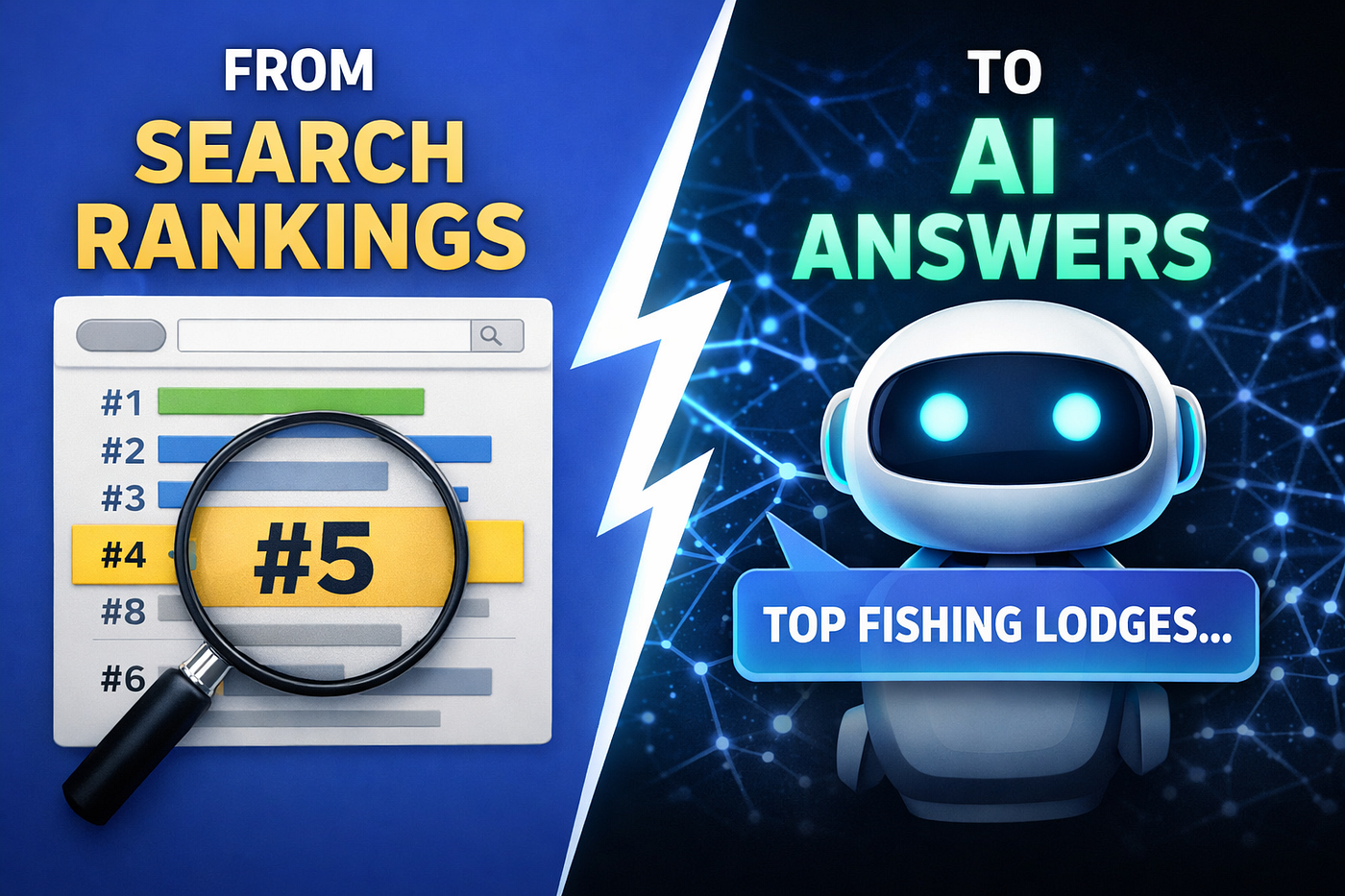
AI SHAKES UP TOURISM MARKETING
How Trends Have Changed — What’s Working Now — How To Prepare and Prosper with Google AI Snippets
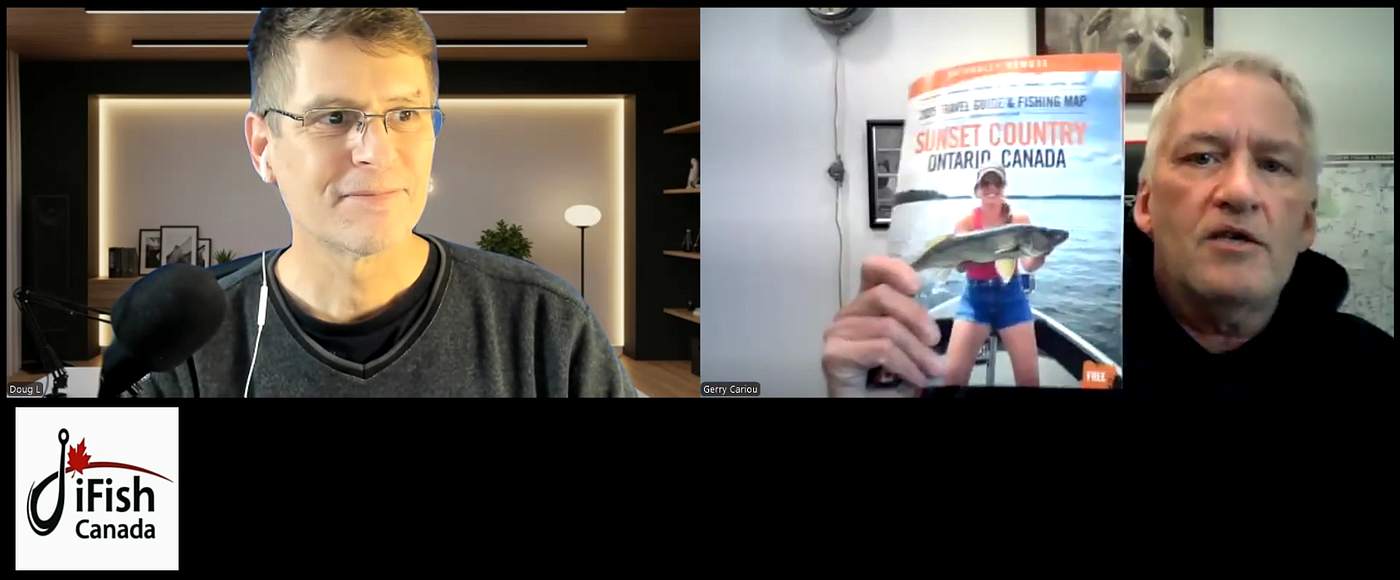
Podcast Interview with Gerry Cariou — Executive Director of Ontario’s Sunset Country Travel Association
AI SHAKES UP TOURISM MARKETING
How Trends Have Changed — What’s Working Now — How To Prepare and Prosper with Google AI Snippets
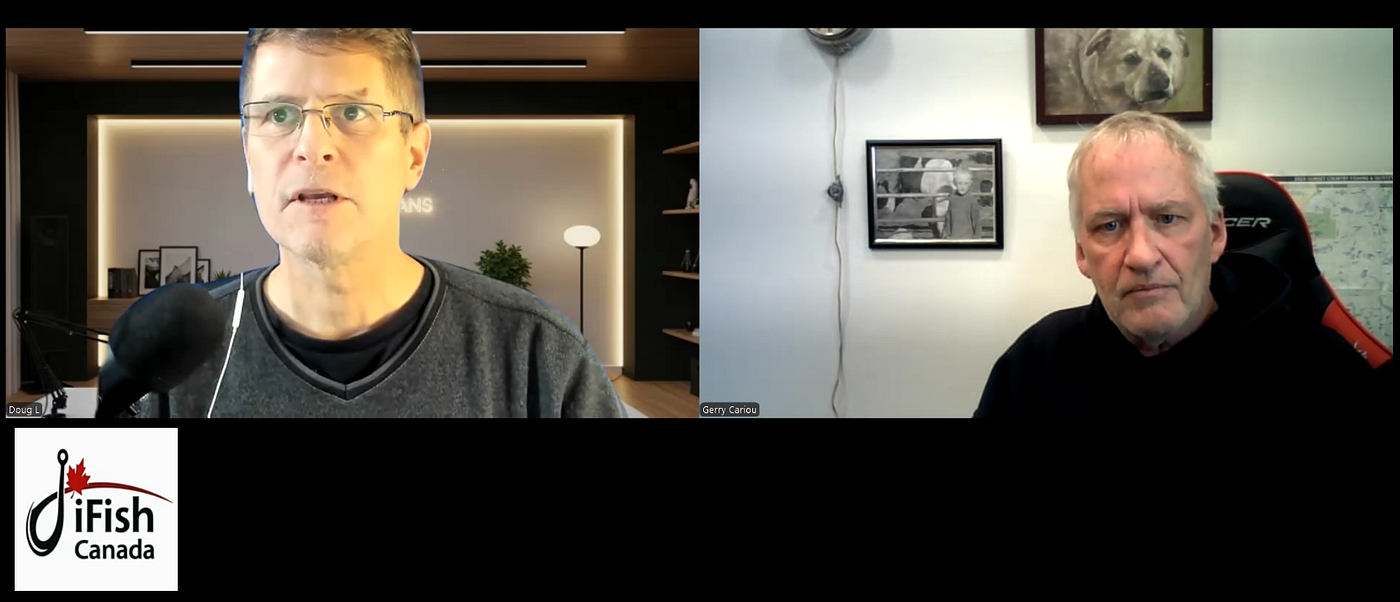
Today I’m excited to welcome Gerry Cariou to our show.
Gerry is the executive director of the Ontario Sunset Country Travel Association and he’s going to give us some insights to help your tourism business save costs and get more bookings.
My name is Douglas Lampi and this is the IFishCanada podcast.
[embed]Watch on YouTube
Today, I’m really in excited to introduce our guest, Gerry Cariou.
Welcome aboard, Gerry. Hey, it’s great to be here.
Thanks uh for having me.
I want to give you a proper introduction so people know uh your background.
Gerry has been widely recognized as one of Canada’s foremost authorities in tourism marketing. Celebrated for his vision and his spirit and his unwavering commitment to advancing the industry.
Over the decades, Gerry has played a pivotal role in shaping how Canadian destinations and small businesses connect with travelers, consistently blending new approaches with marketing principles that stand the test of time.
From the earliest days of print and broadcast to the current days of digital strategies and social media engagement and now AI travel planning, his expertise has helped countless Canadian lodges and resorts and regional tourism destinations become more competitive while building a legacy of tireless dedication to making Ontario sunset country a premier destination for adventurists from around the world.
Thank you for being here, Gerry, and I look forward to this next 30 minutes.
Yeah, so do I. It’ll be an interesting chat. There’s um there’s a lot going on in in destination marketing.
Um AI, which we’re going to talk about today being probably the most significant thing that people I in in my circle are talking about.
FROM DIALUP DAYS TO TIKTOK

Doug:
So, so let’s go back to the very beginning and talk about how things have changed for the industry right from back in the 1990s and all the way through the changes up into where we are now.
Gerry:
Well, you know, I’ve been around a really long time. I’m involved in travel marketing uh in one form or another since the early 1990s.
So, we’re working on about 33 years um since I graduated from uh the University of Wateroo in economic development. Um, you know, travel is is a dynamic uh industry and technology uh the ability to adapt to technology. Key word being I think adapt to embrace and change without becoming over anxious.
Um you have to have a uh open mind and become an early adopter I think. So that’s the thing over 33 years in travel marketing and running a destination management organization here in Ontario that’s since 99. So I’m what 27 years come March there.
Um is is that ability it’s to embrace to um open your mind to the new technology. I mean, I I come from the days of dialup of, you know, and, you know, you had to have a picture that essentially was the size of a thumbnail to load properly on a website. We’re talking, I believe,’95 ‘96 where the, you know, initial stabs at getting the internet.
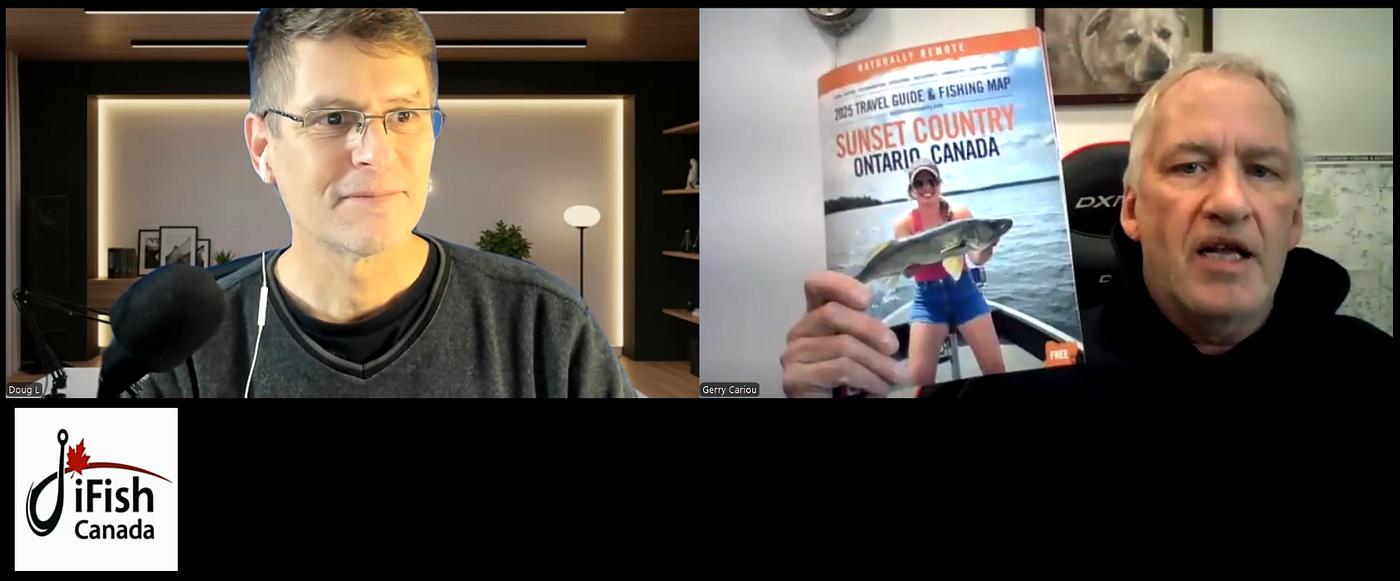
Um, the the the dramatic change in in technology is evidenced by say a sports show environment. You go to a sports show back in 1994, 93,92, you’re giving away, you know, you’re giving away 6,000 of these guides at one show. The show was 10 days long.
And, you know, endless launch brochures as well. Everyone went to the sports show, 60 to 80,000 people over a 10 day period. Some of the bigger ones even more.
That has now changed where an evaluation of a good sports show is 700 to a,000 guides distributed at at a venue as a you know so a decline of like 400 500%.
SPORT SHOWS STILL WORK
So, don’t get me wrong, sports shows are still part of a marketing mix for especially for destination marketing that focuses on resource-based tourism such as fishing and hunting lodges. But digital uh the rise of the internet, social media coming shortly thereafter, what in 2006, 2007, 2008, Facebook especially being probably the main change agent there, Instagram being another one.
Um has really precipitated a need to adapt.
Uh I’m going to use that word a lot today probably in our conversation is the word adapt and uh and not be fearful. Fear a little bit of fear is okay but you can you can overthink stuff always.
Um and I always try to tell myself okay so what do we got to do to fit in?
And now moving to the current 2025 AI is the new thing. I honestly think it may be even more of a dramatic impact over the next 5 to 10 years than social media even was.
Um or it certainly will equal the impact of social media.
Um so it’s time to get on that bandwagon to learn and and to move forward with uh a positive view uh and take advantage. So AI has advantages and disadvantages and human interaction and human judgment are the key for controlling AI. That’s in my view is is you need your intuition and your experience to use AI as a tool as opposed to relying on it.
What some people uh think it is is just replaces people and what people do that will never be replaced. So that would be the first thing I would probably drop about AI.
Doug
Well, that’s awesome. I really like to hear the whole story of how things have started from the especially the change in how you’ve measured the distribution of your guides and getting those quantifiable numbers to see where those numbers have changed.
And if you were to do the reverse now and do a number change of how the the website traffic and the social media became u growth engines, that would be pretty cool.
Gerry:
It it still is. So, social media is still a huge element.
From a travel association point of view, we’re membership based, meaning all these uh lodges and resorts that are present in our geographic destination area in northwestern Ontario pay an membership fee to us annually. And what we do is we’re the the regional marketer, the regional tourism marketer. We we we not only do the the core experiences of fishing and hunting, but outdoor adventure, paddling, camping, hiking, winter sports are are becoming more popular.
Ice fishing, cross-country ski, you know, winter snowmobiling. Um so with that in mind, you you move forward and um social is still a key way.
I’d say probably on an annual basis, Doug, 65% of our total inquiry volume is generated still through social media advertising and at a decent cost.
TURN GUESTS INTO CONTENT GOLD
The thing I really like about social um is the ability to tell a story. Uh that’s key. You got to tell a story.
Uh you got to sort of why how am I unique from the other for the fishing lodges? How is my lodge some? Every lodge is unique from one another. It’s a matter of communicating that, but communicate the story.
The other thing is through social is leverage your your guest content. People love taking pictures of the giant pike or the giant walleye or you know the 49in musky they caught in Sunset Country and leverage them, ask them to tell their story.
So these are areas I’m currently exploring is is is working with we have a very large uh base of people who follow us uh who who like what we talk about on our social media platforms and who want to tell their story through us.
So um what we do is we share uh our members content but we also share locals content.
So the locals who fish around here, a lot of the stuff we share on Instagram stories, for example, Doug, that’s what people are looking for. And it partly relates to being even more important, authenticity, because generative AI is starting to cast doubts here and there of is this real?
And so social can balance that. You can use AI uh to to generate content. It’s how you do it.
Um, and we we’re going to get into a little bit uh that a little bit more detail later, I think. But it’s it’s still social is a key part of of what you do. And it’s so look at as a big recipe you’re building.
And the recipe includes traditional stuff, television, sports shows, even print. Print is is making a bit of a comeback uh actually. Uh and add that digital digital search, digital social and now of course AI snippets um AI and generative AI uh to to actually reduce your workload.
Um it’s it can don’t get it to replace your workload enhance what you’re already doing.
Look at AI in those contexts I think is what’s most important. So, um I know you’re very successful at the uh Facebook marketing and then you’re active on that all the time.

Doug:
So, if you were to give a piece of advice to a lodge owner who finds the whole process overwhelming and then they just never get to it, what would be a key that you would give them?
Gerry:
I think that the the thing I mentioned earlier is leverage your guest content. So, a lot of lodges I talk to, well, what do I post?
Your guests are out there every day. They all likely have uh mobile phones with them. Get them to take pictures and at the end of the day ask meet them at the dock.
Ask how their day was. It was a good day. They probably had a great day on the water.
That’s just the nature of fishing in in northwestern Ontario. Yeah. And um get them to send you some of their images.
Get them to tell you what happened that day and then convey that to your broader following on social. That would be leveraging guest content is key. And look to advertise.
I think um organic reach on al the algorithm changes have been dramatic.
I can give you a story. We used to post just an organic beautiful sunset over lake, you know, um beautiful pines, white pines silhouetted organically 12 years ago, 2,000 to 3,000 likes, 200 shares.
Today that same post, same beauty organically will generate between likely with our base of 126,000 followers probably 100 maybe 200 likes 20 shares. So there’s been a dramatic change in the algorithm which requires you to invest some money in advertising on the platforms.
So the first thing is get a get a Facebook ad account and then you can advertise on IG.
YouTube I think is another very important platform especially short video uh is is coming uh to the forefront in the last few years as a dynamic uh you know reels um is is an interesting development uh through it’s a branch of Instagram.
We we try to be multiplatform uh we have smaller followings on uh platforms such as X uh even started one on blue sky which is the new uh sort of competitor with X I guess maybe a different demographic uh or a different view of the world on blue sky versus maybe the view you see on X and YouTube um you know we try to develop content there.
The key challenge I think for lodges is is what what content?
How do I source content?
How do I develop content?
And to the subject today, AI can be a huge assistant in helping in doing such thing.
Blog content is still really key. Um especially for avid people who are actually interested.
You know, your general population may not be interested in in hearing about a a fishing trip to ex lodge in northwestern Ontario, but the people who love fishing, who have visited here before, they do still want to learn and dream about that.
The the warmest heartwarming story I’ve had in my career is some guy who was 96 years old. I can’t come up there, but can you send me a guide cuz I want to sit by the river?
And he was from Ohio and uh look at your book and dream about my 50 years. I went up there and this guy went 50 years. It goes to show you the emotional tie in.
Yeah. And and there’s people here who were crushed. I talked to one guy was 84.
He was on his going to be on his 69th consecutive year from when he was coming as a 15year-old kid with his dad back in the 40s I think it was but his streak was ended by co and the guy was choking back tears on the phone when he talked to me about how that affected him.
So we our area or the experiences offered in the outdoor tourism that we have here is something that’s people relate to.
People love nature, they love fishing, they love hunting, they love paddling, camping, spending time with their family.
Those are all things relate to. That’s the part of your business as a lodge you want to leverage. Leverage it in your marketing uh and and and embrace it.
Be positive about it.
Post a lot of organic content and uh content that appears to be doing well, then either boost it or create an ad. Uh it’s relatively cheap.
I can get I can get cost per landing page views as low as 5 cents uh on platforms like uh you know that’s that’s a good one. Average probably 15 to 20 cents, but you know, you can click through. Uh cost per click.
I like cost per landing page view. I think it’s a uh you know, the other metric you want to look at is how much time, what’s your bounce rate, what’s your time on site.
Those are things that you want to key and it gives you a gives you a gauge of how successful the content in your thing is.
Cuz if you’re getting a lot of if you’re doing a lot of YouTube reels for example, but the drop off rate is 80% after 10 seconds, maybe what you’re posting isn’t hooking and keeping the people. So those are the kind of you got to look at the metric side of it as well as the thing.
But leverage your guest content, that’s the place where I think most of these lodges can start.
Doug:
What hit me as you were talking is the story of the the the traveler who came up so many years and then they weren’t able to come up anymore. And I read a thing on Facebook on somebody’s page the other day of a lodge owner who it’s like a piece of his family who’s not coming again. And then the whole group that used to come every week every every year at that week, the whole uh this community of people also misses that person who’s not coming back anymore.
So there’s a lot of the aging out group and I’m wondering if you could address how some of the lodges are focusing on u replacing those aging uh visitors with some of the younger group.
Gerry:
That’s that’s a really good question. So I think you have to a start to understand a where is the younger group?
What platforms are under the younger demographic? Let’s say 30 and under, 35 and under even. Uh well, albeit that’s a smaller portion of the total visitors cuz we have an older demographic in outdoor tourism for our area. The fish hunt demographic is is generally people like me with gray hair uh with some uh you know disposable income, that kind of thing.
Is on Facebook.
The younger group,
where are they? Tik Tok.
Uh where are they? Snapchat. (I I still haven’t figured out Snapchat.)
You know that’s an odd one but uh Instagram is a good way to reach.
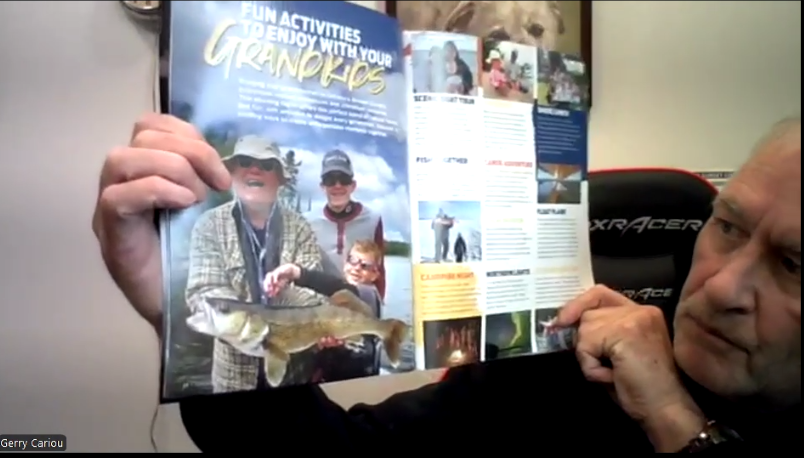
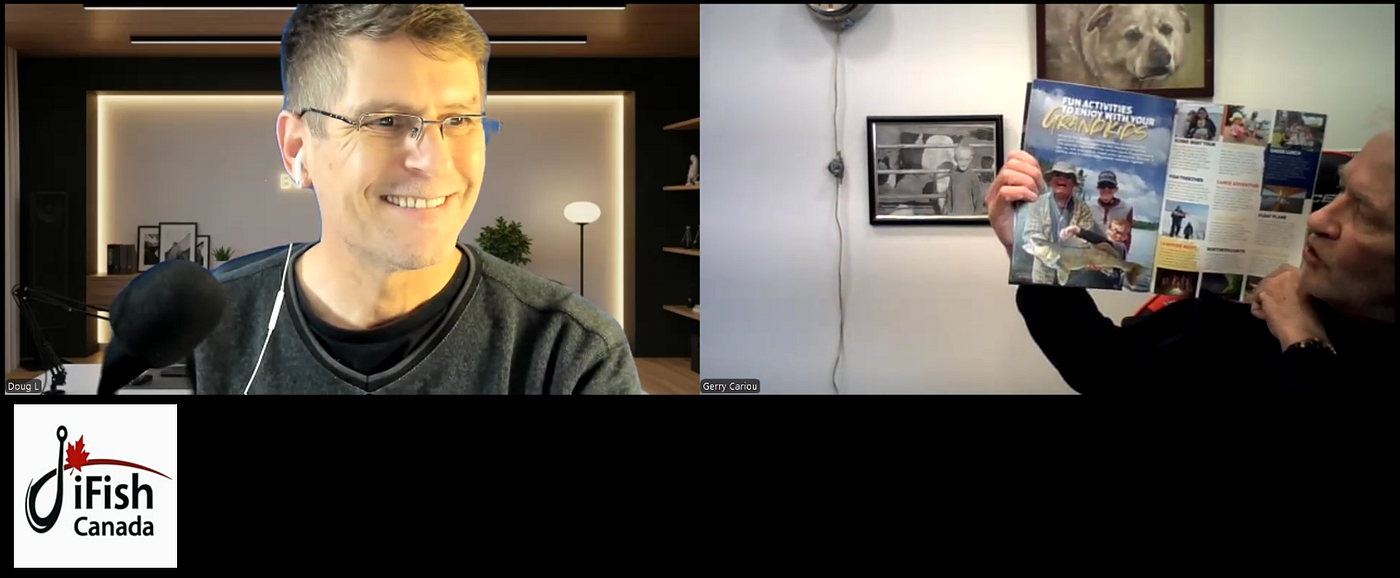
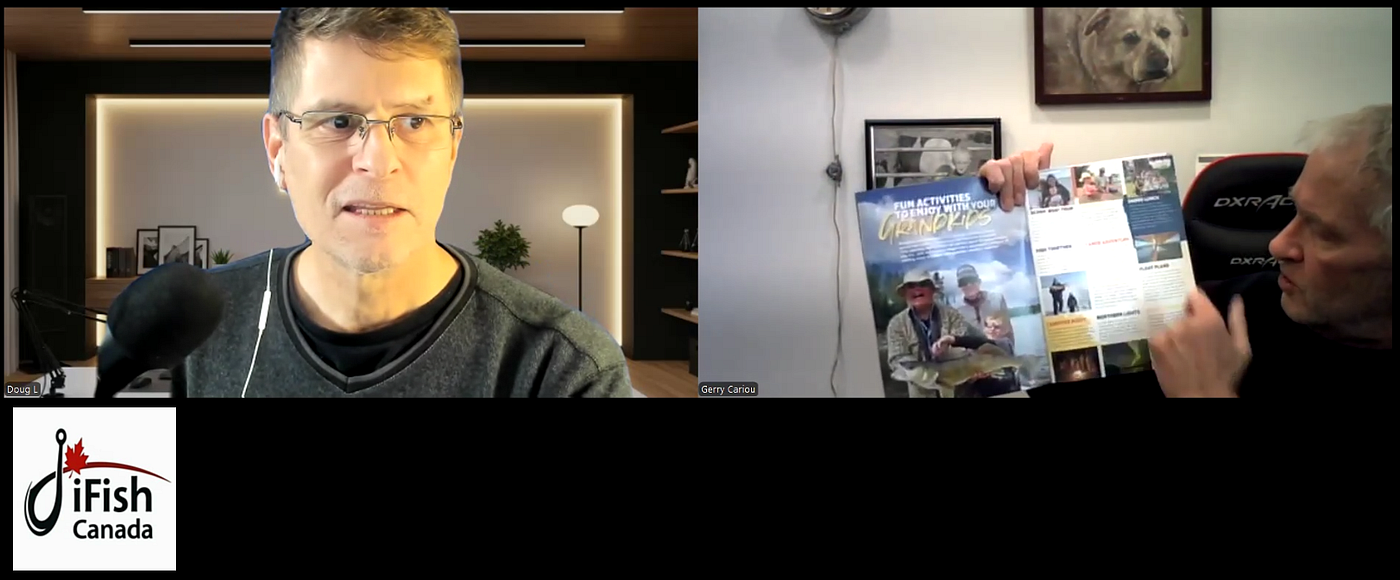
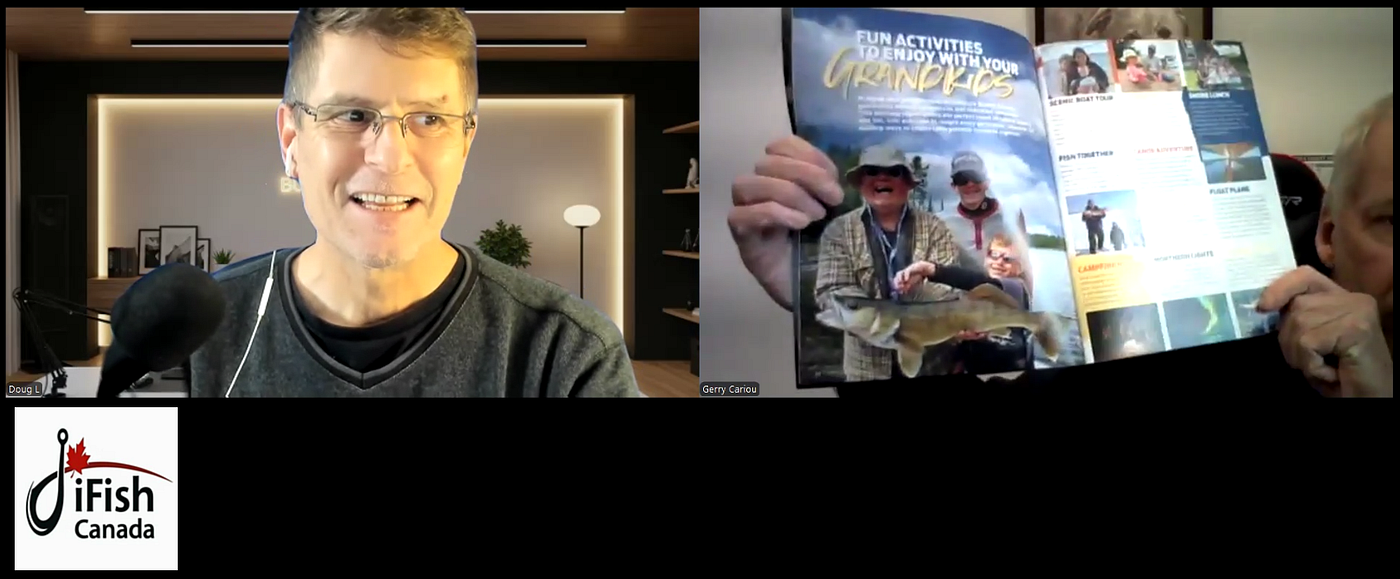
So you have to understand where these people are and you also want to link it as on the generational thing we just spoke about Doug. I think the thing where we have a section we we started promoting if I could show you in here um the guide it’s just a splash page but it focuses on messages to actually the older demographic.
I hope you can see that fun activities to enjoy with your grandkids. So look at the multigenerational things. So what you’re is this gentleman here I believe is the grandfather.
His son would be in the gray and red outfit beside him with the Chicago Cubs. He’s a Cubs fan. That’s okay.
And then the young boy there is the son obviously of that thing holding a walleye in the thrill. And you can see we then have a different suggested things you can do, 10 things you can do with your grandkids on a trip to Sunset Country. So the linkage there um making it fun.
Um the the key thing I hear from today is people are so focused on you know digital devices and and that that they’re living in a virtual world as opposed to a real world.
So how can you get these things to are you up to it?
I think the Gen Z and maybe the one before that, Gen X. The millennials are highly digital.
So, for the replacement demographic because there is an aging out that you mentioned is certainly uh happening.
The groups are smaller. They’re still that older demographic is to to go on where are they? And they’re looking not just for big fish.
They’re looking for a challenge or, you know, or something. Um, and maybe your mix of thing isn’t just the great fishing. That can still be your core as a lodge in northwestern Ontario, but there’s more to it.
Um, and how the messaging then, the psychographics of reaching that younger demographic is something I’m still kind of trying to figure out.
Um, I look at my analytics, my my my visitor base is still skewed quite a bit to 45 plus largely based on the platforms I’m on uh and that we focus on the most.
Um, but um that I think is the key thing is you you got to put a little bit of effort to figure out what those uh younger generation I asked my son, do you ever stop at an Instagram ad?
Because he’s 29, so he’s a millennial. ‘Almost never’ was his response.
How do you scroll-stop them?
How do you get them to be engaged?
Um, I’m not necessarily sure I know the answer to the question on the younger demos, but uh we’ll figure it out and we are working on that.
LET AI MODEL WINNING CAMPAIGNS
Doug
Well, um, one of the things that, uh, I’ve found from the the AI side is that when you’re looking to find what’s working, the best thing to do is go and find out 10 examples that are already working and grab those, give them to the AI and have the AI create a model from that and then you give it your idea and it’ll speak your idea in the form of that model.
So then you can find something of uh something that gets a good engagement rate and just model what they’re doing and then give it your idea and then the AI helps you shape your idea into something that gets better engagement.
Gerry:
So sometimes the AI is really good just for giving it your own original idea for sure and that’s where the mix we talked about earlier about the mix of the human experience and interaction with AI and that’s how the way to leverage AI.
Don’t just say I want 10 posts focusing on this without any input and you just click and post. Is that kind of thing?
The other key thing of course is you can have high engagement but you still have to get it out to enough people.
So how do you get out the stuff you’re using you’re leveraging AI, you know, generative AI to create some IG posts or some Facebook posts or or reels or whatever you’re doing uh to help you generate content, a blog post.
Um key thing check factual information AI comes with because it does make errors. A lot large language models still make errors. Uh it’s new technology one should expect that.
I do see some over reliance on it without checking and uh the funniest told you was that newspaper I think the Pakistan times or something had the chat GPT prompt at the bottom of the article. They had it right. If you would like I can also give you blah blah blah blah blah.
They left that and they actually printed it in an actual newsprint paper. So be careful about that. That obviously, you know, how did it miss the editorial process uh at that newspaper?
Uh they owned it. So good for them that hey, this is quite the, you know, wakeup call for us.
But um the key thing is to do what you said is to is to use AI to do that thing based on successful models.
You still got to have if you have good posts, they still have to reach enough people to make it a meaningful thing. So that’s where maybe combine it with your social, right? And and do their boost it to an audience you don’t have.
Most lodges I see have probably less than 10,000 followers. So many with less than 5,000 followers on key social media platforms. Higher but when because they have such a dedicated following largely their own guests that come there posts do relatively well on organic uh better than say an association page like ours like relative to the size of their follower base.
Oh yeah, right. The number of likes they get and they have 5,000 followers can be equivalent to what we would get with 126,000 followers because people, you know, aren’t maybe as invested in a regional site as they are with say this a specific business site like a launch site. So those are the key things is to use AI.
The way I think you described it is is really a good way, but always you got to please AI. I don’t know if that’s the right word. You’ve got to be there and you got to make it your thing.
People are unique. So the lodge owners themselves are personalities unto themselves.
So make it you can make AI generate the base content but you got to the dressing the window dressing and the trimmings and how you modifications that are needed that’s got to come from you.
So if you can meld those two things together, I think uh the process you suggest is the best process for that. But then make sure that you’re you’re contributing to the the the output of uh of the AI ad.
AI SNIPPETS STEALING YOUR TRAFFIC
Doug
Recently the Google AI overviews are now uh it’s a zeroclick search so that you find the stuff without actually clicking through the search results.
It just brings you a a small result and uh what’s um have you seen any difference in your stats or any results difference from that?
Gerry
The AI snippets have has been blamed a lot for stealing search. Yeah.
So I certainly think we have seen an all this would be a broad trend I’ve seen with other destination marketing organizations say across Ontario uh be it at the provincial sub-regional level or know even sub sub-regional level like say Sunset Country is is yeah there has been an overall traffic decline where uh generalized sites maybe are getting less traffic as a result because AI is returning specific things.
I think that’s going to even increase in the future where people are going to start asking AI for okay of this what of the content you have generated ‘here these are my interests and needs which one do you recommend?’
So AI recommendations is just around the corner and if it’s already not you can do it now for tours for country trips people are asking AI and because it’s AI many are okay I’m going to follow AI suggest suggestions.
Um, I would caution that, you know, you want to maybe check it out a little deeper, take those suggestions.
It’s a good way to narrow down a list, but yeah, you don’t want to just uh blindly follow AI suggestions. Uh, because it doesn’t always take in account all the factors of planning a trip.
Um, yeah, it it’ll aged results that are no longer relevant and and stuff like that. So you still have to double check everything that comes in, but it really limits your whole search experience.
So those people who are not in that (ai search) experience now, you are just dropping out from that younger group of visitors who are potentially looking for you.
You’re just invisible to them, they don’t even hear about you.
I’m hearing from some larger website things, sort of generalized sites, traffic declines just year-over-year.
So we’re talking a 12 to 12 month sort of time frame 30 to 35%. So that’s a lot of them are blaming AI snippets. I think there that’s part of it.
Um the key then of course if you want to address that drop if indeed it’s mostly attributable to AI snippets.
There’s ways where people like you in your business of consulting and expertise in in the technology of AI can help uh in the sense of getting you know the the the text file the site map make sure you have a site map make sure you have structure make sure you have answer is really what they call AI, an answer engine.
REDESIGN WEBSITES FOR ANSWER ENGINES
So on your site, build in answers to questions people have and AI may will then scan like it can scan zillions of pages instantly because you go on chat GPT, you ask it something. Sometimes it says thinking longer for a better answer, which I like actually. Um I see that quite a bit, but I ask it’s how you prompt it, too.
So I ask it some fairly things and then I really modify prompts and I’m still a neophyte in terms of prompt engineering. It’s called the how you ask AI stuff. Yeah.
But that’s key.
Um and then when you when you get that down then you want to make sure that the AI is going to find content on your website and deem it worthy to put it in a snippet is the key here.
Doug:
So that you’re the cited reference when it does when people search for that you’re the one that’s cited for that.
Gerry:
That is correct. So you have to have enough content. So a thinly just oh I have to have a web page kind of a web page you know everyone’s on I got to have a web page that you’re you’re not going to do well in a new AI world.
So we may require either complete website redesigns uh we may require obviously modifications like the uh what do they call it llms.txt txt file or whatever that you know addresses the snippet or I’m not sure that’s what it’s called.
Certainly a site map and the answer engine orientation of how you think answer questions that people have in a general sense on your website and I think that is going to um help you be more visible in a new world of AI uh search and AI summaries.
Doug:
It does seem like uh websites like Expedia and Trip Advisor and maybe Sunset Country, the intermediary sites that were so strong in the past because they had better SEO than a smaller website could do.
Now the AI is just like filtering that out because it is a representation of the final answer and it’s just bringing up the final answer which is the lodge’s website itself.
So if you have the properly structured AI answers on your website, not buried into Facebook, then the AI is going to index you and you’ll you’ll be the one that’s referenced.
Gerry:
Correct. I did a a question in chatGPT just in preparation for this interview.
How are these things working? How’s it you know, what’s it doing? And exactly what you just said.
Can you give me some comprehensive sources of you know information on fishing lodges and fishing in northwestern Ontario Canada
and it did and then
it gave three specific lodges and there’s over 400 lodges but it returned results for just three of them as specific examples of a quality trip.
So thing I haven’t done it yet but I was going to then okay let’s look at those websites that were returned by AI and what are they doing differently and it goes back to your how are the successful thing and then maybe people who aren’t in the AI snippets can emulate what those three lodges are doing.
So use AI to learn AI if that makes sense to then you’ll learn how it kind of returns information to you.
Um, it does give dated information is what I would say is one of its weaknesses. It can give some pretty obsolete website returns that haven’t been updated since you and I were, you know, 25 years old. And for me, that’s it’s almost 40 years ago, you know, and I’m just joking.
I’m being that’s a long time ago. You know, they were they were updated in, you know, 2013 or something. Worst one I’ve ever seen.
And bless this guy, oldtime lodge order was best viewed in Netscape 3 and this was 2015. Wow. It still said that on the bottom of his website.
So, um, right. He had to have a website, but if you have to have a website and that’s your attitude, um, you’re not going to do well in the new world, I think.
So, adapt again.
Embrace and adapt. Yeah.
Doug:
And it’s I like the thing that you started off with at the very beginning where you were talking about the overwhelm, the stress, and the anxiety of it and overthinking things where if you just take a a more of a fun approach to it and don’t try to make you’re going to change the whole world, but make it a process where it’s going to take you a couple cycles of your whole marketing cycle, a few years really to get it all put into place.
Then it’s a lot more fun. It’s a lot easier and you actually get more done.
Gerry:
Oh, agreed.
And you’ll also learn as you go through that process. So AI isn’t an instant fix if you don’t understand it. And we could go prompt engineering probably being one of the key things.
If you don’t understand how AI systems, uh, and I still don’t really understand. I have some idea fine information and I’m constantly trying to like, okay, how do we get in that little club? It’s like a club you want to get into.
Those are the key things. So, embrace it. You’ll you’ll actually feel good after using AI for a while.
But use it daily. Start off five, 10 minutes. Fool around on chatGPT related to your business offering.
See what it’s returning. Say if you’re a lodge in Ear Falls, Ontario, which is a section of Sunset Country. What does AI say about fishing around Ear Falls?
Am I coming up if I my lodges there? Which lodges are coming up? Okay.
Why? Try to figure out why is it picking those lodges and what are they doing like you said I think the key is that use that as use this template sort of um model but again unique you need the unique selling proposition for your facility based on that model.
Um so I want to touch so it’s a learning process it’s not instant gratification.
ONE STORY BECOMES FIFTEEN ASSETS
Doug:
It’s a learning process and it takes steps to get ready for it, but I want to go back to something that you brought up and you showed in the brochure where you were uh tying together the multigenerational family where you’ve got the grandfather, the son, and the the grandson in the picture and then you had a list of all the things that they could do.
For me, this is a great fodder. It’s a great place to start out with as a lodge owner where I could record a 90-second video clip of myself talking about a real guest who actually came and show a picture or two of their experience.
Then I could upload that to YouTube. I could use an AI to split that out so it goes onto Tik Tok, Instagram, and Facebook for me. Another automation will make that into a blog post onto my website.
And then just from this one piece of content, I’ve got 15 pieces of content that help me get out there and naturally covering all the questions that people ask just by answering a question by doing a video that way.
Gerry:
100%. And I mean that’s one of the advantages of AI is the time saving. Think of the time savings if you had to do those three processes blogging, video creation, static posts manually.
If you can have an automation program, uh do that. And that’s what I’m focusing on learning now is how to reduce it.
Because one of the problems we have as a nonprofit destination marketing organization is is money, right?
I mean, you know, was money and people make things happen being the second thing. So, we have not a lot of staff. We’re the largest travel association in Ontario, I believe, by membership or certainly in Northern Ontario um by membership.
So, we I have uh myself uh a marketing uh manager and a part-time admin assistant because that’s all we can afford. So, think of what AI can do there. If you could find some efficiencies to automate Yeah.

Doug
And enhance, like you say, enhance their work so that they’re shifting from making content and doing the social to working on the engagement and the relationships.
Then your your time is spent with people rather than on the technology.
You want people to come back based on the story you tell, right?
So you want them to think about it. You know, you’ll have to maybe drop the word sunset country. They they’re thinking about a Canadian fishing trip.
Well, Canada is a massive country. Where in Canada do I go? So, that’s where Sunset Country comes in.
Well, this is why you should go to Sunset Country. Answer engines. Why visit Sunset Country and have that on your website and have it easily is the right term scannable by the AI bot? I’m not sure what the right term is, but yeah, have it answer questions.
HOOK THEM WITH TROPHY DREAMS
Um, I want to go to, you know, maybe someone in in Chicago is saying, “I want to catch a trophy fish of a lifetime. I love fishing, but I don’t catch big fish around Chicago. Where’s the best place in Canada to find trophy fish?”
Maybe you should be answering that on your website. Maybe positioning yourself and then showing pictures of giant northern pike or a 30-inch walleye, you know, or or a 50-inch muskellunge, that kind of thing. The real thing that is automated then is the excitement.
I don’t know if you ever had a musky on.
Doug
I’ve never caught one of those big musky like I see in the photos.
Gerry:
It’s it’s it’s exhilarating.
I think it’s the right thing. Just some days you go without even seeing one. Some days you’ll catch three.
And you know these fish can be 30 pounds. They’re monsters. Yeah. Monsters.
So the exhilaration, how do you convey that to the larger audience? The guy in Chicago who uh video wants to fun and catch the trophy fish. His son, young son loves fishing, but he’s catching two pound smallmouth or, you know, or carp or or those type of fish.
Well, bring him up to Canada. Maybe he’s going to get a, you know, 28 inch walleye. Maybe he’s going to get something like that.
We ran out of time for this Zoom call and quickly wrapped up a the last moment:
Doug:
So, I want to thank you for being on the show and for sharing all your insights. This is amazing.
I really can’t wait to get this out and online. And I’m gonna invite you back for another one because there’s still so much that we have to talk about. Thanks again for being here, Gerry.
Thanks. And you have a great day, Doug.

iFishCanada
Linkedin 👈
Facebook 👈
🛆 Promotional Disclaimer: Your tourism business can be featured too.

☄ This article may contain referral links for some of my absolute favorite gear for outdoor enthusiasts. If you purchase one of my favorite gear, I will receive a small commission at no additional charge to you.
메타데이터
- post_id
- 38864a122fe3
- slug
- ai-shakes-up-tourism-marketing-38864a122fe3
- url
- https://medium.com/ifishcanada/ai-shakes-up-tourism-marketing-38864a122fe3
- canonical_url
- https://medium.com/ifishcanada/ai-shakes-up-tourism-marketing-38864a122fe3
- author_url
- https://medium.com/@fishingguide
- status
- ok
- fetched_at
- 2026-07-17 02:55:38