A Pictorial Retrospective of Baseball: Part 1, 1868
A new series that goes back, back, back
A Pictorial Retrospective of Baseball: Part 1, 1868
A new series that goes back, back, back
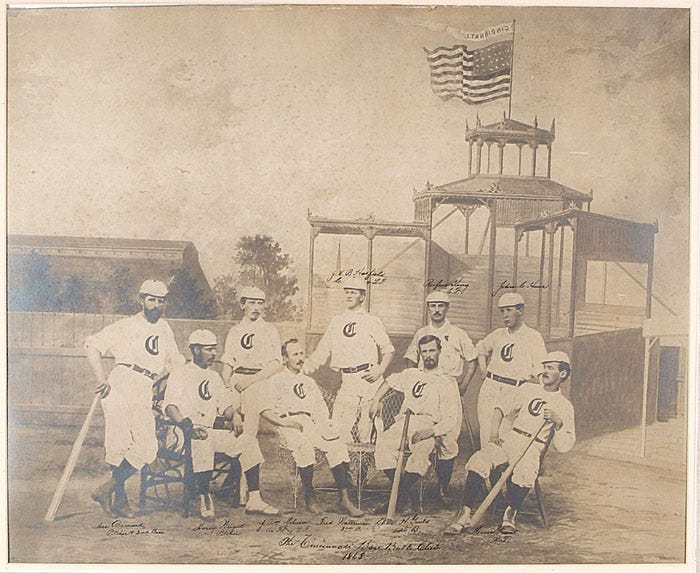
Cincinnati Red Stockings, 1868; John C. Howe at shortstop would be replaced by George Wright for 1869
In April 2019 I wrote, for the launch of a pictorial series on the years 1869–1900: “Because we are celebrating the 150th birthday of professional baseball this year, it seems to me proper to begin this season-long pictorial tribute at 1869, seven years before the birth of Major League Baseball itself.” Thus began a series, still visible: https://bit.ly/4oP9lck.
Today, as we near the 250th birthday of the American idea and the 150th of Major League Baseball, I think it worthwhile to focus on ball play in the years prior, moving backward from the launch of that earlier series. If 1869 proved a momentous year for baseball as a sport whose most skilled practitioners might expect to be salaried, 1868 and earlier seasons merit your attention.
Various highlights of 1868:
· A one-foot-square home base was introduced in 1868, replacing the circular plate whose name survives, anachronistically. One side faced the pitcher. In 1874 the square was rotated so that one point was closest to him, thus yielding 17 inches of strike zone instead of 12. The size of “home plate” has been unchanged since 1874!
· The first spitball was thrown in 1868. Bobby Mathews, then of the Baltimore Marylands, “would wipe one side of the ball clean, and then moisten it with the tips of his fingers and let it go.” Phonney Martin, a pitcher for the Brooklyn Eckfords further recalled that, “the ball would break in a wide out-curve at times and again would drop and curve in.”
· For the 1868 season, the National Association of Base Ball Players (NABBP) gave up the struggle and recognized two classes of player, basically to spare a purely amateur club the embarrassment of being whipped badly by another set of professed amateurs who actually were, at least in part, hired guns. As Henry Chadwick wrote, “clubs can now openly advertise for professional players, and the latter as openly solicit employment as such.” It is often written that the Cincinnati Red Stockings of 1869 were the first professional club, which was not so. Those inclined to nuanced definition will declare the Reds the first openly professional club, which is not quite true either, as any of the several clubs paying their players after 1868 no longer had to hide the fact. But the NABBP recognition of a professional class — withdrawn for 1869 — certainly enabled Harry Wright, armed by the Red Stockings’ directors with an enlarged war chest, to recruit on a Steinbrennerian scale not seen before.
· After the Civil War cricket no longer occupied a parallel station with baseball as America’s favorite sports. An English cricketer tour of 1868 was not as successful as that of 1859, when England had sent its best eleven. If the Civil War had not broken out eighteen months later, two or three follow-up tours might have been arranged in the following five or six years. But by the time an English team returned to America in 1868, American cricket was well on its way to becoming the sport of British expatriates and urban patricians.
· After the success of the Washington Nationals’ westward expedition in 1867, touring became a craze in 1868, with the perceived benefits being not only civic boosterism but also, perhaps too high-mindedly, national reconciliation. Chadwick asked: “Could some prominent Southern club — the Monticellos of the University of Virginia, or the Louisville Clubs, for instance, — be induced to visit New York, we feel confident that the result would be greatly beneficial in removing some portion of the existing sectional prejudices which are among the greatest obstacles to true reconstruction.” Baseball was on its way to becoming the national pastime.
The Images:
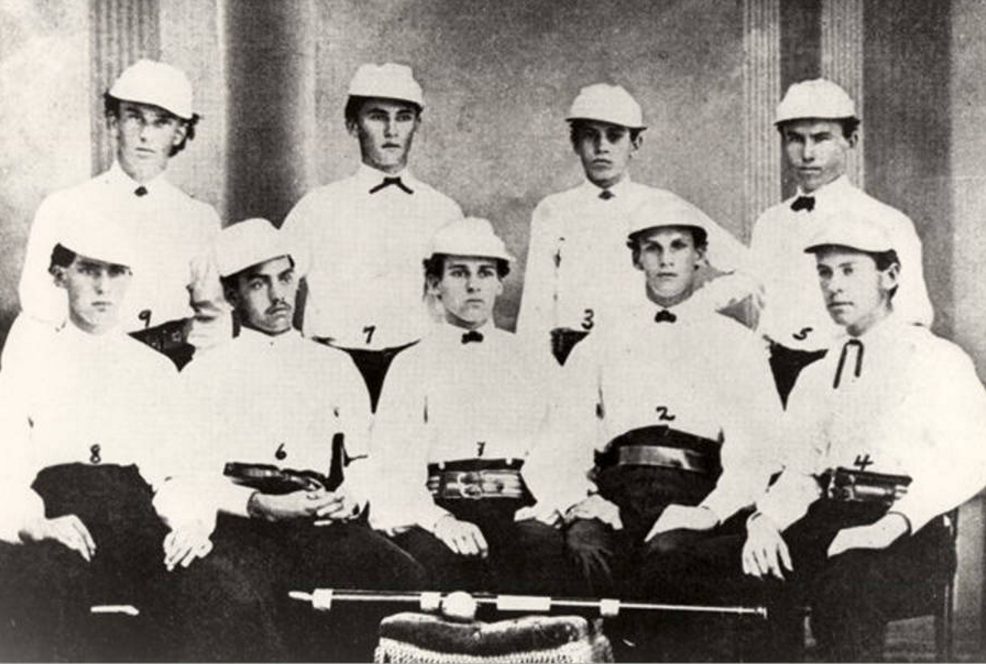
Oberlin College Resolutes, 1868, featuring Black pitcher Simpson Younger (№6), who did not play in MLB but is a pioneer. Born in slavery, at the age of 13 enlisted in the 27th United States Colored Troops. Today his name is displayed on Plaque B-43 at the African American Civil War Memorial in Washington, DC.
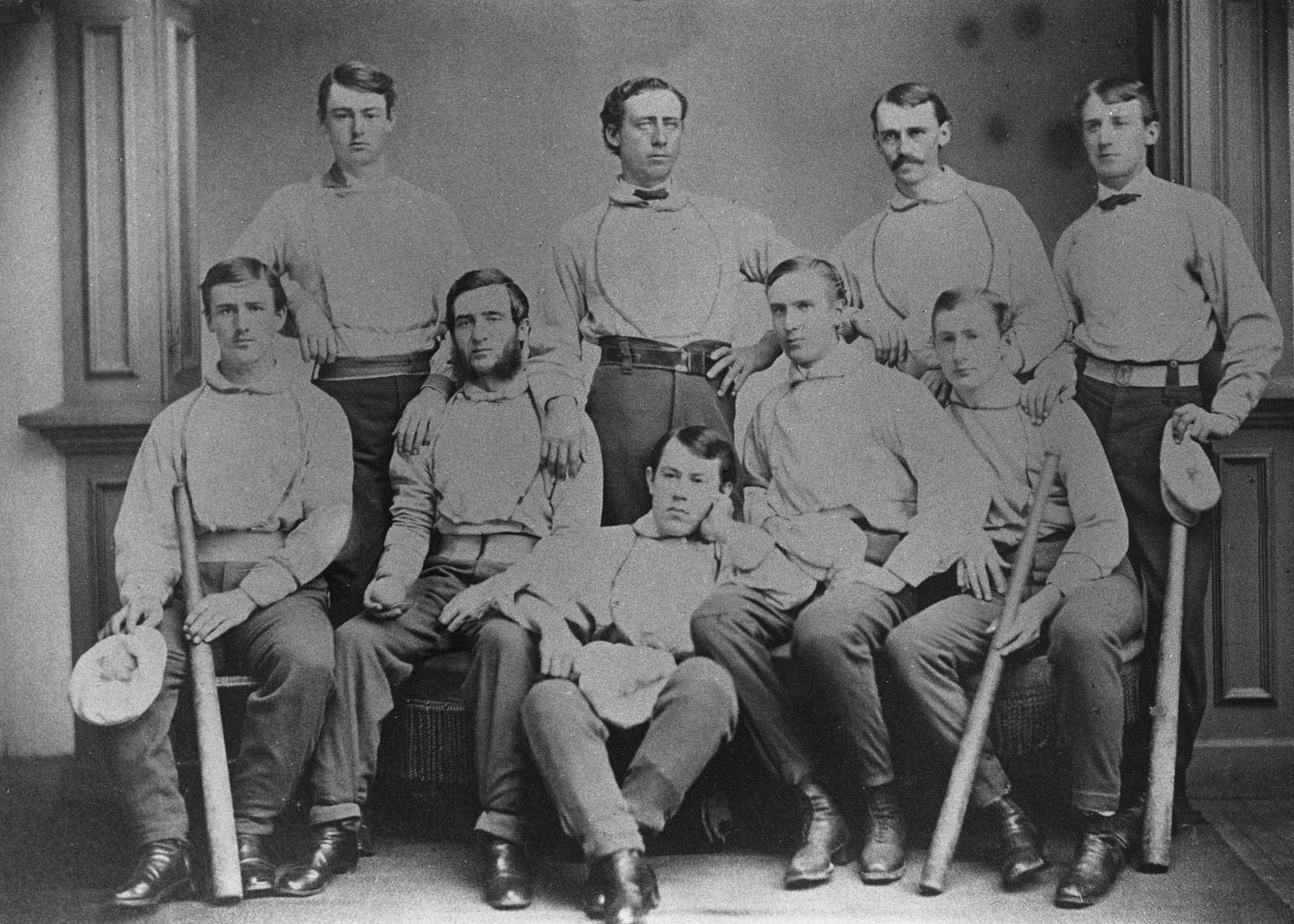
The Forest City of Cleveland nine, featuring future Hall of Famer Deacon White (standing, second from left). Other baseball pioneers of this era await consideration.
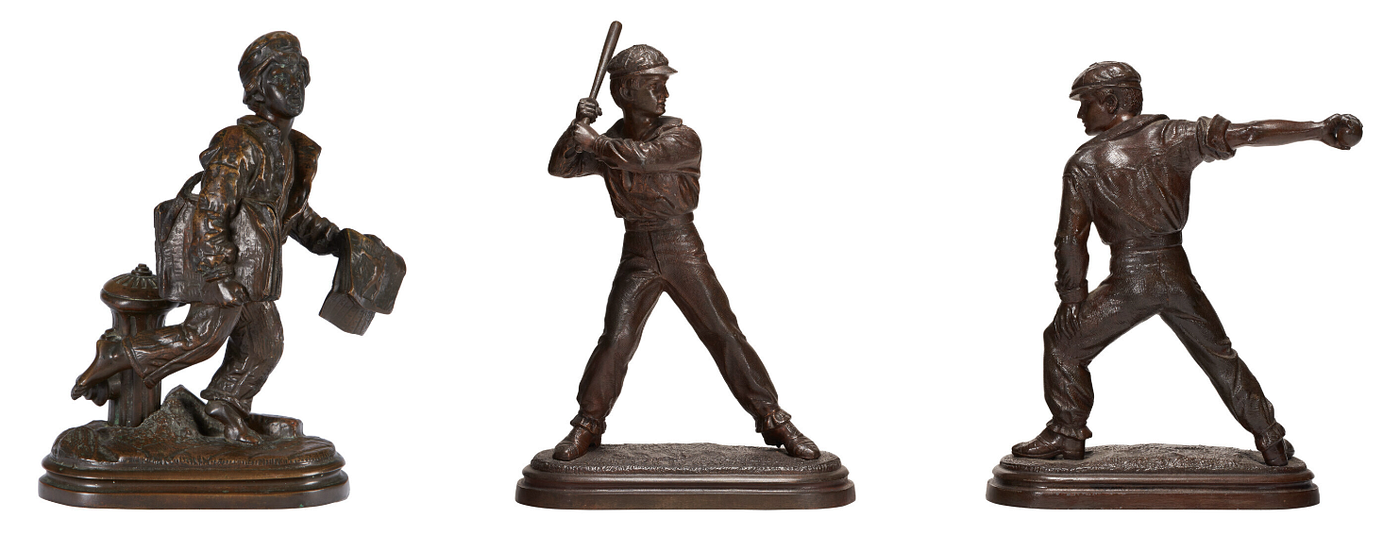
A Christie’s auction in 2023 included two baseball sculptures of 1868, the Karl Muller and John Deacon pitcher and striker, still highly prized among early-baseball collectors. Until that time I had been unaware that the duo were accompanied by a newsboy statuette, whose paper in hand portrayed “The Pitcher.”
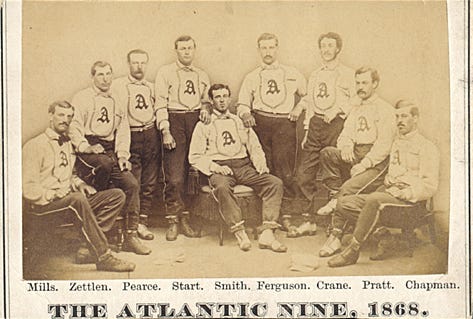
Some will regard this as the first baseball card, as it was produced multiply and could be had from sporting-goods dealers Peck & Snyder. Issued as a carte de visite or calling card (standard form, 2.125 x 3.5 inches), it competes for that “title” with several earlier cards.
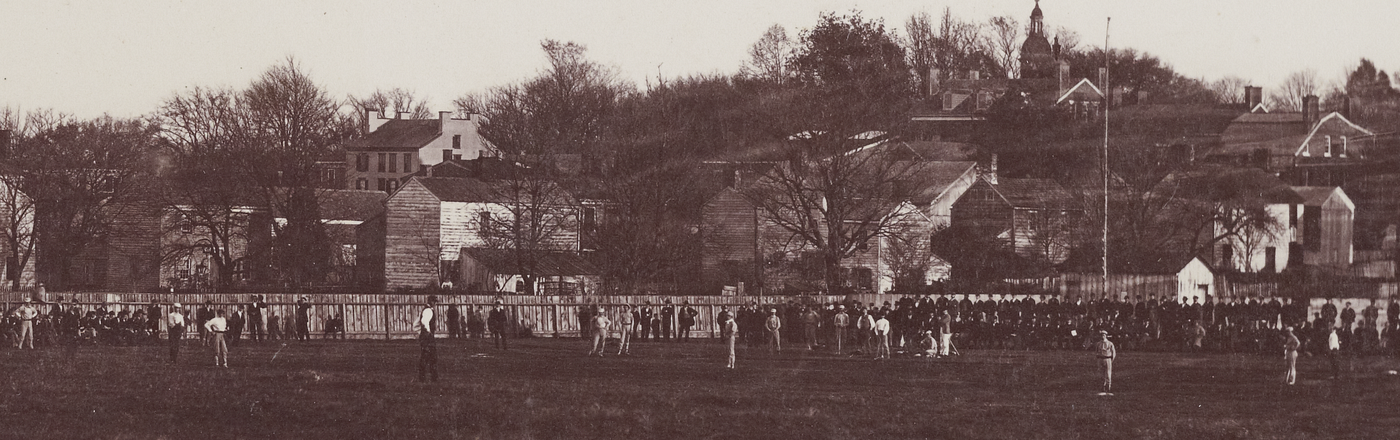
This is a cropped extract from a larger photograph of the Philadelphia Athletics playing ball with the Princeton College nine on October 31, 1868. The Athletics, who were 47–3 on the year, lost this last game of their season, 25–17, a shocking upset that may have thrown their presumed championship (unofficial at that time before league play) into dispute.
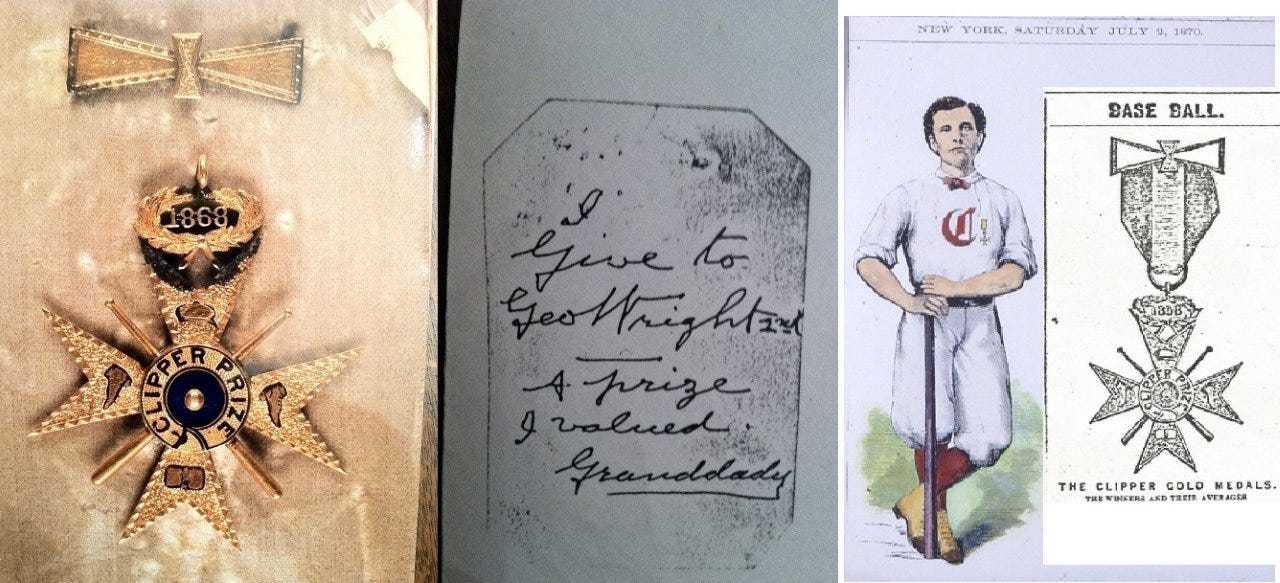
The peripatetic George Wright, shortstop with the Washington Nationals in 1867 was, with the Unions of Morrisania in 1867, widely regarded as the game’s best player. He won the New York Clipper prize for 1868, when he returned to cricket, his first love. By 1869 he was at shortstop again for the unbeaten Red Stockings of Cincinnati, run by his brother Harry, who took on all comers from coast to coast.
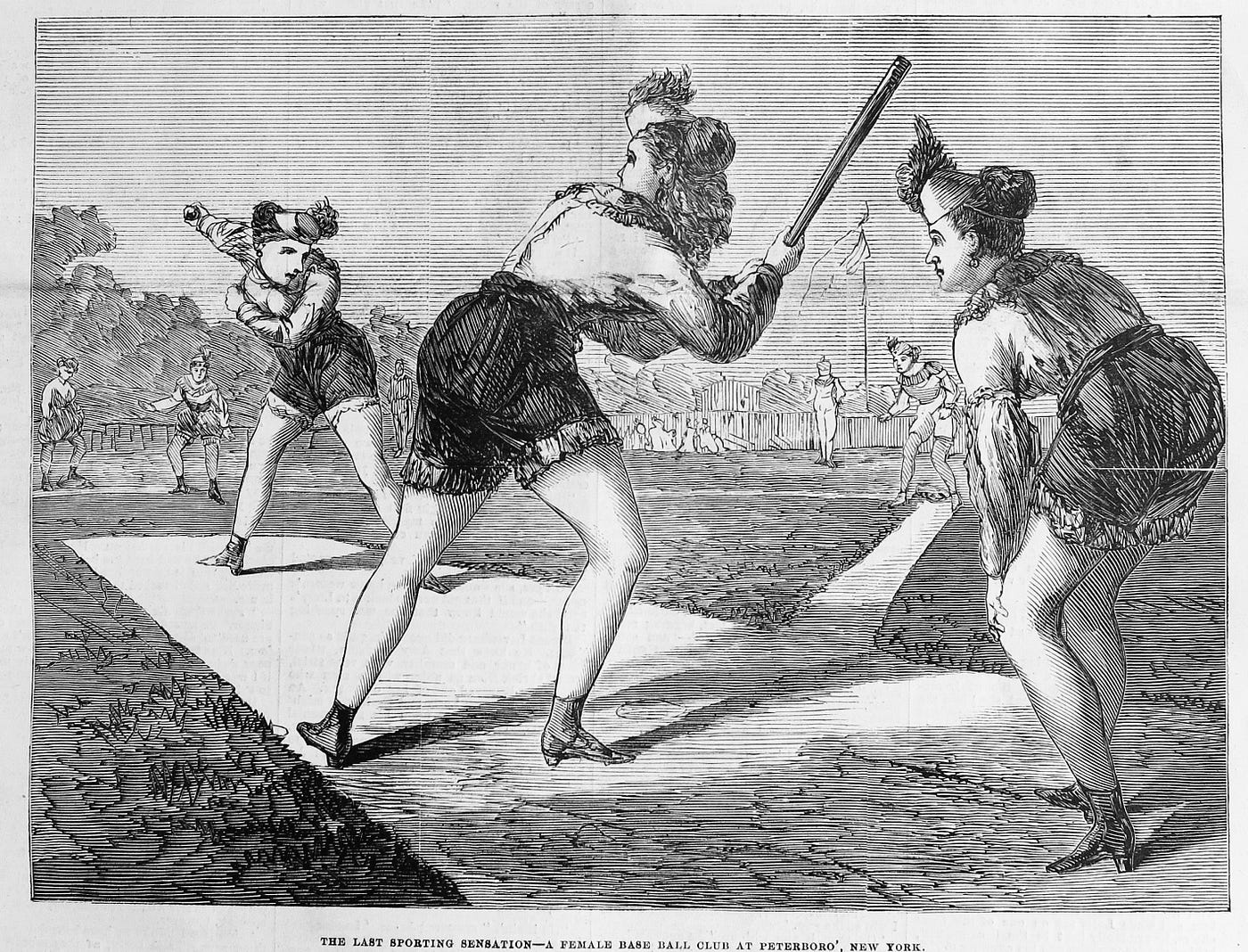
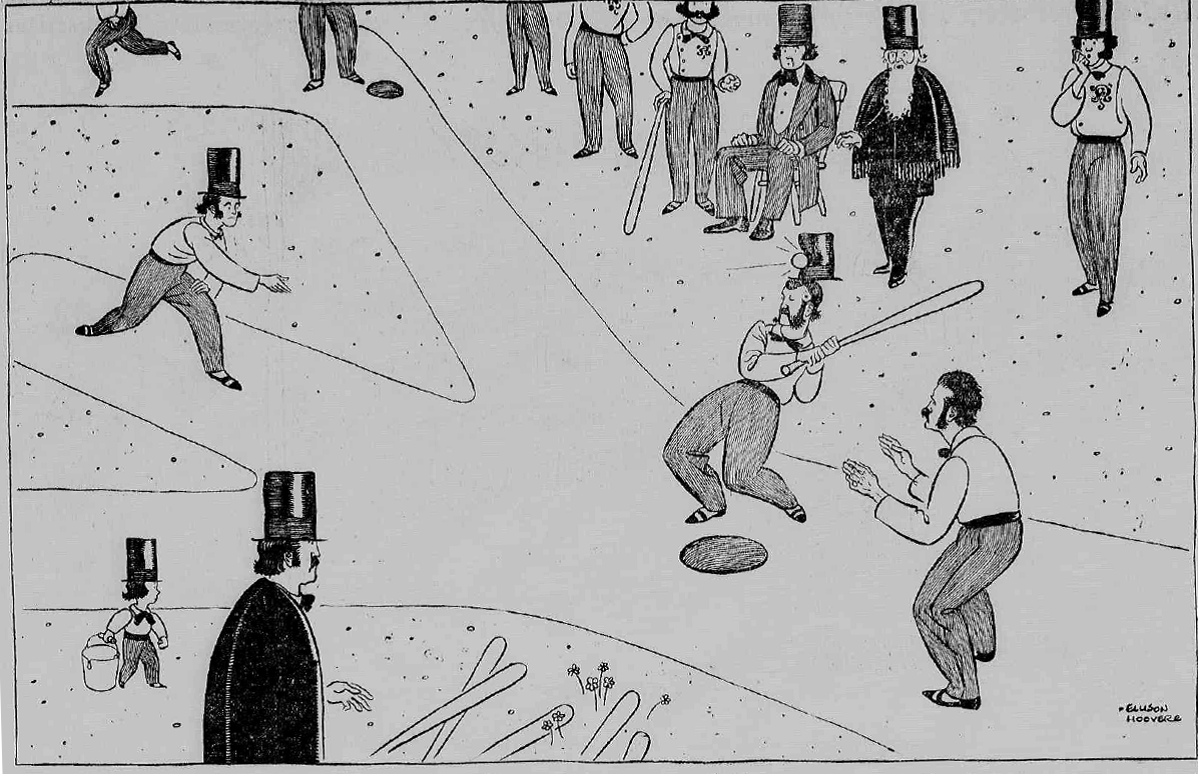
The Sporting Times of August 29, 1868 depicted, fancifully, its readers’ expectations of a women’s baseball game lately played in Peterboro, New York.
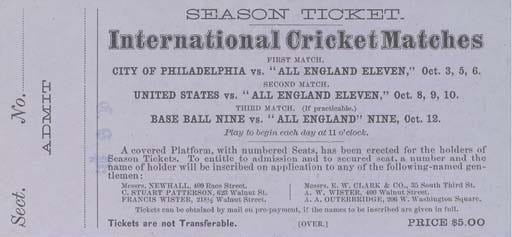
Cricket was losing ground in the U.S., even as a team of England’s best (if not in fact its all-eleven) toured for the first time since 1859.
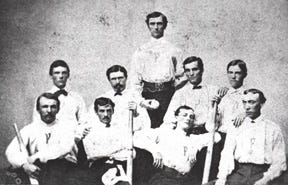
The Pastime club of Baltimore in 1868 featured pitcher Bobby Mathews, standing at center. The perils of amateurism were illustrated by the Marylands in 1870, who ran out of funds while on tour in 1870 and disbanded. Mathews, their pitcher, signed with the professionals of Fort Wayne for 1871.
메타데이터
- post_id
- 38e911a1ee13
- slug
- a-pictorial-retrospective-of-baseball-part-1-1868-38e911a1ee13
- url
- https://ourgame.mlblogs.com/a-pictorial-retrospective-of-baseball-part-1-1868-38e911a1ee13
- canonical_url
- https://ourgame.mlblogs.com/a-pictorial-retrospective-of-baseball-part-1-1868-38e911a1ee13
- author_url
- https://medium.com/@thorn_john_87223
- status
- ok
- fetched_at
- 2026-06-28 10:39:35