Cloud Server vs Physical Server: Which One Should You Choose in 2026?
Choosing the right hosting infrastructure is a foundational decision for any business building websites, applications, or data services…
Cloud Server vs Physical Server: Which One Should You Choose in 2026?
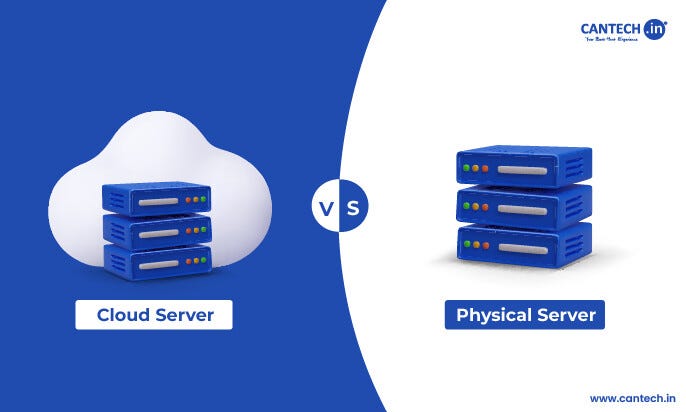
cloud server vs physical server
Choosing the right hosting infrastructure is a foundational decision for any business building websites, applications, or data services. Two dominant models — cloud servers and physical servers — serve very different needs, and understanding how they compare is key to planning your tech strategy effectively.
What Is a Cloud Server?
A cloud server is a virtual machine created using virtualization technology and deployed on a cluster of physical servers inside a data center. It functions like a real server — but its resources (CPU, memory, storage) are allocated from a larger shared pool and can be adjusted on demand.
Key characteristics of cloud servers:
- Virtualized environment on shared infrastructure
- Rapid provisioning — typically minutes
- On-demand scaling and flexible resource allocation
- Pay-as-you-use pricing model
Cloud servers are ideal for workloads that change frequently, need quick scaling, or are unpredictable because you can adjust capacity instantly without hardware changes
What Is a Physical Server?
A physical server (also known as a dedicated server) is a single hardware machine whose resources are entirely dedicated to one organization or workload. It’s not shared or virtualized — you have exclusive access to the CPU, RAM, storage, and network.
Key traits of physical servers:
- Dedicated hardware for one customer
- Fixed resources — no automatic scaling
- Full control of hardware and software configuration
- Very stable and predictable performance
Physical servers work well for consistent, high-performance workloads where resource stability and full control are more important than elasticity.
How They Work
Cloud Servers
Cloud servers are built on virtualization technology using a hypervisor layer that partitions the physical machines into multiple independent virtual servers. Automation, load balancing, and resource pooling allow cloud servers to flexibly manage traffic and failovers across hardware.
Physical Servers
A physical server runs a single operating system directly on bare hardware with no virtualization overhead. Scaling requires manual hardware upgrades, and redundancy depends entirely on how you configure the infrastructure (e.g., clustering or backups).
메타데이터
- post_id
- 38fa61cf9cd0
- slug
- cloud-server-vs-physical-server-which-one-should-you-choose-in-2026-38fa61cf9cd0
- url
- https://medium.com/@shubham2.cantech/cloud-server-vs-physical-server-which-one-should-you-choose-in-2026-38fa61cf9cd0
- canonical_url
- https://medium.com/@shubham2.cantech/cloud-server-vs-physical-server-which-one-should-you-choose-in-2026-38fa61cf9cd0
- author_url
- https://medium.com/@shubham2.cantech
- status
- ok
- fetched_at
- 2026-07-27 21:09:12