I lost my best friend — twice
I met Jeff at the beginning of my senior year of high school. We were normal kids who didn’t fit into any group. I liked to hover at the…
Friendship’s Arc
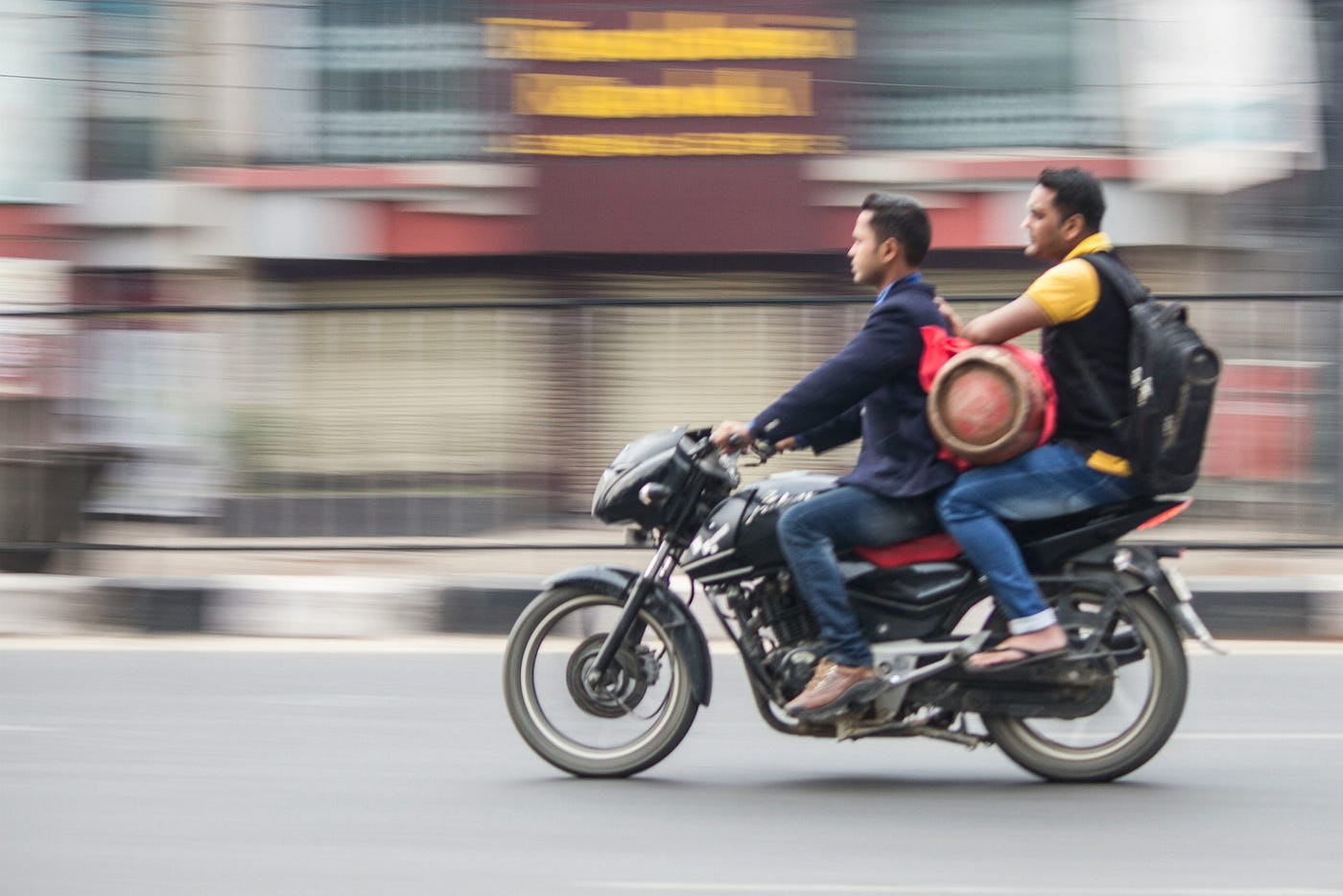
Photo by David Lalremruata on Unsplash
Jeff and I became friends in our senior year of high school. In the school social jungle, we were both outsiders — I surfed the fringes of several cliques while Jeff avoided them altogether. Very quickly we found many common interests — technology and cars, rock anthems, positive outlook for the future, and a healthy interest in girls. Introverted and intelligent, we each had our own gifts. Jeff was applied and strongly mechanical, already hands-on with motorbikes, cars, and trains. He discovered up-and-coming bands, and devised song mixes he carefully recorded on cassette tapes. I leaned toward electronics and was more academic minded, bookish. I however, had a car, a hulking 1960’s model I had purchased myself. He invited me into his group of after-school friends - a combination of misfit car buffs like us and a post-high school working-stiff from his neighborhood. I became acquainted with the corners of our town where teenagers could park and party without fear of discovery. We took turns driving the ‘gang’ around and somehow beer and pot always appeared, and we did the usual things seniors did — descending on Perkin’s at 2 am for breakfast, listening to music, working on cars, talking about girls, and learning about each other’s lives and families.
To have a close friend outside of school who was optimistic and intellectually curious was new to me. It was intoxicating. We talked a lot about the futures we hoped to inhabit —the jobs we would find or create, the private pilot licenses we’d obtain, the great cars we’d own, and the girls who would complete us. Though frustrated with our own parents, we connected with each other’s— Jeff happily discussed physics with my dad and I discussed IT and computers with his. Our families became used to seeing us hanging out together.
We helped each other when in need.
When the muffler on my ancient car rusted out, Jeff drove me all the way to Sears on his moped, some 10 miles. There I picked up the huge box and somehow, we and it managed to fit on his tiny MB50 all the way back.
We were there for each other in crisis.
When my parents split up, Jeff was there for me as a stable presence and sounding board. He organized a group of us to go to senior prom. When his older cousin took his own life, I was there for him, accompanying him on rounds to his relatives, and the visit to his uncles’ apartment. At the beginnings and the endings of our romantic relationships, we supported each other.
We celebrated the milestones.
At senior prom, Jeff and I and our dates joined John, another friend, and his date, for dinner at a fancy restaurant and then on to the dance. Afterwards we spent the night at Jeff’s house. As a group we watched ‘Reds’ and over burgers, discussed what we might do if faced with an invasion. After graduation we celebrated at John’s house.
Friendship taught us lessons.
It was at a party at Jeff’s house that I met his ex-girlfriend from high school. We hit it off instantly. While it did not last, the aftereffects did. When it was over, Jeff told me how he’d felt, and I saw the hurt in his eyes. It was for the best, he said, as he had been unable to move on for over a year, and seeing her with me had been the remedy. Then, he told me how much it hurt. I saw that Jeff’s gift was connecting with people, and mine was attracting them once the conversations started. I swore to myself I would never again date anyone who had been involved, past or present, with a friend, and our friendship went on as strong as ever.
At the end of the summer, I left for University on the other side of the state while Jeff stayed local and attended community college. We saw each other only on the holidays. That summer, my brother helped me get at job at the factory in our hometown where he worked, and Jeff and I met up as often as we could to party and hang out. My mother joined my siblings and my father in moving out of town that summer, landing about 90 minutes away.
The next year I transferred to a college that was much closer. At Christmas Jeff brought his girlfriend by the school and I gave them a tour of the campus. They stayed overnight in the dorm room and Jeff drove us all back home the next day. That summer was similar to the previous one, both of us working full time, struggling with money, and meeting up on weekends. But we were moving toward our dreams and the feelings of freedom and possibility were powerful.

Photo by Woody Kelly on Unsplash
It was during junior year in college that we each started our first serious adult romances. Both of us fell for pretty brunettes who were ambitious, gifted in math, and inexperienced at romance. The attraction was intense, consuming. Jeff and I brought hope to spare. Surely this was the one? I shared many classes with my girlfriend, and Jeff, still living at home, envied our constant togetherness. While I had come to depend on it, I warned him that, in our case, it seemed to lead to friction and conflict. “Still”, he said, “I’m jealous— you’re getting experience toward what marriage would be like.” We followed each other through our ups and downs. After two years of community college Jeff transferred into an strong college in our hometown that included a work-study program. After that he consistently had money and a car, so he was the one to visit at holidays and give me a lift. By then I had sold my car.
After college, I took a job six hours away, out of state. In those days before email and text we still remained connected through occasional calls and semi-regular visits, though we began to miss more of each other's lives. Our time off those first few years was vanishingly brief —a relic of outdated corporate policies.
Less than a year out of college, the romances that had bloomed so promisingly had played themselves out, now more thorn than flower. Our partners had withdrawn their energy. Jeff and I, drugged by seemingly fatal attraction and potential, struggled to let go. My relationship foundered over space — she feared engulfment while I feared abandonment. Each argument, each breakup, only served to deepen existing wounds and widen the gulf, yet underneath passions’ embers glowed.
Jeff’s relationship foundered over energy. She appreciated his slow and steady, stable, disposition, but craved someone who vibrated at a higher energy level, someone with powerful passions. Perhaps someone who would inspire her. They did not fight, instead they softly verbalized their wishes and remained gracious. She dated other men while Jeff silently suffered. Melancholy hung heavy around them like a dark cloak.
The first breakup is the hardest. You feel completely lost because so much of yourself and your first vision of the future was invested. It’s like losing a limb. You lots and completely numb. You’re angry, but without focus. After a time I joined a singles group and found someone new. That summer Jeff and his long-time girlfriend joined us for a vacation in the Outer Banks. We enjoyed ourselves, but both relationships ended soon after for good. I met and dated other girls, girls who were available, who were kind and generous, yet found no fulfillment. I craved yet feared and avoided the fiery passion and intensity I first found in college. That relationship had left me with scars that I could not understand or heal. It would be a long time until I understood my attraction to the unavailable.
Five years after college, both of us found ourselves single again. That summer I arranged a trip with Jeff to New Orleans for a much-needed escape. Each day, we challenged each other - how many conversations with strangers could we initiate? We partied and talked up girls, visited historic sites, and, in a sign of growing maturity, watched “Prince of Tides” and discussed our families. That Christmas Jeff arranged for us to spend a weekend snowmobiling in the Adirondacks; a wilderness park the size of entire New England states. Getting there I drove my tiny pickup truck recklessly over the icy roads, fishtailing and skidding precariously. We snowmobiled for hours each day through isolated terrain, then socialized with locals over hot chocolate. The next summer we caught up in Baltimore and partied at the enormous, rambling and dated drinking clubs that still stood near the harbor then. “It’s so important to have lived somewhere else”, Jeff said a few times, “even if only for a while”. Maybe, I thought, but it can be lonely too.
Our ten-year high school reunion in the early 90’s was a major milestone. We arrived excitedly to find much of our large class, thanks to heroic efforts by class officers and volunteers. For the first time we saw our classmates grown up, bright young things in formal suits and dresses. Time was passing. Jeff was more present to it than I. On the drive back to his apartment he seemed to sink into his seat, his face grey, his eyes wide. “TEN YEARS” he said slowly and quietly a few times, seeming stunned.
The words of Pink Floyd’s ‘Time’ had new meaning now, yet I felt the angst didn’t apply. Jeff and I were off and running — degrees completed, careers started, professional employment. But, rapidly approaching 30, we were still single, had never left the country, and we had made only small progress toward a pilot license or our dream jobs. Yet this was not inconsistent with much of the class.
The next day, Jeff mentioned having attended a much smaller five-year reunion. Unaware of it, I asked him why he had never mentioned it. He looked surprised but did not respond. He had not thought of me. I returned to my new home and dove into work and a master’s program.
Back in our hometown, Jeff began exploring new venues further from town, working hard to overcome his introversion and meet more potential partners. He also traveled to Spain to connect with a friend he had met in college. After a year, he met the woman he would marry, and they became engaged. Living some six hours away, I had no chance to get to know her, although I had known and liked his ex very well after all the years the four of us had hung out. It all seemed rather fast. I was happy for him, knowing how much this mattered, believing our friendship would continue and be enhanced by his having found happiness. I returned to our hometown for the wedding, staying with my father who had returned to work there for a few years. But things were changing. At the bachelor’s breakfast Jeff announced that only locals would be in his wedding party, because he wanted people who would ‘be around’. I was stunned and it registered on my face. As I glanced around the restaurant, I saw I wasn’t the only one.

Photo by Andreas Rønningen on Unsplash
The next morning, I awoke early and rollerbladed fixedly for hours, immersed in feelings of loss and disappointment. As it often did for me, the cut went deep. For reasons I could not understand, I did not verify the address of the church and waited far too long to leave my dad’s apartment for the long drive on roads I was no longer familiar with. As the drive stretched on, reality struck — I was going to be late for my best friend’s wedding. I began to rage, a self-destructive habit I acquired in college to punish myself after a poor test score. I imagined it motivated me, but it was out of control. Now it occurred whenever I fell short of some imagined perfection. Many years would pass before I could see the unconscious drivers behind my avoidance and procrastination. That day in the car though, I felt fear from the destructiveness. This was new. I calmed myself, but the critic behind it all would appear frequently and it would be a long time before it could be confronted and disarmed.
I arrived at the church 10 minutes late and slipped into a pew. At the reception Jeff and his bride were thoughtful enough to seat me with the other single guests. His best man, who had been with us at the senior prom, performed admirably - including the toast - and even at the time I knew it was probably better than I could have done. In my mind I ceded Jeff to his local friends, and to his marriage, but only grudgingly and I knew it would be a long time, if ever, for the emotional wound to heal.
When Jeff stopped by the table, he greeted me warmly as always but noted my lateness at the wedding and asked when I arrived. Instantly I felt crappy. I lied and said I was just a couple of minutes late. He had been watching, looking for support from his friends. It seemed many did not show up at all.
I connected with one of Angie’s single friends from the table. As usual my hopes soared too high and I played my hand too early. Though it did not last, we passed a pleasant afternoon a month later. She filled in details of the happy couple and how Jeff’s ex-girlfriend continued to call until his new wife asked her to stop.
I returned home and ruminated on the memories of the last 12 years. Life went on. A month later I visited to find Jeff and Angie tightly coupled. They did everything together, and his wife and her friends came first now. Jeff could not make any plans without phoning Angie. While part of me wanted to be in his shoes, I wondered how it would affect my relationships with friends and family. I learned Jeff’s parents had had a messy divorce which he had not seen coming. It was worse in some ways than my situation had been, but at least he was out of college and out of the middle of it. His family had moved away except for his father, who had become increasingly isolated and eccentric. He must have felt it really was he and Angie against the world. She seemed nice enough and was clearly devoted to him. Jeff noted that some of Angie’s friends still sought her for barhopping, only to find that she, and Jeff, had left that phase behind as they began married life.
I changed jobs yet stayed in my new home, far from upstate New York. With my family dispersed, there were few reasons to make the long drive to my hometown. I felt too that Jeff had passed me by— in the sphere of relationships, he had achieved his dream. He had done little to reassure me of his continuing friendship. Did he still need me?
Over the years I had made a few other friends, good ones too, though that singular depth of connection proved elusive. We went through our own transitions — moving, changing jobs, raising a family. It was my nature to hold on to people, but I watched how others seemed to fluidly make and release relationships. With each goodbye I grew braver, more generous, letting go more gently, even as my heart struggled with each one.
Jeff and Angie had children.
They were red-headed like their parents. As the 20-year reunion came on the horizon, I contacted Jeff and made plans to go. He was a husband and father now, and I felt more distance. Though Angie dreaded it, she joined us, insisting we stop for drinks on the way. I disliked this but gamely went along. The next day, as we hung out, Jeff gave me a series of strange looks that I could not decipher. His life, he said, consisted of his work, his family, and his neighbors. I understood his priorities and there seemed no room for me. And I did not want to interfere. The luxury car in the driveway, next to the minivan, spoke to success achieved - Jeff had arrived. He did not need me. At the time I was between jobs, yet in the following months Jeff did not follow-up to check on me, only to tell me of his wife’s near fatal car wreck. It was hard to shake the feelings of hurt and loneliness, yet I knew the answer was not so simple.
16 years went by. I landed that new job with help from other friends, finished my master’s, traveled the world, and my career prospered. I lost my mother. I underwent therapy to process my emotions and took creative writing to learn how to express them. I lived at an Ashram and explored spirituality. My self-understanding grew. In all that time Jeff and I never spoke.
Just before the pandemic, a college roommate messaged me. In itself this was quite a surprise. After a brief catch-up, he explained that he and Jeff worked together now and my name had come up. He sensed a bond and thought Jeff and I should reconnect. He would have to arrange it however, Jeff had built a wall. The implication was that I had abandoned him. He filled me in a little on Jeff’s current life, mentioning travel to Europe with his children. I knew he had worked outside the country a few times when he was younger but this was new. I thought about the short flight that separated us and wondered why he had never taken it.
After a few attempts it seemed there was no easy way to schedule a visit. Jeff could not commit to any plan in advance due to the need for coordination with his wife and her family and their vacation plans. Meanwhile I needed confirmation before I would commit to a plane ticket and rental car. This seemed a repeat of events 20 years earlier. A sense of loss and frustration came over me. Then the pandemic hit.
It was almost another four years before I drove up for the next reunion. I found Jeff and his family had moved. I tracked down the new house to find the garage open; cars parked on the street and dogs barking violently in the house. No one answered the door. I called the only number I could find online, left a message, and got back in the car. Later I messaged via Linked-in. There was no response. Again, I felt loss for a time, but it was not as overwhelming, and I also felt anger, new boundaries and assertiveness.

Photo by Jeremy Bishop on Unsplash
It seemed that it had all fallen on me. Friends sacrifice for each other, long distance ones even more so. But in this case maybe it just wasn’t possible - the distance too far, the demands of family life too great. Partly I had not visited because I increasingly felt left out. If I had married when he did it might have been different — we could have double-dated like we used to instead of the awkwardness of a third wheel. Maybe if our families had not moved away from town. Maybe our friendship had simply run its course. Maybe I should have swallowed my sensibilities and gambled on a plane ticket.
Part of me wished I had returned to my hometown to live after the romance had fizzled, though jobs there, like the social scene, were limited and I had considered myself lucky to have a new start elsewhere. My main regret, I concluded, was that we never discussed what our friendship meant, or how we might keep it alive. It had simply been allowed to quietly expire, unexamined, and both of us had lost as a result.
메타데이터
- post_id
- 3903a53f73de
- slug
- i-lost-my-best-friend-twice-3903a53f73de
- url
- https://medium.com/@bgcress/i-lost-my-best-friend-twice-3903a53f73de
- canonical_url
- https://medium.com/@bgcress/i-lost-my-best-friend-twice-3903a53f73de
- author_url
- https://medium.com/@bgcress
- status
- ok
- fetched_at
- 2026-07-24 05:27:41