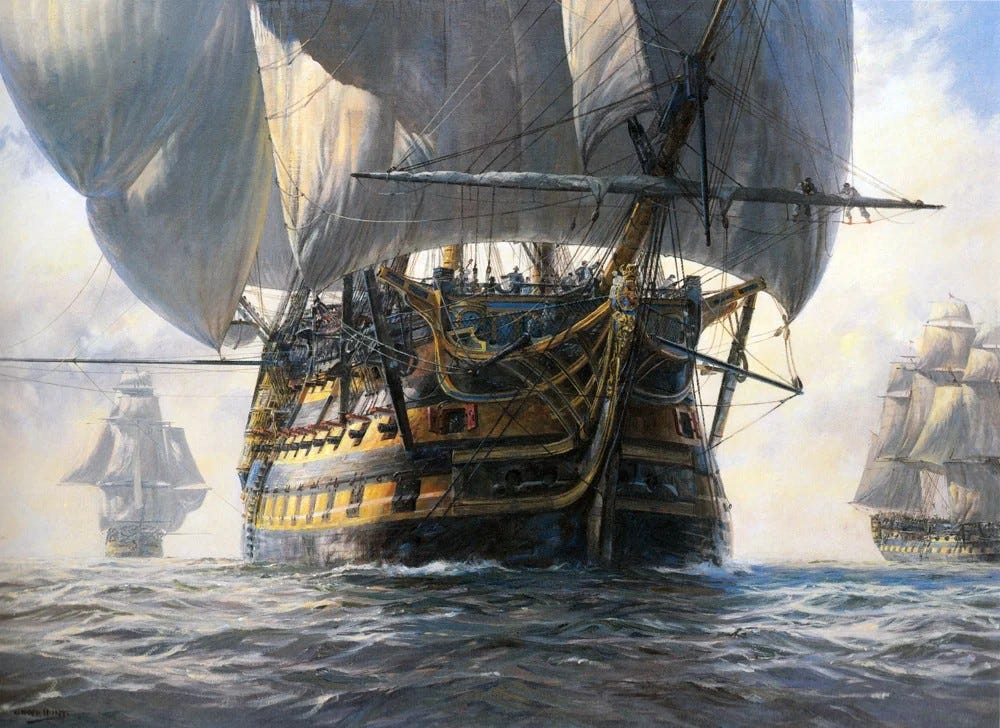
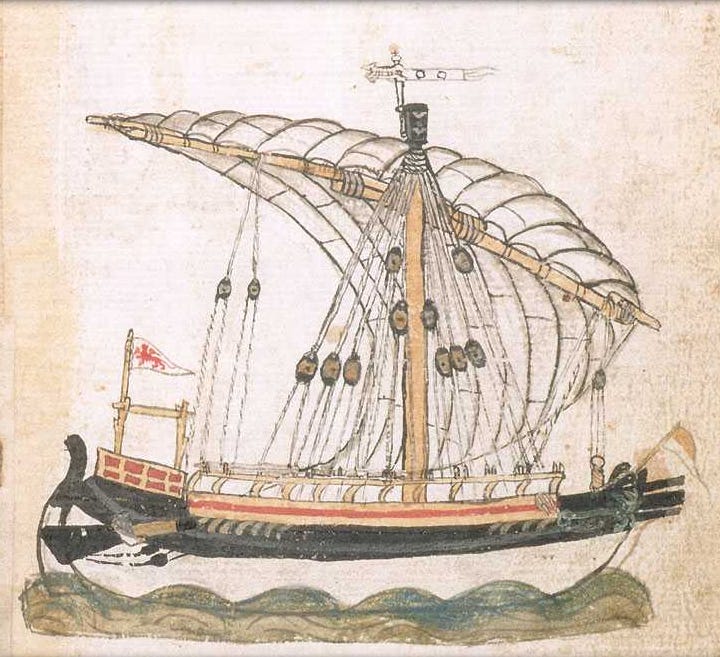
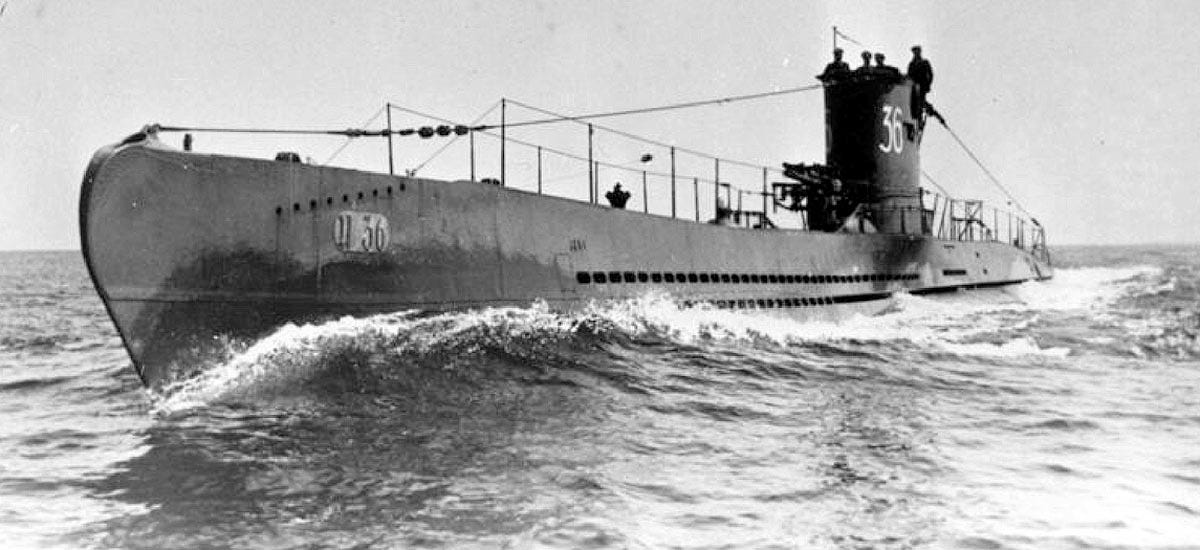
Ten Things (Almost) Nobody Knows about Supertankers
Oil tankers are among the largest machines ever built by human beings.
History of Technology
Ten Things (Almost) Nobody Knows about Supertankers
Oil tankers are among the largest machines ever built by human beings.
Some are longer than the Empire State Building is tall. Their engines are as large as apartment buildings. Sailors sometimes use bicycles to move around the deck, and sometimes they can relax in a gym, play volleyball, or even take a swim after work.
Yet life on board is anything but easy. Crews spend weeks at sea, working around the clock in one of the loneliest environments on Earth. And if disaster strikes, their only escape may be literally plunging into the void from a height of up to 20 metres.
Welcome aboard one of the most extraordinary workplaces on Earth.
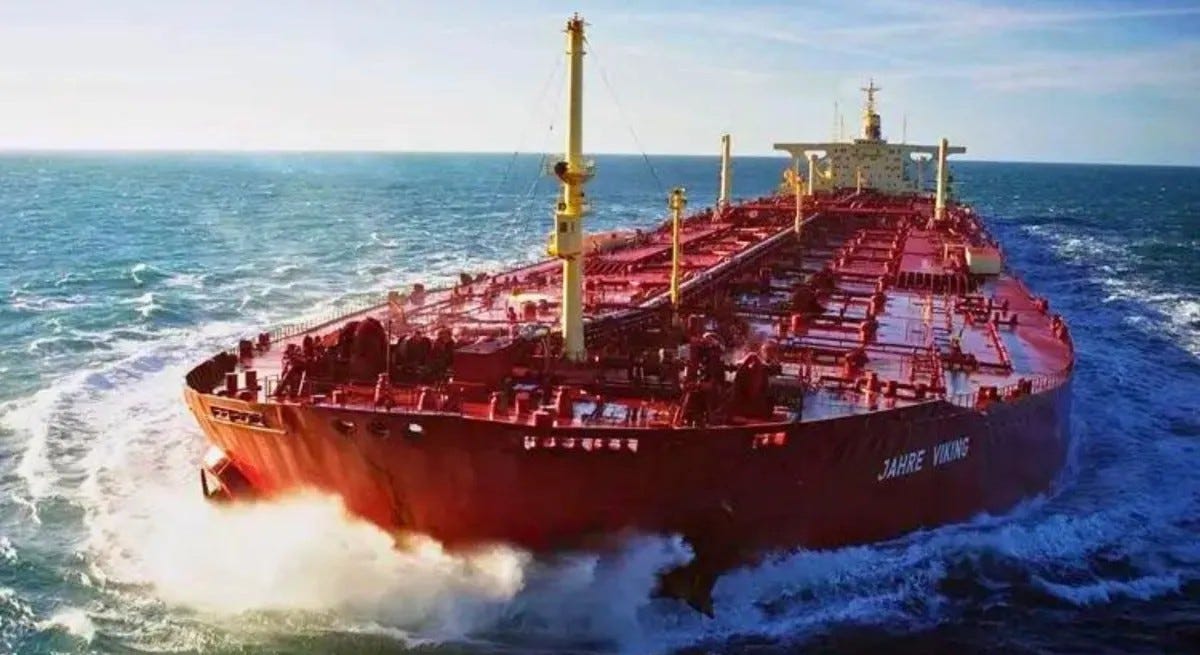
The biggest supertanker ever, the Jahre Viking, former Seawise Giant (source: OrbitHub)
1) Would you Jump From a Height of 20 Metres to Save Your Life?
Imagine being trapped aboard a giant oil tanker carrying hundreds of thousands of tonnes of crude oil. It’s night. The ship is rolling in heavy seas. Thick black smoke is spreading across the deck. Somewhere behind you, flames are advancing toward the accommodation block. At that moment, the normal lifeboats seen on cruise ships are no longer an option. You have only one way out. On the stern of the ship there is a strange, fully enclosed, orange boat, resting on a rail. You and your mates climb into it, strap yourself into a reclining seat, seal the hatch, and prepare to be launched from a height of up to 20 metres, plunging directly into the sea below.
[embed]Source: CraftNestZone on YouTube
The system is called a free-fall lifeboat, and it has become the standard means of emergency evacuation on many oil tankers.
The reason is simple: oil tankers are floating firebombs. When things go wrong, they can go catastrophically wrong. One dramatic example was the tanker Haven, which exploded off the coast of Genoa on 11 April 1991, causing one of the largest oil spills ever recorded in the Mediterranean.
[embed]Source: Vigili del Fuoco.
A free-fall lifeboat sits on an inclined ramp, usually at the stern of the ship. When activated, it slides down the rail, leaves the vessel entirely, enters free fall, and crashes into the sea bow-first.

A free-fall lifeboat (source: Warsila)
For a brief moment, the lifeboat disappears completely underwater: this violent entry into the water gives the craft enough momentum to clear the burning ship as quickly as possible, even if its engine cannot be started immediately.
[embed]This is from inside!
Every aspect of the manoeuvre is governed by strict international regulations: launch height, ramp angle, water-entry angle, occupant protection, and even the distance the lifeboat must achieve from the ship without engine power.
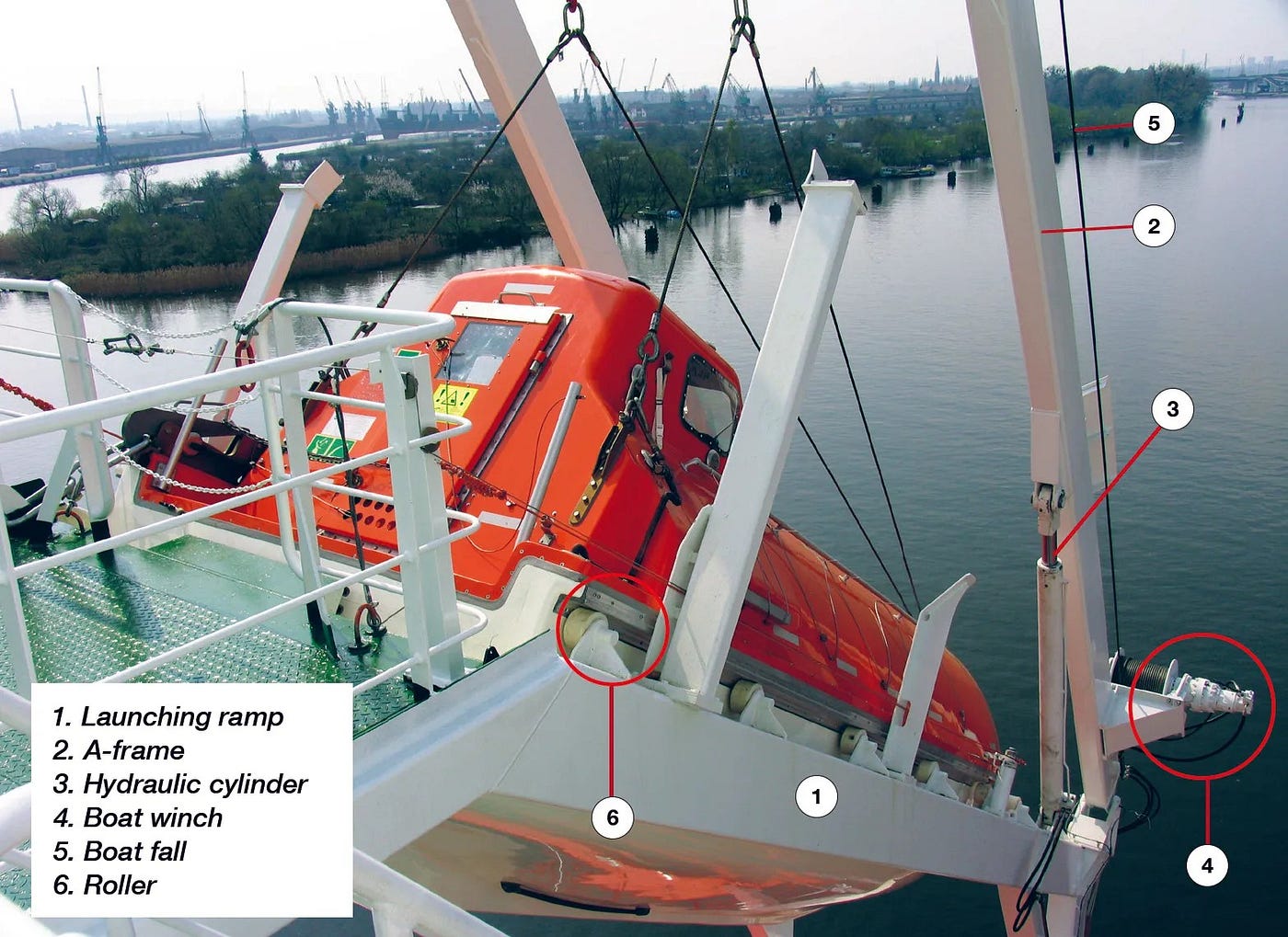
Components of a free-fall lifeboat launching system. The lifeboat rests on an inclined launching ramp (1), which guides the craft during the initial phase of launch. The supporting A-frame structure (2) carries the weight of the system and allows controlled recovery of the boat after drills. A hydraulic cylinder (3) raises and lowers the frame, while the boat winch (4) and boat fall (5) are used to recover the lifeboat from the water. The rollers (6) reduce friction between the hull and the launching ramp, ensuring a smooth release. During an emergency launch, the lifeboat slides down the ramp, enters free fall, and impacts the sea at a carefully calculated angle designed to maximise clearance from the ship and improve crew survival. (Source: Warsila)
A launch height of around 10 metres is common on tankers, though some free-fall lifeboats designed for offshore platforms operate from significantly greater heights.
[embed]World Record 60 meters freefall lifeboat drop. Source MrLivecreator via YouTube
2) Tankers are so Large That they’ve had to Come up with Classifications to Distinguish Them
There are two main types of oil tankers: those that transport crude oil from extraction sites to refineries, and those that distribute refined petroleum products (diesel fuel, gasoline, kerosene) from refineries to distribution centers for final consumption.
The latter are relatively small (around 50,000–60,000 gross tons), because they must be able to enter most ports. The former, by contrast, are large.
Huge indeed. They are so large that many of them cannot pass through certain straits or enter certain ports, even major ones, so they’ve had to come up with classifications to group them into categories:
Panamax vessels are the “smallest” vessel category, with an average length of 230 metres and a tonnage of 80,000 tonnes. They are so named because they can pass through the Panama Canal’s old locks, which are 32 metres wide.
Aframax vessels are the most common category. However, the name does not refer to Africa, as one might think. It derives from the acronym Average Freight Rate Assessment, which was the classification system introduced in 1951 by Shell to rationalise freight costs. In contemporary usage, the term refers to a ship with a gross tonnage of approximately 100,000–120,000 tonnes, capable of transporting up to 750,000 barrels of crude oil.
The Suezmax vessels are even larger, with a capacity of 200,000 tonnes and a length of nearly 300 metres. As the name suggests, these vessels are designed to pass through the Suez Canal fully loaded (around one million barrels).
Suezmax Nissos Delos. Length: 249 m; beam: 43.8 m; deadweight tonnage: approximately 115,700 DWT Photo by Athanasios Papazacharias on Unsplash
The Very Large Crude Carriers (VLCC) are even larger, with a length well over 300 metres, and they carry more than two million barrels of oil per voyage. The global population of these vessels is estimated to be approximately 850, with a single ship having the same economic value as the annual budget of a metropolis such as London.
Today there are roughly 850 VLCCs sailing the world’s oceans. By contrast, the even larger ULCCs have become almost extinct. The age of the giant supertankers ended decades ago, leaving only a handful of survivors as relics of a time when bigger always seemed better.

Supertanker AbQaiq, a VLCC built in 2002 and now sailing as Abie under the flag of Barbados. She has an overall length (LOA) of 333 meters and a width (beam) of 58 meters. Her summer deadweight capacity is 302,986 tonnes. The hull appears so high above the water because the ship is sailing in ballast, meaning that it is not carrying cargo. When fully loaded, the ship settles down to the waterline, which separates the red-painted underwater portion of the hull from the upper portion exposed to the air (freeboard). (source: Wikiimedia)

The oil tanker Sirius Stare in 2008. at full load. Can you see that the upper part of the hull, painted blue, sits much lower in the water than the ship shown in the photo above?. Source: Wikipedia.
3) But Which was the Largest of Them All?
The largest oil tanker ever built was the Seawise Giant (then Knock Nevis, then Jahre Viking). It was laid down in 1974 at the Sumitomo shipyard in Yokohama, Japan.

The Seawise Giant, after being renamed the Knock Nevis (source Amazing.zone)
When it was launched, she was ‘only’ 376 metres long; however, after changing hands several times, it was eventually sold to the Chinese shipowner C. Y. Tung, who had it lengthened by 82 metres. After two years of work, the Seawise Giant truly became the largest ship ever built: she had an overall length of 458.45 metres (1,504.1 feet, 76 feet longer than the famous Steinway Tower in New York), a beam of 86.6 metres (225 feet) and approximately 31,541 square metres (339,500 square feet) of deck space: it could have accommodated four full-size football pitches, or 120 apartments of 250 square meters each. When fully loaded, her 25-metre (81-foot) draught made her too deep to navigate safely through the relatively shallow waters of the English Channel, not to mention the Suez or Panama Canals.
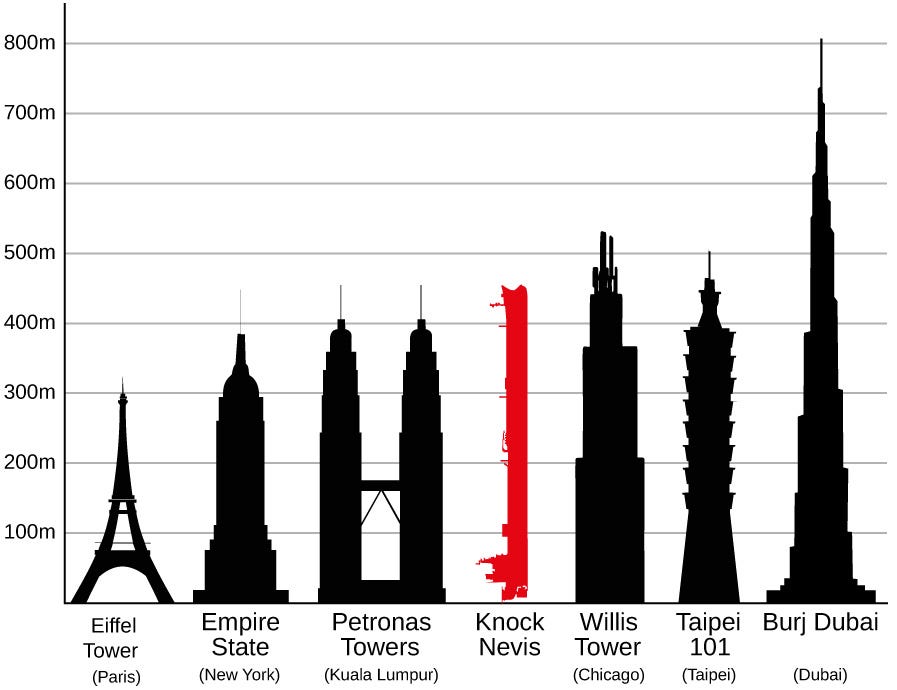
Source: Wikipedia
She had a deadweight capacity of 564,763 tonnes (DWT), making her the largest vessel ever built in terms of carrying capacity. The vessel possessed 46 cargo tanks. Even individual components of the ship were colossal: the rudder alone weighed 230 tonnes, whilst the propellers, with a diameter of nine metres, weighed 50 tonnes each.
After spending several years in the Gulf of Mexico, she was deployed as a mother-ship, or floating storage tank, in Iran, near the island of Larak. It was here that she was struck during the Iran-Iraq War on 15 May 1988. The salvo of Exocet missiles launched by Iraqi aircraft caused a massive fire that devastated the ship. The Seawise Giant was, however, salvaged, renamed Knock Nevis then Jhare Viking and used for a few more years as a floating storage tank. It was eventually scrapped in 2010.
4) The Crew? Much Smaller than you Might Think!
Should any of you have embarked on a cruise on a contemporary vessel, it is likely that you would have formed the impression that the crew numbers were substantial. Indeed, the world’s largest cruise ship, the Icon of the Seas, has a maximum passenger capacity of 7,600 and a crew complement of 2,300, the vast majority of whom are cabin staff or otherwise involved in ensuring the guests’ well-being.
In the context of a supertanker, the situation is wholly distinct. In an effort to minimise expenditure, shipowners endeavour to maintain a reduced crew complement. The number of seafarers on board is not predetermined; rather, it is stipulated in a document known as a Minimum Safe Manning Certificate, which is issued for each vessel. This document denotes the minimum number of seafarers required on board to ensure safe navigation.
The mean crew complement of a VLCC is approximately 25 individuals.
With the exception of the captain, who is universally acknowledged as second only to God, there is a group of three or four deck officers who are responsible for the physical oversight of operations on board, under the control of Chief officer.
They are joined by an equal number of engineer officers, whose responsibility is to monitor the operation of the tanker’s immense engines.
The number of seamen required on deck and in the engine room is limited to four or five for each department.
Finally, the cook and steward are employed to ensure the effective operation of the galley.
5) Where are the Seafarers from?
The ethnic composition of the crews is a subject of particular interest, despite the absence of comprehensive official statistics. The deck and engine room ratings are predominantly comprised of Filipino, Indian, Indonesian and Chinese individuals. In contrast, the officers are often of Indian, Russian, Ukrainian or Filipino origin, and are most commonly led by a Greek captain. The war in Ukraine has had a significant impact on international shipping, as it has led to a notable decline in cooperation between Ukrainian officers and seafarers and their Russian counterparts.
6) But What is Life like on Board These Ships?
Life on board ships is challenging, particularly on supertankers which, due to their role in transporting crude oil from one end of the planet to the other, remain at sea for extended periods of up to 4–5 weeks. Upon arrival, these vessels frequently do not enter a designated port, instead mooring at an unloading platform. This, for example, is the kind of situation sailors on board an oil tanker might come across:
[embed]During a heavy storm in the Baltic Sea, on January 29, 2021, this Oil Tanker was hit by a monster wave from the side so heavily that it destroyed several parts of the bridge Source: YouTube)
The entire crew lives exclusively in the relatively small aft superstructure, which could easily be five or six storeys high. From a purely material perspective, the standard of living appears to be highly satisfactory.For instance, on supertankers, only 6% of seafarers are required to share their cabin with a colleague, and only 15% are obliged to use communal toilets. Precise international regulations specify the characteristics that communal areas, such as canteens, must have. All oil tankers must have an automatic laundry on board, as well as a common room where crew can gather at the end of the working day. Almost all ships have a gym or fitness room on board; some even have a swimming pool. A volleyball court can be set up on deck.
[embed]Source: The Sailor Lounge on YouTube. Swimming pool is at 3'20'’
However, it is on the psychological front that working on these ships can be very tough. The sheer size of VLCCs means that crew members often spend entire working days without seeing anyone. The sense of loneliness is a shadow that hangs over everything. The watches (i.e. the work shifts of the two groups into which the crew are divided) rotate continuously, 24 hours a day, seven days a week.
As a consequence of their working patterns and being at sea, seafarers will have reduced contact with society, their communities, their employer, shore-side management, their loved ones and even their colleagues on board. Being out of sight in this way can also lead to seafarers being out of mind. Crew Welfare Management and Mental Wellness 2nd Edition pg 5
[embed]A game of volleyball on the deck of a supertanker (source: [Youtube](http://A game of volleyball on the deck of a supertanker))
[embed]Oil tankers are so huge that it’s quite normal to get around on deck by bicycle (motorbikes and mopeds are banned because if a spark from the engine were to come into contact with the vapours produced by the oil, it could trigger a catastrophic explosion) .Source: InShot )
However, it is on the psychological front that working on these ships can be very tough. The sheer size of VLCCs means that crew members often spend entire working days without seeing anyone. The sense of loneliness is a shadow that hangs over everything. The watches (i.e. the work shifts of the two groups into which the crew are divided) rotate continuously, 24 hours a day, seven days a week.
As a consequence of their working patterns and being at sea, seafarers will have reduced contact with society, their communities, their employer, shore-side management, their loved ones and even their colleagues on board. Being out of sight in this way can also lead to seafarers being out of mind. Crew Welfare Management and Mental Wellness 2nd Edition pg 5
7) And how much do seafarers earn?
The remuneration offered for seafarers is subject to significant variation. An Able Seafarer can expect to earn between $1,700 and $2,000 per month, while officers can command a salary ranging from $3,500 for a Third Officer to a maximum of $11,000 for a First Officer. The captain’s remuneration is estimated to range from $16,000 to $17,000 per month, while the Chief Engineer, the senior member of the engine room crew, typically receives a slightly lower salary.
8) The Engines
It is clear that, in order to propel vessels of this size, exceptional engines are required. Modern large oil tankers almost always use a single two-stroke diesel main engine, with a very low revolutions per minute (between 60 and 120 rpm) directly coupled to the propeller, i.e. without gearboxes (marine engines do not have a ‘gearbox’ to change the ratio between the engine shaft and the propeller shaft). Everything is designed for high efficiency, not speed.
One of the most common engines in use is the RT-flex96 C, manufactured by Sulzer-Wärtsilä. The structure is 24 metres in length and 13 metres in height, comparable to a medium-sized block of flats. It weighs 2,300 tonnes when empty, which is equivalent to 1,500 medium-sized cars or 100 coastal fishing boats.
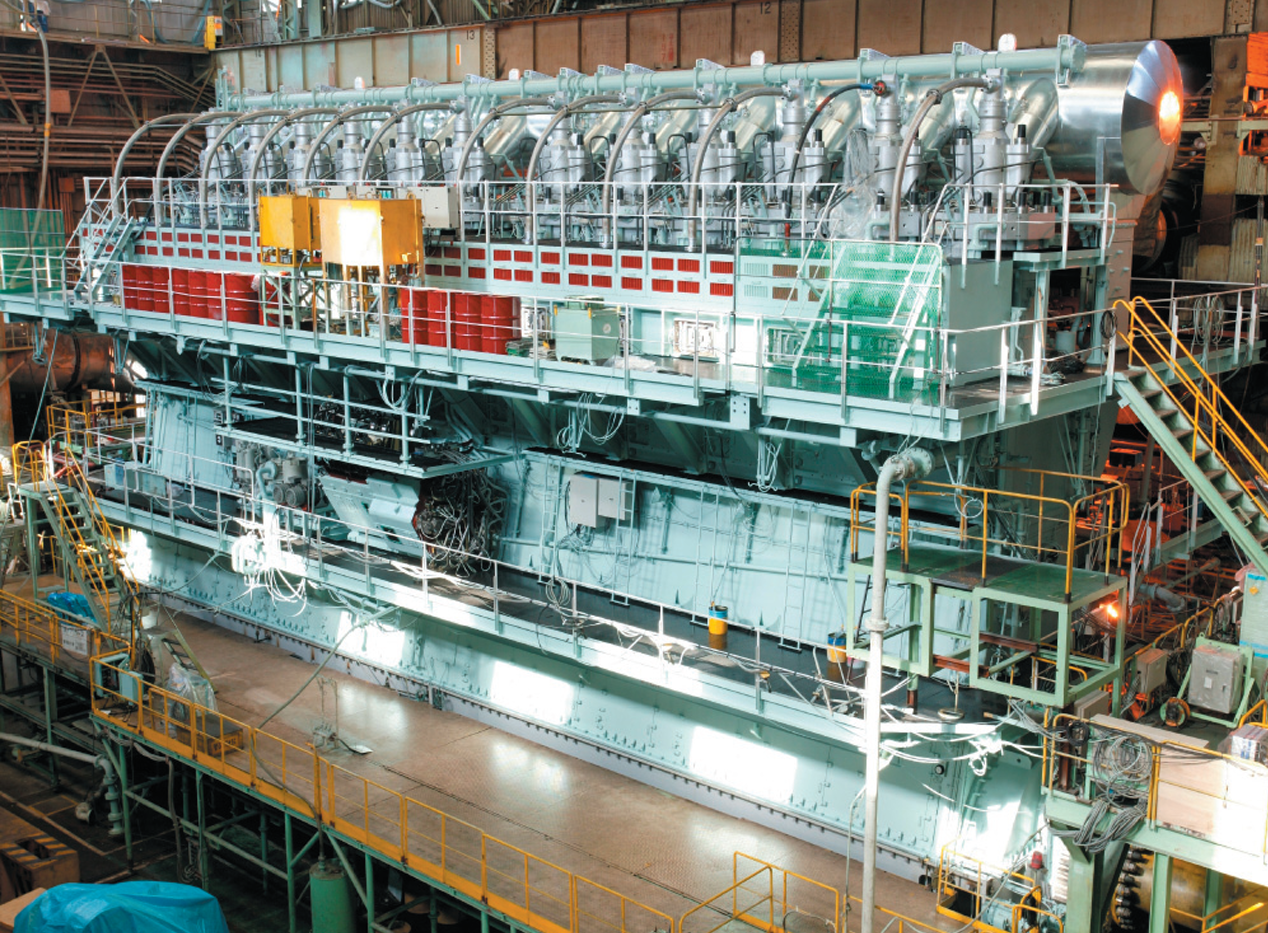
The Sulzer 12RT-flex96C engine develops 68,640 kW at 102 rpm, and measures about 24 m long by 13.5 m high. Source: Wartisilia

This photo gives an idea of the size of the crankshaft. Source: Wartisilia
Despite its low revs, with a total displacement of 25,000 litres, this engine develops 80 MW of power, or approximately 109,000 hp (although the comparison is technically meaningless, this is equivalent to around 110 Formula 1 single-seaters or 220 standard lorries). Fuel consumption is commensurate with these substantial dimensions: a traditional VLCC can burn up to 90 tonnes of fuel per day (a figure halved on newer vessels). Electronic, computer controlled technology RT-Flex enables the removal of the camshaft, the mechanical injection pumps and the reversing servomotors, and allows the precise amount of fuel required at any given moment to be injected into the cylinder combustion chambers, thereby doubling the engine’s thermal efficiency. This impressive figure reaches 50%, which means that approximately half of the energy contained in the fuel is actually converted into motion. For standard engines, this figure stands at 25%.
[embed]Source: Llanta pinchada TV onYouTube.
This enormous power apparently produces a disproportionate result: the cruising speed of a VLCC and, generally, of an oil tanker ranges between 12 and 15 knots, or between 22 and 27 kilometres per hour. This speed is no accident: it has in fact been demonstrated that this speed range offers the best compromise between distance covered and fuel consumption (which does not increase linearly but almost exponentially with speed). Furthermore, it is important to note that ships travel at this speed without interruption, covering more than three hundred miles (approximately 600 kilometres) in 24 hours.
Furthermore, it is imperative to consider the significant mass that must be propelled. In the event of an emergency, a VLCC must stop in approximately 11 minutes and over two and a half miles (more than five kilometres) to bring the ship to a complete halt by putting the engines into ‘full astern’, a technique referred to as a ‘crash stop’.
9) It is Time to Clean!
We never really think about it, but even the tanks used to store crude oil for transport must be cleaned to remove any residual oil, sludge, waxes, asphaltenes and vapours left behind after unloading: it is one of the most delicate and costly operations in the entire operational cycle.
Tanks may require cleaning for a variety of reasons, including when a ship has transported heavy crude and needs to load a lighter product. Even minor contamination can render the new cargo unusable. Tanks may also need to be cleaned during a maintenance cycle at the shipyard or for thorough inspections.
The most effective method for cleaning tanks is to use water heated to 90°C, which is then sprayed against the walls using special rotating nozzles at a pressure of up to 15 bar. The sludgy liquid that accumulates at the base of the tank is then transferred to a separate storage tank where it is left to settle so that the two liquids (oil and water) separate naturally. If a thorough cleaning is not required, COW (crude oil washing) can also be used. This technique involves using ‘fresh’ oil instead of water. This process enables the recovery of a greater volume of oil.
[embed]Source: Marine Online on YoutTube
In any case, once the tank has been washed, the hazardous oil vapours must be extracted using forced ventilation. The complete cycle takes between four and seven days to complete. Personnel are able to enter the tank safely once the cycle is over. The amount of water required for these operations is significant, often amounting to hundreds or even thousands of tonnes.
10) Oil Tankers have two Hulls!
In a traditional oil tanker, the oil was stored directly behind the ship’s outer hull. If the hull was punctured by a collision or running aground, the crude oil could leak immediately into the sea. In a double-hulled vessel, however, there are two separate metal walls:
- an outer hull, in contact with the sea;
- an inner hull, which encloses the cargo tanks.
Between the two there is an empty space or one filled with ballast water, typically 2 to 3 metres wide in modern VLCCs. In cross-section, the ship therefore appears as a large box fitted inside another box.
The decisive impetus for this solution came from a series of serious oil spills in the 1970s and 1980s, culminating in the Exxon Valdez oil tanker disaster in 1989. The grounding in Alaska spilled around 37,000 tonnes of crude oil into the sea and caused enormous environmental damage.
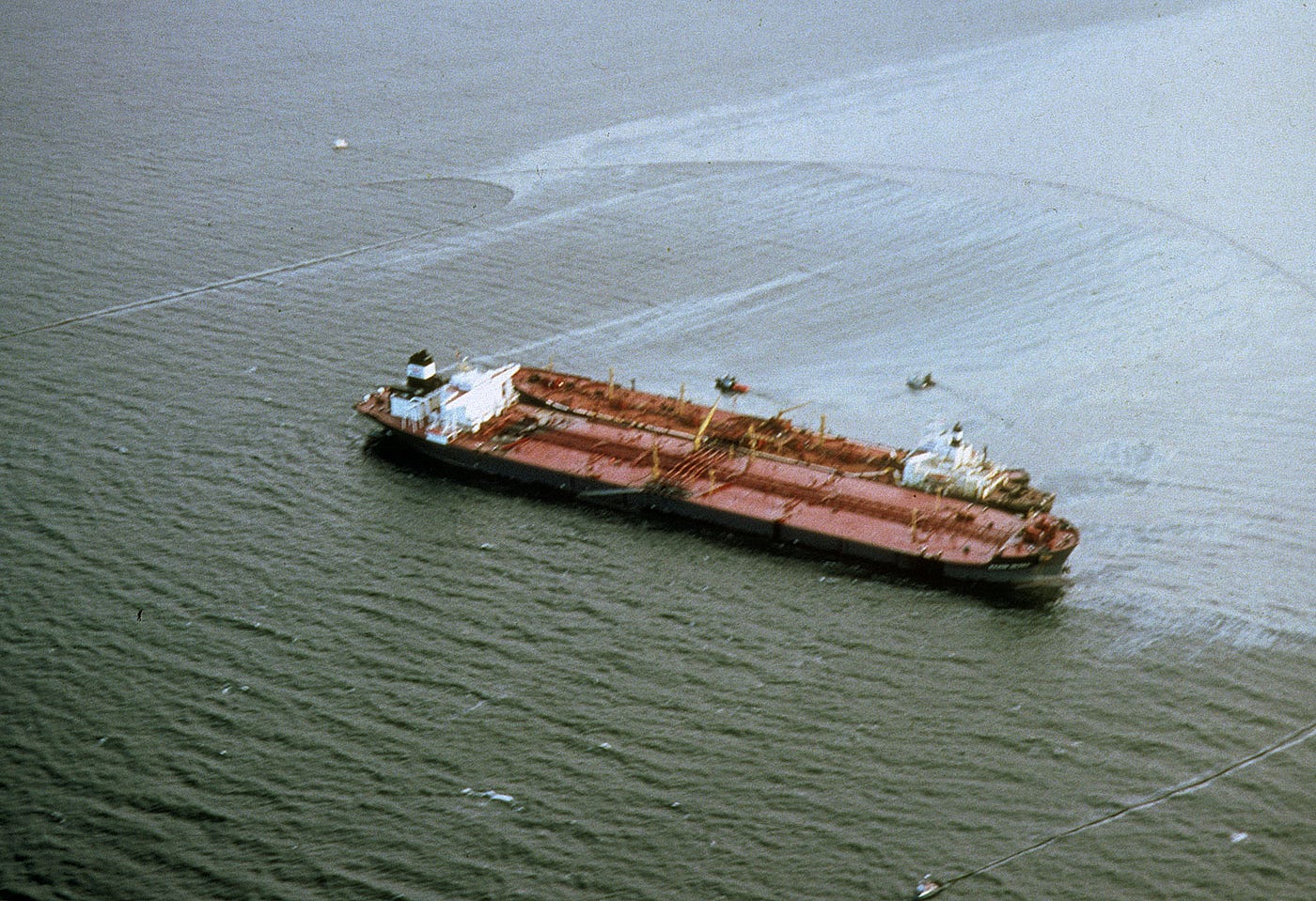
Aerial view of the Exxon Valdez oil spill. Source: Wikipedia
Following that accident, the United States passed the Oil Pollution Act of 1990, gradually mandating double hulls for oil tankers operating in US waters. Subsequently, the International Maritime Organization also amended the MARPOL Convention, extending the requirement worldwide.
The double hull does not make a spill impossible, but it greatly increases safety. In many low- or medium-energy impacts: the outer hull is torn, the air gap absorbs part of the impact and the inner hull remains intact. It is particularly effective in groundings in shallow waters or in collisions with quays and other ships.
Bibliography
Jan Babicz, Encyclopedia of Ship Technology, Wartsila, 2nd Edition, 2015.
Ellis, N., Sampson, H., Acejo, I., Tang, L., Turgo, N., Zhao, Z. : Seafarer Accommodation on Contemporary Cargo Ships, The Lloyd’s Register Educational Trust Research Unit.
Intertanko, Crew Welfare Management and Mental Wellness 2nd Edition.
The Bahamas Maritime Authority, MARINE NOTICE 39 Version Crew Accommodation Standards
Wartsila The Sulzer RT-fl ex Common-Rail System Described, available here.
메타데이터
- post_id
- 391697285fb4
- slug
- ten-things-almost-nobody-knows-about-supertankers-391697285fb4
- url
- https://medium.com/teatime-history/ten-things-almost-nobody-knows-about-supertankers-391697285fb4
- canonical_url
- https://medium.com/teatime-history/ten-things-almost-nobody-knows-about-supertankers-391697285fb4
- author_url
- https://medium.com/@martinosacchi60
- status
- ok
- fetched_at
- 2026-06-20 20:29:01