Who is Iran’s Supreme Leader Khamenei? Warns U.S., Condemns Israeli Strike Amid Escalating Tensions
Ayatollah Ali Khamenei rebukes Trump’s rhetoric, reaffirms Iran’s defiance of U.S. pressure, and accuses Israel of a grave miscalculation.
Who is Iran’s Supreme Leader Khamenei? Warns U.S., Condemns Israeli Strike Amid Escalating Tensions
Ayatollah Ali Khamenei rebukes Trump’s rhetoric, reaffirms Iran’s defiance of U.S. pressure, and accuses Israel of a grave miscalculation.
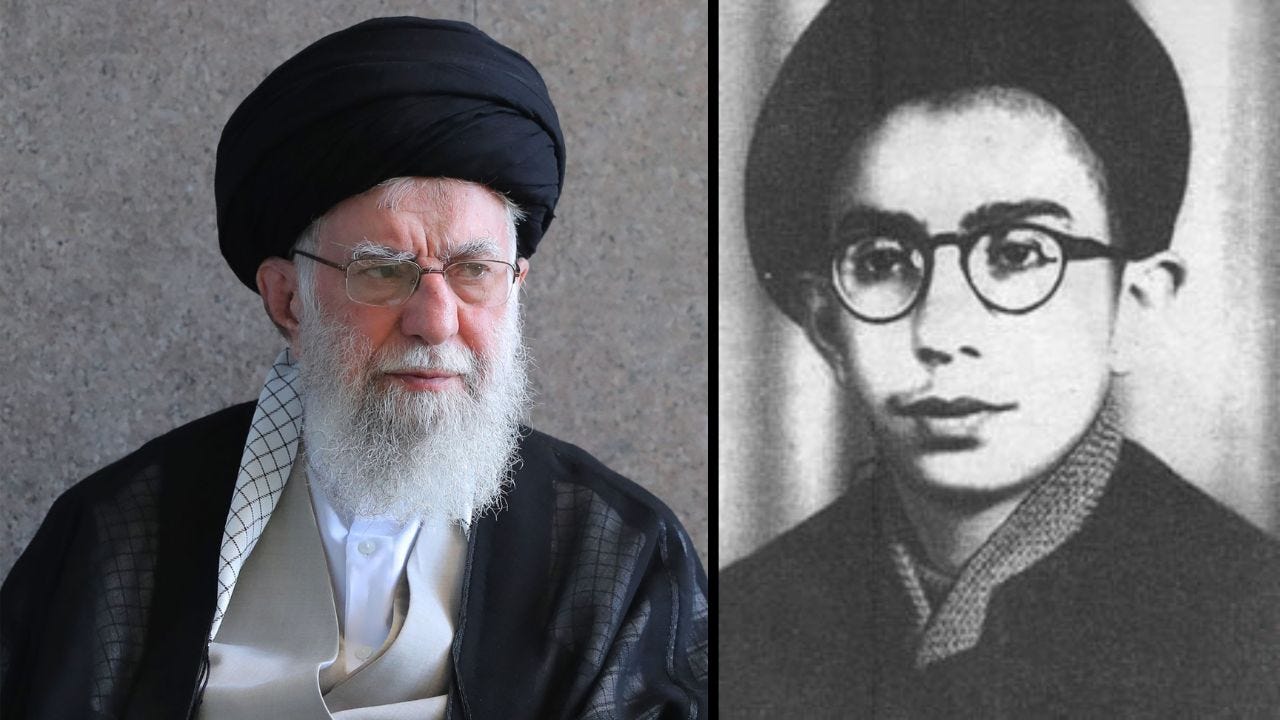
Ali Hosseini Khamenei, Supreme Leader of Iran
Iran’s Supreme Leader Ayatollah Ali Hosseini Khamenei, in a strongly worded televised address on June 18, rejected U.S. President Donald Trump’s call for Iran’s “unconditional surrender” and warned of severe consequences for any military intervention. He also condemned Israel’s recent attack on Iranian territory, calling it a “huge mistake.”
“The Americans should know that any U.S. military intervention will undoubtedly cause irreparable damage,” Khamenei said in a pre-recorded message broadcast on state television. “Intelligent people who understand Iran, its people, and its history, never speak to this nation in a threatening tone. The Iranian nation will not surrender.”
This statement is the latest in a long series of confrontations between Iran and the United States, and it reflects Khamenei’s longstanding policy of defiance against Western powers. Having led Iran since 1989, the 86-year-old cleric has played a central role in shaping the Islamic Republic’s ideology and foreign policy.
From Revolutionary Cleric to Supreme Leader
Born in 1939 in Mashhad, Iran, Khamenei was one of eight children of a modest religious family. He studied Islam in Qom and joined Ayatollah Ruhollah Khomeini’s revolutionary movement at the age of 23. During the 1960s and 70s, Khamenei was arrested six times by the Shah’s secret police (SAVAK), tortured, and imprisoned for his activism. He drew ideological strength from anti-imperialist currents such as Third Worldism, and was inspired by revolutionary ideals of azadi (freedom), esteghlal (independence), and the Islamic Republic.
Following the 1979 Islamic Revolution, Khamenei quickly rose through the political ranks — serving as deputy defense minister and overseeing the powerful Islamic Revolutionary Guard Corps (IRGC). After the death of Khomeini in 1989, Khamenei was named his successor, despite lacking the religious credentials typically required for the role. A constitutional amendment paved the way for his appointment.
Building and Consolidating Power
Unlike Khomeini, Khamenei lacked popular appeal and the support of the revolutionary elite. His leadership was immediately challenged by internal reform movements, especially during the presidency of Mohammad Khatami (1997–2005), when demands for liberalization gained ground.
To cement his authority, Khamenei leveraged the broad powers granted to the Supreme Leader — including command over the military, appointment of key officials, and control over national policy. Crucially, he combined religious dogma with anti-imperialist rhetoric to rally support. He propagated the message that loyalty to the Supreme Leader was equivalent to loyalty to Islam itself.
This narrative was amplified through state-controlled media, religious institutions, the judiciary, and military-aligned groups like the Basij militia and the IRGC. Khamenei also restructured Iran’s economy and education system to deepen clerical dependence on the state.
Political scientist Kjetil Selvik notes that Khamenei built a system of repression capable of silencing dissent through courts, prisons, surveillance, and vigilante forces. Cultural dominance was another key priority: Khamenei has emphasized the need for “cultural jihad” to protect Islamic values from Western influence.
Foreign Policy and the ‘Axis of Resistance’
Khamenei’s foreign policy rests on a triad of principles: the supremacy of Islam, resistance to foreign domination, and opposition to both the U.S. and Israel. He has strategically cultivated alliances across the Middle East with regimes and non-state actors aligned against Western interests.
These include the Assad regime in Syria, Hezbollah in Lebanon, the Houthis in Yemen, and various Shia militias in Iraq and Afghanistan. Khamenei has promoted the idea of a unified Islamic resistance — dubbed the Axis of Resistance — aimed at countering American and Israeli influence in the region.
According to historian Phillip Thomas Tucker, this alliance is armed with sophisticated drones and missiles and is designed to operate across six countries — a “strategic master plan” to confront Western power in the Middle East.
Australian academic Tim Anderson has also highlighted Iran’s material and ideological support to Palestinian and Lebanese resistance movements, and its role in fighting sectarian violence in Iraq and Syria.
A Vision for a United Islamic Front
Khamenei envisions a world in which Muslim nations unite politically and militarily, transcending sectarian differences. He argues that institutions like the United Nations, European Union, and NATO show the potential of regional cooperation — and advocates for a similar Muslim bloc.
“Despite political divisions and doctrinal variances,” Khamenei has stated, “Islamic countries must forge an alliance to assert their sovereignty and protect the Muslim world from Western aggression.”
Conclusion
As tensions rise in the Middle East, Khamenei remains a defiant and central figure in regional geopolitics. His warnings to the U.S. and Israel signal not just military resolve, but a broader ideological confrontation rooted in decades of revolutionary thought, religious authority, and geopolitical ambition.
Read More: Israel Vows to Eliminate Khamenei After Deadly Missile Strike on Hospital Near Tel Aviv
Read More: Is Iran About to Build a Nuclear Bomb?
Read More: Trump Says He Stopped World War 3 and a Nuclear War Between India and Pakistan — But Did He Really?
Read More: Donald Trump Launches ‘Trump Mobile’ and T1 Smartphone: Android 15 Device to Release in August at…
메타데이터
- post_id
- 391be392b7d4
- slug
- iran-supreme-leader-khamenei-warns-us-israel-391be392b7d4
- url
- https://medium.com/@editor_rajan/iran-supreme-leader-khamenei-warns-us-israel-391be392b7d4
- canonical_url
- https://medium.com/@editor_rajan/iran-supreme-leader-khamenei-warns-us-israel-391be392b7d4
- author_url
- https://medium.com/@editor_rajan
- status
- ok
- fetched_at
- 2026-08-03 20:37:42




