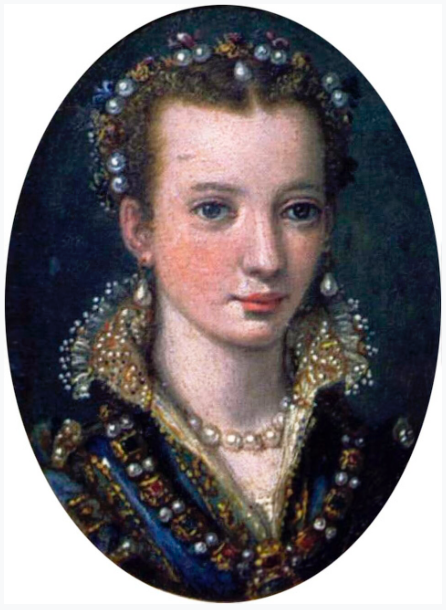
The Woman Who Could Never Have Enough Pearls
Queen Elizabeth I and the Most Extravagant Pearl Obsession in Royal History
The Woman Who Could Never Have Enough Pearls
Queen Elizabeth I and the Most Extravagant Pearl Obsession in Royal History
In 1558, a twenty-five-year-old woman inherited one of the most unstable kingdoms in Europe.
She had no husband. No children. No army of her own. Half the country questioned whether a woman should rule at all. Her mother had been beheaded on the orders of her own father. She had spent part of her childhood declared illegitimate. Powerful nobles expected her to fail. Foreign monarchs expected her to marry.
Instead, she became one of the most successful rulers in English history.
And she did it wearing pearls.
Not a few pearls. Thousands of them.
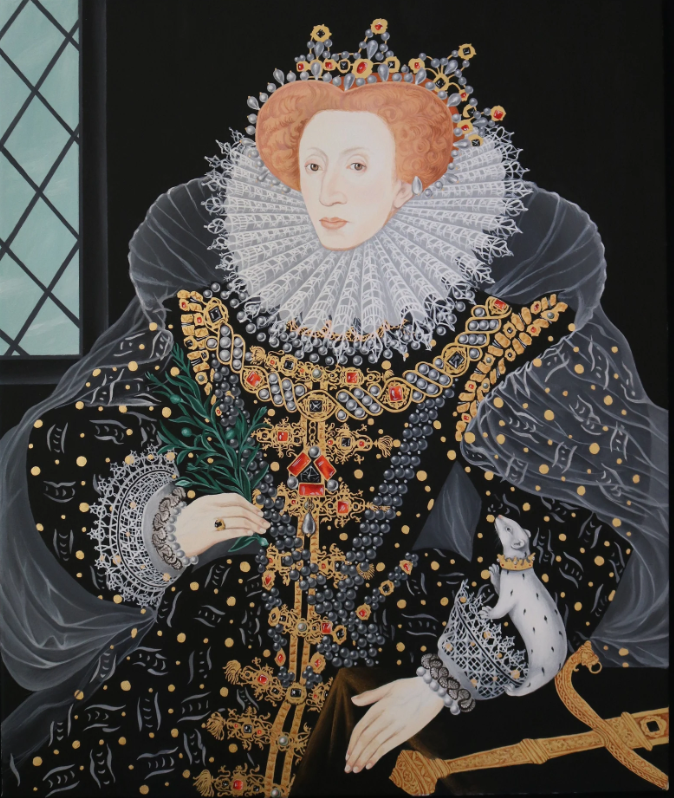
By the end of her reign, Queen Elizabeth I had transformed a gemstone into a political language. Pearls covered her gowns, draped from her neck, adorned her hair, decorated her portraits, and became so closely associated with her image that they were almost inseparable from the queen herself.
The remarkable question is not why Elizabeth owned pearls.
It is why she could never seem to have enough.
Who Was Elizabeth I?
Elizabeth was born on September 7, 1533, at Greenwich Palace, outside London. Her father was King Henry VIII of England — one of the most feared and powerful monarchs of the 16th century. Her mother was Anne Boleyn, Henry’s second wife.
When Elizabeth was two and a half years old, her father had her mother executed.
Anne Boleyn was accused of adultery, treason, and incest — charges most historians today regard as entirely fabricated, invented by a king who had grown tired of his wife and wanted her gone. Anne was beheaded at the Tower of London on May 19, 1536. Within days, the infant Elizabeth was declared illegitimate and stripped from the line of succession.
She survived anyway. She educated herself voraciously, mastered six languages, outmaneuvered every rival, and in November 1558 became Queen of England. She would reign for forty-five years.
She would never marry. She would never name an heir. And throughout every year of her reign, she accumulated pearls on a scale that still astonishes historians today.

The Numbers
In 1587, royal clerks compiled an official inventory of Elizabeth’s jewelry.
The total reached 628 individual pieces.
When she died in 1603, her wardrobe contained more than 2,000 gowns — the majority of them decorated with pearls. To understand what that means, consider this single detail preserved in a royal household record: Elizabeth employed two women whose sole daily occupation was to remove the pearls from whichever gown she had worn that day and sew them onto whichever gown she intended to wear the following morning. That was the entirety of their job. Every night. For years.
When Robert Dudley, the Earl of Leicester — the man most historians believe was the great love of Elizabeth’s life — died in 1588, he left her a parting gift in his will. He bequeathed her a rope of 600 fair white pearls. It was the gift of a man who had spent thirty years learning exactly what would move his queen.
Pearls on Everything
Elizabeth did not confine her collection to necklaces.
Pearls appeared on her bodice, her sleeves, her hair, her collars, and woven directly into the fabric of her gowns. Court painters immortalized this in portrait after portrait, and art historians have since identified at least eleven distinct “pendant pearl” portraits — a recognizable group in which Elizabeth wears a large pearl suspended from a jewel, sometimes with a bow, or hanging from a girdle chain. No European monarch before or after her became so completely identified with a single gemstone.
Yet even a queen’s resources had limits. Many of the individual pearls sewn onto her gowns were not natural pearls at all, but carefully crafted glass beads filled with wax, coated to imitate the luster of the real thing. At the time, these cost one penny apiece — roughly equivalent to a week’s wages for most working people. The illusion was convincing enough to deceive observers standing at court. Elizabeth understood, better than almost anyone in her era, that perception and reality were the same thing if you controlled the image tightly enough.
A Rival Queen’s Pearls — and a Transaction That Reveals Everything
Nothing captures Elizabeth’s obsession more precisely — or more revealingly — than the story of how she acquired the pearls of Mary, Queen of Scots.
Mary Stuart was Elizabeth’s cousin, a Catholic queen with a strong claim to the English throne and a talent for catastrophic personal decisions. By 1567, Mary’s reign in Scotland had collapsed entirely. Accused of complicity in her husband’s murder, she had been forced to abdicate and was imprisoned in a castle on a small Scottish island. To raise funds, her half-brother and political rival, the Earl of Moray, began quietly selling off her possessions — including her extraordinary jewelry collection.
Among Mary’s treasures was a group of pearls that had become famous across Europe. The French ambassador, writing urgently to Paris, described them in his dispatches as “comme noix muscades” — like nutmegs — referring to their extraordinary, almost unbelievable size. Catherine de Medici, the formidable Queen Mother of France and one of the most powerful women in Europe, wanted them badly and dispatched her own ambassador to acquire them.
Elizabeth moved faster. Her agent purchased the pearls before the French could act. She paid 12,000 crowns — roughly one third of their actual value. Mary, imprisoned and powerless, could do nothing. The French, outmaneuvered, had no recourse. These remarkable pearls are believed by many historians to be the very ones visible in Elizabeth’s famous Armada Portrait — the triumphant painting commissioned to celebrate England’s defeat of the Spanish naval invasion of 1588, the defining image of her entire reign.
Elizabeth had taken the pearls of a queen she held captive, paid a fraction of their worth, and then displayed them in the most famous portrait of her life. It was not simply vanity. It was a statement about who held power and who did not — made in the only language Elizabeth ever entirely trusted.

What Pearls Meant
Elizabeth ruled in a world that was openly hostile to female authority. Theologians argued that women were constitutionally unfit for government. Foreign rulers assumed she would eventually surrender the throne through marriage. The pressure on her, from the first day of her reign to the last, was to become someone’s wife — to transfer her power to a man.
She refused. And she needed a visual language to explain that refusal, to transform what her critics called weakness into something that looked like divine election.
Pearls, in Renaissance Europe, symbolized chastity and purity. They connected Elizabeth to Cynthia, the classical goddess of the Moon — a virgin and therefore untouchable. In portraits such as the famous Rainbow Portrait, the pearls knotted across her body allude directly to her virginity, while her pale, luminous, white-lead-painted face mirrors the luster of the pearls themselves. The queen and the gemstone had become, intentionally, the same image.
She was not incomplete without a husband. She was chosen. She was permanent. She was the pearl.
The Pearls Survived
For forty-five years, Elizabeth had used pearls to tell the world a story about herself: that she was powerful, pure, complete, and beyond the reach of any man’s ambition. She had commissioned portraits, controlled her image with an iron hand, employed women whose lives revolved entirely around the movement of gems from one dress to another.
The pearls passed to King James I the moment she drew her last breath. He gave them to his wife, Anne of Denmark, who wore them without hesitation and added more of her own.
The obsession did not die with Elizabeth. It simply transferred.
Which raises an uncomfortable question: was the pearl obsession ever really about Elizabeth at all — or was it about what every queen, in every century, understood she needed in order to be taken seriously?
Thank you for reading this edition of Natural Pearls.
If you enjoy exploring the history, archaeology, science, and cultural legacy of natural pearls, I invite you to follow my newsletter for future editions.
You can also explore additional research, articles, and documentary content at The Columbus Pearls Project.
NaturalPearls #PearlHistory #History #Archaeology #Gemology #QueenElizabethI #TudorHistory #RoyalJewels #MuseumCollections #MaritimeHistory #CulturalHeritage
메타데이터
- post_id
- 391d2ffae0e0
- slug
- the-woman-who-could-never-have-enough-pearls-391d2ffae0e0
- url
- https://medium.com/@petervonperle/the-woman-who-could-never-have-enough-pearls-391d2ffae0e0
- canonical_url
- https://medium.com/@petervonperle/the-woman-who-could-never-have-enough-pearls-391d2ffae0e0
- author_url
- https://medium.com/@petervonperle
- status
- ok
- fetched_at
- 2026-06-27 18:20:27