“Exploring the Various Types of Blockchains: Public, Private, Hybrid and Consortium”
Introduction:
“Exploring the Various Types of Blockchains: Public, Private, Hybrid and Consortium”
Introduction:
Since the debut of Bitcoin in 2009, blockchain technology has swiftly advanced and extended. As a result, multiple varieties of blockchains have arisen, each catering to certain use cases and needs. In this blog article, we will look at the four main types of blockchains: public, private,Hybrid and consortium blockchains. Understanding the differences and applications of these types is essential for anyone interested in the world of blockchain.
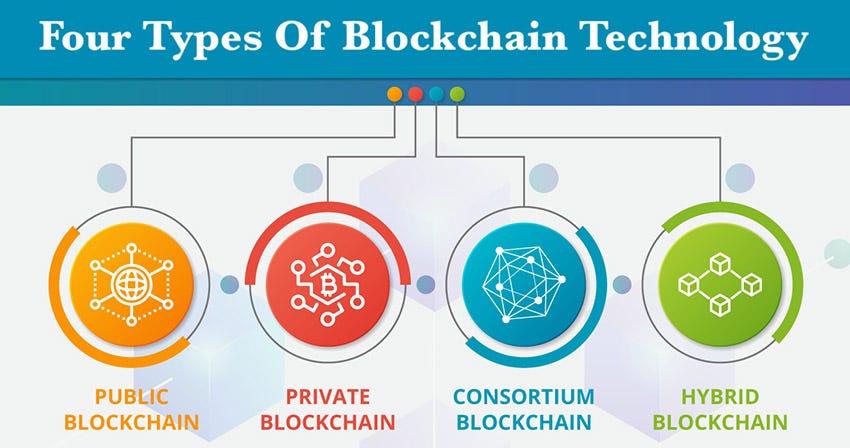
Types of Blockchain Technology
1.Public Blockchains: Open and Decentralized
The Essence of Public Blockchains:
Public blockchains, as the name suggests, are open for anyone to join and participate. These blockchains adhere to several fundamental principles that set them apart:
- Open Access: Permissionless public blockchains allow anybody to join the network, create an address, and participate in transactions. This unrestricted access encourages inclusiveness and transparency.
- Decentralization: It refers to the fact that these blockchains are maintained by a dispersed network of nodes, with no one physical in command. Decentralization is a fundamental feature of public blockchains, since it improves security and eliminates single points of failure.
- Security and trust: To confirm and secure transactions, public blockchains employ cryptographic algorithms and consensus techniques such as proof of work or proof of stake.
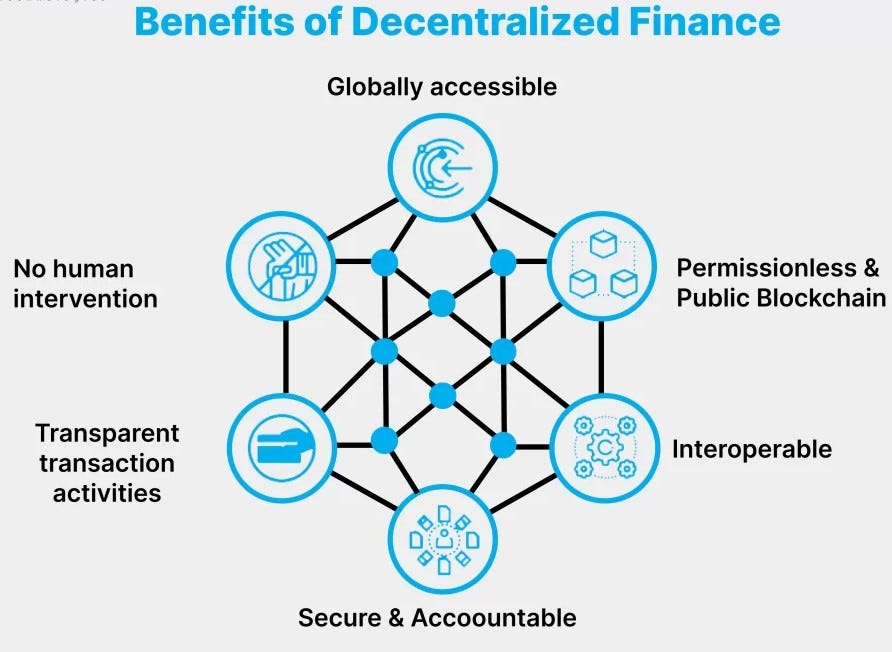
- Transparency: All transactions on public blockchains are transparent and accountable to anybody.
- Examples: public blockchains are Bitcoin, Ethereum, and Litecoin.
Notable Example of Public Blockchain:
Several public blockchains have gained prominence over the years, each with its unique features and applications. Here are some notable examples:
Bitcoin (BTC): Bitcoin was the first cryptocurrency and public blockchain, created by the pseudonymous Satoshi Nakamoto. It’s primarily used as a digital currency for peer-to-peer transactions and has established itself as a store of value.
Ethereum (ETH): Ethereum is known for introducing smart contracts, which are self-executing contracts with the terms of the agreement directly written into code. It has become a platform for decentralized applications (DApps) and DeFi (Decentralized Finance).
Litecoin (LTC): Often referred to as “silver” to Bitcoin’s “gold,” Litecoin is a fast and low-fee cryptocurrency designed for everyday transactions.
Cardano (ADA): Cardano is a blockchain platform that emphasizes research and a layered architecture for scalability, sustainability, and security. It aims to bring blockchain to the mainstream.
Polkadot (DOT): Polkadot is a multi-chain network that connects various blockchains, enabling them to share information and work together, fostering interoperability.
Use Cases for Public Blockchains:
Public blockchains find application in a wide range of use cases, including:
Cryptocurrencies: Digital currencies such as Bitcoin and Litecoin are supported by public blockchains, enabling for safe and borderless transactions.
Smart Contracts: Ethereum’s smart contracts enable self-executing agreements, laying the groundwork for decentralized apps and DeFi platforms.
Decentralized Application: Developers create DApps on public blockchains to provide consumers with numerous services and utilities without relying on a central authority.
Transparency and accountability: Public blockchains may be used to validate and trace the legitimacy of items in supply chains, ensure fair elections, and give transparency in a variety of industries.
2.Private Blockchains: Restricted and Controlled
Understanding Private Blockchain:
As the name implies, private blockchains function in a regulated environment with limited access and participation. Private blockchains, as opposed to public blockchains, have distinct access controls and governance models:
- Permissioned Access: Only a small number of individuals has access to a private blockchain. These participants are frequently well-known and trustworthy entities, such as organizations, people, or consortium members.
- Centralized Governance: The governance system of private blockchains is more centralized. The network’s operation and policies are often overseen by a single company or a coalition of firms.
- Privacy: These blockchains frequently provide increased privacy features that allow members to keep some data private. This is very useful in business contexts.
- Efficiency and Scalability:Private blockchains can be more efficient and scalable than public blockchains since they have a restricted number of nodes and can use consensus processes suited to their needs.
- Specific Use Cases: Private blockchains are often deployed for specific use cases where control, trust, and privacy are paramount.
Use Cases for Private Blockchains:
Private blockchains find application in a wide range of industries and scenarios:
Supply Chain Management: The transparency and trust provided by a private blockchain make it easier to track and verify the movement of items in a supply chain.
Document Verification: Private blockchains may be used to secure the validity and integrity of key documents such as legal agreements, certifications, and records.
Inter-Organizational Processes: When many companies need to work while maintaining trust, private blockchains provide a safe and efficient solution.
Finance and Settlements: Private blockchains are used for financial transactions, cross-border payments, and settlements, allowing for faster and more secure operations.
3.Consortium Blockchains: Collaborative and Controlled
Understanding Consortium Blockchains:
Consortium blockchains, also known as federated blockchains, are designed to foster collaboration between multiple organizations. They strike a balance between the open access of public blockchains and the strict access control of private blockchains:
- Permissioned Access: Consortium blockchains grant access to a predefined group of organizations or persons, making them appropriate for applications requiring participant confidence.
- Partnership-Based:Partnership-based blockchains are frequently utilized for industry-specific cooperation in which numerous firms have shared interests. The consortium of participating organizations controls the blockchain network.
- Customizable Rules: Consortium members can tailor the rules, governance, and consensus methods to their own needs. Because of this versatility, consortium blockchains are diverse and adapted to the unique needs of the partnership.
- Security and Efficiency: Due to their managed and curated nature, consortium blockchains provide a high level of security and efficiency when compared to public blockchains
Use Cases for Consortium Blockchains:
Consortium blockchains find application in a wide array of collaborative scenarios:
Cross-Industry Collaboration: Industries looking to improve their collective operations, such as supply chain management, can use consortium blockchains to increase transparency and confidence among participants.
Financial Consortia: To improve interbank operations, trade financing, and cross-border payments, banks and financial institutions frequently join consortium blockchains.
Healthcare Data Sharing: In the healthcare industry, consortium blockchains allow hospitals, insurers, and healthcare providers to securely and compliantly share patient data.
Industry-Specific Projects: Blockchain is being used by consortiums in industries such as energy, real estate, and manufacturing to streamline processes, decrease friction, and promote accountability.

4.Hybrid Blockchains: Combining the Best of Both Worlds
Understanding Hybrid Blockchains:
A hybrid blockchain is a fusion of public and private blockchains, designed to provide a balance between openness and control. It leverages the strengths of both types while mitigating their weaknesses:
- Public and Private Components: A hybrid blockchain consists of two distinct parts — a public component and a private component. The public component is accessible to anyone, while the private component is restricted to a specific group of participants.
- Interoperability: Hybrid blockchains allow data and assets to move seamlessly between the public and private sides, promoting interoperability and expanding the use cases.
- Customizable Governance: Organizations can tailor the governance and consensus mechanisms of the private side, enabling them to meet their specific requirements.
- Privacy Control: Sensitive information can be kept within the private component, offering enhanced data privacy for participants.
Use Cases for Hybrid Blockchains:
Hybrid blockchains can be applied to a wide range of use cases, including:
Supply Chain Management: Companies can utilize the public side to enhance transparency in their supply chain, while the private side ensures confidentiality of proprietary data.
Cross-Border Payments: Hybrid blockchains can facilitate cross-border payments between financial institutions, with the public side ensuring transparency and the private side maintaining transaction security.
Healthcare Data Sharing: In the healthcare sector, patient data can be shared securely between healthcare providers on the private side, while regulatory compliance and transparency are managed on the public side.
Government Services: Governments can use hybrid blockchains to streamline administrative processes while maintaining data privacy and transparency where required.
Benefits of Hybrid Blockchains:
The hybrid blockchain model offers several advantages:
- Enhanced Privacy: Private components allow organizations to keep sensitive information confidential while still benefiting from the transparency of the public component.
- Customization: Organizations can tailor the private side to meet their specific needs, adjusting governance, consensus mechanisms, and performance.
- Interoperability: The ability to transfer assets and data between the public and private components widens the range of use cases.
- Efficiency: Hybrid blockchains offer a balance between efficiency and security, catering to a broader spectrum of applications.
Challenges and Considerations
While hybrid blockchains have clear advantages, they also present certain challenges:
Complexity: Managing both public and private components can be more complex than handling a single blockchain type.
Regulatory Compliance: Organizations must ensure compliance with regulations governing data privacy and transparency, which can be more intricate in hybrid models.
Scalability: Hybrid blockchains may face scalability challenges due to the increased complexity of managing multiple components.
One size does not fit all in the realm of blockchain technology. The decision between public, private, Hybrid and consortium blockchains is determined by the individual needs of a project. Understanding the major differences between various blockchain variants is critical for making educated decisions about blockchain implementation. Openness and decentralization are provided by public blockchains, control and privacy are provided by private blockchains, and consortium blockchains provide a medium ground for collaborative endeavors. As the blockchain ecosystem evolves, these many types of blockchains will find distinct uses and contribute to blockchain growth and innovation.
메타데이터
- post_id
- 392b5e64eabe
- slug
- exploring-the-various-types-of-blockchains-public-private-hybrid-and-consortium-392b5e64eabe
- url
- https://medium.com/@yaserarabth/exploring-the-various-types-of-blockchains-public-private-hybrid-and-consortium-392b5e64eabe
- canonical_url
- https://medium.com/@yaserarabth/exploring-the-various-types-of-blockchains-public-private-hybrid-and-consortium-392b5e64eabe
- author_url
- https://medium.com/@yaserarabth
- status
- ok
- fetched_at
- 2026-07-25 00:19:29