Embryo Transfer Timing in IVF: The Importance of the ERA Test
In Today’s Time, the success of IVF depends on many factors, but one of the most important is the timing of embryo transfer. Even with a…
Embryo Transfer Timing in IVF: The Importance of the ERA Test
In Today’s Time, the success of IVF depends on many factors, but one of the most important is the timing of embryo transfer. Even with a high-quality embryo, it is not able to fertilise if it is not transferred during the uterus’s most receptive phase. To solve this, fertility specialists now use the ERA Test (Endometrial Receptivity Analysis), an advanced tool that helps identify the precise window when the uterus is ready for implantation. Many couples, especially those who have faced repeated IVF failures, are advised by their **IVF Doctor in Delhi** to undergo this test for a more personalised and successful embryo transfer plan.
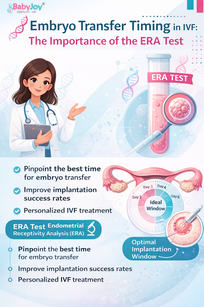
What is the ERA Test?Embryo Transfer Timing in IVF
The Endometrial Receptivity Analysis (ERA) is a specialised genetic test that examines the endometrium, the lining of the uterus, to determine whether it is “receptive” at the time of embryo transfer.
The test studies more than 200+ genes related to implantation and identifies your unique Window of Implantation (WOI).
Why is this important?
Because the window of implantation is not the same for everyone. Similarly, most women have an implantation window around day 19–21 of their menstrual cycle, and many have a delayed window. Transferring the embryo outside this window then it can reduce your chances of a successful pregnancy.
Why Embryo Transfer Timing Matters in IVF
IVF success highly depends on two major factors:
- Embryo Quality
- Uterine Receptivity
Even with a genetically normal embryo, implantation can fail if the uterus isn’t ready. Precise timing ensures:
- The lining is thick enough
- The endometrium has the right hormonal environment
- Immune and molecular markers support implantation
A mismatch between embryo readiness and uterine readiness is one of the biggest causes of failed IVF cycles.
When is the ERA Test Recommended?
Doctors usually advise the ERA test for:
- Couples who face repeated IVF failures
If you’ve faced 2 or more failed embryo transfers even with good-quality embryos, the ERA test can identify whether a timing issue is the cause.
- Unexplained implantation failure
Sometimes everything appears normal: hormones, embryo quality, and uterine lining, yet pregnancy does not occur. ERA helps to find the hidden issues.
- Patients doing Frozen Embryo Transfer (FET)
FET cycles allow care control over timing and make ERA highly useful for couples.
- Women with irregular cycles
If hormonal patterns vary, the implantation window may not align with standard protocols.
How is the ERA Test Done?
The ERA test is usually performed during a mock embryo transfer cycle. Now know the step-by-step process of ERA:
1. Preparation of the Uterine Lining
You will take hormonal medicine to prepare the endometrium, similar to a real transfer process.
2. Endometrial Biopsy
On the day a transfer would normally happen, a small sample of the uterine lining is taken.
3. Genetic checking
The sample is given to the lab to check gene expression markers that indicate whether the lining is:
- Receptive
- Pre-receptive
- Post-receptive
4. Personalised Transfer Plan
Based on the reports, your doctor will manage the embryo transfer timing sometimes by as little as 12–24 hours to match your personal implantation window.
Advantages of the ERA Test
1. Personalised Timing for the couple to Embryo Transfer
Rather than depending on standard timing.
2. Higher IVF Success Rates
Studies show that ERA-guided transfers improve implantation chances, especially in patients with implantation failure.
3. Better Use of Good-Quality Embryos
You get the best opportunity to use high-quality embryos efficiently.
4. Reduces Your Emotional and Financial Stress
Avoids repeating cycles blindly and gives clarity on what your body needs.
Is Every IVF Couple Need the ERA Test?
No, not needed. The ERA test is not required for women who experience their first IVF cycle of implantation problems.
It is most beneficial for:
- Recurrent IVF failure patients
- FET cycles
- Women with abnormal endometrium patterns
Your IVF Doctor will suggest it only if it adds value to your treatment plan.
How ERA Improves the Chances of Your Pregnancy
The ERA test helps to solve the difficulty of IVF, the exact timing of embryo transfer. When the transfer aligns perfectly with your implantation window, the embryo receives the optimal environment to attach and grow.
This single adjustment can make the difference between:
- another failed cycle and
- a positive pregnancy test
Conclusion
Embryo transfer timing plays an important role in the overall success of an IVF cycle, and the ERA test provides an advanced way to identify your personalised window of implantation. By understanding exactly when the uterus is most receptive, couples can significantly increase their chances of achieving a successful pregnancy, especially after repeated implantation failures. As more patients look for advanced and customised fertility solutions, many also compare treatment expenses and explore the **IVF Cost in Delhi** to plan their journey with confidence. With the right guidance and timely interventions like the ERA test, IVF can become a more accurate, effective, and hopeful process for aspiring parents.
FAQ’s
1. What is the ERA test in IVF?
The ERA (Endometrial Receptivity Analysis) test is a genetic test that examines the endometrial lining to determine whether it is “receptive” at the time of embryo transfer.
2. Who should consider getting the ERA test?
The ERA test is most recommended for women who have had two or more failed embryo transfers, unexplained implantation failures, irregular cycles, or those undergoing a frozen embryo transfer (FET) where precise timing is essential.
3. Does the ERA test improve IVF success rates?
Yes. The ERA test can significantly improve success rates, especially in women with repeated IVF failures. By customising the transfer time to your body’s unique receptivity window, the chances of implantation and pregnancy increase.
4. Is the ERA test painful?
The test involves an endometrial biopsy, which may cause mild discomfort or cramping for a few minutes. The procedure is quick, safe, and usually well-tolerated by most patients.
5. Does the ERA test increase the overall IVF time or cost?
Yes, the ERA test requires a mock cycle, which may add extra time before your actual embryo transfer. It also adds to the treatment expenses.
메타데이터
- post_id
- 39325ed8bfc2
- slug
- embryo-transfer-timing-in-ivf-the-importance-of-the-era-test-39325ed8bfc2
- url
- https://medium.com/@babyjoyivfcenter0/embryo-transfer-timing-in-ivf-the-importance-of-the-era-test-39325ed8bfc2
- canonical_url
- https://medium.com/@babyjoyivfcenter0/embryo-transfer-timing-in-ivf-the-importance-of-the-era-test-39325ed8bfc2
- author_url
- https://medium.com/@babyjoyivfcenter0
- status
- ok
- fetched_at
- 2026-06-09 15:37:30