The Betrayal of the Self: Why Adult Children of Narcissists Sometimes Defend the Parent Who Broke…
The invisible cage of loyalty: understanding the trauma bond that makes victims protect their abusers — and how to finally walk free.
The Betrayal of the Self: Why Adult Children of Narcissists Sometimes Defend the Parent Who Broke Them
The invisible cage of loyalty: understanding the trauma bond that makes victims protect their abusers — and how to finally walk free.
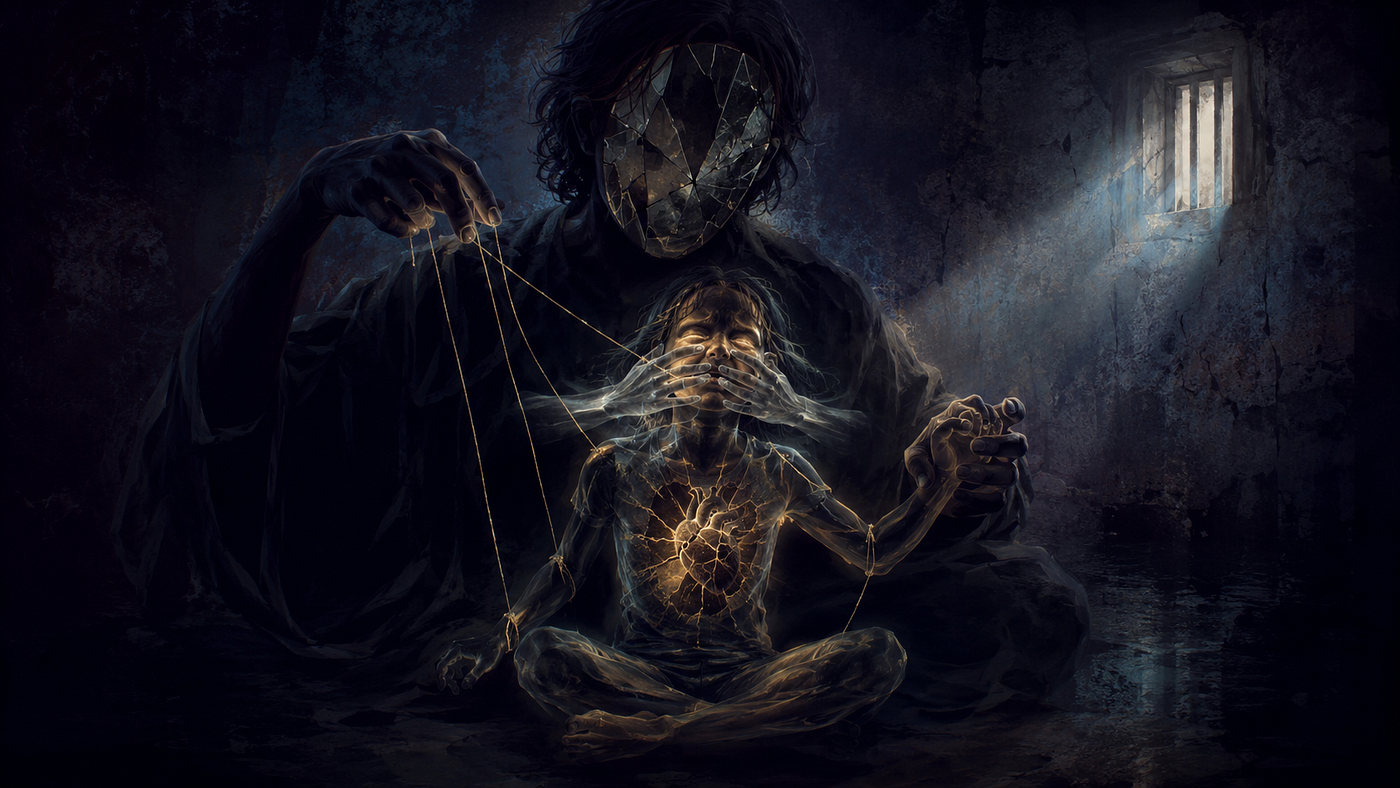
This image is generated via GPT-2
You’re sitting in a coffee shop with a friend you’ve known for years, and the conversation turns, as it sometimes does, to family. Your friend tilts her head, voice gentle but probing, and says, “It sounds like your mother really hurt you. Why do you always jump to her defense?” You feel a heat rise up your neck. Your jaw tightens. Before you can even think, the words are out: “You don’t understand. She did the best she could. I wasn’t an easy child. Besides, she sacrificed everything for me.”
Later, alone in your car, you grip the steering wheel and a wave of confusion washes over you. A small, quiet voice somewhere deep inside whispers, But she broke me. She broke me, and I’m still defending her. Why?
This is the betrayal of the self. It is one of the most disorienting, maddening, and heartbreaking legacies of being raised by a narcissistic parent. The adult child who defends the very person who shattered their sense of worth is not weak, not foolish, not complicit. They are enacting a survival script written in the ink of childhood terror, a script that once kept them alive and now keeps them imprisoned. This article is a deep, unflinching exploration of why that happens — the psychological machinery beneath the loyalty, the hidden architecture of trauma that turns victims into protectors — and a roadmap for finally reclaiming the self that was sacrificed at the altar of parental need.
To understand this paradox, we have to go all the way back to the beginning. Not just to the painful memories, but to the very wiring of a child’s brain, the desperate need for attachment, and the impossible bind created by a parent whose love is a weaponized, conditional thing.
The Narcissistic Parent: A Blueprint of Invisible Destruction
Before we can understand the adult child’s defense, we must understand what they survived. Narcissistic parents are not simply vain or self-absorbed in the way pop culture often paints them. At their core, they possess a profound emptiness, a fragile self-esteem that requires constant external validation, and a near-total inability to see their child as a separate human being with an independent inner world. To the narcissistic parent, the child is not a person to be nurtured but an object to be used — a mirror to reflect their grandiosity, a sponge to absorb their shame, a puppet to act out their unmet needs.
There are many faces to this parenting. The overt narcissist rules through rage, demands, and obvious belittlement. The covert narcissist wields martyrdom, sighing disappointment, and the quiet, crushing weight of “after all I’ve done for you.” The malignant narcissist mixes cruelty with a kind of pleasure in the child’s pain. But regardless of the style, the core message the child receives is the same: You exist for me. Your feelings are an inconvenience. Your needs are an attack. Your only job is to make me feel like the person I desperately need to believe I am.
In such a home, love is not a steady, nourishing presence. It is a currency that can be granted or withdrawn in an instant based on the child’s performance. One day, the child is the golden one, praised and doted upon because they reflected the parent’s brilliance. The next, they are the scapegoat, the repository for everything the parent cannot bear to feel about themselves — failure, inadequacy, rage. This oscillation, known in psychology as intermittent reinforcement, creates one of the most powerful addiction-like bonds in the human brain. The child becomes a gambler at a slot machine, pulling the lever over and over, hoping for the jackpot of approval that comes just often enough to keep them hooked.
And the cost of this hook? The child must slowly, systematically, betray their own reality. They learn that their perceptions are wrong. If they feel hurt by a cruel remark, they are “too sensitive.” If they notice an inconsistency, they are “imagining things.” If they express a need, they are “selfish.” This is gaslighting in its most formative and destructive form — not just denying a single event, but teaching a developing human being that their internal compass is hopelessly broken. The child internalizes the message: The problem isn’t what happened. The problem is how I saw it. The problem is me.
This is the breeding ground for the betrayal of the self. By the time that child reaches adulthood, the machinery of self-doubt, self-blame, and protective denial is running so deeply and automatically that defending the parent feels not like a choice, but like breathing.
The Anatomy of the Defense: Psychological Forces at War Within
So why does the adult child, perhaps now with a partner, a career, maybe children of their own, still rise to the parent’s defense with a ferocity that shocks even them? The answer is not a single cause but a tangled knot of psychological survival mechanisms that have fused together over decades. Unraveling this knot is the work of a lifetime, but naming its strands is the first act of freedom.
1. The Trauma Bond: Love Twisted into Chains
The term “trauma bond” has become more common in public discourse, but its depth is often misunderstood. A trauma bond is not simply a connection between two people who have shared a hard experience. It is an attachment formed through a repeated cycle of abuse, devaluation, and then periodic, intense reinforcement of “love” or relief. Patrick Carnes, who pioneered work on trauma bonding, described it as “the misuse of fear, excitement, and sexual feelings to entrap another person.” In the parent-child context, the excitement is the desperate, soaring hope when the parent finally offers a crumb of kindness, a moment of warmth, a single sentence of praise. That moment floods the child’s brain with a neurotransmitter cascade — dopamine, oxytocin — so powerful that it bonds them to the abuser far more tightly than consistent, calm love ever could.
Think of it this way: if you give a plant a steady, gentle rain, it grows sturdy but unremarkable roots. If you starve it of water for weeks and then suddenly flood it, the roots will cling to that deluge with a frantic, life-or-death desperation. The child of a narcissist lives in an emotional desert, and when the rain comes, it feels like salvation. The parent who broke them becomes, in their neural circuitry, also the only source of relief. Defending that parent is, at a subconscious level, defending the source of the only “water” they ever knew.
2. Cognitive Dissonance: The Mind’s Unbearable Contradiction
Leon Festinger’s theory of cognitive dissonance holds that when a person holds two conflicting beliefs, they experience a psychological pain so intense that they will alter one of the beliefs — even if it means distorting reality — to relieve the pressure. For the adult child of a narcissist, the conflicting beliefs are monumental: “My parent loves me” (a belief essential for a child’s survival) versus “My parent hurts me in ways that loving parents do not.” The mind cannot hold these two truths simultaneously without shattering, so it resolves the dissonance by creating an elaborate defense narrative.
“She had a hard life herself.” “He just wants what’s best for me.” “I was too demanding as a child.” “It wasn’t that bad; I’m exaggerating.” “They sacrificed so much.” Every single one of these sentences is a dissonance-reducing mantra. The mind will willingly rewrite history, minimize abuse, and magnify the parent’s struggles because acknowledging the full truth — the person who was supposed to love me most did not, and cannot, love me in a healthy way — is, at first, an annihilation-level threat to the psyche. Defending the parent is the mind’s desperate, ingenious way of keeping the world from collapsing.
3. Betrayal Blindness: The Eye That Refuses to See
In 1996, researcher Jennifer Freyd introduced the concept of “betrayal blindness.” She proposed that humans have a built-in mechanism to overlook or forget betrayals by a caregiver when acknowledging that betrayal would threaten a necessary attachment. For a child, the parent is survival. Evolutionarily, a child separated from a caregiver dies. So the brain has developed a horrific but effective strategy: if the person you depend on for life is also the source of danger, you simply stop seeing the danger. You go blind to it.
This blindness does not simply switch off when the child turns eighteen. It can persist for decades, an unconscious protective shield that keeps the adult from seeing the parent clearly because to do so would unleash a backlog of grief, rage, and terror that the system never learned to handle. When a friend or partner says, “Your father is a toxic, manipulative man,” the adult child’s immediate, visceral defense is not actually about the father in that moment. It is the ancient blindness circuitry firing, screaming, Do not see this! If you see this, you will die. The adult brain knows it will not actually die, but the amygdala, the survival brain, does not. The defense is, quite literally, a terror response.
4. The Illusion of Control: If I’m to Blame, I Can Fix It
One of the most seductive and tragic traps for the adult child of a narcissist is the internal narrative that they are the problem. On the surface, this looks like low self-esteem, and it is. But at a deeper level, it is a survival strategy. For a child, it is existentially safer to believe “I am bad” than to believe “My parent is dangerous and unpredictable.” If you are the problem, you have agency. You can try harder, be better, quieter, more accommodating. If the parent is simply incapable of love, you are powerless. Powerlessness is, for a child, unthinkable.
This dynamic carries straight into adulthood. When a conflict arises with the narcissistic parent, the adult child reflexively takes the blame. They will defend the parent by saying, “I know I’m difficult,” or “I pushed their buttons,” or “I should have known better than to bring that up.” In doing so, they are not just protecting the parent’s image; they are protecting their own deeply held illusion of control. If the abuse is their fault, they can end it. If it isn’t, they are at the mercy of a chaotic, unloving force, and that is a reality the inner child still cannot bear.
5. The Inner Child’s Unquenchable Hope
Within every adult who defends a destructive parent lives a tiny, starved child with its face pressed to the glass, still waiting for the parent to finally walk through the door as the loving figure they always needed. This inner child is not rational. It does not care about therapy speak or boundaries or trauma theory. It cares about one thing: being loved by mommy or daddy. This inner child holds the hope like a lit match in a hurricane, and that hope fuels the defense. Every time the adult makes an excuse for the parent, they are, in a way, keeping that hope alive. “If I just explain her to others, if I protect her reputation, if I am the good, loyal child, maybe one day she will see it. Maybe one day she will love me the way I need.” The defense is a ritual of hope, a daily offering at the altar of a love that was never there.
This hope is not foolish. It is the most human thing there is. It is the deepest, earliest blueprint of what a child is supposed to do: attach, love, seek repair. That the parent cannot complete that circuit is not the child’s failure, but the child carries the hope anyway because letting it go is its own kind of death.
The Betrayal of the Self: A Death by a Thousand Cuts
When we talk about the “betrayal of the self,” we are not describing a single dramatic moment. We are describing a slow, cumulative process of self-abandonment that begins so early and runs so deep that the adult often has no idea they are doing it. They do not know what it feels like to have an intact self, because the self was never allowed to form in the first place.
The Birth of the False Self
From infancy, a child raised by a narcissist learns that their authentic feelings are not only unwelcome but dangerous. Crying might bring rage. Joy might be met with jealousy. Fear might be ridiculed. Anger might trigger a terrifying withdrawal of love. So the child, brilliant in their survival instincts, constructs a false self — a persona designed to manage the parent’s emotional state. This false self is hyper-vigilant, acutely attuned to the parent’s moods, and ready at any moment to contort into whatever shape will keep the peace. The child becomes the family’s emotional caretaker, the parent’s therapist, the clown, the high achiever, the invisible one — whatever the narcissistic system demands.
By the time this child is thirty years old, they may have no idea who they actually are. They know what the parent needs them to be. They know what their partner needs, their boss needs, their friends need. But ask them, “What do you want? What do you feel? What do you need right now?” and you are met with a hollow silence. This is the ultimate betrayal: the original self, the one with its own desires, boundaries, and truths, was sacrificed so long ago that it feels like a ghost. Defending the parent is, in a very real sense, defending the person who murdered that original self. And yet the false self, constructed in the parent’s image, does not know how to stop.
The Tyranny of Toxic Loyalty
Toxic loyalty is the unspoken, ironclad rule of the narcissistic family system: Thou shalt not speak ill of the family. Thou shalt not reveal the secrets. Thou shalt protect the image at all costs. This loyalty is enforced not just by the parent’s explicit demands but by the deep, internalized shame that anything other than perfect family unity means you are a traitor, a bad child, a fundamentally disloyal person. The child grows up believing that love means protecting the parent from the consequences of their own behavior. It means lying to relatives, smiling at holiday gatherings, making excuses for the screaming, the manipulation, the neglect.
When that child becomes an adult and someone outside the system gently questions the parent’s behavior, the loyalty alarm screams. To let the truth out feels like an act of betrayal against the family, when in reality, the deepest betrayal happened long ago — the parent’s betrayal of the child’s right to safety, dignity, and a separate self. The adult child, defending the parent, is unknowingly defending the very system that demands their silence and their self-erasure.
The Body Keeps the Score
No discussion of the betrayal of the self is complete without acknowledging the body. While the mind constructs elaborate defenses, the body holds the truth. Adults who defend narcissistic parents often suffer from unexplained chronic pain, autoimmune disorders, migraines, digestive issues, and a constant, humming anxiety that has no name. The body remembers every violation, every moment the small self had to swallow rage or dissolve into compliant invisibility. The betrayal is not just psychological; it is somatic. Every time the adult defends the parent, they are forcing their body to participate in a lie, and the body protests. It screams through tension, through illness, through exhaustion. The self that was betrayed tries to speak through the only language left to it — the language of physical distress.
The Unseen Strings: Cultural, Familial, and Social Reinforcement
The adult child’s defense does not happen in a vacuum. It is reinforced by a world that sanctifies parental authority and too often mistakes the image of family for the substance of love. Understanding these external pressures is crucial because they often form the last, most stubborn layer of justification.
The Religion of the Parental Bond
Society holds a near-sacred belief that the bond between parent and child is fundamentally pure. We have sayings: “A mother’s love is unconditional.” “Blood is thicker than water.” “Honor thy father and mother.” These ideas are not inherently wrong, but they become weapons when applied to abusive dynamics. The adult child who dares to break the silence is met with a wall of cultural pressure: “But she’s your mother.” “You only get one dad.” “They won’t be around forever; you’ll regret this.” These platitudes, often spoken by well-meaning people, pile an enormous weight of guilt onto the person who is already carrying the invisible burden of abuse.
The child defending the narcissist often internalizes these voices. They become part of the internal chorus. “What kind of person cuts off their own parent?” This question haunts them and fuels the public relations campaign they run for the abuser. Defending the parent becomes a way of conforming to society’s demand for the sacred family narrative, even if that narrative is a complete fiction.
The Enmeshed Family System
In many narcissistic families, there is no boundary between individuals. This is enmeshment. The parent’s feelings are the child’s feelings. The child’s successes belong to the parent. The child’s life is an extension of the parent’s ego. In such a system, separating psychologically is seen as a death threat. When an adult child begins to wake up — perhaps through therapy, a supportive partner, or their own reading — and attempts to set a boundary, the entire family system mobilizes to pull them back. Siblings who are still entrenched may become “flying monkeys,” delivering the parent’s message: “Mom is so devastated. How could you do this to her after everything she’s done? You’re tearing the family apart.” The adult child, already primed for guilt, often retreats into the defense. It is easier to turn on themselves than to bear the weight of being branded the destroyer of the family.
The Addictive Pull of the Familiar
There is a neurological component here that is rarely discussed: the brain craves the familiar, even if the familiar is painful. The neural pathways of a child raised in chaos are shaped by that chaos. Stress hormones like cortisol become the baseline. In adulthood, a calm, healthy relationship can feel alien, even boring or threatening. The push-pull dynamic with the narcissistic parent, however painful, feels like home. Defending the parent and re-engaging in the old cycles provides a neurochemical hit of the known. To step out of the defense is to step into unfamiliar territory, and to the survival brain, unfamiliar equals danger. The betrayal of the self is, in part, a tragic addiction to a chemical and emotional state that was programmed in the earliest years of life.
The High Price of the Armor
Defending a narcissistic parent does not protect the adult child. It exacts a devastating toll that ripples out into every corner of their existence. This armor, once so necessary, becomes a prison.
1. The Erosion of Intimate Relationships
Partners of adult children of narcissists often live in a bewildering double reality. They see the abuse clearly, but their loved one refuses to acknowledge it. They watch their partner come home from a phone call with the parent, hollow-eyed and anxious, only to say, “It was fine. They mean well.” This creates a chasm. The partner feels shut out, helpless, and sometimes, resentful. The adult child, unable to be honest about the parent, cannot fully let the partner in. Intimacy requires truth, and when a significant portion of your emotional life is walled off behind a fortress of defense, the relationship starves.
Moreover, the adult child often unconsciously re-enacts the parental dynamic in the relationship. They may people-please, suppress their needs, and then explode in unexpected rage — a rage that actually belongs to the parent but has been displaced. They may choose partners who are emotionally unavailable or critical, because that feels like home. The defense of the parent bleeds into a defense of all toxic patterns, perpetuating the cycle of self-betrayal.
2. The Loss of Authentic Selfhood
Perhaps the greatest cost is existential. To spend decades defending someone who broke you is to live in a state of dissociation from your own truth. You become a walking contradiction. You say “I’m fine,” but your body is falling apart. You present a cheerful face to the world, but inside you are a hollowed-out cathedral of unmet needs and unwept grief. The authentic self — the one who loves, who creates, who knows what she feels — stays buried under layers of performance. Life becomes a series of roles rather than a lived experience. You go through the motions, but you are not truly there. This is the final betrayal: you have abandoned yourself so thoroughly that you have become a ghost in your own life.
3. The Generational Handoff
Without intervention, the betrayal passes to the next generation. Adult children who do not heal often become parents who, despite their most fervent wishes, reproduce aspects of the dynamic. They may become overprotective to the point of suffocation, fearing that any boundary will damage their own child as they were damaged. Or, conversely, they may inadvertently fall into patterns of emotional neglect because they never learned what healthy attunement looks like. Their own unprocessed pain leaks out in moments of stress, and suddenly they hear their narcissistic parent’s voice coming from their own mouth. The horror of this moment is a profound call to awakening. The cost of defending the past is the poisoning of the future.
The Awakening: Cracks in the Illusion
For many, the defense does not last forever. It cracks. The cracks can come in many forms: a therapist’s gentle, repeated question that finally lands; a partner who says, “I can’t watch you do this to yourself anymore”; a child of one’s own, whose innocent face suddenly illuminates the stark contrast between what was done to you and what you would never, ever do to them. Or sometimes, the crack comes from the body’s insurrection — a panic attack, a diagnosis, a collapse that forces the lie to stop.
The awakening is not a single event. It is a slow, terrifying, and sacred unravelling. It often begins with a radical, almost unbearable thought: Maybe it really was that bad. Maybe I was not the problem. Maybe I deserved better. To allow that thought is to open the door to an ocean of grief. And this is why so many people turn back. The grief of a lifetime of self-betrayal is immense. It is the grief of the childhood you never had, the parent you never got, the self you never got to become. But on the other side of that grief is the first true breath of freedom.
Breaking Free: The Long Journey Back to the Self
Healing from this deep a betrayal is not a straight line. It is a spiral, a labyrinth, a messy, nonlinear pilgrimage. There is no checklist that, once completed, grants you a golden ticket of wholeness. But there are waypoints, practices, and profound shifts that can guide the way. The following is not a prescription but a map drawn from the collective experience of countless survivors who have walked this path and found their way back to themselves.
Stage One: Radical Honesty and Witnessing
The first act of reclaiming the self is to break the silence, but in a very specific way. It does not necessarily mean confronting the narcissistic parent. In most cases, that confrontation is futile and re-traumatizing, as the parent’s entire psychological structure is built to deflect and deny. Radical honesty means telling the truth to yourself and to a carefully chosen, safe witness. This could be a trauma-informed therapist, a support group for adult children of narcissists, a trusted friend who has proven their capacity to hold pain without rushing to fix it. The simple act of speaking the truth out loud — “My mother belittled me constantly. I was terrified of my father’s rages. I felt utterly alone.” — without immediately softening it with “but they meant well,” is revolutionary. It rewires the brain. It tells the inner child, “I am listening now. Your story matters.”
Journaling is a powerful tool at this stage. Write the uncensored truth. Write the memories. Write the anger you were never allowed to feel. Write the unfairness. Do not edit. Do not minimize. Let the page hold what you could not. This is the beginning of externalizing the poison that has lived inside you.
Stage Two: Grieving What Was and What Never Will Be
Grief is the gateway to healing. Many adult children get stuck because they try to skip the grief. They want to jump straight to forgiveness, or to “moving on,” or to a transcendent understanding. But the body and the psyche need to mourn. You must mourn the child who was not protected. Mourn the love you did not receive. Mourn the parent you needed but never had. Mourn the time lost, the other paths you might have taken if you hadn’t been so busy surviving.
This grief is not a one-time event. It comes in waves. A scent, a song, a scene in a movie can suddenly open the well. Let it come. Scream into a pillow. Sob in your car. Write a letter to your younger self. Create a ritual — burn a symbol of the false self, plant something in the ground to represent the new life. Grief, when honored, eventually softens. It transforms from a sharp, daily pain into a quiet, profound acknowledgment of a deep truth. And on the other side of that grief, you begin to find space — space for something other than the defense.
Stage Three: Reclaiming Your Narrative from the Inner Critic
The narcissistic parent lives on inside the adult child in the form of an internal voice — the inner critic. This voice is a perfect facsimile of the parent’s judgments, criticisms, and demands. It says you are never good enough, that you are selfish for having needs, that you are doomed to fail. Unhooking from this voice is essential. One powerful approach comes from Internal Family Systems (IFS) therapy, which views this inner critic not as an enemy but as a protective “part” that learned to keep you safe by preemptively attacking you before the parent could. You can learn to dialogue with this part, to thank it for its misguided protection, and to gently help it step back so that your true Self — compassionate, curious, calm — can take the lead.
Another technique is cognitive defusion from Acceptance and Commitment Therapy (ACT). When the inner critic says, “You’re a failure,” instead of fighting it or believing it, you can say to yourself, “I’m having the thought that I’m a failure.” This tiny linguistic shift creates a crack of space between you and the thought. Over time, that space becomes a playground for a new, self-compassionate voice to emerge.
Stage Four: The Radical Act of Boundary Setting
Boundaries are not walls built of anger. They are the clear, compassionate articulation of what you need to be safe and whole. For the adult child of a narcissist, setting a boundary can feel like a declaration of war. The narcissistic parent will likely react with fury, guilt trips, victimhood, or icy withdrawal — the very responses that kept you defensively loyal for years. This is why boundaries must first be internal. You must establish a boundary inside your own mind: I will no longer betray my own truth to manage your feelings. I will no longer set myself on fire to keep you warm.
External boundaries may range from limiting phone calls to five minutes, to refusing to discuss certain topics, to taking a period of no contact. No contact is not an act of hatred; it is often the last, necessary measure to protect a self so fragile it cannot yet withstand the parent’s presence without collapsing. The goal of any boundary is not to punish the parent — though it may feel that way to them — but to create a safe container in which your authentic self can finally begin to breathe and grow without the constant toxic interference.
Stage Five: Reparenting and the Cultivation of the Self
The final, lifelong stage of healing is reparenting. You must learn to give yourself what the narcissistic parent could not. This is not about blaming yourself for the past, but about taking responsibility for your present and future. Reparenting means learning to tune in to your own emotions and meet them with curiosity and care. When you feel sad, instead of numbing out or scolding yourself, you can place a hand on your heart and say, “I see that you’re hurting. It’s okay. I’m here with you.” This might feel absurd at first, but it is rewiring the attachment circuitry that was damaged in childhood.
It means discovering what you actually like, what you actually want — perhaps for the first time. Try new hobbies not to be good at them, but to see if they bring you joy. Ask yourself, “What would feel nourishing right now?” and listen for the quiet answer. Build a relationship with your body through yoga, dance, or simply walking and noticing the world around you. The body has been a battleground; it can become a home. Surround yourself with people who celebrate your growth, who can hold your emerging self without needing you to be small. A chosen family can be a profound corrective to the isolation of a narcissistic upbringing.
Stage Six: Forgiveness Reimagined
A word about forgiveness, because it is so often weaponized against survivors. True forgiveness, if it comes, is not a premature absolution that papers over the wound. It is a quiet, organic fruit that may — or may not — grow after years of grieving, boundary-setting, and reclaiming the self. Forgiveness is not for the abuser; it is a release of the intense emotional grip the abuser has had on your life. And you can release that grip without ever speaking to the parent again, without ever saying “It’s okay,” because it wasn’t okay. It will never be okay. But you can arrive at a place where the past no longer dictates your present, where the betrayal is a scar that has healed, not a wound that festers. This is a deeply personal journey. No one has the right to demand it of you.
A Letter to the One Still Defending
If you have read this far and a part of you is still trembling, still ready to argue, “But you don’t understand my parent, they really did love me in their own way,” please hear this: I believe you. I believe that you experienced moments of love, or what felt like love. I believe that your parent is a complex human being with their own unhealed wounds. And I believe that none of that erases the harm. Two things can be true at the same time, and that is the hardest thing for the traumatized mind to hold. Your parent can have had a terrible past and still have failed you. They can have said “I love you” and still have made you feel worthless. They can be in pain and still be toxic to your soul.
You are allowed to love them and protect yourself from them. You are allowed to hold gratitude for what they gave you and grief for what they stole. You are allowed to say, “This ends with me.” You do not have to defend them to anyone, least of all yourself, to be a good person. Your goodness is not measured by your capacity to absorb abuse. Your worth is not determined by your loyalty to someone who could not see you.
That small, quiet voice inside that says, She broke me — that voice is not your enemy. That voice is the exiled self, the one who has been waiting in the dark for you to come back. Turn toward it, not away. It holds your aliveness, your creativity, your capacity for real love. The parent may never change, but you can. The betrayal of the self can end. The reclamation can begin. And on the day you finally stop defending the one who broke you, you will discover that you have, at last, begun to defend yourself.
The Coda: Stepping into the Light of Your Own Life
To walk out of the shadow of a narcissistic parent is to be born again, but this time, you are your own midwife. It is messy, and painful, and unspeakably beautiful. There will be days you fall back into the old patterns, days you pick up the phone and immediately regret it, days the guilt threatens to swallow you whole. That is not failure. That is being human. Healing is not the absence of the old wounds; it is the growing capacity to meet them with a fierce, tender, unwavering presence that says, “I am with you now. I will not abandon you again.”
The world needs your liberated self. The world needs people who have walked through the fire of this particular betrayal and come out the other side with a hard-won wisdom that cannot be acquired any other way. Your story, once you fully own it, becomes a lantern for others still lost in the dark. You will no longer just be a survivor of a narcissistic parent; you will be a thriver, a cycle-breaker, a living testament that the self, once betrayed, can be redeemed. And that redemption does not depend on anyone else’s understanding, apology, or change. It depends on you, finally, looking in the mirror and saying to the one staring back, “I see you. I believe you. You are enough.” That is the end of betrayal. That is the beginning of everything.
메타데이터
- post_id
- 396ed38074f1
- slug
- the-betrayal-of-the-self-why-adult-children-of-narcissists-sometimes-defend-the-parent-who-broke-396ed38074f1
- url
- https://medium.com/be-open/the-betrayal-of-the-self-why-adult-children-of-narcissists-sometimes-defend-the-parent-who-broke-396ed38074f1
- canonical_url
- https://medium.com/be-open/the-betrayal-of-the-self-why-adult-children-of-narcissists-sometimes-defend-the-parent-who-broke-396ed38074f1
- author_url
- https://medium.com/@ahmedhashir816_67454
- status
- ok
- fetched_at
- 2026-07-08 22:53:05