Cashews for Heart Health: Good Fats Explained
Heart health has become a major concern due to increasing stress levels, sedentary lifestyles, and changing eating habits. Diet plays a…
Cashews for Heart Health: Good Fats Explained
Heart health has become a major concern due to increasing stress levels, sedentary lifestyles, and changing eating habits. Diet plays a critical role in maintaining cardiovascular health, and nuts like cashews are gaining attention for their nutritional benefits.
Cashews are often misunderstood because of their fat content, but most of these fats are considered beneficial for the body. When consumed in moderation as part of a balanced diet, cashews can support heart health rather than harm it. Their combination of healthy fats, minerals, and antioxidants makes them a valuable addition to heart-conscious eating habits.
What Makes Cashews’ Fats “Good” for the Heart
The fats present in cashews are primarily unsaturated fats, which are commonly referred to as “good fats.” These fats help maintain healthy cholesterol levels by supporting a balance between LDL (bad cholesterol) and HDL (good cholesterol).
Unlike trans fats and excessive saturated fats found in many processed foods, the fats in cashews are associated with better cardiovascular outcomes when consumed in controlled portions. These healthy fats also contribute to sustained energy and improved satiety, reducing the need for unhealthy snacking.
Key Nutrients in Cashews That Protect Your Heart
***Cashews contain several nutrients ***that support heart health:
- Magnesium helps regulate blood pressure and supports muscle function, including heart muscles
- Potassium contributes to maintaining healthy blood pressure levels
- Antioxidants help reduce oxidative stress, which can damage blood vessels over time
- Plant-based protein supports overall nutritional balance
- Healthy fats contribute to better cholesterol management
This combination makes cashews more than just a snack — they provide nutrients linked to cardiovascular support.
Science Behind Cashews and Heart Health
Research on nuts consistently shows that moderate nut consumption is associated with improved cardiovascular health. Cashews, when included as part of a balanced diet, may help improve lipid profiles and support healthier cholesterol levels.
Studies suggest that replacing processed snacks with nuts like cashews can reduce the intake of unhealthy fats while increasing beneficial nutrients. The fiber and healthy fat content also help improve satiety, indirectly supporting weight management, which is closely linked to heart health.
Although cashews alone are not a treatment for heart disease, they can contribute positively to long-term dietary patterns that support cardiovascular wellness.
Cashews vs. Other Nuts: A Heart-Healthy Comparison
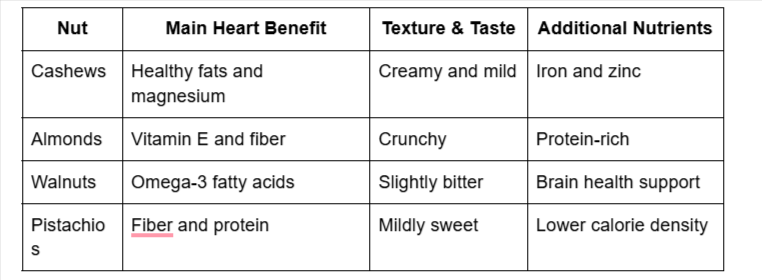
Cashews stand out for their creamy texture and mineral content, making them easy to include in multiple types of meals.
Real-Life Case Studies on Cashews and Heart Benefits
Many individuals who replaced processed snacks with nuts like cashews noticed improvements in their eating habits and energy levels. Working professionals who consumed small portions of mixed nuts during the day reported fewer cravings for fried or sugary snacks.
In another case, families that introduced nuts into breakfast and evening snack routines gradually reduced their intake of processed foods. These small dietary changes contributed to better overall nutrition and more balanced eating patterns.
People focusing on heart-conscious diets often find cashews easier to sustain long term because of their taste and versatility compared to stricter dietary alternatives.
Simple Ways to Add Cashews to Your Daily Diet
***Cashews can be included in daily meals ***in several practical ways:
- Eat a small handful as a mid-day snack
- Add chopped cashews to oatmeal or yogurt
- Use cashew paste in curries and gravies
- Blend cashews into smoothies for creaminess
- Combine cashews with raisins or dates for balanced snacks
These methods make it easy to include cashews regularly without major dietary changes.
Delicious Cashew Recipes for Heart Health
Some simple heart-friendly recipes include:
- Mixed nut trail mix with cashews and almonds
- Cashew and vegetable stir-fry
- Oats topped with roasted cashews and fruits
- Homemade energy balls using dates and cashews
- Cashew-based smoothie bowls
These recipes combine convenience, taste, and nutrition in practical ways.
Potential Risks and How to Enjoy Cashews Safely
Although cashews are healthy, overconsumption can increase calorie intake because nuts are energy-dense. Portion control is important, especially for individuals managing weight or calorie intake.
Salted or heavily processed cashews should be consumed in moderation due to added sodium and oils. Choosing plain or lightly roasted options is generally a healthier choice.
Individuals with nut allergies should avoid cashews entirely and consult healthcare professionals regarding dietary alternatives.
Conclusion
Cashews can be a valuable part of a heart-conscious diet when consumed in balanced portions. Their healthy fats, magnesium, antioxidants, and protein make them a practical alternative to processed snacks and unhealthy fats.
The quality of nuts also matters when focusing on long-term health benefits. Krishival offers carefully sourced and properly packaged cashews that help maintain freshness, texture, and nutritional value. Including high-quality cashews in everyday meals and snacks can support healthier eating habits and contribute positively to overall heart wellness.
Frequently Asked Questions
1. Are cashews good for heart health?
Yes, cashews contain healthy unsaturated fats and minerals that support cardiovascular health when consumed in moderation.
2. Do cashews increase cholesterol levels?
Moderate consumption of plain cashews is generally associated with healthier cholesterol balance rather than increased cholesterol.
3. How many cashews should I eat daily for heart health?
A small handful, around 20–30 grams per day, is usually considered appropriate.
4. Are roasted cashews healthy?
Lightly roasted cashews without excessive salt or oil can still be healthy.
5. Can cashews help reduce unhealthy snacking?
Yes, their combination of fats and protein helps improve satiety and reduce cravings.
6. Are cashews better than fried snacks?
Yes, they provide healthier fats and more nutrients compared to processed fried foods.
7. Can people with high blood pressure eat cashews?
Plain unsalted cashews can be included in moderation as part of a balanced diet.
8. Do cashews contain omega-3 fatty acids?
Cashews contain healthy fats but are lower in omega-3 compared to walnuts.
9. What is the best time to eat cashews?
They can be consumed as snacks between meals or added to breakfast dishes.
10. How should cashews be stored?
Store them in airtight containers in cool and dry conditions to maintain freshness.
메타데이터
- post_id
- 397b7af586e4
- slug
- cashews-for-heart-health-good-fats-explained-397b7af586e4
- url
- https://medium.com/@krishivalfoodsltd/cashews-for-heart-health-good-fats-explained-397b7af586e4
- canonical_url
- https://medium.com/@krishivalfoodsltd/cashews-for-heart-health-good-fats-explained-397b7af586e4
- author_url
- https://medium.com/@krishivalfoodsltd
- status
- ok
- fetched_at
- 2026-06-26 03:39:16