Wilderness of Lakes
A safari in Wilpattu National Park
TRAVEL | SRI LANKA
Wilderness of Lakes
A safari in Wilpattu National Park

Peacock. All photo credits in this article from the Yonaka family.
The first animal we saw on our safari, only a few minutes from the park entrance and just a hair past 7 AM, was a peacock. It was also the last animal we saw as we exited, close to eleven hours later.
Who knows how many peacocks we saw that day, but the total undoubtedly surpassed fifty. It’s the kind of bird that would be spectacular if it were rare, but they run amok at numerous zoos and parks around the world, and seem common as dirt.
The novelty of these encounters was that we could appreciate them in a completely wild setting, rather than watching them wait for handouts at a park bench. They glided through the undergrowth, iridescent feathers glinting in the speckled sunlight, uninterested in the presence of a chugging, open-backed jeep.
It felt appropriate that so many were here. Peacocks, officially called Indian peafowl, originated on the Indian subcontinent, which was connected to Sri Lanka by a land bridge until about 7,000 years ago.
To enter Wilpattu National Park in central-western Sri Lanka, we were required to take a tour with an officially registered driver. We could also have hired a safari guide, but in my experience, a driver familiar with the area is often just as good at spotting animals as a guide.
Our driver, a young and enthusiastic one-man tour operation, asked if there was a particular animal we wanted to see. I was fine with anything, because a wildlife park makes no promises. The animals are free to hide. But I added that, like everyone who has ever visited this park, we would like to see a leopard.
As soon as we cleared the park entrance gate, he pointed out anything he thought would interest us, including peacocks. He had a cheeriness and affability about him that would have been notable had we not already found it so common among the people we met in Sri Lanka.
The country has been through some tough times. Over 25 years of civil war. It kept Wilpattu National Park closed to visitors for many years, only reopening in 2010.

An elephant foraging for water plants in one of the lakes.
The park is named for a string of shallow lakes scattered throughout, the Sinhala word ‘willus’ meaning lake. None of them is very deep, but they provide critical habitat for many bird species and wallowing ground for elephants and water buffalo. The rest of the park is covered in thick forest with generally flat topography.

Chital.
I hoped the safari would cheer my daughter, who was suffering from ‘temple fatigue’. We had spent the last few days in Dambulla and Anuradhapura, looking at little else besides Buddhist monuments.
For me, it was a day to relax and leave the logistics to someone else for the first time in this trip. All we had to do was load into the jeep at dawn and offload in the evening. And it had been a few years since we, as a family, had been on a real safari.
The dense forest growth meant that visibility was restricted, except around the lakes. Very different from the typical African savannah experience, where open grasslands allow sweeping views. Regardless, the park was rich in wildlife, and it wasn’t long before we saw chital and sambar deer.
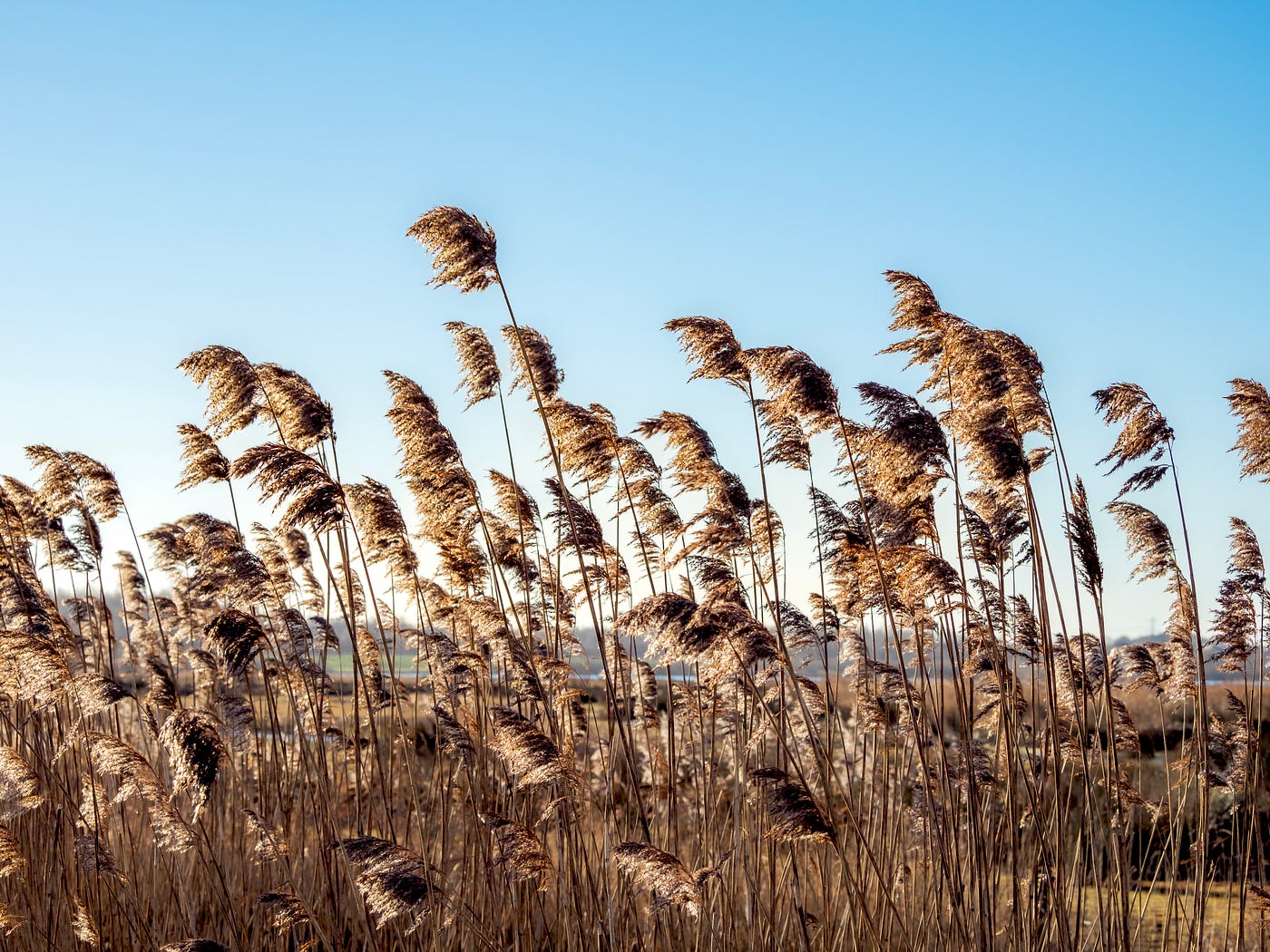
The lakes offered a grander scope, with their extensive reed-lined shores. Here, the occasional elephant felt around in the shallows, tearing out and eating water plants, and water buffalo stood motionless like statues, each with a white egret perched on its back.

Clockwise from top left: Sri Lanka guineafowl, red-wattled lapwing, Chinese pond-heron, and Asian woolly-necked stork.
There were many safari vehicles when we entered the park, but they soon dispersed along a web of roads, and for most of the day, we had the forest to ourselves. Every so often, we would pass another vehicle, and the drivers would relay information about wildlife sightings.
We took lunch at a small rest area by a lake, the one place where we were allowed to disembark the jeep. It was also the only place in the park where we saw monkeys, drawn by the easy food pickings. We had to shoo them out of our seats upon returning to the vehicle.
“No one has seen a leopard today,” the driver lamented, “but we will keep trying at some other places.”

Asian green bee-eater.
I use a smartphone for most pictures, but it is useless for wildlife photography. Between the three of us, we had one real camera with zoom capacity, which my daughter was in charge of (part of my strategy to keep her fully engaged in the excursion). She did a good job that day, producing better photos than either my wife or I could.

Changeable hawk-eagle with mouse.
The interior, low-lying plains of Sri Lanka are subject to constant humidity and heat, in contrast to the cool breezes of the hills around Kandy or the coastlines. We had spent the last few days walking in the sun and clambering up temples, so it was a relief to just sit and look for the next interesting animal.
We stopped for half an hour at a secluded pond, where, reportedly, leopards had been seen a few days before. But all was quiet except for a scarab beetle, pushing along a lump of dung.

Scarab beetle.
Pushing through some sandy tracks to another, less-visited series of pools and open grassland, I was busy trying to photograph some birds and chital when the driver slammed on his brakes and pointed. There it was, a leopard peering out from behind some brush, on the side of the vehicle we had not been paying attention to.

Sri Lankan leopard.
We had some time to observe the leopard’s behavior. It watched in our general direction, as though we occupied only a part of its attention. It had been standing as though to walk into the open, but now stopped and sat. There were some chitals nearby, which did not appear to smell or see it. Perhaps we had interfered with a hunt. It hesitated for some time, smelling random plants and otherwise stalling to see if we would move on. Finally, it decided it was safe to continue its stroll into the open.

Confident but alert.
It is estimated that there are over 100 leopards in Wilpattu NP, but most of them remain in areas without road access. The one we saw was part of a much smaller group, perhaps 15 individuals, that frequent places where they can be seen by safari vehicles. According to our driver, our sighting was the first one of the day. And perhaps the only one, since by now it was late afternoon.
It was only the second time in my life that I had seen a wild leopard, the first time being over 30 years ago in South Africa. They are much more elusive and harder to spot than, say, lions. Their solitary habits demand that they remain fully aware of their surroundings at all times, and they prefer to move unseen.
The sighting gave us a satisfying conclusion to the safari, and we gradually drove back out toward the park entrance in the lengthening shadows of the afternoon. We stopped by a large lake to get some photos of crocodiles, an animal we had not yet seen that day.

Mugger crocodile.
I assumed they were Mugger crocodiles, which are the only purely freshwater species on the island. Unlike many of the other animals we photographed, they sat still for the duration.
The homestay we slept at outside the park entrance was a small operation with just one room for guests. The resident family, like others we had encountered in Sri Lanka, was incredibly friendly. That evening, Barman, the father, looked through our photos and invited me to look for sleeping birds in the trees around their house. He knew where individuals and pairs of various species liked to roost. He talked about his time as a UN Peacekeeper, stationed in Haiti, an island that must have seemed startlingly different than Sri Lanka.
I commented that Wilpattu was a well-conceived park, with most of its acreage pristine and free of roads. Many animals could live their whole lives without human intrusion.
He said that was well in line with how the Sri Lankan people felt about their wildlife. “We respect the wild animals of our island,” he said proudly, “unlike some countries, we do not think to hunt them, and we bother them as little as possible.”
I surmised that this was a characteristic Buddhist response, a live-and-let-live philosophy. A worthy model I wish were adopted in all the remaining wild spaces of the world.
Thank you, hard-working editors of Picture This, and thank you for reading! Please check my profile for other travel-related articles at Brad Yonaka. For a story from the same Sri Lanka trip, please read:
[embed]Climbing Up Lion Rock The Royal Fortress of Sigiriyamedium.com

Click here to if you wish to further support my work
메타데이터
- post_id
- 39def4ebcdae
- slug
- wilderness-of-lakes-39def4ebcdae
- url
- https://medium.com/picturethis/wilderness-of-lakes-39def4ebcdae
- canonical_url
- https://medium.com/picturethis/wilderness-of-lakes-39def4ebcdae
- author_url
- https://medium.com/@byonaka0668
- status
- ok
- fetched_at
- 2026-07-18 02:05:57