7 Hidden Details in the Good Samaritan Story Most Readers Never Notice
Jesus’ most famous parable is even more surprising than many of us realise.
7 Hidden Details in the Good Samaritan Story Most Readers Never Notice
Jesus’ most famous parable is even more surprising than many of us realise.
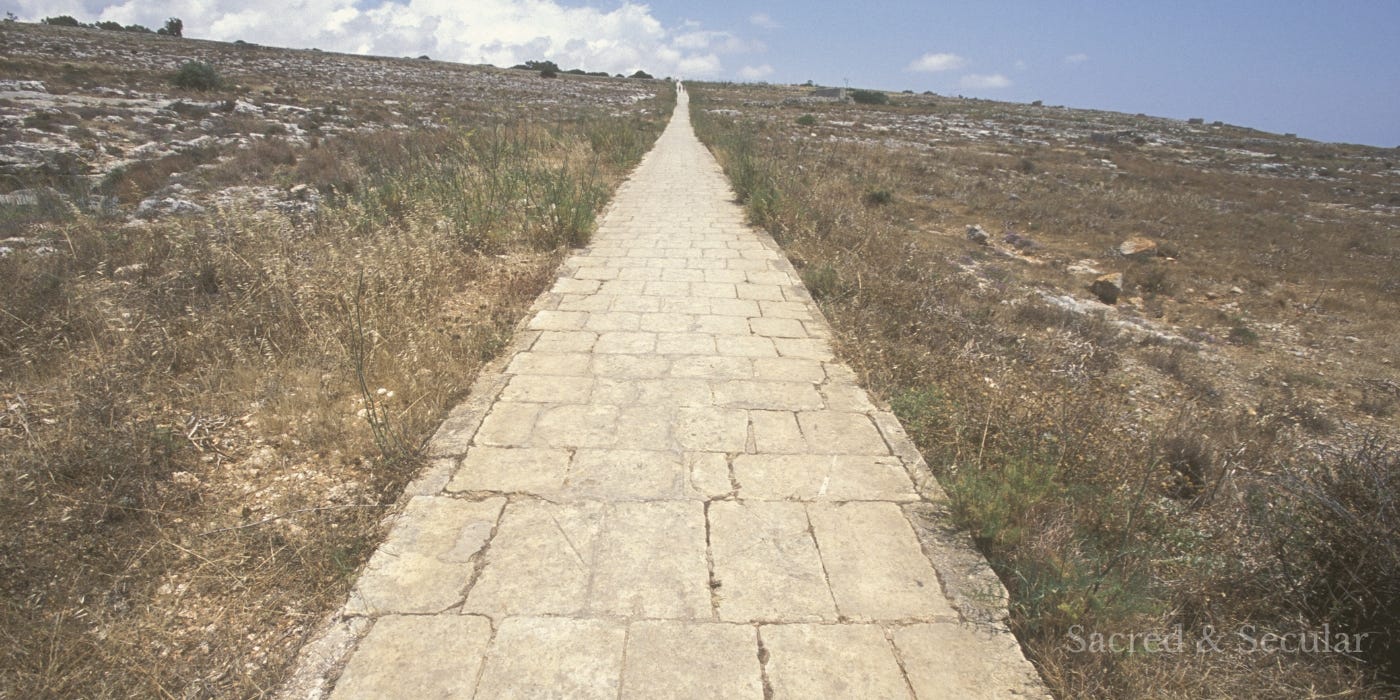
The road from Jerusalem to Jericho forms the dramatic backdrop to one of Jesus’ most challenging parables. Image: Canva Pro.
There is a reason the Good Samaritan has become one of the best-known and most written about stories in history.
People who have never opened a Bible know roughly what it means. Hospitals, charities and volunteer groups all borrow its name. We use the phrase almost instinctively to describe someone who helps a stranger.
The danger with famous stories, however, is that we begin to think we have exhausted them. That we gleaned all meaning from the text.
The opposite is often true.
I have spent the past few years re-reading Jesus’ parables, and I have discovered that the smallest details can often carry the greatest importance. What appears to be a simple moral tale slowly reveals itself as a carefully crafted story that challenges assumptions about compassion, religion, and even eternal life.
Perhaps nowhere is that truer than in the story of the Good Samaritan. It has become so familiar that we often stop noticing its surprises.
Here are seven details hidden within the story that have completely changed the way I read one of Jesus’ most famous parables.
1. The Conversation Was Never Really About Being Nice
Most people assume Jesus tells this story because someone asks,
”Who is my neighbour?”
That isn’t actually how the conversation begins.
A lawyer stands up and asks a far bigger question:
”Teacher, what must I do to inherit eternal life?” (Luke 10:25)
Neighbourliness isn’t the starting point; eternal life is. Jesus asks him what the Law says, and the lawyer answers correctly:
Love God.
Love your neighbour.
Then comes the question that changes everything.
”And who is my neighbour?”
The lawyer wants a definition and boundaries. He wants to know where his responsibility ends. But Jesus refuses to answer the question directly. Instead, he tells a story that dismantles the question itself.
The parable is not simply about kindness.
It is about the kind of life that reflects the kingdom of God.
2. The Road Really Was That Dangerous
The journey from Jerusalem to Jericho was around seventeen miles, descending through steep, rocky wilderness.
It was infamous.
Caves and narrow passes made perfect hiding places for robbers, and travellers often journeyed together because the danger was well known.
When Jesus says,
”A man was going down from Jerusalem to Jericho…”
His audience immediately knew what might happen next. This wasn’t bad luck; it was entirely believable. That matters because it also explains something else.
Stopping wasn’t merely inconvenient. It was genuinely risky. Every person who approached the injured man had to wonder whether the robbers were still nearby.
Compassion required courage before it required generosity. Sometimes we imagine love only costs us time or money. In reality, it often asks us to risk our comfort, our reputation, or even our own sense of security.
3. The Injured Man Has No Name
This is the detail that perhaps surprised me most.
Jesus never tells us anything about the wounded man.
We never discover:
- his name
- his occupation
- his nationality
- his wealth
- his beliefs
- whether he was kind or difficult
He is simply…
”a man.”
That omission is extraordinary. Most of us instinctively want more information before deciding how we feel about someone. Was he one of us? Did he deserve what happened? Would he have helped someone else?
Jesus deliberately refuses to answer any of those questions.
The victim has no identity because his identity is irrelevant. If Jesus had told us he was a priest, a Pharisee or a Samaritan, we might immediately begin sorting him into categories. Instead, we are left with only one undeniable fact.
Someone is suffering, and perhaps that is enough. Before we can ask whether someone deserves our compassion, Jesus asks whether we are willing to recognise their humanity.
It strikes me that we often ask exactly the questions Jesus refuses to answer. What political views do they hold? What mistakes have they made? Did they bring this upon themselves?
Jesus removes every label before asking us what love looks like.
4. The Priest and Levite Are More Complicated Than We Think
Most sermons portray the priest and Levite as obvious villains.
I am no longer convinced it is that simple. Many people assume they avoid the wounded man because touching a corpse would make them ceremonially unclean. The problem is that they appear to be travelling away from Jerusalem, probably returning home after completing their Temple duties.
If so, ritual purity may not fully explain their behaviour.
Luke never tells us why they pass by, and perhaps that silence is intentional. Maybe they genuinely believed stopping would place them in danger. Maybe they simply convinced themselves someone else would help.
The uncomfortable truth is that Jesus allows us to recognise ourselves in them.
Most of us have never deliberately walked past someone in desperate need. But many of us have found reasons not to become involved.
The priest and Levite aren’t cartoon villains. They are recognisably human, and that makes the parable far more searching.
5. The Samaritan Doesn’t Perform One Kind Act; He Performs Six
Luke slows the story down in remarkable detail.
The Samaritan approaches the man, bandages his wounds, pours on oil and wine, lifts him onto his own animal, takes him to an inn and continues caring for him
This isn’t a random list. It forces us to slow down over every act of compassion.
The Samaritan doesn’t simply rescue someone. He interrupts his entire journey. Love becomes very practical, messy, expensive and time-consuming.
I wonder whether that is one reason Jesus gives so much space to these actions.
Compassion is rarely one dramatic gesture. More often, it is a succession of small choices made over and over again. The people who have helped me most through chronic illness haven’t usually done one spectacular thing. They have simply kept showing up.
6. His Generosity Was Far Greater Than Most of Us Imagine
The Samaritan leaves two denarii with the innkeeper.
That sounds rather modest until you realise what it represented. It was enough to pay for several weeks of care, far more than emergency first aid. He isn’t covering one night’s accommodation; he is making sure the wounded man has time to recover properly.
Then comes another remarkable promise.
”When I return, I will reimburse you for any extra expense.”
There is no time limit, no receipt required, and no carefully calculated budget. The Samaritan simply commits himself to whatever recovery requires.
It reminds me that genuine compassion is rarely interested in doing the minimum. Love asks,
”What will help this person?”
rather than,
”What is the least I can do?”
7. Jesus Never Answers the Lawyer’s Question
This may be the most brilliant detail of all.
The lawyer asks,
“Who is my neighbour?”
At the end, Jesus asks a completely different question.
”Which of these three became a neighbour to the man?”
Do you see the difference? The lawyer wants to identify neighbours, but Jesus wants people to become neighbours.
That tiny detail changes everything. Neighbour is no longer a category; it becomes an action. A way of living. The lawyer was looking for the minimum requirement. Jesus invites him into an entirely different way of seeing the world.
The final command is wonderfully simple.
”Go and do likewise.”
Not:
”Go and identify the right people.”
Simply:
”Go and become the kind of person who acts with mercy.”
The Hidden Detail Behind All the Others
Perhaps the greatest surprise in the Good Samaritan isn’t the Samaritan at all.
It is Jesus himself.
He refuses to let us stay safely in the realm of theory. Every attempt to define, categorise or limit love is gently dismantled. The wounded man has no identity. The priest has no excuse. The Samaritan has no obvious reason to help. The lawyer never gets the answer he expected. Instead, Jesus turns the mirror around.
The question is no longer,
”Who deserves my love?”
The question becomes,
”What kind of neighbour am I becoming?”
That is why this parable continues to challenge us two thousand years later. It is not really a story about a road between Jerusalem and Jericho. It is a story about every moment we encounter another human being.
Jesus still leaves us with exactly the same invitation:
”Go and do likewise.”
If you enjoyed this article, you might also enjoy my daily Substack, Sacred & Secular.
While Medium is where I often explore hidden details, difficult questions, and surprising insights from Scripture, my Substack is a little different. It is a daily pause rather than a news feed. A place for reflection, stories, faith, doubt, ordinary life, and the unexpected places where God can still be found.
You can join hundreds of readers here: www.sacredandsecular.co.uk
My new book, ***Sacred & Secular: Finding God in the Ordinary***, is also now available on Amazon and brings together many of the themes explored in both publications.
메타데이터
- post_id
- 39ea87cc6027
- slug
- 7-hidden-details-in-the-good-samaritan-story-most-readers-never-notice-39ea87cc6027
- url
- https://medium.com/sacred-secular/7-hidden-details-in-the-good-samaritan-story-most-readers-never-notice-39ea87cc6027
- canonical_url
- https://medium.com/sacred-secular/7-hidden-details-in-the-good-samaritan-story-most-readers-never-notice-39ea87cc6027
- author_url
- https://medium.com/@paulianclarke
- status
- ok
- fetched_at
- 2026-07-11 11:24:59