A Society That Cannot Read Symbols Will Be Ruled by Them
A society does not need to believe in magic to be governed by symbols — it only needs to stop noticing them
A Society That Cannot Read Symbols Will Be Ruled by Them
A society does not need to believe in magic to be governed by symbols — it only needs to stop noticing them
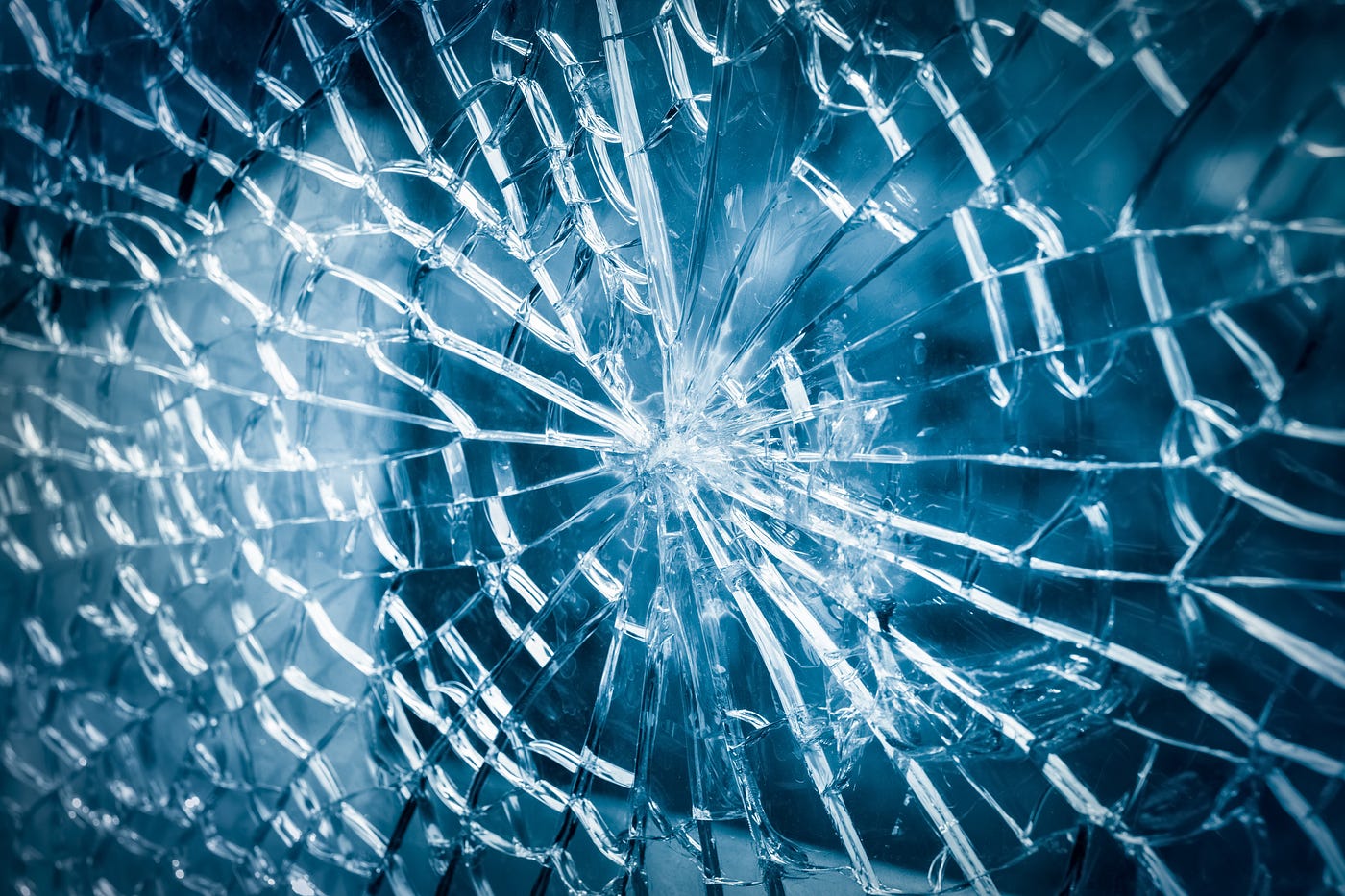
Photo by Nick Fewings on Unsplash
A flag becomes more than cloth. A photograph becomes more than evidence. A wedding ring becomes more than metal. A crown becomes more than decoration. A brand becomes more than a logo. A celebrity becomes more than a person. A story becomes more than entertainment. A machine becomes more than a tool.
Symbols organize attention. They teach us where to place awe, fear, loyalty, longing, shame, desire, memory, and obedience. They tell us what matters before we have consciously decided what matters. They enter the body faster than argument. They move through image, rhythm, repetition, ritual, beauty, threat, nostalgia, and belonging.
This is why symbolic literacy matters.
Symbolic literacy is the ability to recognize the stories, images, archetypes, and cultural patterns shaping our perception, so that we can participate in them consciously rather than be unconsciously ruled by them.
Without symbolic literacy, people do not stop living in myth. They simply live inside myths they cannot see.
It is clear to me that our symbols shape society. But the question that remains is whether we know how to read them.
This matters especially now, because we are living in an age of accelerated symbol-making. Media, politics, advertising, celebrity culture, religion, education, algorithms, and artificial intelligence all shape reality through images and narratives. AI does not merely answer questions. It can mirror language, intensify identity, organize memory, name patterns, and give form to private experience. Used well, it can help people recognize symbolic patterns. Used carelessly, it can make those patterns feel like destiny.
That is the danger.
- A pattern is not a prophecy.
- A symbol is not an identity.
- A mirror is not an oracle.
- A story is not a command.
A society that cannot tell the difference becomes vulnerable to possession: possession by ideology, spectacle, nostalgia, charisma, fear, projection, and machine-amplified meaning.
This is not a new problem. It is an ancient human problem appearing in new technological clothing.
- Roland Barthes showed how modern culture turns ordinary things into myths that carry hidden ideology.
- Guy Debord warned that social life can become mediated by spectacle, where images replace direct participation.
- Ernst Cassirer described human beings as symbolic animals, shaped by language, myth, art, religion, and science.
- Paulo Freire taught that literacy is not only the ability to read words, but the ability to read the world.
But there is also a crucial women’s lineage here.
- Bell hooks understood that education is not neutral. Teaching can reproduce domination, or it can become a practice of freedom. Her work insists that people must become critically conscious of the systems shaping them, including systems of race, gender, class, representation, and power. Education, in this sense, is not merely information transfer. It is liberation from unconscious obedience.
- Susan Sontag understood that images are never innocent. In On Photography, she examined how photographs shape memory, possession, witnessing, distance, and power. A photograph can document reality, but it can also aestheticize suffering, turn experience into consumption, or make people feel they possess what they have only viewed. Her work helps us understand why image-saturated cultures need ethical viewers, not passive consumers.
- Donna Haraway is essential for the age of AI. Her work challenges the fantasy of detached, all-seeing knowledge. In “Situated Knowledges,” she argues for accountable, embodied ways of seeing. In “A Cyborg Manifesto,” she disrupts rigid boundaries between human, animal, machine, nature, culture, body, and technology. Her work helps us ask: What happens when human meaning-making becomes entangled with machines? How do we stay embodied inside technological systems that promise disembodied vision?
- Gloria Anzaldúa belongs here because she wrote from the borderlands: between languages, identities, cultures, bodies, and worlds. Her work shows that consciousness is often born at the edge, where inherited symbolic systems collide. She understood language not as decoration, but as identity, wound, survival, and world-making. To be forced to abandon one’s language is to be forced to abandon a way of being.
- Clarissa Pinkola Estés enters through myth and the feminine psyche. Her work with stories and archetypes invites women to recover instinct, intuition, wildness, and inner symbolic knowing. While her language is more mythopoetic than media-theoretical, she belongs in this lineage because she treats story as a living force in the psyche, not as mere entertainment.
Together, these women help form a fuller understanding of symbolic literacy.
- Hooks teaches us that literacy must liberate.
- Sontag teaches us that images must be ethically read.
- Haraway teaches us that vision must be situated and embodied.
- Anzaldúa teaches us that language and identity are borderlands of power.
- Estés teaches us that myth lives in the body and must be listened to carefully.
This matters for women especially because women are often turned into symbols before they are allowed to be full subjects.
Muse. Mother. Witch. Virgin. Whore. Queen. Girlboss. Wife. Maiden. Healer. Madwoman. Temptress. Savior. Victim. Goddess.
A woman who cannot read the symbols projected onto her may become trapped inside someone else’s myth.
She may perform the role before she has chosen it. She may mistake projection for destiny. She may confuse attention with power, beauty with agency, desirability with authorship, sacrifice with goodness, or visibility with freedom.
But symbolic literacy gives her another option.
She can ask:
- What story am I being placed inside?
- Who benefits if I accept this role?
- What does this symbol reveal?
- What does it conceal?
- Where do I feel it in my body?
- Does it increase my agency, or does it make me easier to control?
- Can I participate in this myth without being possessed by it?
I want to be clear, myth is not the enemy. The danger is unconscious fusion with myth.
To become symbolically literate is not to flatten mystery into explanation. It is not to expose every sacred thing, mock every ritual, or reduce beauty to manipulation. A society without living symbols would be spiritually starved. We need story, ritual, image, metaphor, and meaning. We need forms that help us carry grief, love, death, birth, belonging, transformation, and the unknown.
But we also need discernment.
- A living symbol opens participation.
- A dead symbol fixes identity.
- A liberating myth increases agency.
- A possessive myth demands obedience.
- A sacred image deepens relationship.
- An extractive image consumes attention.
This is the difference between metabolizing symbols and consuming them. Consuming symbols means taking the aesthetic, identity, mystery, or charge without responsibility.
Metabolizing symbols means asking what the symbol reveals, what it asks of us, and how it changes the way we live.
This distinction is urgent in the age of AI.
AI can preserve old language, retrieve forgotten patterns, generate images, simulate voices, amplify archetypes, and help us construct narratives at extraordinary speed. It can make invisible structures visible. But it can also intensify illusion. It can turn a passing metaphor into a cosmology. It can make a person feel seen without actually knowing them. It can mirror the self so persuasively that the mirror begins to feel like an oracle.
That is why symbolic literacy must be embodied.
Meaning has to be tested through the body, through relationship, through ethics, through time, and through consequence.
- Does this symbol make me more honest?
- Does this story make me more responsible?
- Does this image make me more awake, or more entranced?
- Does this myth connect me to life, or separate me from other people?
- Does this pattern invite participation, or does it demand worship?
A society that cannot ask these questions will be ruled by symbols.
It will be ruled by flags it does not understand, screens it cannot interpret, myths it mistakes for facts, leaders it turns into saviors, celebrities it turns into gods, technologies it mistakes for wisdom, and inherited stories it never chose.
But a society with symbolic literacy can become harder to possess.
Its people can still be moved by beauty, ritual, story, and image. But they are less easily captured by them. They can participate without surrendering authorship. They can honor mystery without abandoning discernment. They can read the world before the world writes them.
This is the work now. Not to destroy symbols or worship them. But to learn how to read them. Because what we cannot read, we repeat. What we cannot name, we obey.
And what we cannot symbolically metabolize may one day rule us from the inside.
Ever since I was young, something bigger than myself has pulled on me to understand what I could so clearly feel. I am a philosopher at heart, with a background in psychology and dance — and my work is an attempt to articulate that pull into meaning.
For more stories about symbolism, AI, philosophy, and the hidden narratives that shape our lives, follow Fourth Wave. Also check out our Livestreams and sign up for our Newsletter. Let’s grow the community! Have you got a story or poem that focuses on women or other targeted groups? Submit to the Wave!
메타데이터
- post_id
- 3a06bfd53446
- slug
- a-society-that-cannot-read-symbols-will-be-ruled-by-them-3a06bfd53446
- url
- https://medium.com/fourth-wave/a-society-that-cannot-read-symbols-will-be-ruled-by-them-3a06bfd53446
- canonical_url
- https://medium.com/fourth-wave/a-society-that-cannot-read-symbols-will-be-ruled-by-them-3a06bfd53446
- author_url
- https://medium.com/@Themindfulnessmuse
- status
- ok
- fetched_at
- 2026-07-10 23:26:47