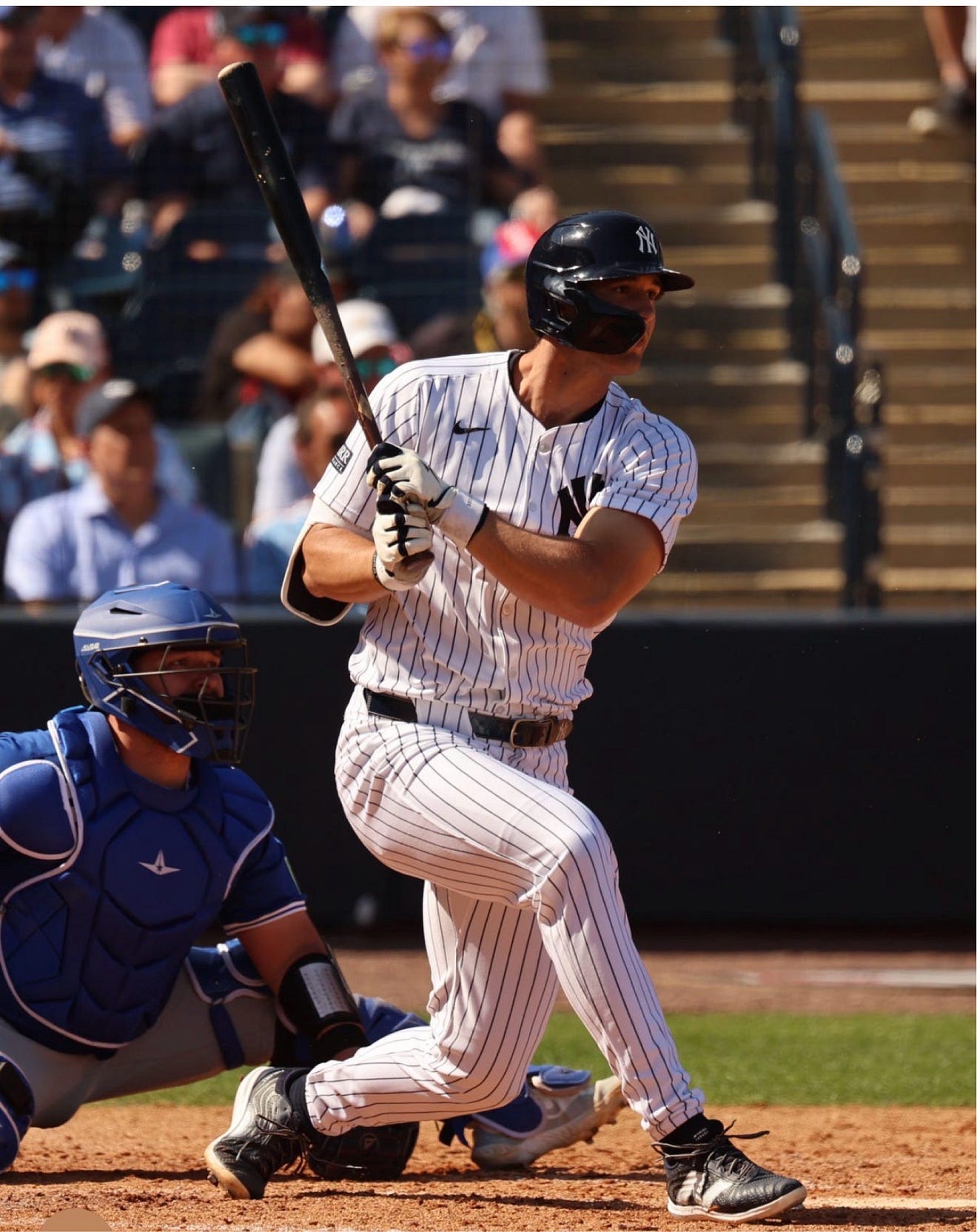
Baseball’s First Play-by-Play
From the New York Sunday Mercury, July 25, 1858
Baseball’s First Play-by-Play
From the New York Sunday Mercury, July 25, 1858
William Cauldwell, editor of the Sunday Mercury, had done his own baseball reporting in the mid-1850s. But in the spring of 1858 he had hired Henry Chadwick, who had been doing the cricket work for the New York Times and a Brooklyn paper, to do the baseball and cricket work for the Mercury. Chadwick’s play-by-play below is presumed, but because of the importance of the game, and the sometimes flippant prose style, it may be Cauldwell’s.
I offer the transcription below less as pleasant reading than as historical artifact, in the belief that, like Lincoln’s five-legged dog, it may be presumed not to exist. Spelling and punctuation are very slightly conformed to modern usage.
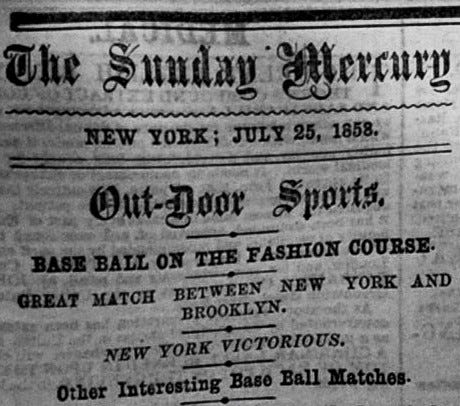
The column header, as presented in the Sunday Mercury report
The great and growing popularity of the game of Base Ball, and the interest manifested by the public in the progress and encouragement of manly outdoor sports, was plainly indicated by the large assemblage of spectators who gathered at the Fashion Course, L.I., on Tuesday last, 20th inst., to witness the great match between nine players selected from the Brooklyn, and nine from the New York clubs. There could not have been present less than eight or ten thousand lookers-on, including, we were pleased to find, a large number of ladies; and never have we witnessed a prettier, or more interesting scene, than was presented by the tout ensemble; and we doubt whether there was ever congregated together a more orderly and well-behaved assemblage.
Owing to the excellent management of the committee, Messrs. Dakin, Davis, and Jones, and the excellent police regulations of the day, everything passed off without the slightest confusion or trouble; and the arrangements were such, that every one who came upon the ground was enabled to find a place from which to witness the game. The stands being thronged with spectators, the committee found it necessary to permit a large number to enter the field; and these, ranging themselves inside of a semi-circle formed by the gaily-decorated omnibuses (which had been chartered by many of the clubs for the conveyance of their members to the ground), at a distance sufficiently removed to be out of the way of the players, gave to the scene — in connection with the crowd on the stands — the appearance of an amphitheater crowded with an assemblage eager and anxious to witness the sports of the arena.
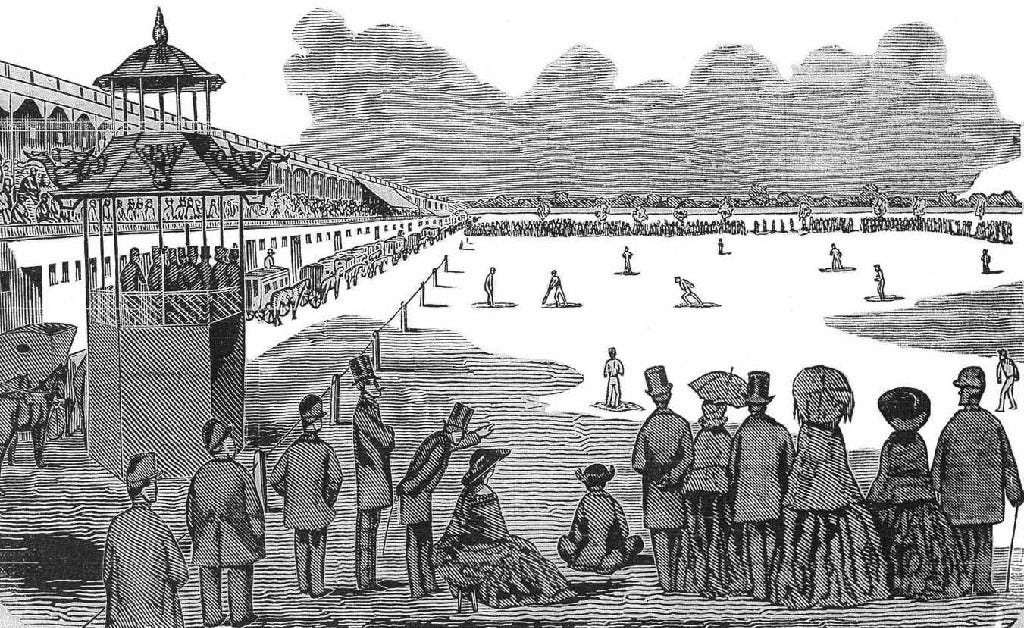
Fashion Race Course Game, July 20, 1858
The omnibuses referred to formed quite an interesting feature of the occasion. The clubs thus represented were the “Excelsior” and “Nassau” of Brooklyn; the “Union” of Morrisania; the “Monumental,” “Mutual,” “Eagle,” and “Empire,” of New York; and the “Oriental,” “Atlantic,” “Putnam,” “Pastime,” “Eckford,” and “Continental,” of Brooklyn. The “Excelsior” Club had a splendid large omnibus, drawn by fourteen horses. The “Eagle” Club had an eight-horse omnibus, surmounted by a large spread eagle, and decorated with flags, and was accompanied by a band of music, which created quite a sensation as the omnibus made its way to and through the Course. The “Pastime” Club also had an eight-horse team; and the “Eckford” Club stage was drawn by six beautiful white horses. All the other omnibuses had four-horse teams — the “Monumental” and “Empire” clubs each having two omnibuses.
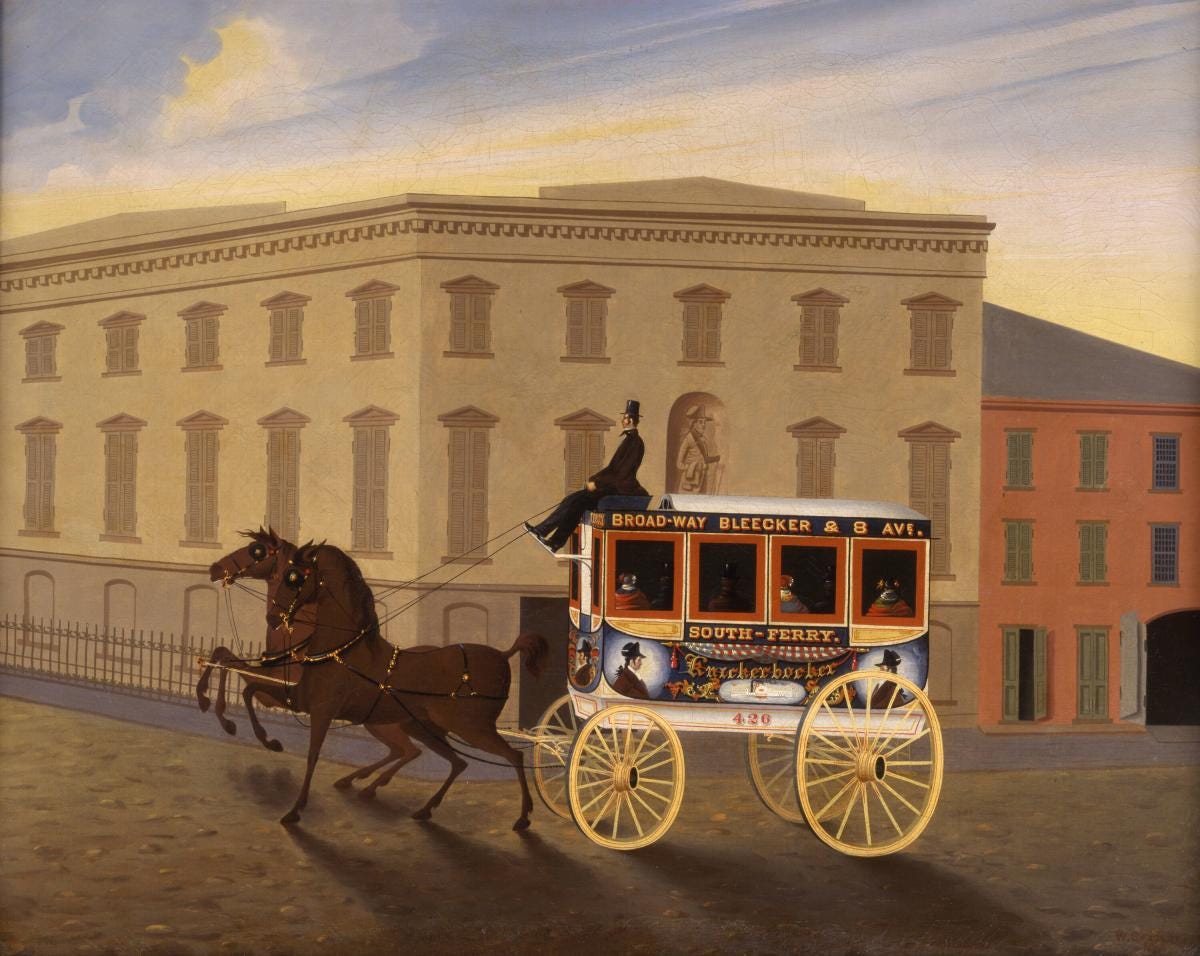
Knickerbocker Stage Line Omnibus, New York City; William Seaman, New-York Historical Society
All the preliminaries of the match having been arranged, the players, with the scorers and umpire, made their appearance on the ground — a space prepared for the purpose, some five hundred feet square, directly in front of the principal stand — at about a quarter of three o’clock, and at once arranged themselves for play, the Brooklyn side leading off with the in hand. The players were:
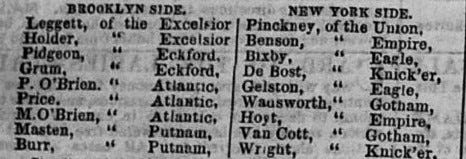
The rosters, as presented in the Sunday Mercury report
It will be seen that an alteration had been made in the New York nine, by the substitution of Mr. Wright in place of Davis, from the Knickerbocker Club, and of Mr. Hoyt, in place of Miller, from the Empire Club. This alteration, taken in connection with the fact that the second base had been allotted to Pinckney (who, in that position, has no superior) warranted those who were familiar with the advantage thus gained by the nine, in predicting at least a very close contest; though the general impression on the ground, prior to commencing the game, undoubtedly was that the Brooklyn side would come off victorious; and among those who make a practice of betting, very large odds were offered in support of that opinion, finding, however, but few takers. There was, however, just sufficient doubt, on both sides, as to the result, to make the game highly interesting, and not a little exciting.
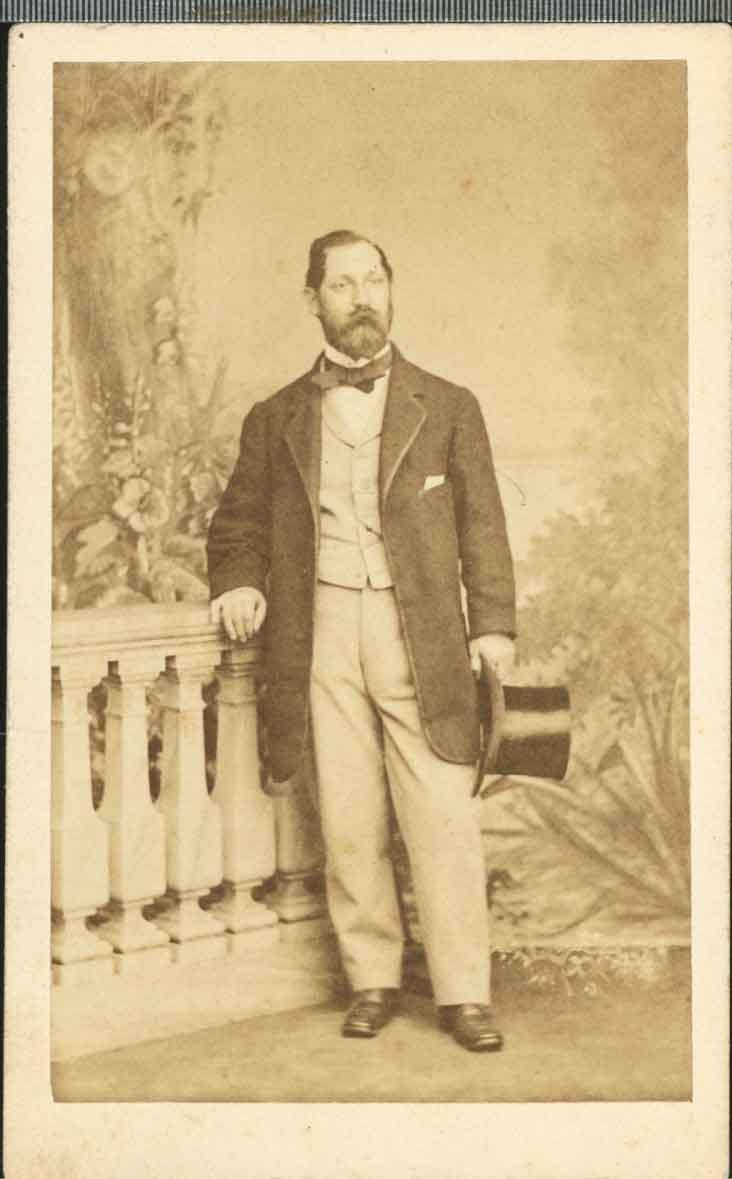
Charles De Bost
As we have already stated, the Brooklyn side commenced the game with the in hand, and led off, too, in fine style, decidedly strengthening the buoyant hopes of their numerous friends. Leggett, the first player, struck a fair ball, and made the first base. Holder, who succeeded him, gave the ball a powerful bat, sending it spinning into the field, and enabled Leggett to complete his run, while Holder reached the third base. Pidgeon was the next striker, and he tipped out, De Bost catching the ball on the fly. Grum then took the bat, and struck a foul ball; but afterward made a capital strike, sending the ball almost directly into Hoyt’s hands, and it should have been caught by him, but ’twas not. Grum got safely to the first base. P. [Peter] O’Brien followed at the bat, and, like his predecessor, struck the first ball foul, and afterwards, also, like him, struck a ball which appeared to be intended especially for Hoyt, but which that gentleman again let pass him. O’Brien made the first base, which had, of course, been vacated by Grum, who succeeded in reaching the third. Price was the next striker, and struck, in succession, two foul balls. O’Brien then made an effort to steal from the first base to the second, but the quick eye and precision of De Bost, and the sure catching of Pinckney, was a little ahead of his time — he was put out. Price then struck a fine ball, which was worthy of a run of two bases, but so quickly was the ball fielded, that he was kept on the first base. M. [Matt] O’Brien then took the bat, tipped, and was neatly caught out by De Bost, thus closing the innings, with 3 runs for their side.
The New Yorkers then had their first innings, which, unfortunately for them, was a very short one — Pinckney, the first striker, after striking a couple of foul balls, made a tip, and was caught out by Leggett. Benson, his successor, knocked the ball into that part of the field occupied by P. O’Brien, who gracefully acknowledged the favor by catching it on the first bound [thus recording an out; not until 1864 would an out require catching a ball on the fly]. Bixby then struck and made a tip, which was not caught. He next struck short, and while Price left the first base to stop and catch the ball, Pidgeon, with excellent judgment, flew rapidly from the short field to cover the base, and the ball was passed to him in time by Price to head off and put out Bixby. Runs for the New York side, nary; and great cheering for All Brooklyn.
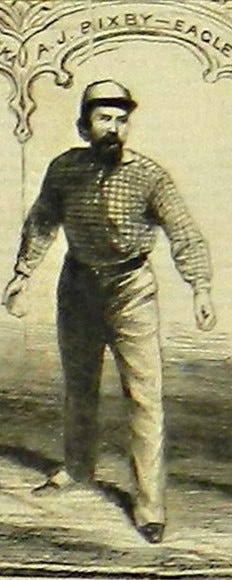
A.J. Bixby of the Eagles
Masten commenced the second innings, on Brooklyn side, and struck an air ball — which was not, but ought to have been caught by Hoyt — and made the first base. Burr followed with a splendid strike, which brought Masten home. Leggett made a tip, and was caught out by De Bost. Holder made another good strike, but was caught out on first bound by Pinckney. Pidgeon, who followed Holder, gave us another fine specimen of good batting, which enabled him to reach the third base, and brought Burr home. Grum was the next striker, and he tipped out, before Pidgeon could complete his run. In this innings, 2 more runs were made for the Brooklyn side.
The New Yorkers commenced their second innings, with De Bost at the bat, who first struck an attitude (reminding one of Ajax defying the lamp-lighter), then a foul ball, and finally a short ball, and was caught out by Pidgeon. Gelston, who succeeded De Bost, struck a foul ball; his next strike was a splendid one, however, and he made the third base. Wadsworth, the next striker, following the example of his illustrious predecessors, also struck a foul ball, which was caught by M. O’Brien. Hoyt then took the bat, and struck a very swift ground ball, which enabled Gelston to get home, and make the first run for his side, while Hoyt made the first base. Van Cott came forward to take his turn at the bat, but before he could get a chance to strike, Hoyt made an attempt to run to the second base, and was put out; receiving some injury in the face in striving to reach the base. This closed the second innings; and the New York side had thus far made 1 run only — the Brooklyn side 5 runs. Brooklyn stock was, of course, ever so far above par, at this stage of the game.
P. O’Brien was the first striker in the third innings on the Brooklyn side; he also led off with a foul ball. His next effort was a splendid ground ball, and a long one at that, which which carried him to the second base. Price next took the bat, and he also struck a foul ball, and then another foul ball. (Van Cott, the New York pitcher, seemed to have got his peculiar “twist” in play here, which accounts for the numerous foul balls that were struck.) Price, however, the next time he struck at the ball, gave it “Hail Columbia,” and sent it “away over yonder,” now stole to the third base. Burr made a very pretty and sent strike, and came near making a home run, but was obliged to return to third base, P. O’Brien, in the mean time, getting home. M. O’Brien made a splendid strike, but was caught out on first bound by Wright, but Price got home safe. Masten, the next striker, was caught out on first bound by Wadsworth; and Burr, who struck short, was caught out on first bound by Van Cott. The result of this innings was 2 more runs for All Brooklyn.
The New Yorkers, with seven runs against them, and only one in their favor, came in for their third innings — Van Cott taking his turn at the bat. He struck a fine ball, though an airy one, but, luckily for him, it was not caught, and he made the first base. Wright succeeded him, and struck three “fouls,” on the last of which he was caught out by Leggett. Pinckney took another turn at the bat, and struck a good ground ball, and reached the first base — Van Cott, in the meantime, made the third. Benson struck a foul, which flew away up into the air, but was caught in its descent by M. O’Brien, before it hurt itself. Bixby was the next striker. A ball passing the catcher, Van Cott run in home, and Pinckney made third base. Leggett missed another ball, and Pinckney got home. Bixby then made a tip, and was caught out by Leggett. Two runs in this innings for the New York side, making three to seven.
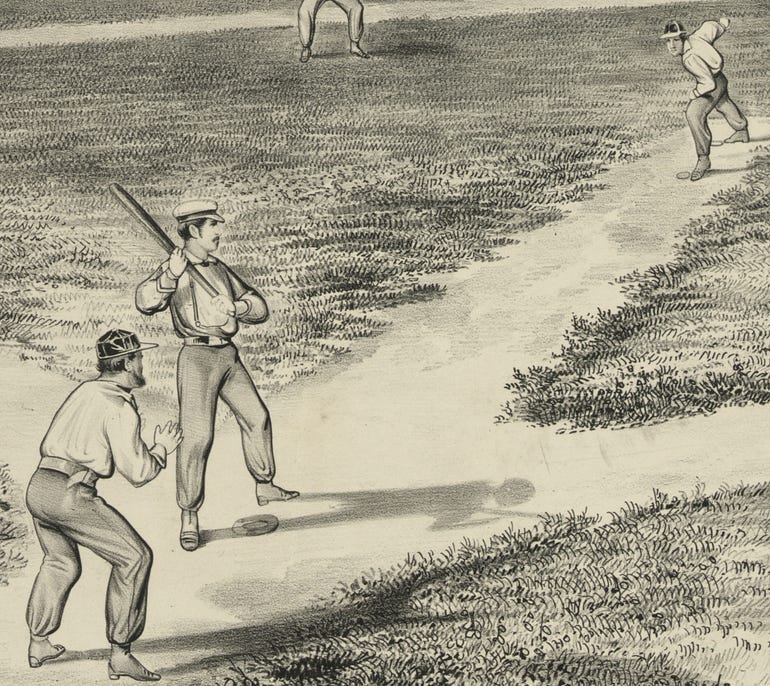
Joe Leggett, catching Jim Creighton
The fourth innings was a short one for the Brooklyn side. Leggett, who led off, made a splendid strike, but was caught out in fine style by Wright. Holder made two strikes at the ball, and missed; then made a tip, and was caught out by De Bost. Pidgeon struck a good ball, and made first base. Grum next took the bat, but before he had a chance to strike, a ball sent by Van Cott passed the catcher (De Bost) and Pidgeon attempted to make the second base. Ere he reached it, however, De Bost had secured the ball, and passed it down to Pinckney, and thus put Pidgeon out. This elicited a round of applause from the spectators. The Brooklyn side added nothing to their score in this innings.
The New Yorkers entered for the fourth innings with hopes revived, and enlivened spirits. It was De Bost’s turn at the bat, and he made two splendid strikes at the ball, but they were struck out of the range of the third base, and were declared foul. He then struck a ground ball, and got to the first base, on his first voyage round the field. Gelston next took the bat. Taking advantage of a ball passing the catcher (Leggett), De Bost ran to the third base. Almost immediately after, another ball passed the catcher, and De Bost got home. Gelston then struck and missed the ball; struck again, tipped, and was caught out by Leggett. Wadsworth followed Gelston, and made a tip, but was not caught. He then struck, in succession, three foul balls, but finally made a good hit, got to the first base, and, as Mr. Hoyt took his stand with the bat, another ball passed the catcher, which enabled Wadsworth to make the second base. Hoyt then struck a short ball, which was stopped and passed to Price on first base, but missed by him, and Hoyt made the first base, while Wadsworth got to the third base. Van Cott then took the bat; before he struck, Hoyt made an effort to reach the second base, which he succeeded in reaching in consequence of the ball being missed by Holder, and Wadsworth availed himself of the favorable opportunity to get home. Van Cott now struck, in succession, two foul balls, then made a good hit, and got to the first base, and Hoyt ran to the third. Wright then took the bat, and Van Cott attempted to run to the second base. The ball being quickly passed down, he was headed off, and made tracks again for the first base, but the ball was there before him; turned again toward the second, and was again headed off; and was thus kept between the two points, till, in their anxiety to put him out, the ball thrown to Holder on the second base was missed by him, and Van Cott, amidst tumultuous applause, reached that port in safety. Hoyt, in the meantime, completed his run. Wright then struck a foul ball, and another, and another. A ball thrown to the bat then passed the catcher, and Van Cott made the third base. Wright now struck an air ball, and was caught out by Pidgeon. Pinckney took his turn at the bat, and tipped, not caught; struck an air ball, not caught; made, by tall running, second base, narrowly escaping being put out; and, the ball being thrown wildly to pitcher, Pinckney made the third base, being much applauded for his fleetness of foot. Benson, the next striker, first struck a foul and then an air ball, which latter was caught by Pidgeon, closing the innings, and leaving Pinckney on on the third base. Four runs were made in this innings on the New York side, and the game now stood seven and seven, and the interest in the game was rapidly approaching fever heat.
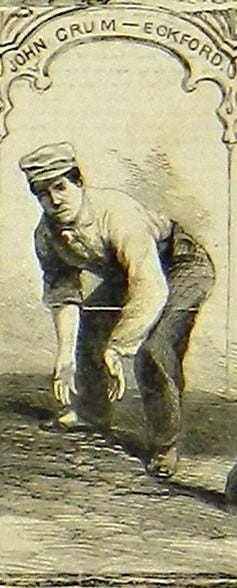
Johnny Grum of the Eckfords
Grum now took the bat at the commencement of the fifth innings on the Brooklyn side. He made a splendid strike, but the ball was so quickly passed to the second base, and as quickly passed on to the first, that had not Pinckney thrown a little wild — an unusual thing for him, by the way — the batter would have been put out. As it was, the ball passed out of Wadsworth’s reach, and Grum succeeded in reaching the third base. P. O’Brien then took the bat, gave the ball another sockdollager, on which he ran to the third base, and brought Grum home. Price, who throughout the game did good execution with the bat, made another capital strike, O’Brien running home, and he getting to the first base, and afterwards succeeded in reaching the second safely. Masten, the next striker, was caught out by Van Cott. Price, taking advantage of the strike, made for the third base, which he would not have reached had not the ball thrown by Van Cott been missed by Bixby; in consequence, M. O’Brien also made the second base. Burr struck short, and got to the first base, and Price reached home in safety. M. O’Brien also ran on Burr’s strike for the third base, which he made, in consequence of another ball passing Bixby. Leggett then made an excellent strike, but his ball was caught by Pinckney on the first bound. The Brooklyn side added four to their score in this innings.
Much interest was now manifested in regard to the fortunes of the New York side in the fifth innings, which was rightly considered the turning point in the game. They had four runs to make to equal their opponents. Bixby led off with a good strike, and made first base. De Bost struck another “poultry,” which was handsomely caught by Leggett, but neither on the fly or the first bound. Determined to change the order of his striking, De Bost then laid himself out for an old-fashioned blow at the next fair ball, and when it came he gave it “ballyhoo,” and Bixby was enabled to run home from the first base, while De Bost made the second. Gelston next followed also, with one of the best strikes of the day, and sent De Bost home with flying colors, and enabled himself to reach second base; and a ball thrown from the catcher having passed the pitcher, Gelston took advantage of it to make the third base. Wadsworth then struck a foul ball (he also was death on “ poultry”) and next made a tip which was caught out by Leggett. Hoyt took the bat, and the ball delivered to him having passed the catcher, Gelston ran home safely; Hoyt made a good strike, and got to the first base. Van Cott struck short, and ran for the first base, while Hoyt strode off for the second, for reaching which he is indebted to Holder’s missing the ball thrown to him by Pidgeon. Wright took the bat. The pitcher (M. O’Brien) here made a feint, which, upon appealing to the umpire, was decided to be a baulk, and the parties on the bases were declared, under the rules, to be entitled to a base each, which they took. Wright struck a foul — more “poultry” — and then tipped out. Pinckney made an excellent strike, which brought Hoyt and Van Cott home, and let him reach second base, and immediately afterwards stole a march to the third. Benson also made a good strike (the batting generally on the New York side was much improved in this innings) and got to first base, and Pinckney ran home. Bixby then took the bat for the second time in this innings. A ball passed the catcher, and Benson made the third base. Bixby followed on in the improved style of batting, and made the second base, while Benson came home. De Bost, the next striker, added much merriment to the then existing excitement, by his amusing attitudes. He struck another capital ball, but this time it was handsomely caught by P. O’Brien, closing the innings with seven runs for the New York side, and placing them, on the score, three ahead of their opponents. (The cheers from the “Eagle” omnibus during this innings made the welkin ring.)
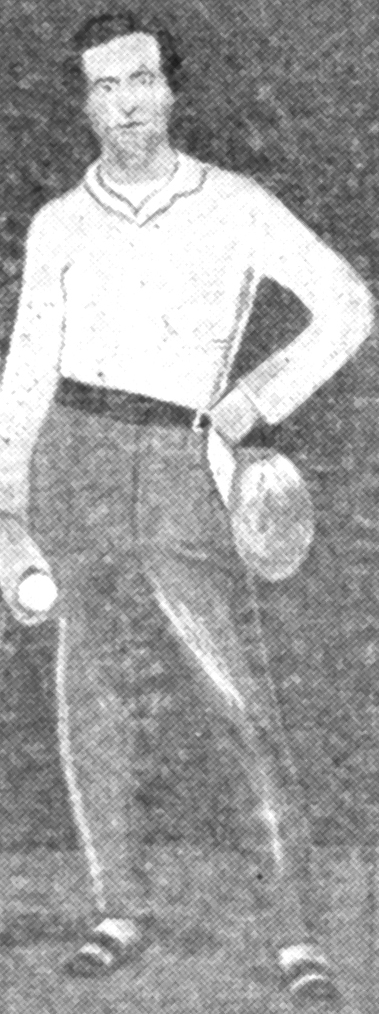
Frank Pidgeon of the Eckfords
The Brooklyn men commenced the sixth innings undismayed. Holder, the first striker, made the longest and most effective strike of the day, and succeeded in making the only home run that was made during the game. Pidgeon then struck a ball in the vicinity of the third base, which was well stopped by Bixby and put Pidgeon on the “retired list” for that innings. Grum made a good strike but the ball was handsomely stopped by Pinckney and sent up toward the first base, but being altogether out of calculation, and swiftly passing Wadsworth, Grum made an entire run in consequence. P. O’Brien, the next striker, tipped out. Price struck a foul ball, and then made a good hit which was stopped by Gelston, and sent down to Pinckney on the second base in season to head off Price, and closed the innings with only two runs for the Brooklyn side, which left them one behind their competitors, who also had an inning in their favor.
The sixth innings was commenced on the New York side by Gelston (M. O’Brien, of the Brooklyn side, giving the position of pitcher to Pidgeon). Gelston struck a highball, and was caught out by Masten. Wadsworth next took the bat, and was struck by a ball, delivered by the pitcher, on the fingers of the right hand, seriously damaging one of them. The general impression at first was that the ball had been struck foul; but the appearance of Wadsworth’s shattered finger settled the point, and the umpire declared that it was no ball [a batter hit by a pitch would not be awarded first base for nearly 30 years]. Wadsworth then made a tip, and followed with a splendid strike, on which he made the first base. Hoyt struck a firm ball, and let Wadsworth run to the second, while he made the first base. Van Cott struck short; the ball was stopped by Masten, and passed to the first base in advance of Van Cott, which brought Hoyt and Wadsworth both home, and enabled him to reach the second base. Pinckney struck handsomely, but his ball was stopped by Holder from making a run, closing the innings with two runs for New York, and leaving them still three runs ahead of their competitors.
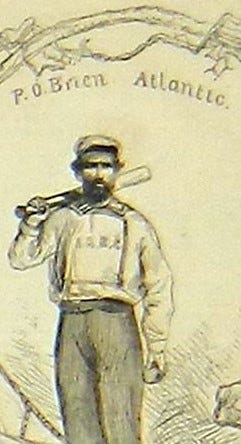
Pete O’Brien of the Atlantics
M. O’Brien opened the seventh innings on the Brooklyn side. In the meantime, Wadsworth was, in consequence of his injury, compelled to withdraw from the game, and Davis, of the Knickerbocker, was substituted in his place, and was stationed in the field, Pinckney being transferred from the second to Wadsworth’s place on the first base, and Wright from the field to the second base. M. O’Brien made a capital strike, but could not get further on his run than the first base. From that he succeeded in stealing to the second. Masten, the next striker, followed with a powerful ball, which was very handsomely caught on the fly by Davis. Burr then took the bat and, before he struck, O’Brien managed to steal to the third base, making however, a very narrow escape. Burr then made a very fair strike, on which he made the second base, and O’Brien got home. Leggett struck short, and was put out by Pickney on the first base. Holder, his successor, tipped, and was caught out by De Bost, leaving Burr still on the second base. One more run only was added to the Brooklyn score in this innings.
The New Yorkers commenced the seventh innings in full confidence and in high spirits. They were two ahead of their opponents, with an inning to spare. Benson was the first striker, and led off with a foul, next a good ground ball, and made first base. A ball passing the catcher, Benson ran to the second, and as the ball thrown thither to head him off, passed Holder, Benson succeeded in making the third base. Bixby struck an air ball, a good long one, which P. O’Brien caught on the first bound. De Bost also sent up a “sky-rocket,” which Masten took good care of, and prevented from reaching the ground; but Benson managed to complete his run. Gelston, the next striker, tipped. Judgment was called for, on the tip, by the Brooklyn side. The umpire hesitated. The spectators cried “out,” “not out” — which, by the way, was very much out of order — and the umpire finally decided Gelston out, and we must add that, we think, very unjustly. This closed the innings, the New Yorkers making but one run, placing the game in the same position in which it stood at the close of the sixth innings — the New Yorkers three ahead.
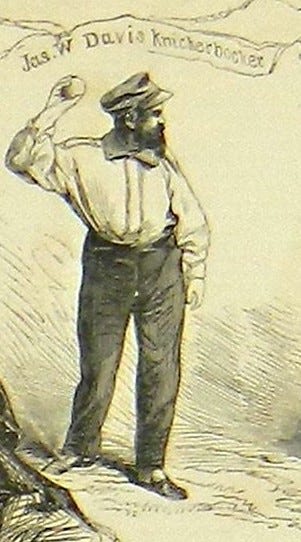
James Whyte Davis of the Knickerbockers
Pidgeon, of the Brooklyn side, took the bat for the eighth innings. He struck the ball in the long field, which Davis unfortunately missed catching, and got to his first base. Grum followed with a grounder, and made first base, and Pidgeon got to the third. Grum then stole his way to the second base. P. O’Brien struck a very swift ball, which was caught on the fly by Van Cott — one of the prettiest catches of the day. Price then made a very fortunate strike, bringing both Pidgeon and Grum home and enabling him to reach second base. M. O’Brien also struck a capital ball,on which Price ran home, and O’Brien got to the first base. A ball passing De Bost afforded O’Brien an opportunity which he improved, of gaining the second base. Masten struck short, and the ball was passed by Gelston to Pinckney on the first base, in time to head him (Masten) off. O’Brien, who was on the second, now stole to the third base. Burr made a vaery pretty strike, and made first base, O’Brien running home. Leggett tipped out, and closed the innings with four runs for the Brooklyn side, thus leading the New Yorkers one run.
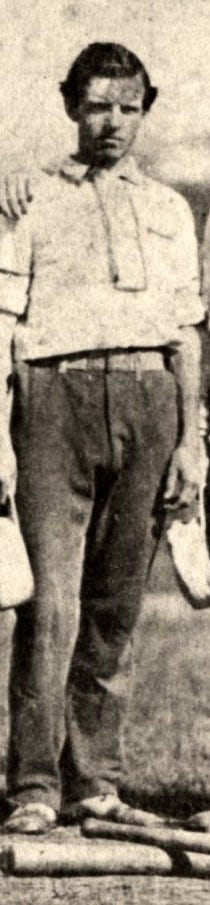
Harry Wright of the Knickerbockers
The excitement was at its height, when the New Yorkers came in to take their eighth innings, and the hopes of the friends of the Brooklyn side were revived. Davis struck a fine ball, and made the second base with a mighty close shave, the ball having been passed up so quickly to Holder that Davis hadn’t the twentieth part of a second to spare, and he only touched the base by sprawling on the ground. Judgment was asked, and the umpire decided Davis “not out.” A ball passed the catcher, and Davis ran for the third base, which — Davis succeeded not only in reaching, but also got home. Hoyt struck a short, high ball, which ought to have been caught, but wasn’t, and made the first base. Van Cott followed, with a good ground ball, and got to the first base, and Hoyt to the second. Wright — who was singularly unfortunate with the bat — made a short strike, and was put out on the first base, Van Cott making the third. Pinckney struck a foul, then a grounder, and got to the first base, and Van Cott ran home. Benson also struck a short ball (the players on both sides were getting a little nervous) and the ball having been passed down to second base, with the hope of heading off Pinckney — but he was too quick for it — Benson made the first base. (A change in position here took place between Leggett and Masten, of the Brooklyn side, the former taking the third base, while Masten went behind.) Bixby was the next striker,and made a good one, sending Benson home, while, with close stretching, reached the second base. De Bost struck a swift ball, away down into the O’Brien district, which however, was so well stopped and passed up by that gentleman, that De Bost did not make more than one base. Bixby reached the third. De Bost then stole a run to the second, making a very narrow escape. Gelston struck short, and was caught out on the first bound, by Pidgeon — at least, so it was decided by the ump. Davis then took the bat and tipped out, leaving Bixby on the third, and De Bost on the second base. The New Yorkers made five runs in this innings, and placed themselves four ahead of their competitors.
The Brooklyn players now came in for their ninth and last innings, and were put out in rapid succession, without a run, amidst vociferous applause. Holder, the first striker, was caught out on the fly by Wright; Pidgeon, his successor, was served in a similar manner by Davis, and Grum, who like his predecessor, struck a splendid ball, was caught also on the fly, by Benson.
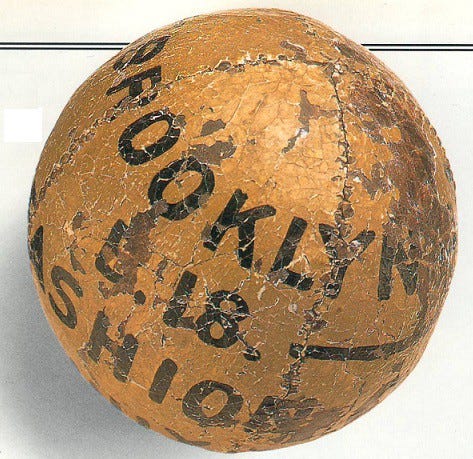
From Family of Charles De Bost: Fashion Race Course trophy ball, Game One
This result, of course, decided the game in favor of the New Yorkers, who had four runs ahead. As they were entitled to another inning, however, Hoyt stepped forward and took the bat, and, striking short, was put out on the first base. Van Cott, who followed Hoyt, was also put out on the first base, and Wright was caught out by M. O’Brien, thus terminating the innings also without a run.
Three cheers were then given by the vanquished for the victors, in which the spectators heartily joined, and the band of the Eagle Club struck up with “Hail to the Chief.” The compliment was then returned by the New Yorkers, in good style, and the fun for the day being concluded, the immense throng of spectators began to separate, and the game was over.
The following is the score of the game:
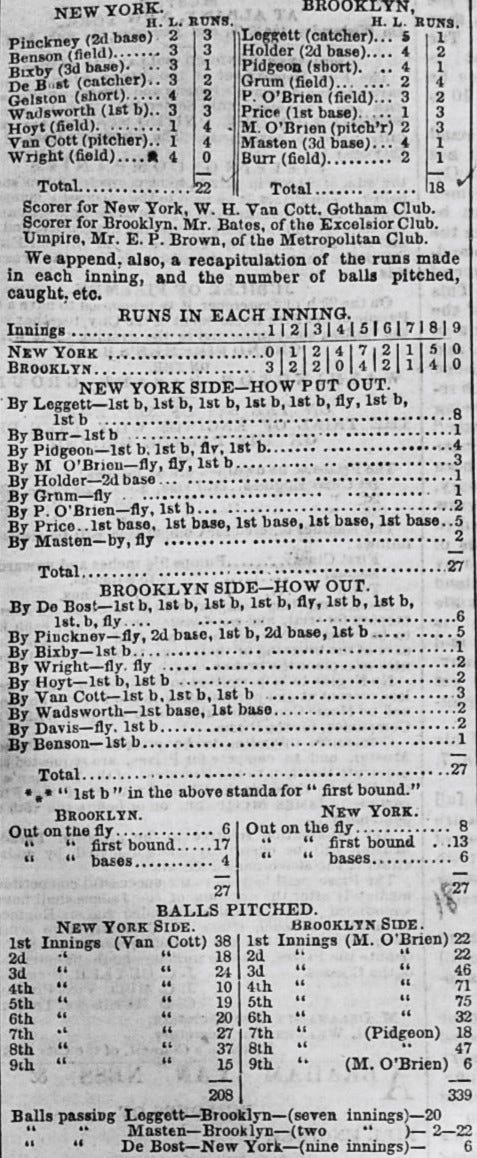
Box score and miscellaneous stats, as presented in the Sunday Mercury report
The exceeding length of this report precludes the possibility of our indulging in extended remarks concerning the playing of individual members of the two nines. As a whole, the playing was very good, with some exceptions (and one or two bad ones), of course, on both sides. The batting of the New Yorkers was not equal to that of their opponents; nor, as a general thing, was their fielding. New York excelled in having a superior player on the second base, a cool and careful pitcher, and a sure and certain catcher, and to the excellent playing of these parties, in their several positions, is attributable much of the success of the New York nine.
De Bost, the catcher on the New York side, never played better, in his life; he allowed but few balls to pass him, and but one, only, which proved disadvantageous to his side. Leggett, the catcher of the Brooklyn nine, on the contrary, was remarkably unfortunate in his playing, although he made several very pretty catches. A reference to the detail of the game will show that a number of balls passed him, which proved decidedly advantageous to the New York side. It is due to Leggett to state, however, that several of the balls referred to were pitched entirely out of the reach of any man.
The playing of Van Cott, as pitcher, must have satisfied the gentleman who had the selection of the New York nine, that it would have been a serious mistake to have had him located in any other position. Especially after the second innings did Van Cott play remarkably well. He wasted no time in fancy throwing to the bases; every ball pitched or thrown by him was well calculated, and throughout the game he played with a coolness and steadiness well worthy of imitation by others. M. O’Brien, the pitcher on the Brooklyn side, also acquitted himself very well. He pitched the balls with great swiftness, but occasionally he pitched a little bit too high, or too low for the behind man.
Gelston, of the New York side, was active and efficient as short-fielder, and did good service every way. Wadsworth, in spite of the lameness of one of his hands, played the first base in his best style. Pinckney, on the second base, played most admirably, and won general applause. He was one of the most easy and graceful players on the field. Bixby did not play so well as was expected, on the third base. He missed several rather important balls. Hoyt, Benson, and Wright fielded pretty well, though each one might and should have done better.
Pidgeon, the short-fielder of the Brooklyn side, “acted well his part.” He was active and vigilant, and was always on the spot where he was wanted. Price, on the first base, and Masten on the third base, played also very well. Holder, on the second base, was not so successful. He lost several good opportunities of putting out players running to his base. Green [typesetting error; what was meant is “Grum”], Burr, and P. O’Brien, in the field, did all they could do, and did it handsomely. The latter has no superior as a fielder. Every ball that was struck in his part of the field, on Tuesday, was considered by the striker as his death-stroke.
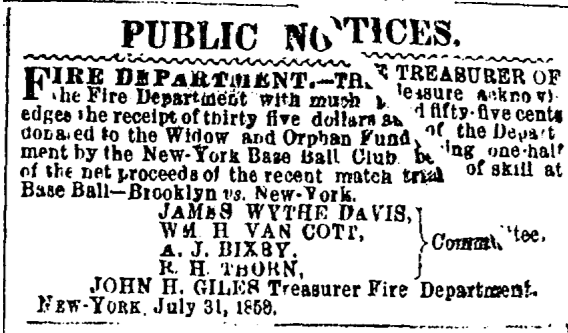
Fashion Race Course Game One netted $35.55 for the Widow and Orphan Fund
At the conclusion of the match the New Yorkers invited the Brooklyn players to an impromptu entertainment, and an hour or two was spent in the interchange of friendly sentiment. Nothing definite was said as to the time when the return match will be played. There will doubtless be several alterations made in the players on both sides for the next match. It is generally understood and agreed, however, that it will be played on the same ground, the Fashion Course. We hope, in that event, that the committee of arrangements for the next match, will insist that there shall be better facilities extended to visitors for the purchase of tickets of admission to the course. In the crowd and general scramble for tickets on Tuesday last, pickpockets realized a rich harvest. We heard of the loss, by visiters, of a number of watches and pocket-books, which were, doubtless, stolen from them in the crowd around the ticket window.
메타데이터
- post_id
- 3a1b3cec3e5e
- slug
- baseballs-first-play-by-play-3a1b3cec3e5e
- url
- https://ourgame.mlblogs.com/baseballs-first-play-by-play-3a1b3cec3e5e
- canonical_url
- https://ourgame.mlblogs.com/baseballs-first-play-by-play-3a1b3cec3e5e
- author_url
- https://medium.com/@thorn_john_87223
- status
- ok
- fetched_at
- 2026-07-13 06:23:13