How Does an IP Geolocation API Help You Track Users and Improve Website Experience?
Understanding your website visitors is one of the most important steps toward building a better digital experience. An IP api allows…
How Does an IP Geolocation API Help You Track Users and Improve Website Experience?
Understanding your website visitors is one of the most important steps toward building a better digital experience. An **IP api** allows businesses to identify where users are coming from and use that information to deliver more relevant, secure, and personalized interactions.
Instead of guessing your audience’s needs, you can rely on location-based insights to make smarter decisions that improve engagement, conversions, and overall usability.

What Is an IP Geolocation API?
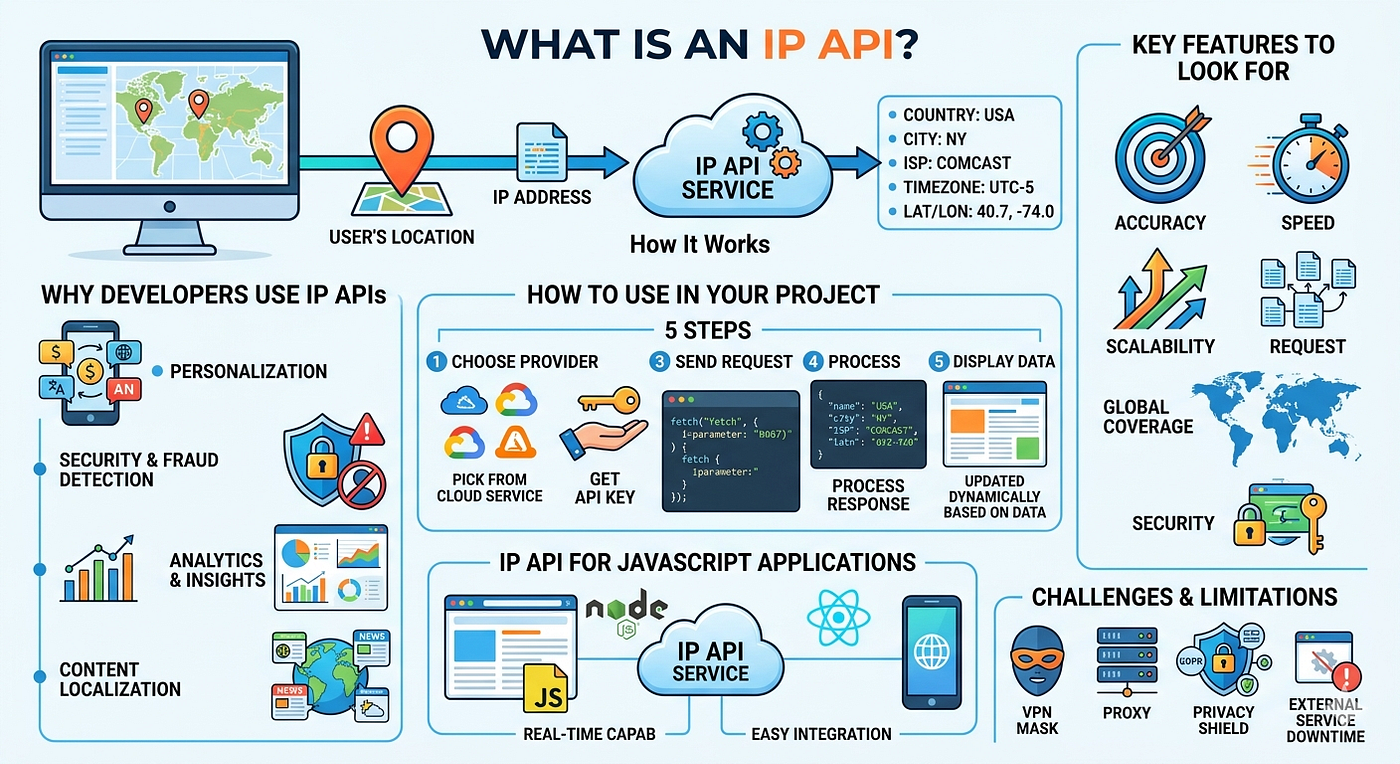
An IP geolocation API is a tool that connects your website or application with a database that maps IP addresses to real-world locations. When a visitor lands on your site, their IP address is analyzed, and details such as country, city, region, and sometimes ISP information are returned.
This process happens in real time and does not require users to manually share their location.
With this data, businesses can better understand visitor behavior and tailor their digital experience accordingly.
Why Tracking User Location Matters
User behavior often depends on where they are located. Someone browsing from a different country may have different expectations, language preferences, or purchasing power.
Tracking location helps you:
- Understand where your traffic is coming from
- Identify high-performing regions
- Detect unusual or suspicious activity
- Deliver content that matches user intent
This insight is especially valuable for ecommerce stores, SaaS platforms, and content-driven websites.
How It Helps Improve Website Experience
1. Personalized Content for Every Visitor
Visitors are more likely to engage with content that feels relevant to them. Location data allows you to adjust your website dynamically.
For example:
- Show local language or currency
- Highlight region-specific offers
- Display relevant products or services
This level of personalization creates a smoother and more meaningful user journey.
2. Better User Interface and Navigation
A website that adapts to a user’s region feels easier to use. Small changes based on location can make a big difference.
You can:
- Redirect users to region-specific pages
- Adjust time zones for bookings or events
- Optimize layouts based on regional preferences
These improvements reduce friction and help users find what they need faster.
3. Smarter Marketing Campaigns
Location data helps you target the right audience with the right message.
Instead of running broad campaigns, you can focus on specific regions where your product or service performs best.
This enables you to:
- Create region-based ads
- Improve email targeting
- Optimize ad spend by focusing on high-converting areas
The result is better ROI and more efficient marketing efforts.
4. Fraud Detection and Security
One of the most valuable uses of location tracking is improving security. By analyzing IP-based location data, you can detect suspicious behavior.
For instance:
- Login attempts from unexpected locations
- Multiple accounts from the same IP range
- Sudden traffic spikes from unknown regions
These signals help prevent fraud and protect both your business and users.
5. Enhanced Analytics and Decision Making
Traditional analytics show what users do on your site. Location data adds context to those actions.
You can identify patterns such as:
- Which regions generate the most traffic
- Where users drop off in the funnel
- Which locations drive the highest conversions
This allows you to make data-driven decisions and continuously improve your website performance.
Real-World Use Cases
Ecommerce Platforms
Online stores use location data to show local pricing, shipping options, and product availability. This reduces confusion and increases the chances of purchase.
SaaS Applications
Software platforms use location insights to manage access, improve onboarding, and ensure compliance with regional regulations.
Content Websites
Blogs and media platforms use location tracking to deliver relevant content based on regional interests and trends.
Travel and Booking Platforms
Travel websites rely heavily on location data to suggest destinations, display local deals, and provide accurate booking information.
How to Implement It on Your Website
Integrating an IP-based solution is simpler than it might seem. Most APIs are designed for easy setup and can be integrated within minutes.
Basic steps include:
- Sign up for an API provider
- Get your API key
- Connect it to your website or application
- Use the returned data to customize user experience
Many providers also offer documentation and support to help developers get started quickly.
Best Practices to Follow
To make the most out of location-based tracking, keep these practices in mind:
- Be transparent about data usage and respect user privacy
- Avoid over-personalization that feels intrusive
- Combine location data with other analytics for better insights
- Regularly test and optimize your strategies
The goal is to enhance user experience without compromising trust.
Challenges to Consider
While location tracking offers many benefits, there are a few limitations:
- IP-based data is not always 100 percent precise
- Some users may use VPNs or proxies
- Privacy regulations may restrict data usage in certain regions
Understanding these challenges helps you use the technology responsibly and effectively.
The Future of Location-Based Experiences
Location data is becoming more important as businesses focus on personalization and real-time interactions. As technology evolves, websites will become even more adaptive and user-centric.
Combining location insights with AI and automation will allow businesses to create highly tailored experiences that feel seamless and intuitive.
A well-implemented **geolocation API** can play a key role in this transformation by providing accurate and actionable data.
FAQs
1. How accurate is IP-based location tracking?
IP-based tracking is generally accurate at the country and city level, but it may not always pinpoint exact user locations. Accuracy can vary depending on the network and data provider.
2. Is it legal to track user location using IP addresses?
Yes, but it depends on how you use the data. You should always follow privacy regulations and inform users through your privacy policy about how their data is collected and used.
3. Can IP geolocation improve website conversions?
Yes. By delivering personalized content, local offers, and a smoother user experience, location-based insights can significantly increase engagement and conversion rates.
Recommended Resources:-
**Static IP Address Explained: What It Is, Pros & Cons, Costs, and When You Need One**
**What Is API Access? API Keys, Authentication, Rate Limits, and Common Errors Explained.**
메타데이터
- post_id
- 3a3eb809e4f9
- slug
- how-does-an-ip-geolocation-api-help-you-track-users-and-improve-website-experience-3a3eb809e4f9
- url
- https://medium.com/@rameshchauhan0089/how-does-an-ip-geolocation-api-help-you-track-users-and-improve-website-experience-3a3eb809e4f9
- canonical_url
- https://medium.com/@rameshchauhan0089/how-does-an-ip-geolocation-api-help-you-track-users-and-improve-website-experience-3a3eb809e4f9
- author_url
- https://medium.com/@rameshchauhan0089
- status
- ok
- fetched_at
- 2026-07-11 12:15:36