How to Stop AI Bots in 2026 (Using Behavioral Intent)
Your Firewall Can’t Read Minds. But Your Security Stack Should
How to Stop AI Bots in 2026 (Using Behavioral Intent)
Your Firewall Can’t Read Minds. But Your Security Stack Should
Photo by Steve A Johnson on Unsplash
I spent last Tuesday watching a bot dismantle a client’s entire API layer. Not with brute force. Not with a DDoS flood that would show up on any dashboard. It was a single, perfectly formed request. It mimicked a legitimate mobile app. It used a residential IP that had never been flagged. It moved at a human pace. It even paused to “read” the response before sending the next request.
My client’s WAF didn’t blink. Their rate limiting rules saw nothing unusual. The bot completed 47 transactions before anyone noticed scraping pricing data, testing credential stuffing and mapping every endpoint in their catalog. When I traced it back the logs showed nothing but “normal” traffic.
That’s the problem with 2026. AI bots don’t attack like bots anymore. They act like your best customers. They follow your business logic. They mimic human curiosity. They’re not faster than us. They’re more believable than us. And traditional security tools built to spot volume not nuance are completely blind to them.
Here’s what actually works.
The Problem: Bots Learned to Act Human
The days of simple scripts hammering login pages are over. Modern attackers operate structured ecosystems that combine residential proxy networks full browser automation tools like Playwright and Puppeteer, API abuse patterns, mobile emulation and AI assisted decision logic. Attackers no longer rely only on volume. They rely on consistency. They make every signal reinforce the next so a malicious session appears legitimate when inspected in isolation.
The numbers are staggering. Radware’s 2026 threat research found that bad bot transactions increased 91.8% in 2025 compared to 2024 a sharp acceleration from the 35.2% growth observed the previous year. In Q1 2026 alone, malicious web and API transactions were up 273% compared to Q1 2025. The volume is overwhelming. But volume isn’t the real story.
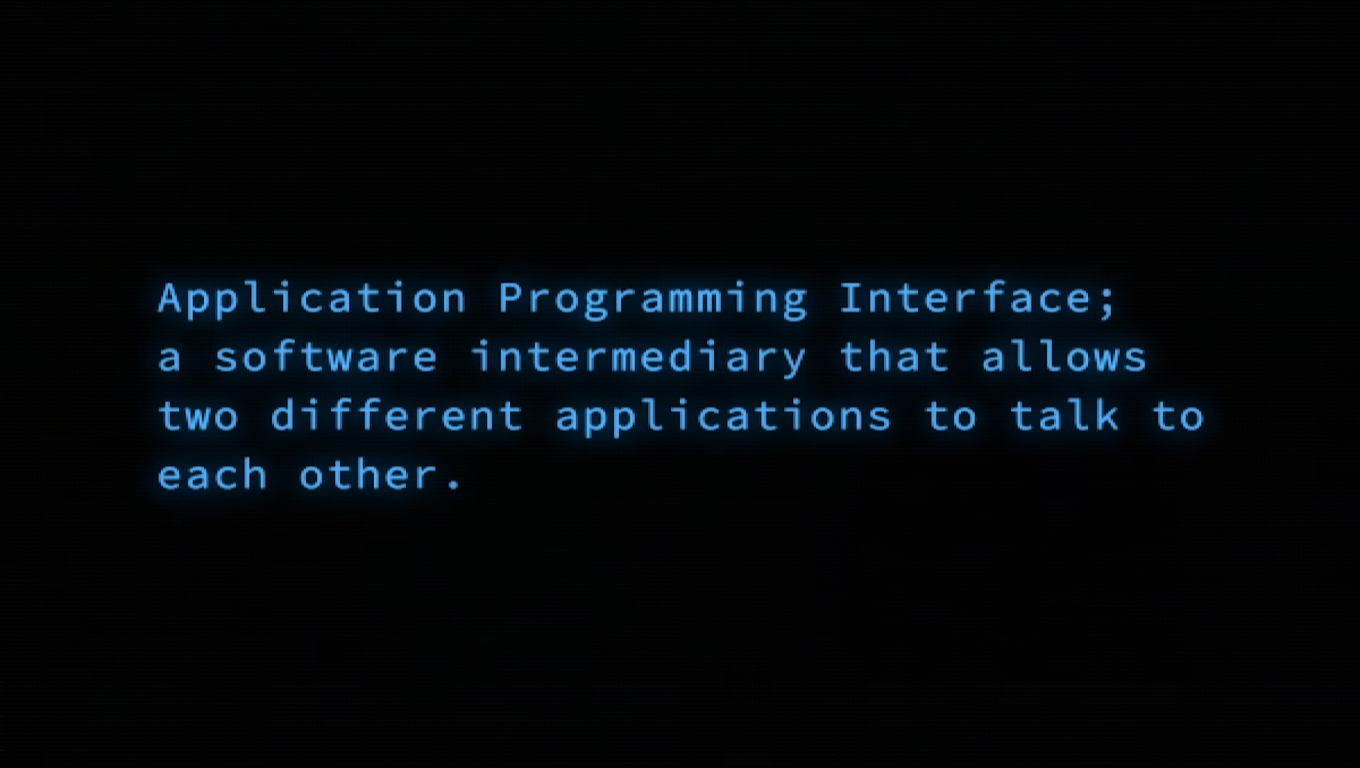
API
The real story is quality. Bots can now interpret application responses and adjust behavior dynamically. They retry flows when friction appears. They slow down when they detect a CAPTCHA. They change navigation paths based on what the application returns. They’re not just moving faster. They’re moving more believably. And defenders are no longer looking only for automated traffic they’re looking for automated behavior that looks exactly like human behavior.
A single residential IP may look trustworthy. A browser fingerprint may look valid. A session pace may look human. An API request may appear syntactically correct. A mobile request may appear to come from a normal application. But when these signals are correlated, inconsistencies start to appear. The problem is that most security tools don’t correlate them. They inspect each signal in isolation and conclude everything is fine.
The Shift: From Rules to Intent
Traditional defenses IP blocking, CAPTCHA, static rate limiting were never designed for this level of sophistication.They assume attackers are “out there” and defenders are “in here.” They assume a binary: bot or human. They assume that if you block the bad IP, the problem is solved.
In 2026 those assumptions are lethal.
The shift we need is from rules based detection to intent based analysis. Instead of asking “Is this a bot or a human?”we need to ask “What is this entity trying to achieve?” A legitimate user and a malicious bot might both request the same page. But their intent is different. The user wants to browse. The bot wants to extract, abuse or exploit. The challenge is distinguishing those intentions in real time.
Radware’s approach to this problem is built around cross layer analysis. Rather than inspecting signals in isolation, it correlates browser signals, API abuse patterns, mobile attestation and threat intelligence into a unified decision. A browser signal can improve API protection. API abuse can strengthen bot scoring. Mobile attestation can reduce emulator risk. Each layer contributes context but the defensive value comes from connecting those signals.
This is the fundamental insight: legitimate sessions are coherent; malicious sessions are consistent, but not coherent across layers. A bot might mimic a human at the browser layer and at the IP layer. But it can’t mimic a human across all layers simultaneously not yet. The inconsistencies are there. You just need to look for them.
Ai Model
The Shadow AI Problem: The Bots You Don’t Know About
Here’s the part that keeps me up at night. Even if you deploy the best intent based detection you’re still blind to the bots you don’t know exist.
Shadow AI agents unauthorized AI agents deployed inside an enterprise without the knowledge, approval or oversight of IT and security teams are proliferating at an alarming rate.They operate autonomously across enterprise systems, querying databases, invoking APIs, transferring files and triggering downstream services using the deploying employee’s credentials or personal API keys.Because they are never registered, reviewed or integrated into governance frameworks, security teams have no visibility into what they are doing or what data they are touching.
BeyondTrust’s research found a 466.7% year over year increase in AI agents operating inside enterprise environments. Yet Cisco’s 2026 State of AI Security data shows only 31% of organizations deploying agentic AI feel equipped to secure it. The gap between deployment velocity and governance readiness is where shadow agents thrive.
AI agents
The threat isn’t just about data leakage anymore. It’s about access control. Shadow agents inherit whatever permissions the employee who deployed them had. If that employee has access to sensitive data, the agent does too. And the agent operates at machine speed across dozens of actions per workflow, without a human reviewing each step.
How Behavioral Intent Protection Actually Works
So what does intent-based protection look like in practice? Let me break it down based on what’s actually working in 2026.
Discovery and Visibility
You can’t protect what you can’t see. The first step is continuous discovery of AI agents across your environment both internally built agents and SaaS agents. This means mapping not just the agents themselves, but the tools and systems they can access. Traditional asset inventories don’t include AI agents. Yours needs to.
Intent-Based Security
This is the core. Advanced runtime behavioral algorithms detect and mitigate malicious or abnormal intent within agent interactions including multi-step behaviors and patterns that span multiple agents.It’s not about blocking a single suspicious request. It’s about identifying a pattern of behavior that doesn’t align with legitimate intent.
For example, an agent that queries a database formats the results and sends them to an external email address might be performing a legitimate workflow.But an agent that queries a database formats the results sends them to an external email address and then deletes the query logs?That’s a pattern that warrants investigation.
Integration with Agent Platforms
Protection needs to work across custom built agents and third-party services. Radware’s solution supports Microsoft 365 Copilot, Microsoft 365 Copilot Studio, AWS Bedrock and in house agents. The goal is consistent protection without limiting developer choice.
Continuous Posture Management
Security isn’t a one time configuration. It’s an ongoing process. A Risk Graph Map continuously scores an organization’s security posture for agentic AI, highlighting multi agent risk paths and potential data exposure in real time. This isn’t a static dashboard it’s a live view of how agents are interacting, where risks are accumulating and what needs immediate attention.
The 2026 Reality: What You Need to Do Now
If you’re a network engineer, security professional or IT leader here’s where to focus.
First, stop relying on signature based detection. AI bots don’t have signatures. They adapt. They evolve. They’re not using known exploit patterns they’re using your own business logic against you. If your security stack is still looking for “known bad” you’re already compromised.
Second, invest in cross layer visibility. A residential IP might look clean. A browser fingerprint might look valid. An API request might look normal. But when you correlate them, inconsistencies emerge. You need a security architecture that correlates signals across layers not just inspects them in isolation.
Third, discover your shadow agents. They’re already inside your organization. They’re running on employee workstations using employee credentials accessing employee data. You need continuous discovery of AI agents and MCP-connected systems operating inside your environment. Traditional discovery scans won’t find them. You need agent-specific discovery.
Fourth, adopt intent based protection. Ask not “Is this a bot?” Ask “What is this entity trying to achieve?”. Runtime behavioral algorithms can identify malicious intent within agent interactions including multi step behaviors that span multiple agents. This is the difference between detecting a bot and stopping an attack.
Fifth, align with emerging standards. The OWASP Top 10 for Agentic AI provides a structured framework for managing agentic AI threats. The AI Vulnerability Scoring System (AIVSS) helps assess and prioritize core security risks. These aren’t theoretical frameworks they’re practical guides for securing the agentic enterprise.
The Bottom Line
Agentic AI is moving from experimentation to enterprise reality. Autonomous AI agents are capable of reasoning, taking actions and orchestrating complex workflows across enterprise systems. They’re not limited to generating responses anymore they reason, act, call tools, access data and influence business outcomes.
This introduces security challenges that traditional AI and application security solutions were never designed to handle. Static guardrails designed for governance don’t address the behavior of autonomous, tool-using agents during live operation. The attackers know this. They’re exploiting it. And they’re getting better at it every day.
The solution isn’t to block AI. It’s to secure it. Not with rules. Not with signatures. With behavioral intent analysis that understands what an agent is trying to achieve and stops it when that intent is malicious.

Active vs Ai (Learning)
The bots in 2026 don’t look like bots. They look like your users. They act like your users. They follow your business logic. But they’re not your users. And the only way to tell the difference is to look at what they’re trying to do, not just what they appear to be.
That’s the shift. That’s the future. And it’s already here.
Thanks for reading Shahzaib
Good Luck!
메타데이터
- post_id
- 3aca2782189a
- slug
- how-to-stop-ai-bots-in-2026-using-behavioral-intent-3aca2782189a
- url
- https://osintteam.blog/how-to-stop-ai-bots-in-2026-using-behavioral-intent-3aca2782189a
- canonical_url
- https://osintteam.blog/how-to-stop-ai-bots-in-2026-using-behavioral-intent-3aca2782189a
- author_url
- https://medium.com/@shahzaib01
- status
- ok
- fetched_at
- 2026-06-23 17:05:31