Connecting insight to prioritisation: a better way to improve services
Summary
Connecting insight to prioritisation: a better way to improve services
Summary
Organisations are generating more insight than ever before. User research, analytics, operational data and performance reporting all provide valuable perspectives on how services are performing. Yet many teams still face a familiar challenge: deciding what to improve first.
In our experience, the problem is rarely a lack of evidence. More often, it’s that different sources of insight exist in isolation. By bringing together user needs, operational knowledge and quantitative data, organisations can develop a richer understanding of end to end journeys and make more confident decisions about where to focus their efforts. This article explores why connecting insight matters and how it can help teams prioritise improvements that deliver meaningful value for users and organisations alike and what the future holds.
Understanding the challenge
Most organisations today have access to a wealth of information about their services.
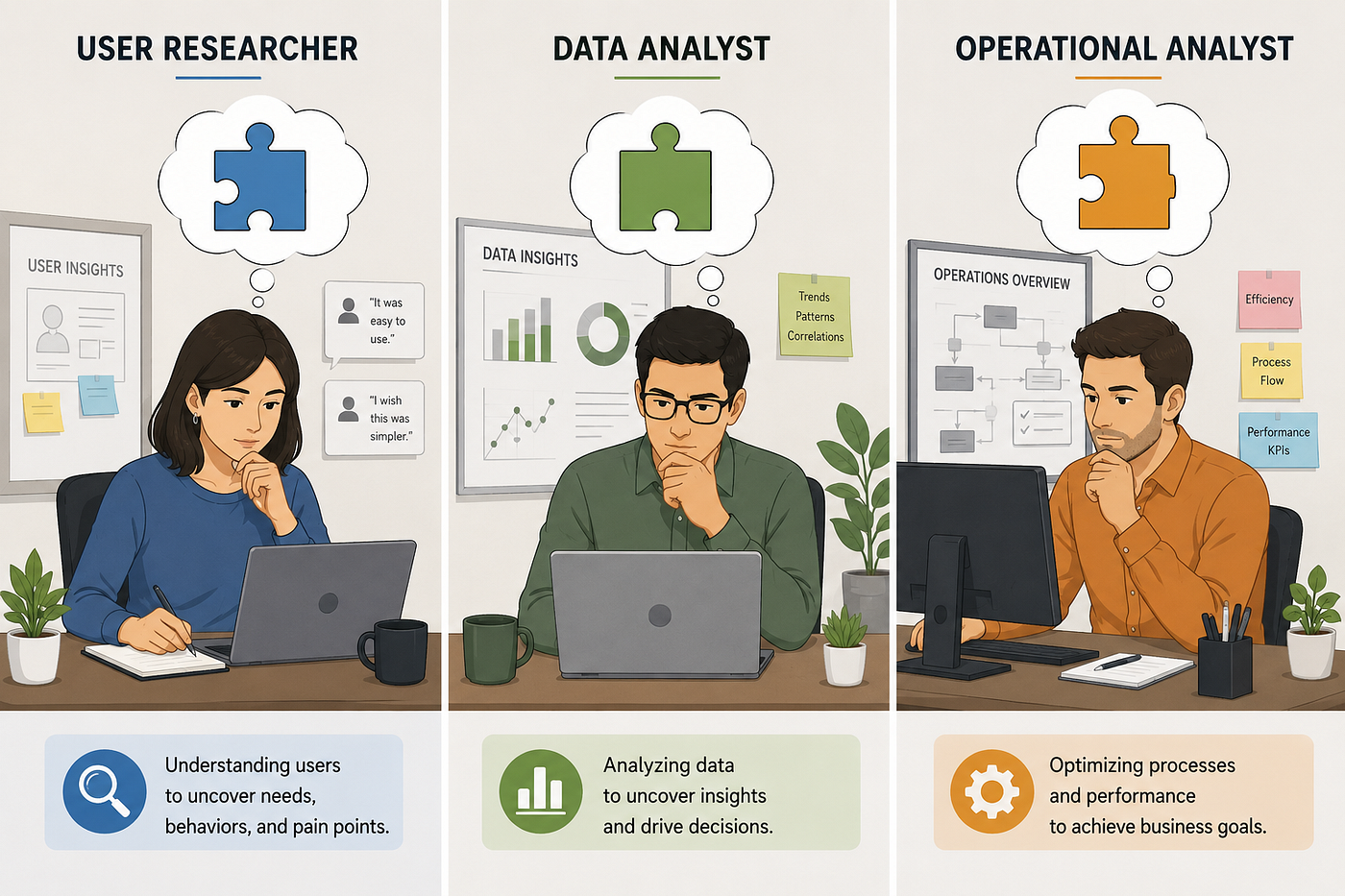
User researchers are uncovering needs, behaviours and pain points. Data analysts are identifying trends and patterns. Operational teams are highlighting recurring issues and areas of demand. Product teams are balancing competing priorities and delivery pressures.
The challenge isn’t generating insight. The challenge is making sense of it.
Too often, these perspectives are considered separately. Research findings sit in reports. Analytics live in dashboards. Operational feedback is shared through meetings and stakeholder conversations. Each source provides part of the picture, but none tells the whole story.
This becomes particularly challenging in complex services, where users move across multiple channels, interact with different teams and experience a journey that extends far beyond a single transaction or digital interaction.
Users experience services end to end. Organisations often understand them in parts.
Bridging that gap is where the real opportunity lies.
Looking beyond individual touchpoints
One of the most valuable lessons we’ve learned is the importance of understanding journeys rather than interactions.
When teams focus on individual touchpoints, they naturally optimise the areas they can see. Improvements are made to specific processes, communications or digital experiences, but the cumulative impact on the overall journey is often unclear.
By taking an end to end view, a different picture emerges.
Research helps us understand where people experience uncertainty, frustration or additional effort. Operational colleagues provide context on the issues they regularly help users overcome. Quantitative data shows how frequently those issues occur and the scale of their impact.
Viewed together, these sources reveal something more powerful than individual findings. They reveal patterns.
And it is these patterns that create the foundation for better decision making.
Moving from observations to insight
A common challenge in service transformation is distinguishing between observations and insights.
An observation tells us what happened.
An insight helps us understand why it matters.
For example, research might show that users struggle to understand a particular communication. Analytics might reveal increased contact volumes shortly afterwards. Operational teams might describe the same issue appearing repeatedly in conversations with users.
Individually, these are useful observations.
Combined, they become a meaningful insight about the relationship between communication, understanding and demand.
This distinction is important because prioritisation depends on confidence.
The stronger the evidence connecting user experience, operational impact and measurable outcomes, the easier it becomes to make informed decisions about where to invest time and effort.
Prioritising what matters most
Every organisation faces more opportunities for improvement than it has capacity to deliver.
The question is rarely whether something could be improved. It is whether it should be improved before something else.
This is where connecting insight becomes particularly valuable.
When qualitative research is aligned with quantitative evidence and operational understanding, organisations can begin to quantify friction across a journey. They can identify not only where users struggle, but how many people are affected, what impact that friction has and where intervention is likely to deliver the greatest value.
This creates a stronger foundation for prioritisation.
Instead of focusing on the loudest problem, the most recent issue or the most visible piece of feedback, teams can focus on areas where evidence suggests the greatest opportunity to improve outcomes.
Importantly, this helps keep user needs at the centre of delivery decisions while balancing organisational priorities and constraints.
Building roadmaps with confidence
Roadmaps are ultimately a reflection of organisational choices.
The challenge is ensuring those choices are informed by a complete understanding of the problem space rather than isolated signals.
In our experience, the most effective roadmaps emerge when organisations connect insight across disciplines and view services through the lens of the entire user journey.
Doing so creates a shared understanding of where friction exists, why it matters and what should happen next.
The result isn’t simply better prioritisation.
It’s greater confidence that teams are working on the right thing, at the right time, for the right reasons.
As organisations continue to invest in research, data and service improvement, the opportunity may not be to gather more evidence. It may be to make better use of the evidence they already have.
Because meaningful change doesn’t come from understanding individual parts of a service.
It comes from understanding how those parts work together.
Looking ahead: insight in an AI enabled world
As organisations increasingly explore the opportunities presented by artificial intelligence, the importance of connected, high quality insight will only grow.
AI has enormous potential to support research, analysis and decision making. It can help teams identify patterns across large volumes of data, accelerate synthesis activities, surface emerging trends and support prioritisation discussions. For product teams, it offers the possibility of moving more quickly from evidence to action. For large public services, it presents opportunities to better understand user journeys at a scale that would previously have been difficult to achieve.
However, AI is only as effective as the information it is given.
If research findings are fragmented, operational data is inconsistent, or service performance measures are poorly understood, AI will simply process and amplify those limitations. The challenge is not whether organisations can adopt AI, but whether they have built the foundations that allow it to be used effectively.
This is particularly important in government services, where decisions can have a direct impact on people’s lives. Understanding the needs of users, the realities of operational delivery and the quality of underlying data remains essential. AI can help connect evidence, identify opportunities and support decision making, but it cannot replace the human judgement required to interpret context, understand nuance and balance competing needs.
The organisations that will gain the greatest value from AI are unlikely to be those with the most advanced technology. They will be the ones that have invested in understanding their services, improving the quality of their data and creating a shared view of user needs and outcomes.
In many ways, the future of AI in service transformation depends on the same principle that underpins effective user centred design today: better decisions come from better understanding. The more connected, reliable and meaningful our evidence becomes, the greater the opportunity to use AI not just to work faster, but to make smarter decisions that deliver better outcomes for the people who rely on our services.
메타데이터
- post_id
- 3afeb08e4e8a
- slug
- connecting-insight-to-prioritisation-a-better-way-to-improve-services-3afeb08e4e8a
- url
- https://medium.com/@chrisjjrobinson/connecting-insight-to-prioritisation-a-better-way-to-improve-services-3afeb08e4e8a
- canonical_url
- https://medium.com/@chrisjjrobinson/connecting-insight-to-prioritisation-a-better-way-to-improve-services-3afeb08e4e8a
- author_url
- https://medium.com/@chrisjjrobinson
- status
- ok
- fetched_at
- 2026-07-08 02:40:31




