Mary Must Become Male
Why the Final Saying of the Gospel of Thomas Is Really the Beginning
Mary Must Become Male
Why the Final Saying of the Gospel of Thomas Is Really the Beginning

“Whoever discovers the interpretation of these sayings will not taste death.”
The reader is told from the very beginning that the sayings contain something hidden. The surface meaning is only the beginning. The text expects to be interpreted.
The second saying then describes the reader’s journey.
“Let him who seeks continue seeking until he finds. When he finds, he will become troubled. When he becomes troubled, he will be astonished, and he will rule over the All.”
Throughout this series, these opening sayings have provided the key to reading Thomas. They taught us how to move forward through the Gospel. The reader searches, discovers, struggles with what has been found, and eventually reaches a new understanding.
But what happens when we arrive at the end?
Perhaps the journey is not finished.
Perhaps the end is where the second journey begins.
If Thomas was intentionally designed to be read in reverse, then the final saying is no longer the conclusion.
It becomes the introduction.
Instead of answering the reader’s questions, it asks the first question of the reverse journey.
What does it actually mean to become male?
The three sayings read:
(114) Simon Peter said to them, “Mary should leave us, for females are not worthy of life.” Jesus said, “See, I am going to make her male, so that she too may become a living spirit resembling you males. For every female who makes herself male will enter the kingdom of heaven.”
(113) His disciples said to him, “When is the kingdom going to come?” Jesus said, “It is not by being waited for that it is going to come. They are not going to say, ‘Here it is’ or ‘There it is.’ Rather, the kingdom of the Father is spread out over the earth, and men do not see it.”
(112) Jesus said, “Woe to the flesh that depends upon a soul. Woe to the soul that depends upon flesh.”
The Two Kingdoms
Before we can understand these sayings, we first need to understand the two kingdoms they introduce.
The Gospel of Thomas does not use the Kingdom of Heaven and the Kingdom of the Father interchangeably. Throughout the Gospel they appear in different contexts and develop different themes.
The Kingdom of the Father is the kingdom that already exists.
It is not somewhere else.
It is not waiting to arrive.
It is already spread across the earth.
The problem is not its absence.
The problem is that men do not see it.
This translation differs from the more familiar rendering, “people do not see it.” The Coptic permits either reading, but within the context of Saying 114 the more specific translation creates an immediate connection between the two sayings.
Peter has just demonstrated exactly the blindness Jesus describes.
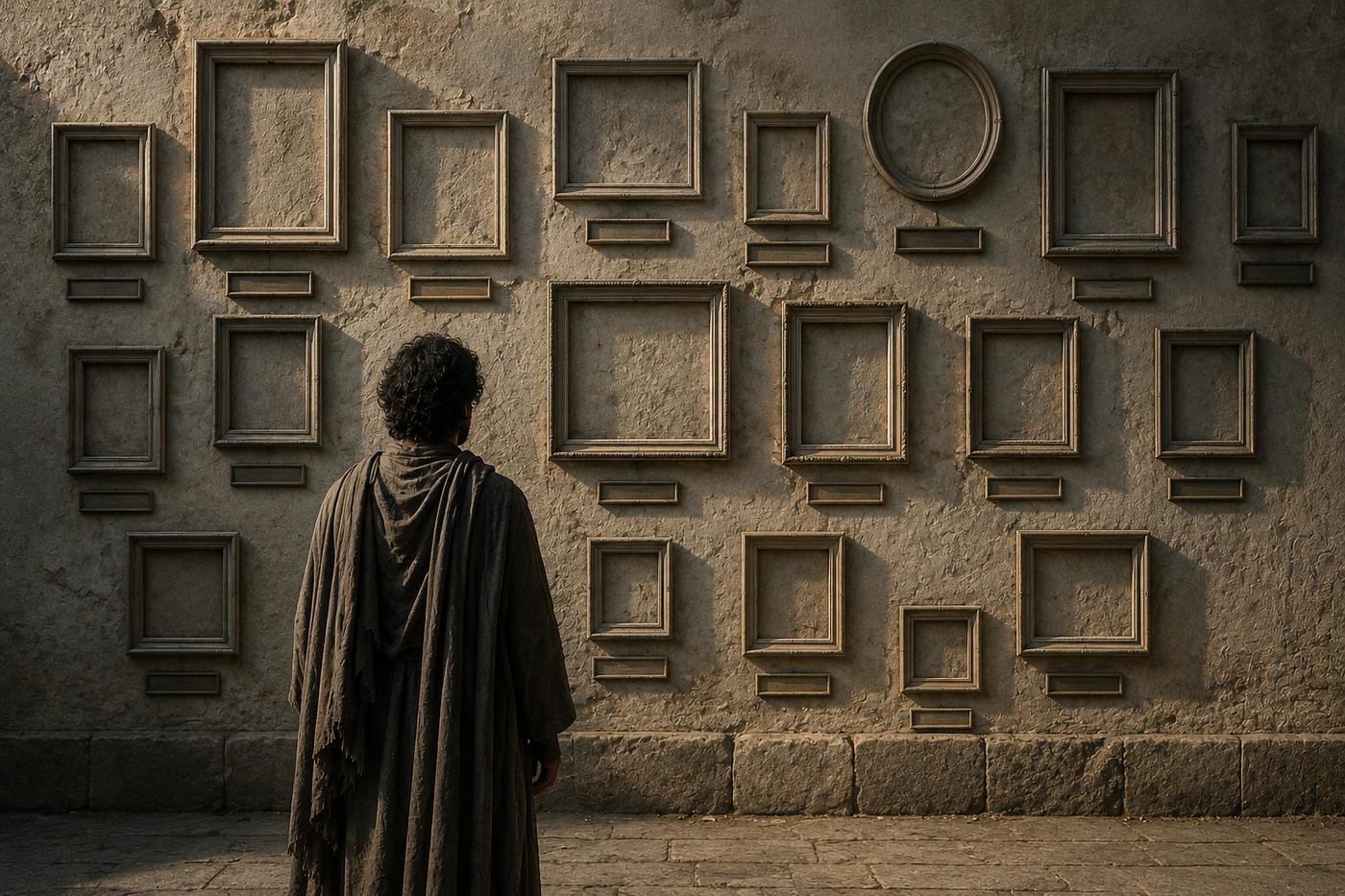
When Peter looks at Mary, he does not see a living spirit.
He sees a woman.
From that single observation he constructs an entire identity.
Female body.
Female status.
Unworthy of life.
Peter does not recognize this as prejudice or ideology. To him, it is simply reality.
The Kingdom of the Father is invisible because those living within it mistake its assumptions for the natural order of the world.
Mary, however, sees the kingdom because she experiences its consequences.
Peter lives inside the system.
Mary lives beneath it.
The Kingdom of Heaven
The Kingdom of Heaven operates according to a different pattern.
As I argued in Volume Five of The Gnostic Notebook, the Kingdom of Heaven sayings repeatedly involve the crossing of sexual boundaries.

Women become male.
Men become female.
The categories that define the Kingdom of the Father begin to dissolve.
Ancient literature preserves several remarkable examples of women becoming men.
In Ovid’s Metamorphoses, Iphis is born female but raised as male. Unable to marry the woman she loves, Iphis is transformed into a man through the intervention of the goddess Isis before the marriage is blessed by Venus.
Another account, preserved by Diodorus Siculus, tells of Callo, who later becomes Callon after being transformed from female into male. The transformation creates a religious dilemma because Callo had possessed sacred mysteries forbidden to men.
Whether historical or legendary, these stories demonstrate that Mary’s transformation would not have been unimaginable to an ancient audience.
The idea already existed.
More importantly, it belonged to the world of the gods.
Jesus is therefore introducing Mary into an entirely different kingdom.
But he is not making her into Peter.
Peter represents the very misunderstanding that the journey must overcome.
Peter’s Definition of Male
Peter begins with the simplest possible definition.
Male means male flesh.
Since Mary does not possess male flesh, Peter concludes that she is not worthy of life.
Jesus immediately destroys that equation.
“I am going to make her male.”
The moment Jesus says these words, maleness can no longer be reduced to biology.
If Mary can become male, then “male” must mean something deeper than possession of a particular body.
The reverse Gospel begins with a question rather than an answer.
If being male is not simply biological, then what is it?
The Kingdom That Men Cannot See

The next saying explains why this question matters.
The disciples ask when the kingdom will come.
Jesus rejects the question entirely.
The Kingdom of the Father is already here.
The real problem is perception.
Peter believes he already knows what it means to be male because he has inherited the assumptions of the Kingdom of the Father.
Those assumptions have become invisible.
Before Mary can become male, she must first understand the kingdom that has already defined maleness without anyone questioning its definition.
Jesus begins by exposing the system before redefining the role.
Flesh and Soul
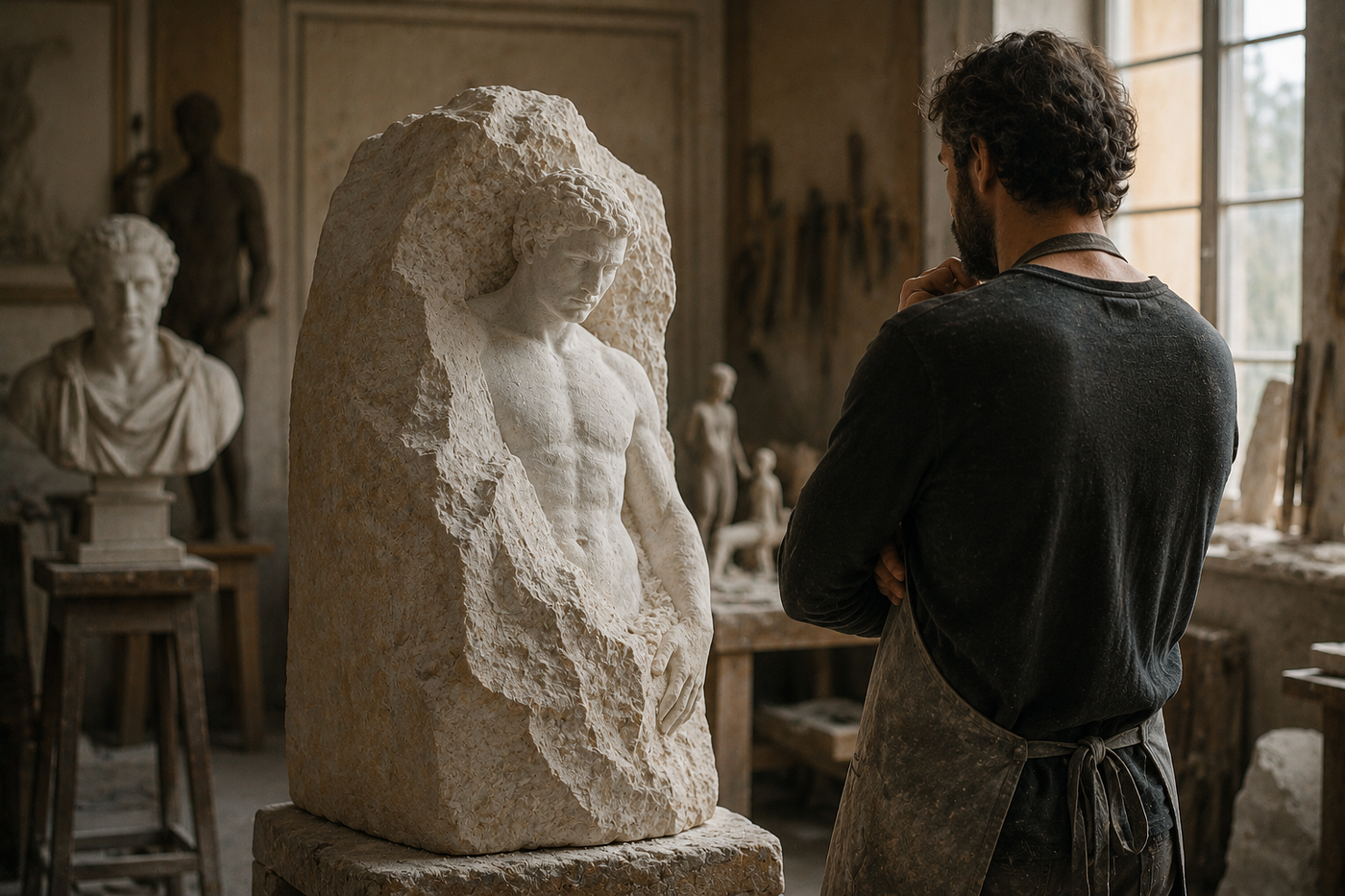
The final saying explains the mechanism behind the confusion.
“Woe to the flesh that depends upon a soul. Woe to the soul that depends upon flesh.”
The two warnings describe opposite errors.
The soul depending upon flesh is Peter’s mistake.
The visible body determines the invisible person.
Female flesh becomes female identity.
Female identity becomes exclusion.
The person disappears behind the category.
The opposite mistake moves in the other direction.
The flesh depends upon the soul.
An invisible identity demands that the body conform to it.
Circumcision provides one example.
Castration provides another.
The body is altered in order to satisfy an idea.
Jesus condemns both forms of dependence.
Neither the body nor the social identity should rule the other.
Mary’s Education Begins
When read backward, the Gospel of Thomas no longer ends with Mary becoming male.
It begins there.
Jesus is not simply transforming Mary.
He is educating her.
The question is no longer whether Mary can become male.
The question is what “male” actually means.
Peter believes he already knows.
Jesus begins to demonstrate that he does not.
The reverse journey that follows will explore the traditional attributes associated with being male:
Inheritance.
Wealth.
Possession.
Authority.
Power.
Knowledge.
Creation.
Each will be examined.
Each will be separated from the assumptions of the Kingdom of the Father.
Just as the opening sayings of Thomas taught us how to read the Gospel forward, these final sayings now teach us how to read it backward.
The first journey began by asking how to discover hidden meaning.
The second begins by asking a different question.
What does it truly mean to become male?

All images by the author and AI.

Feuilleton of Independent Arts.
메타데이터
- post_id
- 3b18db78a600
- slug
- mary-must-become-male-3b18db78a600
- url
- https://plume.obsidianeagle.com/mary-must-become-male-3b18db78a600
- canonical_url
- https://plume.obsidianeagle.com/mary-must-become-male-3b18db78a600
- author_url
- https://medium.com/@timothyjameslambert
- status
- ok
- fetched_at
- 2026-07-13 17:28:18