Best AI Test Case Generation Tools (2026 Guide)
Over the past few years, AI has been helping QA teams generate test cases, but the latest generation of testing platforms has made the…
Best AI Test Case Generation Tools (2026 Guide)
Photo by Patrick Perkins on Unsplash
Over the past few years, AI has been helping QA teams generate test cases, but the latest generation of testing platforms has made the process far more practical by embedding AI directly into test management and automation workflows.
Every platform right now claims to generate accurate test cases with AI, but the experience varies significantly. Some tools are excellent at understanding requirements, while others are better suited for teams that need traceability, collaboration, or automation alongside test generation.
In this article, I’ll look at the AI test case generation tools that stood out to me, where they perform well, and the kind of teams I think they’ll benefit the most.
How to generate test cases using AI?
AI test case generation starts by analyzing the information you provide about your application. This could be a product requirement, user story, acceptance criteria, UI screenshot, mockup, or even a simple prompt describing a feature.
The AI then identifies the application’s expected behavior, user actions, validations, and possible outcomes. Using this context, it generates a structured set of test scenarios that typically includes:
- Positive test cases
- Negative test cases
- Boundary value scenarios
- Validation checks
- Common edge cases
For example, if you ask the AI to generate test cases for a password reset feature, it can create scenarios such as:
-> Resetting the password with a valid email address.
-> Entering an unregistered email address.
-> Using an expired reset link.
-> Submitting an invalid email format.
-> Verifying that the new password meets the application’s password policy.
Many AI tools can also identify missing scenarios, suggest additional edge cases, and improve existing test suites based on the application context. However, the generated output should always be reviewed by a QA engineer to ensure it aligns with business requirements and real-world user behavior.
What to look for in an AI test case generation tool?
I considered the following factors while evaluating the tools:
> Quality of generated test cases: The tool should generate meaningful positive, negative, boundary, and edge-case scenarios instead of just producing repetitive or overly generic test cases.
> Supported input sources: Some tools accept only text prompts, while others can generate test cases from requirements, user stories, screenshots, design files, or existing documentation. The broader the input support, the easier it is for you to fit the tool into different stages of product development.
> Review and collaboration workflow: AI-generated test cases should be easy to edit, review, approve, and collaborate on. Human validation remains an essential part of the process.
> Integrations: Look for integrations with tools your team already uses, such as Jira, Azure DevOps, GitHub, or test management platforms. This reduces context switching and keeps your testing workflow connected.
> Support for automation: If your team plans to automate testing, check whether the generated test cases can be reused or converted into automated test scripts. This can significantly reduce the effort involved in moving from manual planning to automated execution.
> Scalability: Finally, consider how well the tool performs as your projects grow. Features like version control, AI-assisted maintenance, duplicate detection, and centralized test management become increasingly valuable for larger QA teams.
Most Popular AI Test Case Generation Tools of 2026
1. BrowserStack Test Management
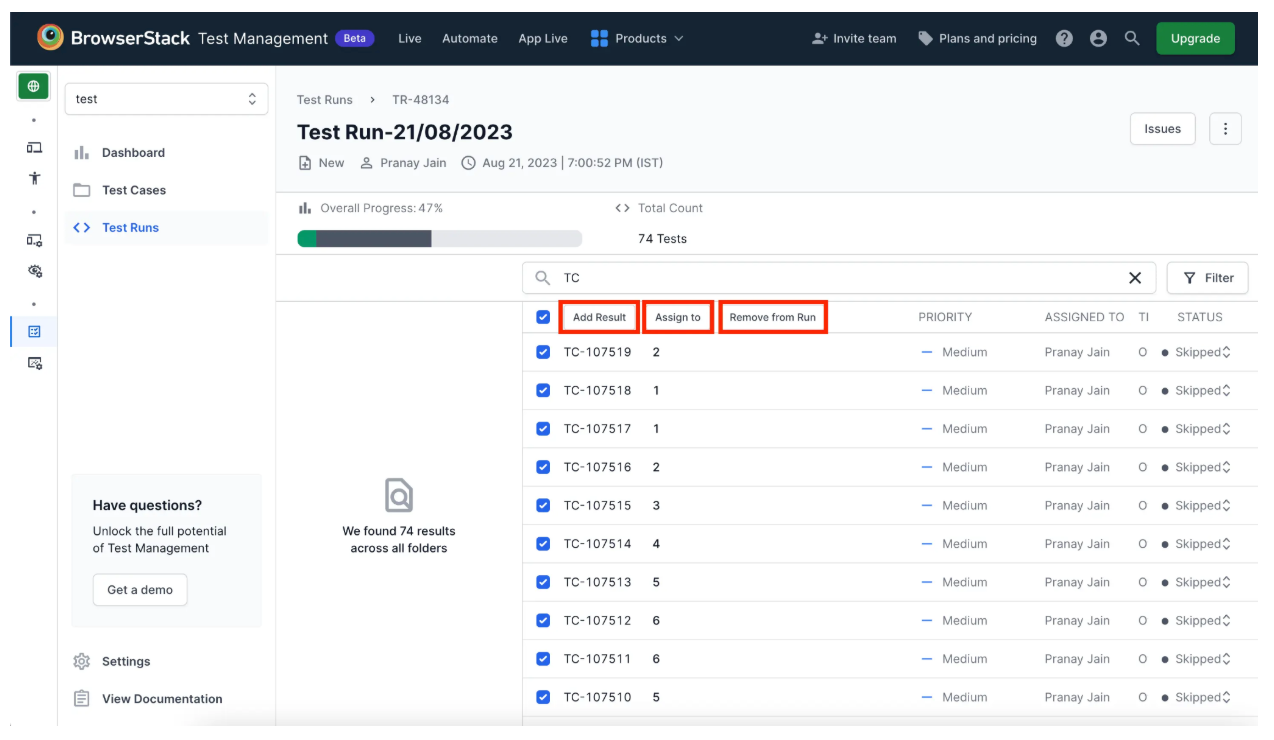
BrowserStack Test Management combines AI-powered test case generation with a centralized test management platform. It is not a standalone ai tool, in fact, it helps QA teams create, organize, and maintain test cases throughout the testing lifecycle.
What stood out to me is that this tool can generate test cases from natural language prompts and supports both standard and BDD (Gherkin) formats. Its AI capabilities also extend to identifying duplicate test cases, prioritizing relevant tests, and assisting with failure analysis, making it particularly useful for teams managing large and evolving test suites. Integration with Jira also makes it easy to incorporate AI-generated test cases into existing Agile workflows.
But if your only requirement is generating test cases, BrowserStack’s broader test management capabilities may be more than you need.
It is best suited for teams looking for AI-assisted test generation alongside structured test management and collaboration.
2. Shiplight AI
Shiplight AI is built to simplify one of the most time-consuming parts of testing: converting product requirements into actionable test cases. It uses AI to generate structured test scenarios from requirements, user stories, and natural language prompts, allowing QA teams to create an initial draft much faster.
What I liked was that the generated output is generally well-structured and covers the primary user flows without requiring extensive prompt engineering. This makes it a good option for teams that regularly work with detailed product requirements.
Limitation of this tool is that the quality of the generated test cases depends heavily on the clarity of the input. Ambiguous or incomplete requirements often require additional manual refinement.
Best suited for: Teams looking to speed up manual test case creation directly from product requirements.
3. QA Wolf

QA Wolf takes a different approach to AI-powered test generation by focusing on executable end-to-end tests rather than standalone test case documentation. Its AI explores application workflows, generates automated tests as Playwright or Appium code, and keeps them updated as the application evolves. I found this particularly useful because it removes the extra step of converting manually written test cases into automation scripts.
The platform is well suited for teams that want to expand automated test coverage without investing heavily in test maintenance. Since the generated output is executable code, it fits naturally into an automation-first development workflow and can accelerate regression testing.
One consideration is that QA Wolf is built around automated testing. Teams that rely primarily on manual test execution or use traditional test case management workflows may not fully benefit from its capabilities, whereas teams looking to increase end-to-end automation will likely see the most value.
4. Functionize

Functionize has been using AI in software testing long before it became an industry trend. Today, it combines AI-powered test creation, self-healing, and maintenance to help teams reduce the effort involved in managing automated test suites.
I particularly noticed that the platform’s AI helps keep tests up to date as applications evolve, reducing the maintenance overhead that often comes with large automation projects.
One limitation of Functionize is that smaller teams looking only for AI-generated manual test cases may find its many feature sets unnecessary.
Rather, it is best suited for organizations looking to combine AI-assisted test generation with enterprise-scale test automation.
5. Checksum
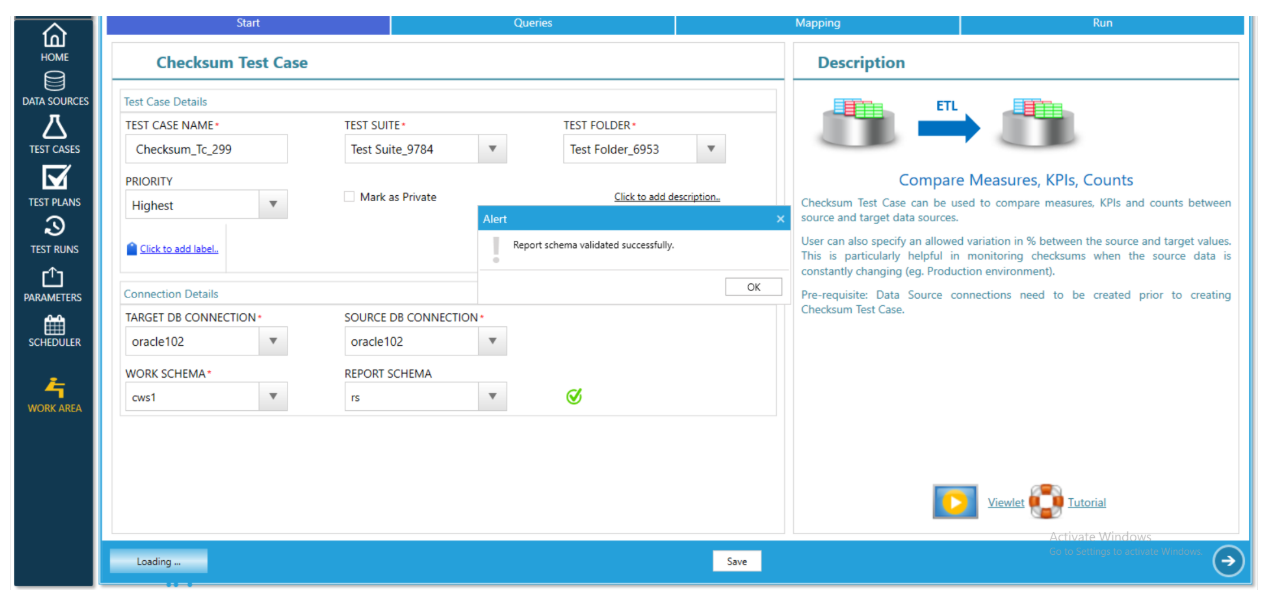
Checksum takes a slightly different approach to AI-powered testing by generating test cases from real user sessions and application behavior instead of relying only on written requirements. This makes it particularly useful for teams that want their test coverage to reflect how users actually interact with the product.
The platform identifies high-impact user flows and generates test scenarios around them, helping teams prioritize tests that matter most in production. This data-driven approach can uncover scenarios that are often missed during manual planning.
However one noticeable con would be that since it relies heavily on production usage data, newer products or applications with limited user traffic may not benefit as much from its AI capabilities.
It is great for product teams that want to generate test cases based on real user behavior rather than assumptions.
6. DevAssure
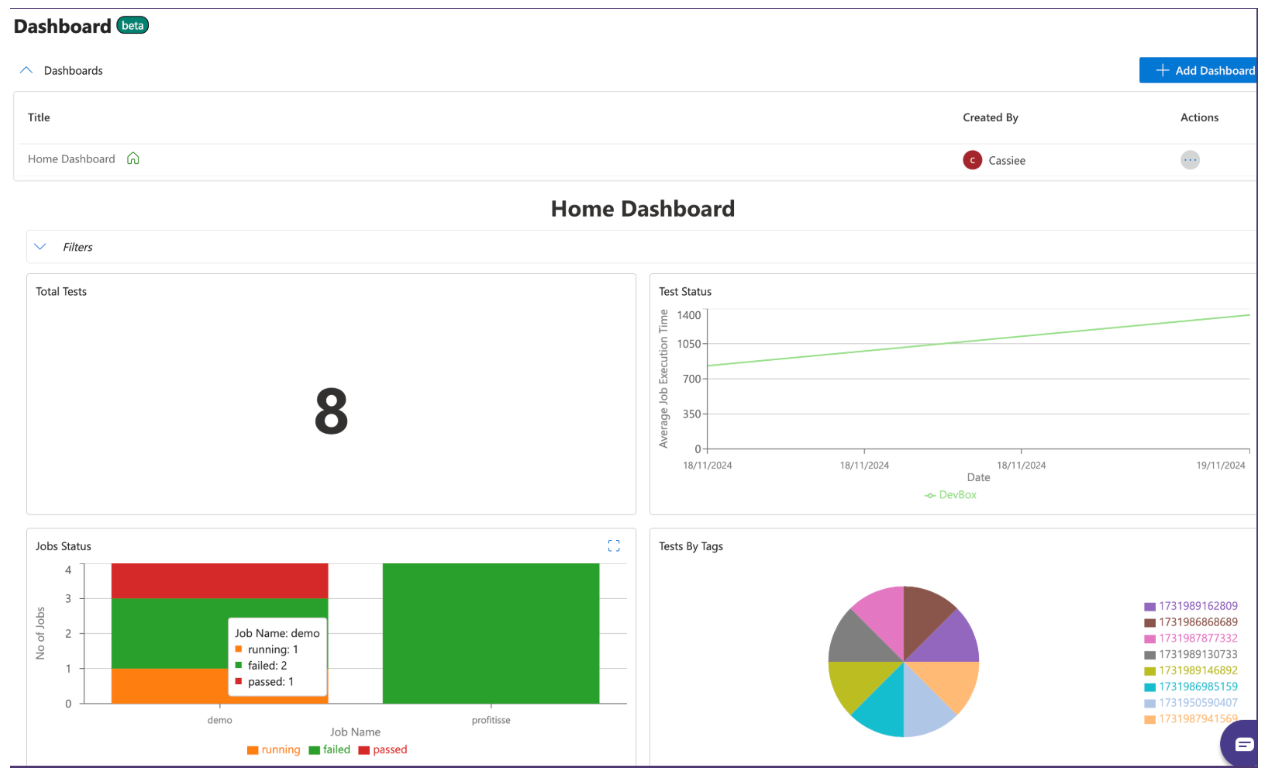
DevAssure combines AI-powered test case generation with a broader test automation platform, making it a strong option for teams looking to streamline both test design and execution. It can generate test cases from product requirements, user stories, UI mockups, API specifications, and natural language prompts, significantly reducing the effort involved in creating repetitive functional test scenarios.
What I found particularly useful is that the generated test cases don’t exist in isolation. They integrate naturally into DevAssure’s automation workflow, with features for organizing tests, linking them to development artifacts, and collaborating through tools like Jira. This makes it easier for Agile teams to move from requirements to automated validation without constantly switching between tools.
Like most AI-driven platforms, the generated output still benefits from human review, especially for complex business logic and domain-specific scenarios where contextual understanding is essential.
7. TestSprite
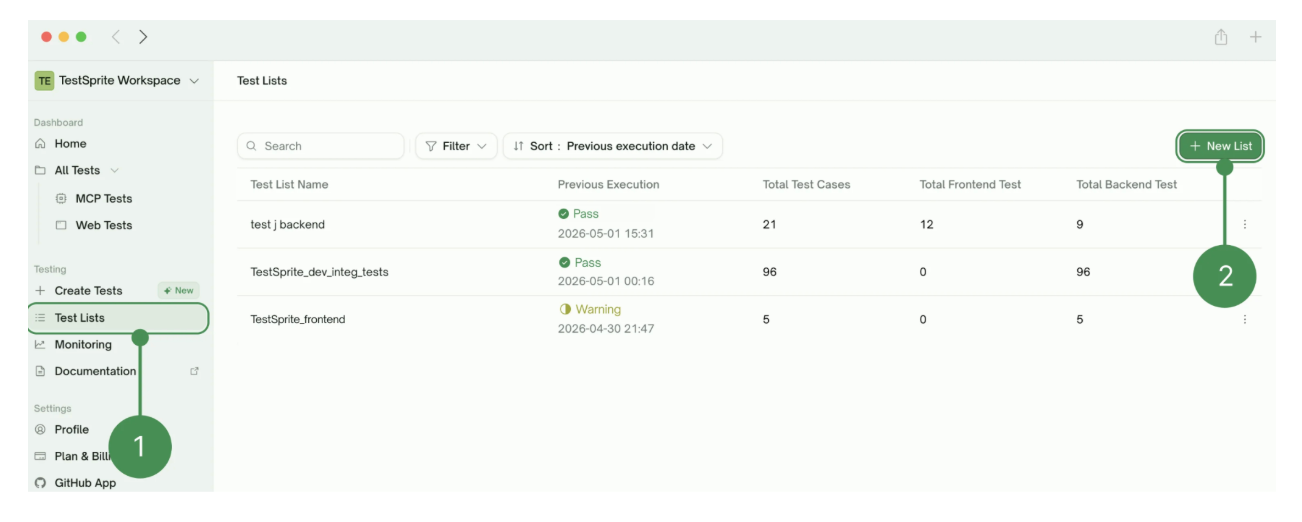
TestSprite goes beyond generating test cases by using AI to create test plans, executable test cases, and automated test scripts from requirements and natural language prompts. What I found particularly interesting is its AI-native approach, where test generation is closely integrated with modern development workflows and AI coding assistants, helping teams move from requirements to validation with minimal manual effort.
The platform keeps the overall experience straightforward while producing structured, readable test cases that can be reviewed, refined, and executed as part of the testing process. This makes it a practical choice for development and QA teams looking to accelerate test creation without adding unnecessary complexity.
8. Testomat.io

Testomat.io combines AI-powered test generation with test management, execution, and reporting, making it a good fit for teams that manage both manual and automated testing within a single platform. It can generate structured test cases from requirements, existing tests, source code, and Jira issues, helping reduce the effort involved in creating and maintaining test documentation.
One aspect I particularly liked is how naturally the AI fits into the existing workflow. Instead of acting as a standalone assistant, it works alongside features such as traceability, real-time reporting, and analytics, allowing teams to generate, organize, execute, and monitor tests without switching between multiple tools.
If your primary requirement is simply generating AI test cases, you may not take full advantage of Testomat.io’s broader test management capabilities. However, for teams looking to combine AI-assisted test generation with end-to-end test management, it offers a well-rounded solution.
My observation after evaluating these tools
The best AI tools only remove the repetitive work involved in creating the first draft of test cases, allowing testers to focus on validation, exploratory testing, and business-critical scenarios. It does not replace testers. AI can generate faster, but experienced testers are still responsible for ensuring the generated test cases are meaningful, complete, and aligned with real user expectations.
If your goal is simply to generate test cases from prompts or requirements, almost any tool on this list can help. However, if you’re looking for long-term value, prioritize tools that fit naturally into your existing QA workflow.
Can AI generate complete test cases without human review?
No. AI can generate a strong first draft, but it cannot replace human review; yet.
Most AI tools can create positive, negative, and edge-case scenarios from requirements or prompts. However, they may miss business-specific rules, compliance requirements, or product context that experienced QA engineers naturally consider.
The best approach is to let AI handle the repetitive work and have testers validate, refine, and expand the generated test cases before execution. This ensures better accuracy and more reliable test coverage.
Common Questions about AI-Powered Test Case Generation
Can AI generate test cases from user stories?
Yes. Most modern AI test case generation tools can analyze user stories, acceptance criteria, and product requirements to generate structured test cases. The quality of the output depends on how detailed the user story is.
Can AI generate both manual and automated test cases?
Yes, but it depends on the tool also. Some platforms generate manual test cases that QA engineers can review and execute, while others can also generate or assist with automation-ready test scripts. Always check whether the tool supports your preferred automation framework and workflow.
Which AI tools integrate with Jira?
Several tools on this list offer Jira integration, including BrowserStack Test Management, DevAssure, and Testomat.io. These integrations help teams generate, manage, and trace test cases without leaving their existing Agile workflow.
Are AI-generated test cases reliable?
They are a good starting point but shouldn’t be considered final. AI can quickly generate functional, negative, and edge-case scenarios, but it may overlook application-specific logic or business rules. Reviewing and refining the generated output is still a critical step in the testing process.
What is the difference between AI test case generation and AI test automation?
AI test case generation focuses on creating test scenarios from inputs like requirements, user stories, or prompts. AI test automation goes a step further by helping create, execute, maintain, or optimize automated tests.
메타데이터
- post_id
- 3b1b3a98dfd3
- slug
- best-ai-test-case-generation-tools-2026-guide-3b1b3a98dfd3
- url
- https://medium.com/@clydegarret/best-ai-test-case-generation-tools-2026-guide-3b1b3a98dfd3
- canonical_url
- https://medium.com/@clydegarret/best-ai-test-case-generation-tools-2026-guide-3b1b3a98dfd3
- author_url
- https://medium.com/@clydegarret
- status
- ok
- fetched_at
- 2026-07-30 16:19:19