[Oldboy] A Mind That Doesn’t Break After 15 Years of Imprisonment
I’d like to talk about Park Chan-wook’s Oldboy from a slightly unusual angle: what does this film tell us about how an individual survives…
[Oldboy] A Mind That Doesn’t Break After 15 Years of Imprisonment
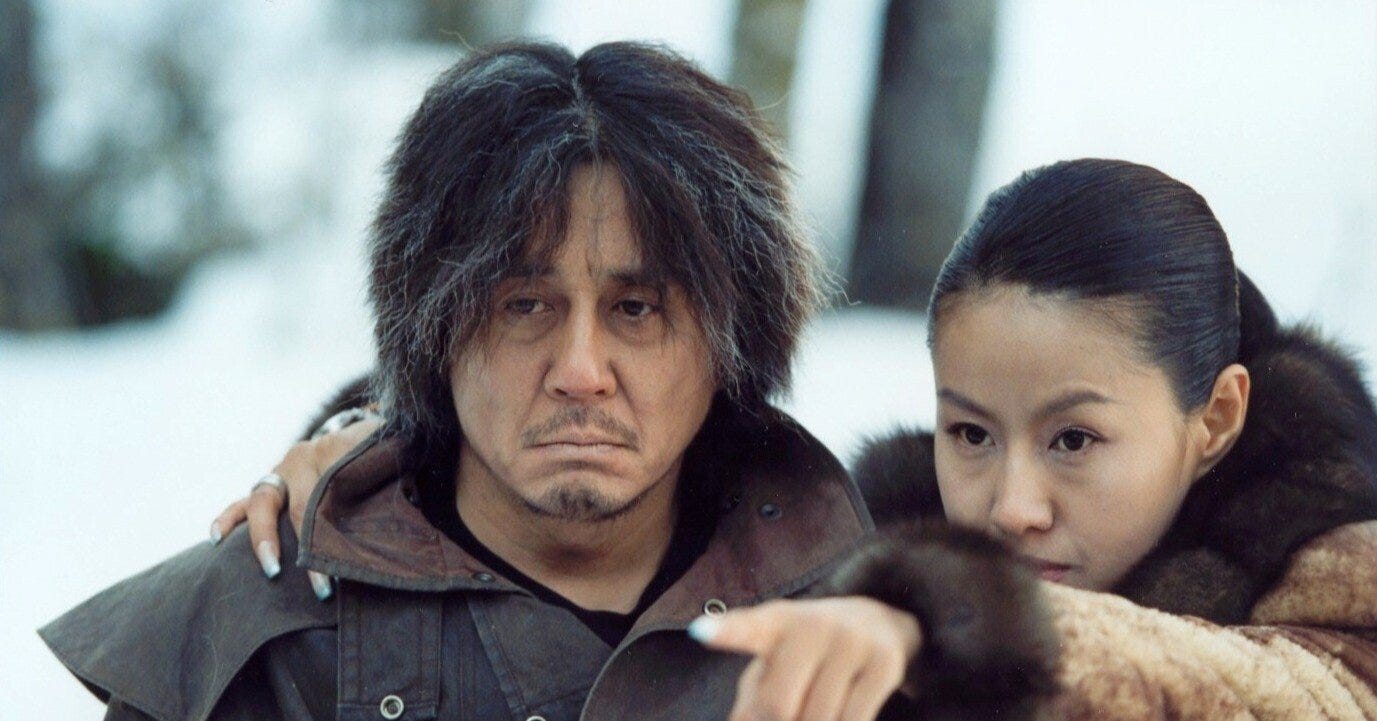
Oldboy / 2003 ©︎Show East
I’d like to talk about Park Chan-wook’s Oldboy from a slightly unusual angle: what does this film tell us about how an individual survives the worst possible situation?
On the surface, this Korean classic is usually talked about in terms of “15 years of imprisonment,” “that hammer fight,” and “one of the most shocking revenge stories ever made.” But its extreme premise can also be read as a kind of survival manual for people trying to live through our own overwhelming modern reality.
In this essay, I’m going to lean into spoilers and look at Oh Dae-su’s survival strategies as one man pushed to the edge, and ask what kind of wisdom about “how not to break” we can steal from him.
Survival habits that keep a human from breaking after 15 years
The story opens with Oh Dae-su, a drunk, obnoxious salaryman, suddenly getting kidnapped and thrown into a windowless, motel-like room. He has no idea why. His only contact with the outside world is a TV. It’s exactly the kind of environment where most people’s minds would completely collapse.
In that situation, what Dae-su chooses to do is build habits.
Push-ups and shadowboxing in the tiny room. Scraping away at the wall, a few millimeters at a time. Writing his own story down, filling notebook after notebook. None of these guarantee a miraculous escape. None of them produce quick, dramatic results.
But in psychology, “resilience” — our ability to recover and keep going under stress — is often said to grow from stacking up these tiny moments of self-efficacy. You can’t choose your environment, but you can still choose some of your daily actions. That small sliver of choice becomes the last line that protects your sense of being human.
Our real lives are (hopefully) not as extreme as Dae-su’s. Still, a toxic workplace, an endless exam grind, job hunting that never seems to end, or sheer social media fatigue can feel like being stuck in a room with no exit sign. Under those conditions, it’s rarely the huge life goals that save us. More often, it’s something as small as: “I do this one thing every single day, no matter what.”
Dae-su’s workout routine and that obsessive wall-digging aren’t just cool visual flourishes. They represent a minimum guarantee of dignity: “Even when everything is taken away, this part of my life is still decided by me.” That, I think, is why those scenes hit so hard.
From here on, the section contains spoilers that touch upon the plot development and ending.
Information as weapon and curse: when a small piece of gossip ruins lives
The entire revenge engine of Oldboy starts from something deceptively small: casual gossip.
As a high schooler, Dae-su happens to witness a forbidden moment between his classmate Lee Woo-jin and his sister Soo-ah. He shares it with a friend as a juicy story. That rumor spreads, snowballs, and eventually morphs into, “She’s pregnant.” Soo-ah is cornered and ultimately takes her own life.
Woo-jin’s revenge begins right there. Dae-su didn’t punch or steal or stab anyone. What he did was “distribute information.” And that alone was enough to obliterate someone’s life — and, decades later, come back to devour his own.
If we pull that into our present, this is basically an SNS-era parable. One screenshot. One retweet. One throwaway “Isn’t this person kind of terrible?” from an influencer can nuke a stranger’s life in a single day.
The survival lesson here is painfully simple:
“Pause for one beat before you speak.” “Read it one more time before you hit send.”
Dae-su never took that extra beat. He pays the price as 15 years of imprisonment and the destruction of whatever is left of his life afterwards.
Information can be a weapon, but it’s also a boomerang. Thinking carefully about what we say, to whom, and in what context is no longer just about being polite. It’s turning into a core self-defense skill in a networked world.
Revenge as catharsis in fiction, bad ROI in real life
Lee Woo-jin’s revenge plan is so elaborate it’s almost darkly funny. He buys up a private prison, keeps Dae-su locked away for 15 years, has Dae-su’s daughter adopted overseas, gives her a new identity as Mi-do, hires a hypnotist to orchestrate their “chance” meeting and emotional bond, and watches everything like a god from above. He pours his money, time, and whole existence into this one project.
In terms of behavioral economics, this is a walking, breathing case of the sunk-cost fallacy. Once he has decided “I will dedicate my life to revenge,” he can’t stop. The more he invests, the harder it is to quit. If you step back, the obvious question is: “What exactly do you gain that justifies this level of sacrifice?” But anger is not interested in return on investment.
We see softer versions of this in real life all the time. “I’ll become successful and make my ex regret leaving me.” “I’ll grind my way up purely to prove that boss wrong.” In the short term, revenge fantasy can be a powerful motivator. But as a long-term life strategy, it’s almost never “profitable.” Like Woo-jin, you risk reaching your goal and being left with nothing but the question: “So… my entire life was for this?”
From a survival standpoint, the smarter move is to treat anger and resentment as fuel, but redirect that fuel into a different project: a qualification, a career switch, a creative endeavor — something that actually builds a life. Betting your whole existence on revenge is the epitome of a high-risk, low-return investment. Oldboy dramatizes just how empty that victory can feel.
Between “the right to not know” and “the dignity of knowing”
The final twist is infamous. Mi-do turns out to be Dae-su’s daughter. Their romantic and sexual relationship is actually a reenactment of the past incest between Woo-jin and Soo-ah. It’s designed, down to the last detail, as a cruel mirror.
Faced with this truth, what Dae-su chooses is not confession but erasure. He cuts out his own tongue and begs Woo-jin never to tell Mi-do. In the epilogue he goes even further, seeking out the hypnotist and asking her to erase only one thing: the memory that Mi-do is his daughter.
In that last snowy scene, he holds Mi-do as she embraces him, his expression flickering between a relieved smile and raw agony. We never find out if his memory was actually erased. The film leaves us in that ambiguity.
What’s at stake here is the question: Is turning away from the truth always cowardly?
Modern mental health culture often emphasizes “facing your past” and “not running away from trauma.” That message can be important and lifesaving. But human minds are not indestructible. “Facing everything head-on” is not always the healthiest — or even possible — choice.
From a Freudian or psychoanalytic point of view, repression and forgetting can function as the mind’s own self-preservation tactics: defense mechanisms, not bugs. In that framing, what Dae-su tries to do at the end is less “moral failure” and more “emergency survival move”: choosing life over total psychic collapse.
For ordinary life, the takeaway might be this: part of surviving is accepting that there are things we don’t fully dig into, that we choose not to know or process. We don’t have to make sense of absolutely everything. But we also have to live with the fact that we are the only ones who know what we chose to look away from.
Dae-su’s final expression — that painful mixture of smile and grimace — captures the thin, shaking line between “staying alive” and “losing your mind.”
When words don’t reach, the body is the last interface with the world
You can’t talk about Oldboy without mentioning the corridor fight. Dae-su, armed with a single hammer, plowing his way through a swarm of goons in a narrow hallway — in a single, famous long take — has become one of the most iconic action sequences in modern cinema.
What makes it special isn’t just the choreography. It’s the fatigue. There’s no hyper-cut Marvel gloss. Dae-su and his enemies get tired. They breathe hard, stumble, drop their guard. No one looks cool; everyone just looks exhausted and stubborn. It’s not “heroic badassery” so much as “a human who has nothing left but the will to keep moving forward.”
At this point in the story, Dae-su has no law on his side, no institutional protection, and no meaningful language that can reach his enemies. The last interface he has left to negotiate with the world is his body. The hammer is just an extension of that. Moving his body — even if it’s just barely — is the only way he can still say, “I’m here, and I’m not done yet.”
For us, too, the body is a far more important survival tool than we like to admit. When we sacrifice sleep, nutrition, or movement for work and endless scrolling, what we’re really burning away is the energy we need to interact with the world at all.
If we only see Dae-su’s hammer rampage as “cool violence,” we miss something. That scene is also a reminder that there are things in life — from quitting a job to leaving a toxic relationship — that cannot be solved by thinking alone. At some point, you have to move your body through a door, down a corridor, out of a building. That physical act is the change.
Is “never relying on anyone” actually strength?
For 15 years, Dae-su survives essentially alone. No friends, no family. The only human contact is whoever slides in his food. But once he’s released, he very quickly becomes deeply dependent on Mi-do: for food, shelter, information, emotional support — almost everything.
That whiplash from radical isolation to intense dependence mirrors our “hyper-individualized” society. On paper, we can live off a smartphone, delivery apps, and remote work. In reality, a lot of us are starving for connection. That hunger makes us prone to over-investing in fragile forms of closeness: dating apps, parasocial relationships, group chats, online communities.
Oldboy never romanticizes the idea of “being so strong you need no one.” If anything, it stares straight at a harsher truth: “We can’t live without others, but other people can also be the ones who break us.”
From a survival perspective, the goal might not be “rely on no one,” but “don’t rely on just one thing.” Spread out your dependencies. If all your self-worth and support are tied to just your job, or just your partner, or just your follower count, you’re building your life on a single leg. When that leg snaps, you go down with it.
Diversifying relationships, roles, and sources of meaning is a kind of emotional risk management — less dramatic than Dae-su’s story, but deeply in the spirit of “how not to break.”
Why Oldboy still gets under our skin
More than 20 years after its release, Oldboy is still being discovered, debated, and rewatched around the world. People praise its stylish visuals, intricate plotting, and jaw-dropping twist — and those are all real strengths. But for me, its staying power comes from something else:
You don’t walk away from Oldboy with “answers.” You walk away with sandpaper in your chest.
There’s no pure hero. No flawless victim. No cartoon-villain evil. Everyone is warped, wounded, and beyond easy redemption. The film feels closer to Greek tragedy or Kafka than to a conventional thriller: a universe that’s irrational and unexplainable, full of flawed humans stumbling around inside it.
Because of that, we can’t keep the story at arm’s length. We find pieces of ourselves in these characters. “I’d never go that far — but I recognize that feeling.” “I wouldn’t make that choice — but I can’t swear there isn’t a version of me that would eventually crack like that.”
It’s easy to consume Oldboy as just a grotesque revenge movie. But if you tilt your perspective slightly and ask, “What did this man cling to in order to stay alive in a situation this bad?”, the film transforms into something else: a brutal but strangely useful survival manual for people living through our own quieter, less cinematic crises.
Habits. Information hygiene. Distance from revenge. The balance between truth and forgetting. Our relationship with our bodies. How we lean on other people. None of these are abstract, academic themes. They’re about what we do tomorrow morning.
Watching movies isn’t just entertainment. It can also be a way to simulate different ways of living, without having to pay the full price ourselves. Oldboy reminds us of that in the most extreme, unforgettable way.
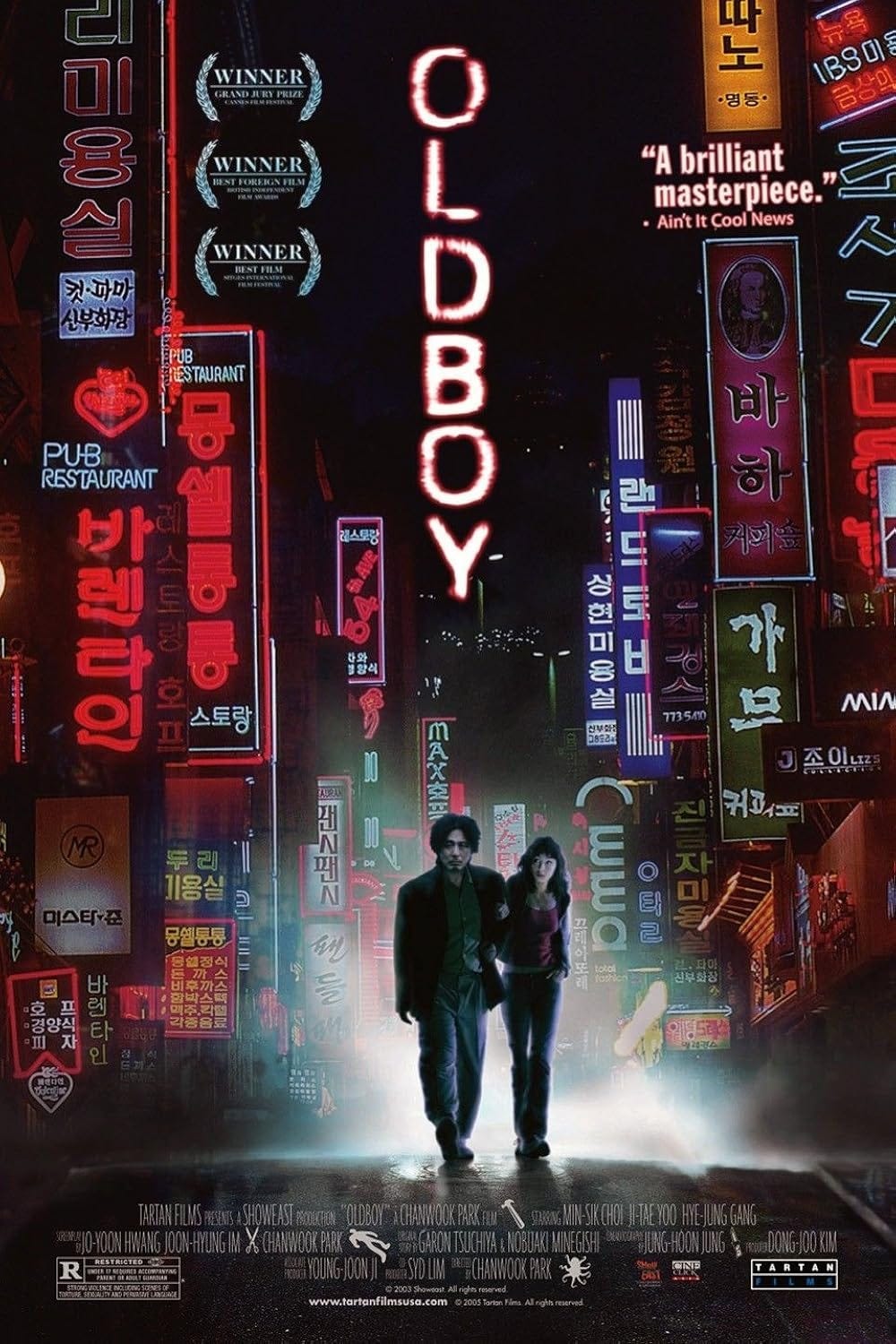
Oldboy / 2003 ©︎Show East
메타데이터
- post_id
- 3b1bc68698a7
- slug
- oldboy-a-mind-that-doesnt-break-after-15-years-of-imprisonment-3b1bc68698a7
- url
- https://medium.com/@monoessey/oldboy-a-mind-that-doesnt-break-after-15-years-of-imprisonment-3b1bc68698a7
- canonical_url
- https://medium.com/@monoessey/oldboy-a-mind-that-doesnt-break-after-15-years-of-imprisonment-3b1bc68698a7
- author_url
- https://medium.com/@monoessey
- status
- ok
- fetched_at
- 2026-06-09 15:37:30