Savitribai Phule: When Teaching Became a Revolution
How a simple classroom turned into a frontline in the struggle against caste and patriarchy
Savitribai Phule: When Teaching Became a Revolution
How a simple classroom turned into a frontline in the struggle against caste and patriarchy
Savitribai Phule: When Teaching Became a Revolution
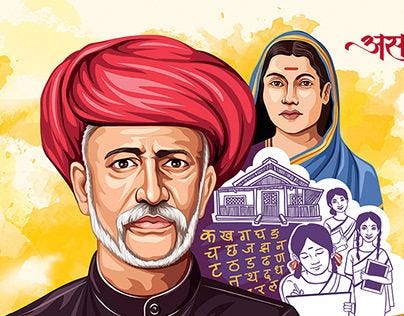
In 1848, a quiet classroom in Pune unsettled a deeply rooted social order. A young woman stood before a group of girls holding slates and chalk. That moment — simple on the surface — challenged centuries of caste hierarchy and patriarchal control.
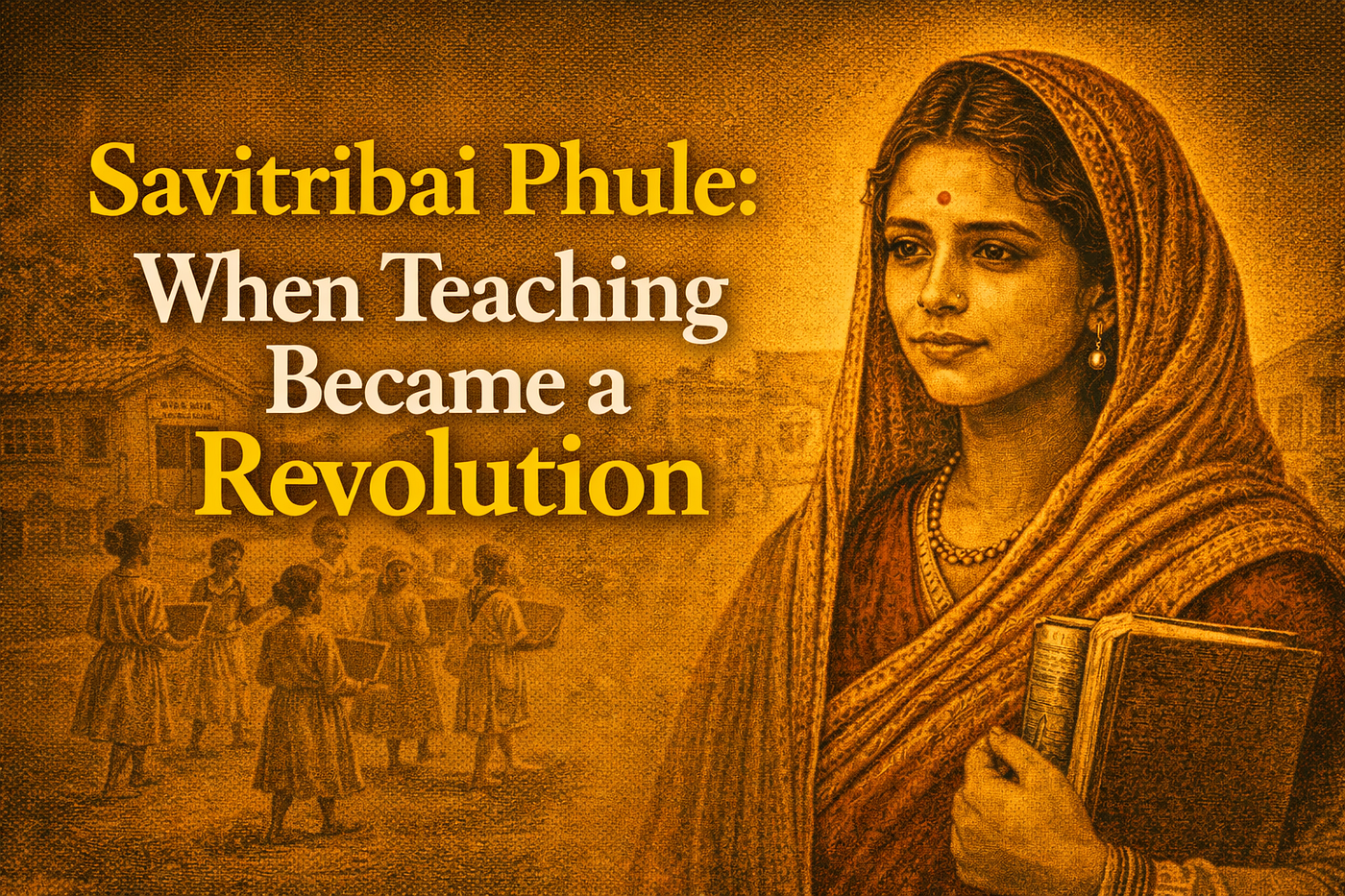
The woman was Savitribai Phule. What she began inside that classroom was not merely teaching. It was a structural rebellion against a system that denied education to women and marginalised communities.
A Society That Feared Educated Women
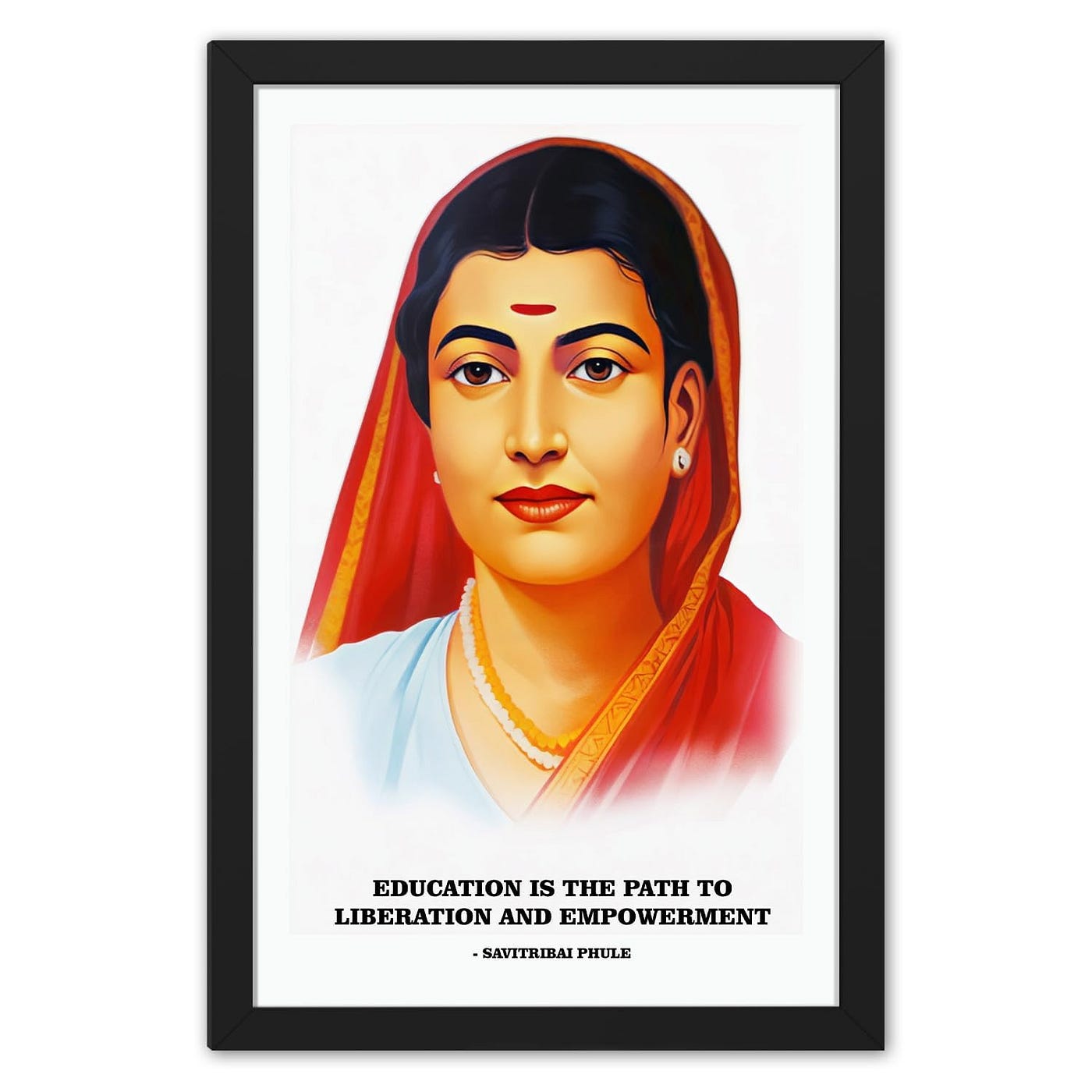
Mid-19th-century India did not simply discourage girls from studying. In many communities, educating women was considered dangerous.
The fear was not about books or literacy. It was about control.
If girls learned to read and write, they could question customs that kept them confined. They could challenge child marriage, widow oppression, and caste discrimination. Literacy threatened the structure that preserved social hierarchy.
Education was therefore restricted to upper-caste men. Knowledge remained a guarded privilege rather than a shared resource.
Into this environment stepped Savitribai Phule and her husband Jyotirao Phule, who believed education was the only way to break this cycle.
Their decision did not emerge from comfort or consensus. It emerged from confrontation with injustice.
The First Girls’ School in Pune
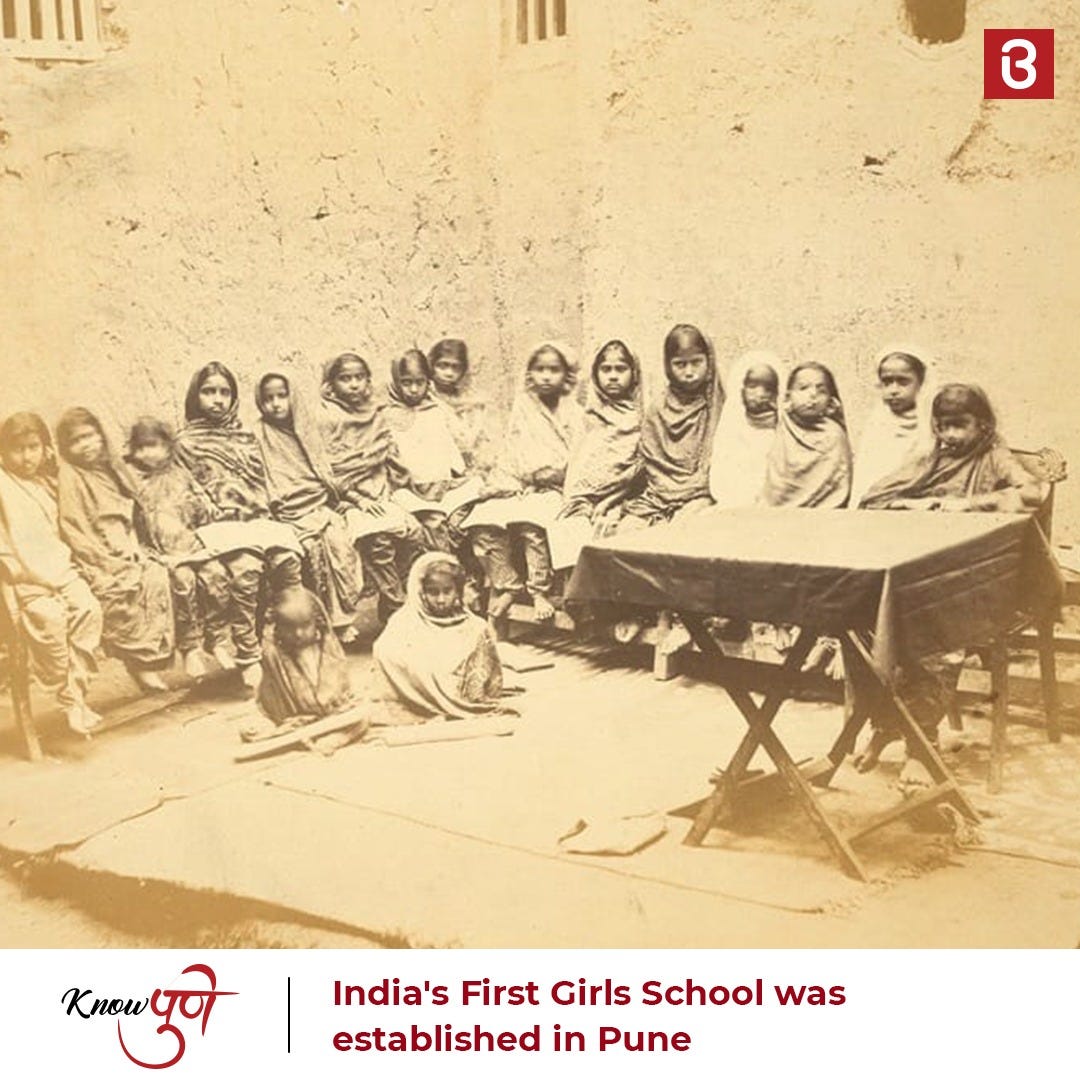
In 1848, Savitribai Phule opened one of India’s first modern schools for girls at Bhide Wada in Pune.
This decision carried consequences that few teachers face today.
She walked daily to school, knowing people might attack her. Accounts from that period describe crowds throwing stones, mud, and cow dung at her on the way. She carried an extra sari because the one she wore would often be soiled before reaching the classroom.
Yet she continued.
Teaching was not symbolic. It was operational resistance.
Savitribai did not simply run a school. She built a curriculum and method designed to expand access to education. The schools taught mathematics, science, and social awareness — subjects rarely offered to girls at the time.
By 1851, the Phules were running multiple schools for girls in Pune. Contemporary reports suggest that enrollment in their schools surpassed that of government schools in the region.
Education had quietly begun to move beyond caste boundaries.
The Mechanism: Why Education Threatened the System
The conflict around Savitribai Phule’s schools cannot be understood as mere social conservatism. It was structural.
The existing system depended on three reinforcing elements:
- Control of knowledge Literacy remained restricted to maintain hierarchy.
- Gender restriction Women were expected to remain economically and intellectually dependent.
- Caste preservation Education for marginalised communities risked weakening caste barriers.
Teaching girls from marginalised backgrounds disrupted all three at once.
Once literacy spreads, authority shifts. Written knowledge allows individuals to interpret religious texts, legal rules, and social norms independently. Power moves away from gatekeepers.
The resistance Savitribai faced was therefore predictable. The system reacted to protect itself.
Education looked like charity. In reality, it redistributed power.
A Personal Observation About How Systems Resist Change
Several years ago, I watched a team redesign a training program for rural students. The intention was good, and the curriculum was strong.
But something small caught my attention.
Every time a decision involved expanding access to the poorest communities, the discussion slowed. Concerns about “logistics,” “capacity,” and “timing” suddenly appeared. None of those concerns was entirely wrong.
Yet the pattern repeated often enough to reveal something deeper.
The obstacle was not always hostility. Sometimes, it was institutional discomfort with losing control. Systems resist change even when individuals inside them support the idea.
Savitribai Phule confronted that resistance directly. She refused to let hesitation determine access to education.
Expanding the Movement Beyond the Classroom
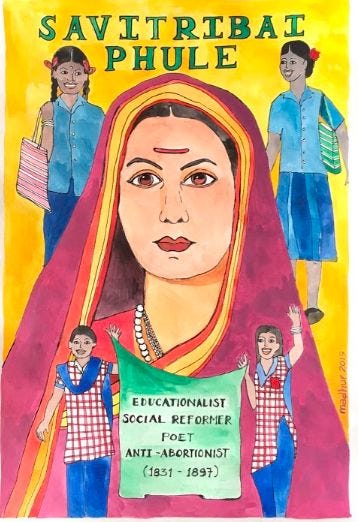
Savitribai’s work did not stop with girls’ education.
She and Jyotirao Phule also worked to support widows and victims of social ostracism. At a time when widows faced extreme social exclusion, the couple opened a shelter to provide care and dignity.
They also established a centre where widows could safely give birth to children who might otherwise be abandoned due to social stigma.
These efforts expanded the meaning of education. Literacy was only one piece. The deeper goal was social dignity and autonomy.
Savitribai also wrote poetry that encouraged people from marginalised communities to pursue knowledge and self-respect.
Her writing emphasised a direct message: education is not simply a path to employment. It is a tool of self-liberation.
Evidence of Impact
Historical records from colonial reports and contemporary scholars highlight the scale of the Phules’ work.
By the early 1850s:
- The Phules operated multiple schools for girls in Pune.
- Enrollment included students from lower-caste communities, which was rare at the time.
- Their schools reportedly had higher attendance than several government schools.
Savitribai Phule’s efforts are widely recognized by historians as a turning point in the movement for women’s education in India.
Her contributions are documented in academic works on Indian social reform and recognised by institutions across the country.
Readers interested in a deeper historical context can explore these detailed resources:
- English article: Savitribai Phule: The Woman Who Used Education to Challenge Caste and Patriarchy
- Hindi article: सावित्रीबाई फुले: एक स्कूल से शुरू हुई सामाजिक क्रांति
These sources provide additional historical background about her life and the reform movement.
The Final Years
Savitribai Phule continued her social work throughout her life.
In 1897, a devastating plague spread across parts of Maharashtra. Savitribai helped establish a clinic to care for infected patients.
While transporting a sick child to the clinic, she contracted the disease herself.
She died that same year.
Her final act mirrored the principle that guided her entire life: service to those whom society had abandoned.
What Her Story Reveals
Savitribai Phule is often remembered as India’s first female teacher. That description, while accurate, understates the structural significance of her work.
She did not merely introduce schooling for girls.
She exposed a deeper truth.
Education systems are rarely neutral. They reflect the power structures of the societies that create them. When education expands beyond those boundaries, it can quietly rearrange authority.
Savitribai Phule understood this long before it became a modern policy debate.
Her classroom was small. The resistance was enormous.
Yet the idea survived.
A Question That Still Matters
If a single classroom could provoke such resistance in 1848, what does that reveal about the power of education even today?
The answer remains unfinished.
메타데이터
- post_id
- 3b2cd26e34a4
- slug
- savitribai-phule-when-teaching-became-a-revolution-3b2cd26e34a4
- url
- https://medium.com/@MrChandravanshi/savitribai-phule-when-teaching-became-a-revolution-3b2cd26e34a4
- canonical_url
- https://medium.com/@MrChandravanshi/savitribai-phule-when-teaching-became-a-revolution-3b2cd26e34a4
- author_url
- https://medium.com/@MrChandravanshi
- status
- ok
- fetched_at
- 2026-06-22 12:55:45