How Portable Lifting Solutions Improve Flexibility Without Sacrificing Safety
Industrial material handling environments are rarely static. Production layouts evolve, maintenance tasks vary week to week, and facilities…
How Portable Lifting Solutions Improve Flexibility Without Sacrificing Safety

Industrial material handling environments are rarely static. Production layouts evolve, maintenance tasks vary week to week, and facilities are often required to support multiple workflows within the same physical footprint. In this context, portable lifting solutions have become an essential part of modern operations.
However, flexibility in lifting often raises an important question: does portability compromise safety? The reality is that when designed, selected, and operated correctly, portable lifting equipment can enhance both adaptability and safety — rather than forcing a trade-off between the two.
This article explores how portable lifting systems support operational flexibility while maintaining the safety standards required in industrial and material handling environments.
The Shift Toward Flexible Lifting Systems
Traditional fixed lifting infrastructure — such as overhead cranes or permanently installed hoists — offers reliability for repetitive, high-volume tasks. Yet many facilities face scenarios where fixed systems are impractical:
- Temporary lifting during equipment maintenance
- Changing production layouts
- Confined workspaces or shared aisles
- Low-frequency or variable load handling
Portable lifting solutions address these challenges by allowing equipment to be repositioned as needed. Instead of moving loads to the crane, the crane — or lifting device — moves to the load. This shift reduces unnecessary material movement, improves workflow efficiency, and minimizes manual handling risks.
What Defines a Portable Lifting Solution?
Portable lifting equipment is designed to provide mechanical lifting capability without permanent installation. These systems typically share three characteristics:
- Mobility — The ability to be relocated between work zones
- Adaptability — Suitability for multiple load types or tasks
- Controlled operation — Emphasis on precision and stability
Examples include mobile cranes, modular lifting accessories, and manually operated devices that provide fine control over load movement. While portability introduces new considerations — such as floor conditions and setup procedures — it does not inherently reduce safety when best practices are followed.
Safety Fundamentals Remain Non-Negotiable
Regardless of whether a lifting system is fixed or portable, the same safety principles apply:
- Loads must remain within rated capacities
- Stability must be maintained throughout the lift
- Operators must retain clear visibility and control
- Rigging must be appropriate for the load and lift geometry
Portable systems often encourage more deliberate lift planning because setup is not assumed to be permanent. This planning mindset can actually reduce complacency, a common risk in environments with fixed equipment.
Improving Load Stability with a Crane Spreader Beam
Uneven load distribution is a leading cause of lifting instability. Long, wide, or asymmetrical loads are especially prone to shifting during a lift if supported from a single point.
A **crane spreader beam** addresses this issue by distributing the load across multiple lifting points. By maintaining proper sling angles and balancing forces, the beam reduces stress on rigging components and minimizes load rotation.
In portable lifting applications, a crane spreader beam is particularly valuable because it enhances stability without requiring permanent structural changes. It allows portable systems to handle a wider variety of load shapes while maintaining predictable load behavior. When used correctly, it contributes directly to safer lifting conditions by keeping forces controlled and evenly distributed.
Mobility Without Compromising Stability
One of the most common concerns about portable lifting equipment is stability during movement and lifting. This concern is valid — but manageable.
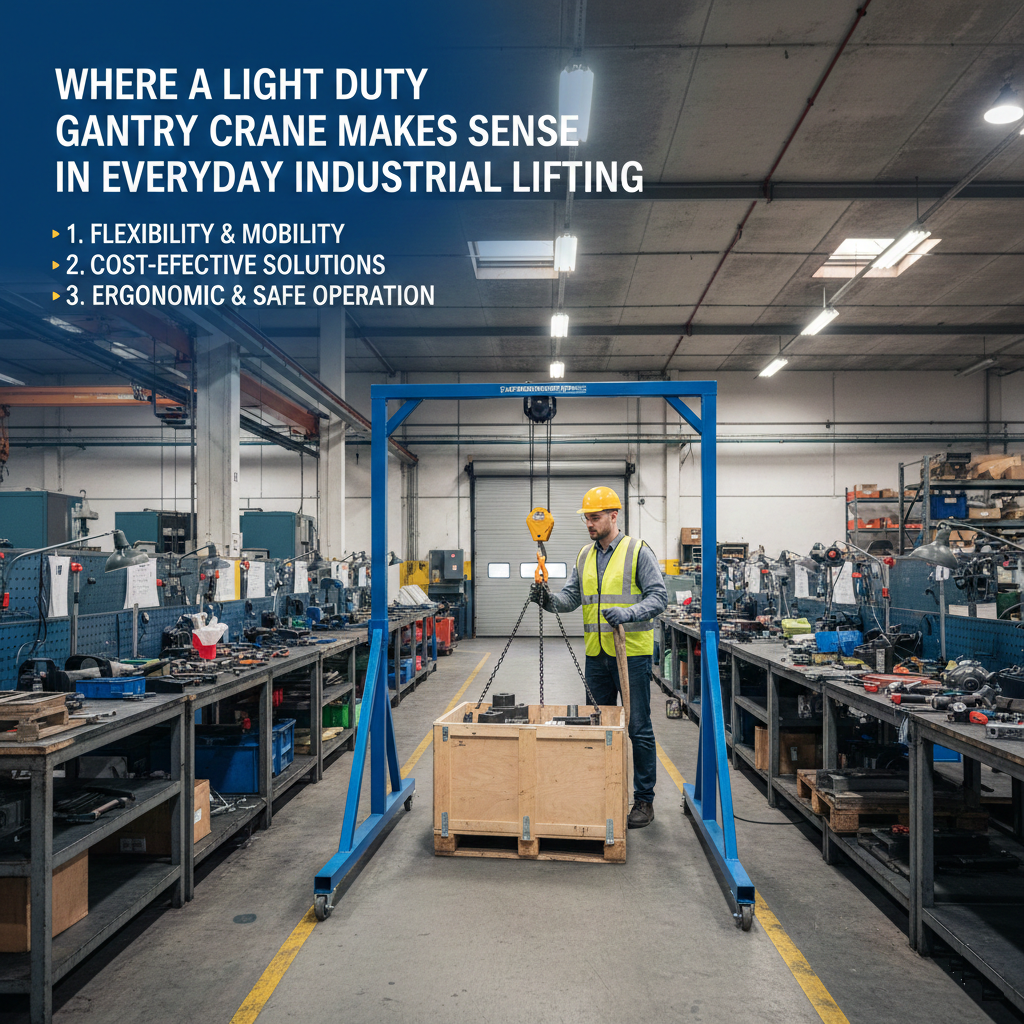
A **portable jib crane on wheels** demonstrates how mobility and safety can coexist. These systems are engineered with wide bases, reinforced frames, and locking mechanisms that prevent unintended movement during operation. When positioned correctly and secured before lifting, they provide a stable lifting point comparable to fixed alternatives for appropriate load ranges.
The key to safe operation lies in procedure:
- Positioning the crane on level surfaces
- Engaging wheel locks before lifting
- Maintaining proper load radius limits
By following these steps, facilities gain the advantage of mobility while maintaining consistent lifting safety.
Precision Control Through Manual Lifting Devices
Not every lifting task requires powered equipment. In some cases, manual devices offer superior control, especially during alignment, positioning, or short-distance lifts.
A **Harrington chain come along** is an example of a manual lifting and pulling device that emphasizes operator feedback and precision. Because the operator directly controls movement through incremental chain operation, sudden load shifts are less likely compared to powered systems used in confined or sensitive environments.
This type of controlled lifting is particularly effective when:
- Aligning machinery during installation
- Tensioning components during maintenance
- Performing adjustments where millimeter-level accuracy matters
When used within rated capacities and inspected regularly, a Harrington chain come along provides a balance of simplicity, reliability, and safety.
Risk Reduction Through Better Lift Planning
Portable lifting systems often require operators to think through each lift rather than relying on permanently available equipment. This encourages better planning, including:
- Evaluating load weight and center of gravity
- Selecting appropriate rigging and accessories
- Confirming surface conditions and clearances
Because portable setups are temporary by nature, they promote situational awareness. This awareness helps reduce common risks such as side loading, improper sling angles, and unexpected obstructions.
In many cases, the deliberate nature of portable lifting leads to safer outcomes compared to repetitive lifts performed on autopilot.
Inspection and Maintenance Considerations
Portable lifting equipment must be inspected just as rigorously as fixed systems — sometimes more so due to frequent movement.
Key inspection points include:
- Structural integrity of frames and welds
- Condition of wheels, locks, and brakes
- Wear on chains, hooks, and lifting points
Routine inspections help identify issues early and ensure compliance with safety requirements. Documentation of inspections and maintenance activities also supports internal audits and regulatory reviews.
Selecting the Right Portable Lifting Approach
Choosing the right portable lifting solution depends on several operational factors:
- Load characteristics (weight, shape, balance)
- Frequency of lifts
- Workspace constraints
- Required level of precision
In some environments, combining solutions delivers the best results — for example, pairing a portable jib crane on wheels with a crane spreader beam for balanced lifting, or using a Harrington chain come along for final alignment.
The goal is not to replace fixed systems entirely, but to complement them where flexibility is required.
Conclusion: Flexibility and Safety Are Complementary
Portable lifting solutions are not shortcuts — they are engineered responses to real operational challenges. When selected thoughtfully and used correctly, they expand a facility’s ability to adapt without compromising safety standards.
By supporting controlled movement, encouraging proper lift planning, and enabling better load management, portable lifting equipment demonstrates that flexibility and safety are not opposing goals. In modern material handling environments, they are increasingly inseparable.
메타데이터
- post_id
- 3bc6c40541e8
- slug
- how-portable-lifting-solutions-improve-flexibility-without-sacrificing-safety-3bc6c40541e8
- url
- https://medium.com/@cranedepot/how-portable-lifting-solutions-improve-flexibility-without-sacrificing-safety-3bc6c40541e8
- canonical_url
- https://medium.com/@cranedepot/how-portable-lifting-solutions-improve-flexibility-without-sacrificing-safety-3bc6c40541e8
- author_url
- https://medium.com/@cranedepot
- status
- ok
- fetched_at
- 2026-06-20 20:29:01