SaaS vs Traditional Software: The Shift Telcos Can’t Ignore
Telecom operators today are navigating a market that demands constant responsiveness. New offers need to be launched faster. Customer…
SaaS vs Traditional Software: The Shift Telcos Can’t Ignore
Telecom operators today are navigating a market that demands constant responsiveness. New offers need to be launched faster. Customer experiences need to feel more personalized. Regulatory changes must be addressed without delay. And all of this has to happen while managing cost pressures and complex partner ecosystems.
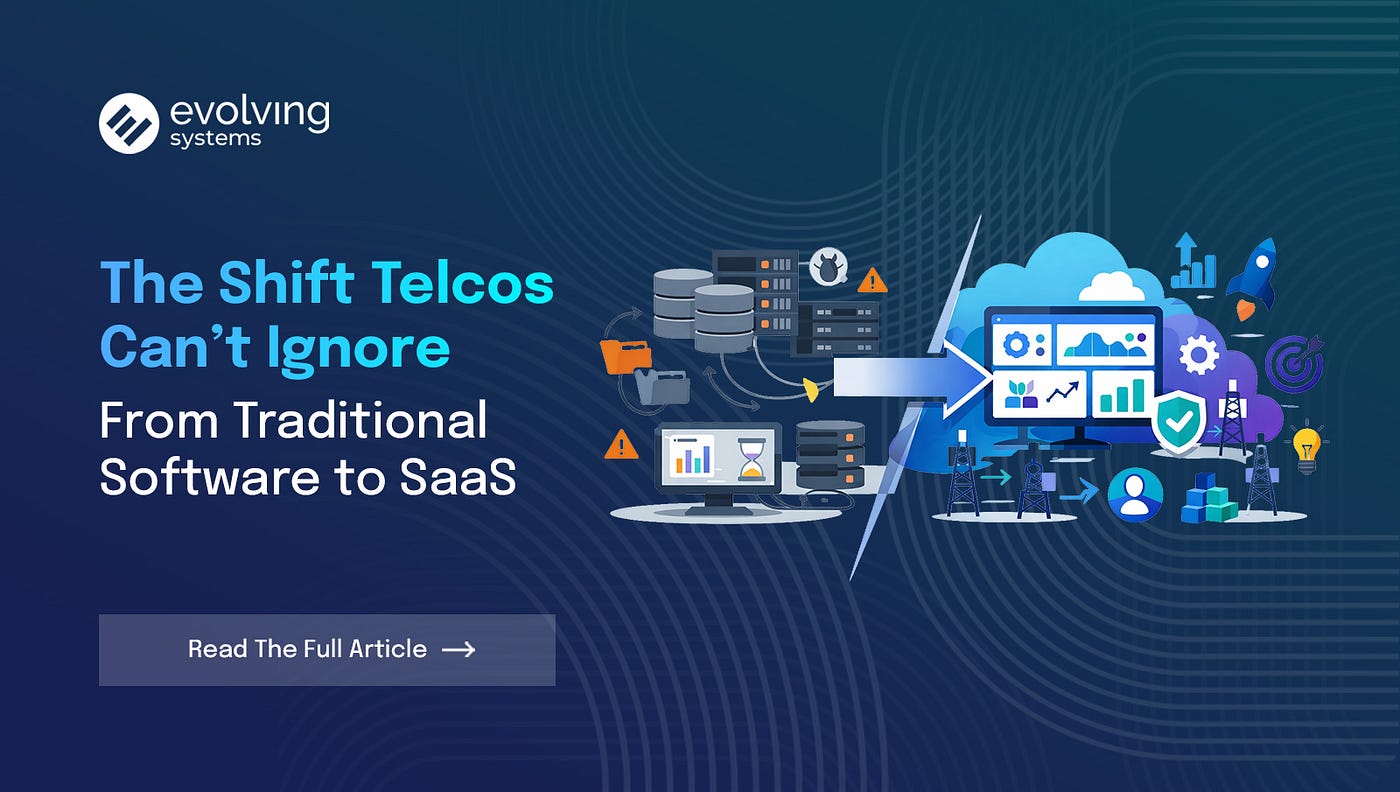
However, many of the systems that support these operations were not designed for this level of agility. Traditional, on-premise software has long been the backbone of telecom infrastructure, but it often introduces rigidity at a time when flexibility is critical. This growing disconnect is one of the key reasons why SaaS is gaining traction across the industry.
SaaS is not simply a different way to deploy software. It represents a fundamental shift in how telecom operators build, scale, and evolve their operations.
The Limitations of Traditional Software in Telecom
Traditional software has played an important role in building stable and reliable telecom operations. But stability often comes at the cost of speed and adaptability.
In many cases, deploying or updating traditional systems involves long development cycles, complex testing processes, and significant coordination across teams. Even relatively small changes, such as modifying a customer onboarding journey or launching a targeted campaign, can take considerable time to implement.
This model also introduces structural challenges:
· High upfront costs, including infrastructure, licensing, and setup
· Ongoing maintenance overhead, requiring dedicated internal teams
· Complex integrations across BSS and OSS environments
· Limited flexibility, making it harder to respond to market changes
As customer expectations continue to evolve, these constraints can slow down innovation and impact overall competitiveness.
What Changes with the Introduction of SaaS?
SaaS shifts the operational model by moving software delivery to the cloud and making it accessible on demand. Instead of managing infrastructure and upgrades internally, telecom operators can rely on SaaS providers to handle these aspects.
This shift allows internal teams to focus less on maintaining systems and more on improving outcomes.
SaaS platforms are typically designed to be modular, API-driven, and continuously updated. This means new capabilities can be introduced without disrupting existing operations. It also allows telecom operators to experiment, iterate, and scale more efficiently.
In essence, SaaS replaces a static system landscape with a more dynamic and responsive environment.
Key Benefits of SaaS for Telecom Operators
The advantages of SaaS become more tangible when viewed through the lens of day-to-day telecom operations.
1. Faster Time to Market
Speed is a critical differentiator in telecom. Whether it is launching a new prepaid offer or introducing a revised onboarding process, delays can directly impact revenue and customer acquisition.
SaaS platforms enable faster configuration and deployment of new features. This reduces dependency on long development cycles and allows operators to respond more quickly to market opportunities.
2. Scalable Infrastructure Without Added Complexity
Telecom networks often experience fluctuations in demand, driven by seasonal trends, campaigns, or data usage patterns.
With SaaS, scalability is built into the model. Operators can handle increased demand without investing in additional infrastructure or reconfiguring systems. This flexibility ensures that performance remains consistent, even during peak usage periods.
3. Continuous Innovation and Updates
One of the key limitations of traditional software is the reliance on periodic upgrades, which can be resource-intensive and disruptive.
SaaS platforms follow a different approach. Updates are delivered continuously, ensuring that operators always have access to the latest features, security enhancements, and performance improvements. This enables faster adoption of emerging technologies, including AI-driven capabilities.
4. More Predictable and Optimized Costs
SaaS introduces a shift from capital expenditure to operational expenditure. Instead of large upfront investments, operators pay based on usage or subscription models.
This not only reduces the initial financial burden but also makes costs more predictable over time. Additionally, the reduced need for infrastructure and maintenance can contribute to a lower total cost of ownership.
5. Easier Integration Across Ecosystems
Modern telecom operations rely on a wide range of interconnected systems, including customer engagement platforms, dealer management solutions, and digital channels.
SaaS platforms are generally built with API-first architectures, making it easier to integrate with existing systems and third-party tools. This supports the creation of more cohesive workflows and improves coordination across the ecosystem.
Where SaaS Creates the Most Impact
The value of SaaS becomes especially clear when applied to specific telecom functions.
For instance, in customer onboarding and KYC, SaaS platforms enable faster and more standardized processes. Updates to compliance requirements can be implemented more quickly, reducing operational risk while improving the onboarding experience.
In customer value management (CVM), SaaS supports real-time data processing and more responsive campaign execution. This allows operators to move beyond static, batch-based approaches and deliver more relevant customer interactions.
Similarly, in dealer and partner management, SaaS-based platforms provide greater visibility and control across distributed networks. This helps streamline operations, reduce inefficiencies, and improve collaboration.
Across these areas, the common thread is clear; SaaS enables faster execution, better coordination, and more consistent customer experiences.
Key Considerations Before Moving to SaaS
While the benefits of SaaS are significant, a successful transition requires careful planning.
Operators need to evaluate data security and regulatory compliance, particularly when dealing with sensitive customer information. Integration with existing legacy systems must be managed thoughtfully to avoid disruption.
It is also important to assess vendor reliability, scalability, and long-term alignment with business goals. Internally, teams may need to adapt to new processes and ways of working.
Approaching SaaS as both a technological and operational shift can help ensure a smoother transition.
A Strategic Shift, Not Just a Technology Upgrade
The telecom industry is evolving rapidly, and the systems that support it must evolve as well.
SaaS offers telecom operators a way to move beyond the limitations of traditional software. It enables greater agility, supports continuous innovation, and aligns technology investments more closely with business outcomes.
At Evolving Systems, we have seen how SaaS-driven platforms can support telecom operators in modernizing critical areas such as onboarding, dealer management, and customer engagement. More importantly, it allows them to do so without being constrained by legacy infrastructure.
As the industry continues to move toward more real-time, data-driven operations, the shift to SaaS is becoming less of an option and more of a necessity. The focus now is on how effectively operators can leverage this model to create meaningful and differentiated customer experiences.
메타데이터
- post_id
- 3bd682de10fe
- slug
- saas-vs-traditional-software-the-shift-telcos-cant-ignore-3bd682de10fe
- url
- https://medium.com/@rohit.yellowmkt/saas-vs-traditional-software-the-shift-telcos-cant-ignore-3bd682de10fe
- canonical_url
- https://medium.com/@rohit.yellowmkt/saas-vs-traditional-software-the-shift-telcos-cant-ignore-3bd682de10fe
- author_url
- https://medium.com/@rohit.yellowmkt
- status
- ok
- fetched_at
- 2026-07-11 07:07:53



