Why do swindlers and grifters like Vaush keep existing on Youtube
The digital tapestry of our era is woven with luminaries and provocateurs alike, each threading their unique narratives into this vast web…
Why do swindlers and grifters like Vaush keep existing on Youtube
The digital tapestry of our era is woven with luminaries and provocateurs alike, each threading their unique narratives into this vast web. Ian Kochinski, more widely recognized as Vaush, undeniably belongs to this cadre of influencers, ones who frequently find themselves enmeshed in the dichotomy of adulation and reproach.
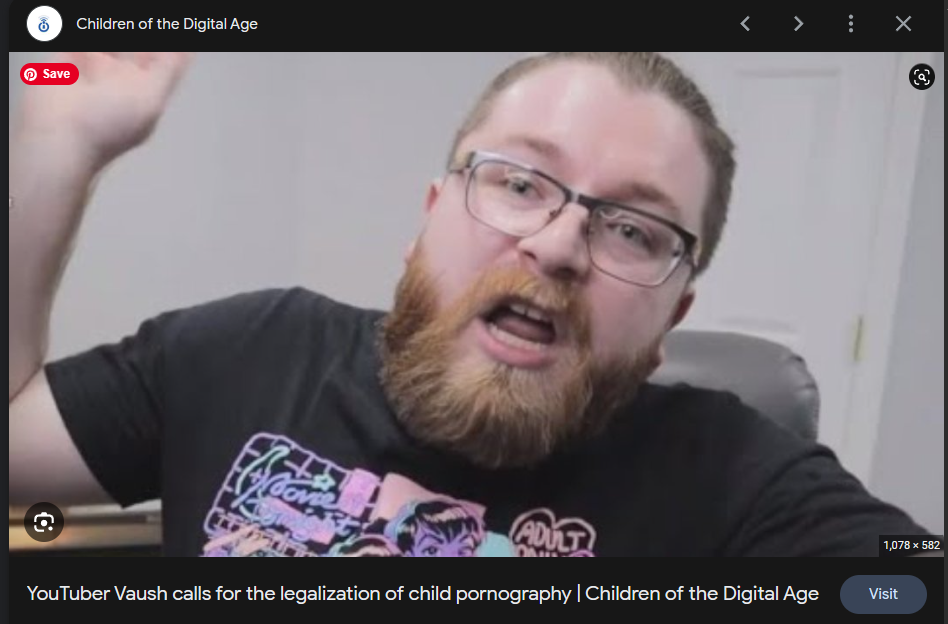
Peeling back the layers of Vaush’s presence online reveals a series of controversies, some of which have left indelible marks on his public persona. An instance that resurfaces with regularity concerns remarks he made, ostensibly diminishing child exploitation in the framework of capitalism. Critics pounced on this as evidence of his insensitivity, while Vaush and his supporters insisted that his comments were misconstrued, contending they were taken out of their intended context.
Then there’s the linguistic domain, where Vaush’s experiments with racial slurs stirred significant unease. Describing his usage as an act of “reclamation,” he ventured into a linguistic space fraught with historical and cultural weight. Critics argue that his forays were ill-advised, seeing them as needless provocations rather than genuine attempts at redefining or reclaiming terminology.
Additionally, the sociopolitical realm of YouTube is not without its skirmishes and territorial disputes. Vaush’s altercations with fellow leftist creators, including noted disagreements with Jimmy Dore and Peter Coffin, stand testament to the ideological fracturing even within specific political subsets. While disagreements are intrinsic to any dynamic discourse, the public nature of these disputes amplifies their resonance.

Off the shores of YouTube, on the platform of Twitch, Vaush found himself momentarily exiled. His assertion that certain conservative sections might rejoice in the wake of post-2020 election violence was deemed by the platform as crossing the Rubicon into the land of incitement. Although Vaush challenged this perspective, positing that his statements were again wrenched from their context, the episode underscores the tightrope influencers walk on, balancing expression with platform policies.
Shifting the lens towards sociocultural topics, Vaush’s navigation through the turbulent waters of gender discourse, especially regarding J.K. Rowling’s stance on trans rights, has also been a source of critique. Moreover, his perspectives on global geopolitics, notably the Israel-Palestine conflict and the advocacy for a “one-state solution,” have drawn both support and criticism, reflecting the deeply divisive nature of the issue.
The discourse surrounding Vaush, replete with commendations, criticisms, and fervent debates, mirrors the complexities of the digital age. Each controversy, each discussion, not only shapes the narrative around the individual but also offers a mirror to the society engaging with and responding to these narratives.
As the threads of Vaush’s online trajectory unfurl, there emerges a shadowy pattern woven with the deliberate art of rhetoric. This isn’t a mere dalliance with controversy for the sake of it, but rather a crafted strategy that goes beyond the superficial engagement metrics. It’s a dance with the darker side of discourse, where words become weapons and ideas turn incendiary.

Vaush’s method, whether intentional or not, often appears to follow a certain cadence: introduce a provocative stance, stir emotional reactions, then, in the wake of the tumult, attempt to contextualize or clarify. This sequence, repeated in varying forms, is emblematic of a style that capitalizes on the shock value. And in a digital ecosystem that rewards virality, these tactics, however morally ambiguous, can be highly efficacious.
Consider the art of rhetoric. Historically, it’s been a tool for persuasion, a means to rally crowds and mold public opinion. In Vaush’s hands, rhetoric transforms into something more potent, often with an edge that cuts deep, dividing audiences and fueling acrimony. There is an undercurrent of the Machiavellian in this: an understanding that in the realm of public discourse, it’s not just the message, but the delivery and subsequent controversy that amplifies its reach.
Such practices aren’t novel, nor are they exclusive to Vaush. History is replete with figures who’ve mastered the art of controversy, who’ve recognized that human emotions, especially anger and indignation, are powerful catalysts. But in an age where digital footprints are indelible and where every word is scrutinized, the stakes are higher. The echoes of one’s pronouncements don’t just fade; they reverberate, sometimes taking on a life of their own, shaping perceptions and, in some cases, realities.
As we step back and gaze upon the vast digital landscape, figures like Vaush stand as both products and architects of this era. Their influence, fueled by a heady mix of charisma, rhetoric, and controversy, serves as a testament to the power of the digital age. But it’s also a cautionary tale, a reminder that in this age of information, the line between influence and manipulation is precariously thin.
메타데이터
- post_id
- 3bf12ff77a0e
- slug
- why-do-swindlers-an-grifters-like-vaush-keep-existing-on-youtube-3bf12ff77a0e
- url
- https://medium.com/@brechtcorbeel/why-do-swindlers-an-grifters-like-vaush-keep-existing-on-youtube-3bf12ff77a0e
- canonical_url
- https://medium.com/@brechtcorbeel/why-do-swindlers-an-grifters-like-vaush-keep-existing-on-youtube-3bf12ff77a0e
- author_url
- https://medium.com/@brechtcorbeel
- status
- ok
- fetched_at
- 2026-07-25 06:22:12