The Precision Anti-inflammatory Stack
An Integrated Protocol for Inflammation, Stress, and Longevity
The Precision Anti-inflammatory Stack
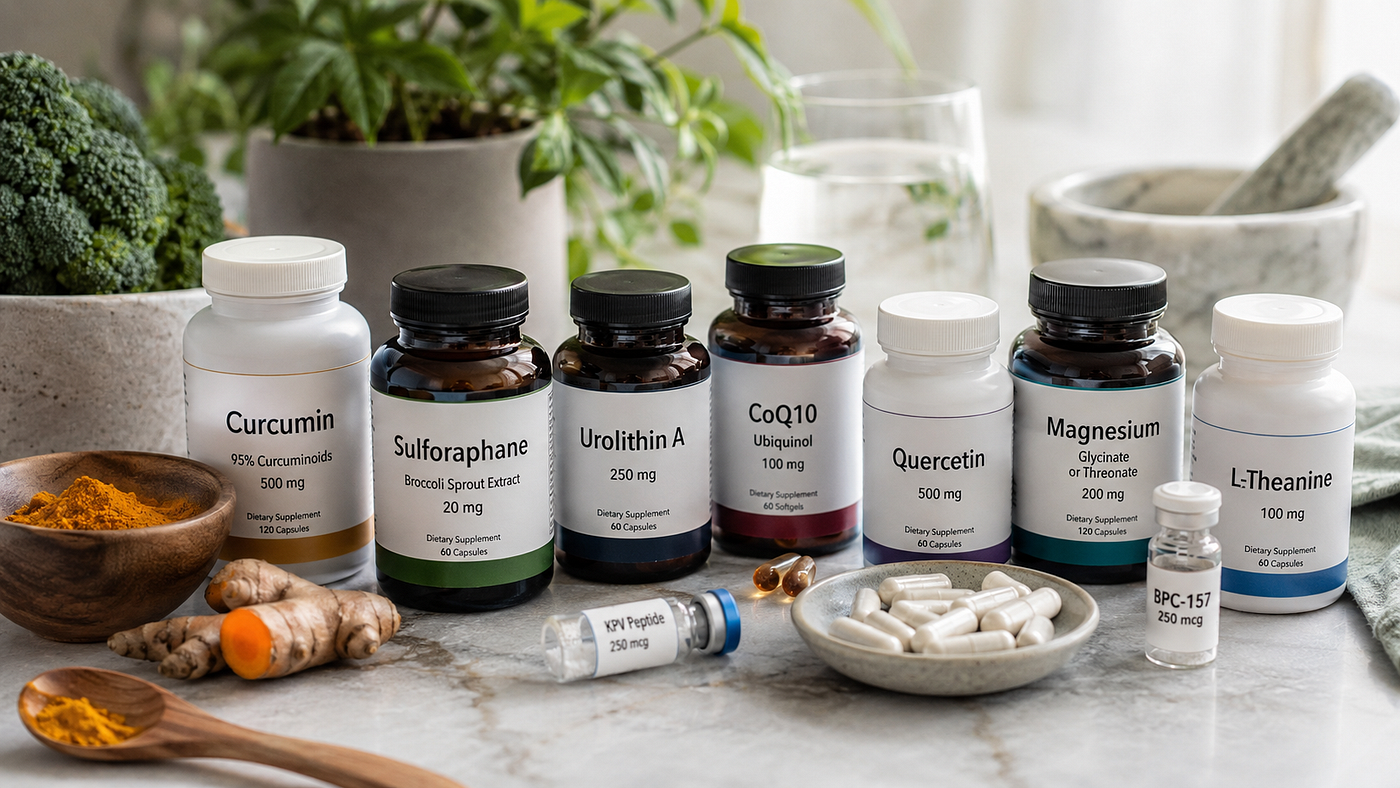
Inflammation can be tamed through diet, exercise, supplements, and peptides.
An Integrated Protocol for Inflammation, Stress, and Longevity
Inflammation is one of the body’s most fascinating paradoxes. In the short term, it protects us. It repairs tissue, coordinates immune defense, and helps us survive infections and injuries. Yet when inflammation lingers quietly beneath the surface for years, it begins to alter the very architecture of human health.
Chronic low-grade inflammation has been associated with cardiovascular disease, neurodegeneration, insulin resistance, autoimmune conditions, accelerated aging, mitochondrial dysfunction, and even mood disorders. Scientists sometimes refer to this phenomenon as “inflammaging,” a slow simmering immune activation that gradually erodes resilience over time.
What makes inflammation particularly intriguing is that it is rarely isolated. It is deeply interconnected with oxidative stress, gut permeability, mitochondrial decline, stress hormone signaling, and even genetic polymorphisms that influence how efficiently we detoxify or regulate immune responses.
This is why modern anti-inflammatory strategies are evolving beyond the old “take one supplement and hope for the best” model. The future appears increasingly precision-based, layered, and systems-oriented.
The protocol below was designed with that philosophy in mind. Rather than simply suppressing inflammation, this stack attempts to influence multiple interconnected systems simultaneously:
- Inflammatory signaling pathways
- Antioxidant defense systems
- Mitochondrial quality control
- Gut barrier integrity
- Stress resilience and neurotransmitter balance
- Tissue repair signaling
Importantly, this is not a replacement for medical care, diagnosis, or individualized treatment. Instead, think of it as a framework, a biologically informed strategy that can be personalized according to symptoms, genetics, stress levels, recovery capacity, and overall health goals.
Some individuals may respond dramatically to mitochondrial support. Others may discover their greatest leverage point lies in calming mast cells, supporting detoxification genes, or restoring gut integrity. Biology is wonderfully individualistic.
And that is precisely where this becomes interesting.
The Precision Anti-inflammatory Stack
1. The Foundation: Curcumin as the Signal Regulator
Curcumin acts upstream, modulating inflammatory signaling, oxidative stress, and transcription factors like NF-κB.
Dose
500 to 1,000 mg, twice daily Take with fat and a bioavailability enhancer
You can use your preferred option here: ***Amazon Curcumin Option***
2. Layer One: NRF2 Activation (Cellular Defense Upgrade)
Curcumin alone activates antioxidant pathways, but pairing it with NRF2 activators creates a multiplicative effect.
Sulforaphane
A potent activator of NRF2, driving expression of detoxification and antioxidant genes.
Mechanism
Activates NRF2 → increases glutathione, SOD, catalase Supports phase II detoxification
Dose
20 to 40 mg sulforaphane (or broccoli sprout extract) Cycle: 5 days on, 2 days off
Synergy
Curcumin + sulforaphane creates a dual-layer defense:
- Curcumin reduces inflammatory signaling
- Sulforaphane enhances cellular defense capacity
Genetic Insight
GSTM1 null or GSTT1 null → Stronger need for NRF2 activation NQO1 polymorphisms → May alter detox response
3. Layer Two: Mitochondrial Enhancement
Inflammation and mitochondrial dysfunction are inseparable. If one rises, the other follows.
Urolithin A
A postbiotic that stimulates mitophagy, the recycling of damaged mitochondria.
Mechanism
Activates mitophagy pathways Improves mitochondrial efficiency
Dose
250 to 500 mg daily
Who Needs It Most
- Individuals over 40
- Low energy, poor recovery
- Individuals lacking gut bacteria to convert ellagitannins
CoQ10 (Ubiquinol form preferred)
Supports electron transport chain efficiency.
Dose
100 to 200 mg daily
Genetic Insight
SOD2 variants → Increased mitochondrial oxidative stress mtDNA variants → May increase reliance on support nutrients
4. Layer Three: Peptide Signaling (Targeted Repair)
Here is where things become more precise, almost surgical.
KPV Peptide
A fragment of alpha-MSH with strong anti-inflammatory properties.
Mechanism
Reduces TNF-α, IL-6 Supports gut barrier integrity
Dose
250 to 500 mcg daily Oral or subcutaneous
Best For
- Gut inflammation
- MCAS tendencies
- Chronic systemic inflammation
BPC-157
A peptide involved in tissue repair and angiogenesis.
Mechanism
Enhances healing pathways Supports gut and connective tissue
Dose
250 to 500 mcg daily
5. Layer Four: Neurotransmitter and Stress Modulation
Inflammation and stress are bi-directional. Calm the brain, and the body follows.
Magnesium (Glycinate or Threonate)
Dose
200 to 400 mg daily
Mechanism
Supports GABA signaling Reduces HPA axis overactivation
Genetic Insight
COMT variants → Slower dopamine breakdown, higher stress sensitivity Magnesium helps buffer this
L-Theanine
Dose
100 to 200 mg as needed
Effect
Increases alpha brain waves Promotes calm focus without sedation
6. Layer Five: Gut and Immune Interface
The gut is where inflammation often begins.
Polyphenol Support with Quercetin
Dose
500 mg daily
Mechanism
Mast cell stabilization Anti-inflammatory synergy with curcumin
Genetic Insight
Histamine-related SNPs (DAO, HNMT) may benefit
Putting It All Together
Morning
- Curcumin
- Sulforaphane
- Urolithin A
- CoQ10
Midday
- Curcumin (second dose)
- Quercetin
Evening
- Magnesium
- Optional second dose of Quercetin (especially if you have MCAS)
- Optional L-theanine
Peptides
- KPV or BPC-157, once daily; 5 days on/2 days off
What This Stack May Actually Do
It does not just reduce inflammation, but it also may help with the following:
- Lowers inflammatory signaling at the transcription level
- Enhances antioxidant gene expression
- Repairs mitochondrial networks
- Stabilizes gut and immune responses
- Calms neurological stress circuits
In other words, it shifts the body from a defensive posture to a regenerative one.
A Note on Personalization
This stack becomes truly powerful when tailored:
- High inflammation phenotype → emphasize curcumin + KPV
- Detox weakness (GSTM1 null) → prioritize sulforaphane
- Fatigue phenotype → increase mitochondrial support
- High stress genotype (COMT, MAOA) → deepen calming layer
The fascinating thing about precision wellness is that two people can carry the same diagnosis while possessing entirely different biological bottlenecks. One person may struggle with detoxification capacity. Another may be dealing primarily with mitochondrial inefficiency or mast cell hyperreactivity. This is why personalized medicine, genetics, and systems biology are rapidly becoming central to the future of health optimization.
The goal is not merely symptom suppression. The goal is resilience.
When the body is given the right inputs, inflammatory burden often decreases not because the body was “forced” into balance, but because its underlying systems finally regained the resources required to function properly. That distinction matters.
References
Hewlings, S. J., & Kalman, D. S. (2017). Curcumin, a review of its effects on human health. Foods, 6(10), 92.
Zhang, Y., & Gordon, G. B. (2004). A strategy for cancer prevention, stimulation of the Nrf2-ARE signaling pathway. Molecular Cancer Therapeutics, 3(7), 885–893.
Ryu, D., et al. (2016). Urolithin A induces mitophagy and prolongs lifespan. Nature Medicine, 22(8), 879–888.
Gonzalez-Rey, E., et al. (2007). Anti-inflammatory effects of alpha-MSH-derived peptides. Endocrine Reviews, 28(5), 521–544.
Barchitta, M., et al. (2019). Nutrition and wound healing, the role of peptides. Nutrients, 11(5), 1119.
Boyle, N. B., et al. (2017). The effects of magnesium supplementation on subjective anxiety. Nutrients, 9(5), 429.
메타데이터
- post_id
- 3bfc953cd7a1
- slug
- the-precision-anti-inflammatory-stack-3bfc953cd7a1
- url
- https://medium.com/illumination-scholar/the-precision-anti-inflammatory-stack-3bfc953cd7a1
- canonical_url
- https://medium.com/illumination-scholar/the-precision-anti-inflammatory-stack-3bfc953cd7a1
- author_url
- https://medium.com/@petermarinoscience
- status
- ok
- fetched_at
- 2026-06-09 15:37:30